
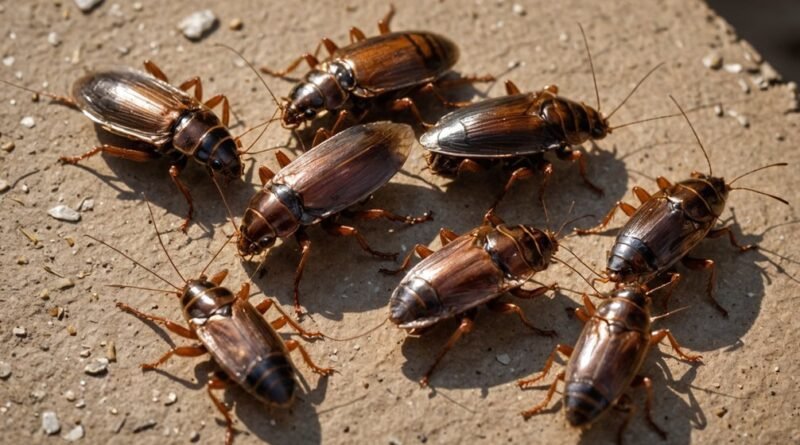
Brown Banded Cockroaches, Signs, Behavior and Treatment Options
Brown-banded cockroaches are small (0.5–0.6 in), light to medium brown with two darker bands; males fly, females don’t. You’ll spot pepper-like droppings, glued egg cases, shed skins, a musty odor, and nymphs. They prefer warm, dry, high spots—upper cabinets, furniture, electronics—feeding on crumbs and starches at night. They spread bacteria and trigger asthma through allergens. Inspect carefully, use baited sticky traps, tighten sanitation, seal gaps, and rotate baits/residuals. Next, you’ll see exactly how to tackle them effectively.
Key Takeaways
- Brown-banded cockroaches are small (10–14 mm), light to medium brown with two broad bands; males fly, females have short non-flying wings.
- They prefer warm, dry, elevated areas (upper cabinets, furniture, electronics) and are nocturnal, often avoiding floors and light.
- Signs include pepper-like droppings, glued oothecae, shed skins, musty odor, and nymphs; sticky traps help confirm activity.
- Health risks include food contamination with bacteria (E. coli, Salmonella) and potent allergens that can worsen asthma, especially in children.
- Control with thorough inspections, sanitation, sealing cracks, baited sticky traps, and rotating cockroach baits/residual sprays while monitoring effectiveness.
Identification and Physical Characteristics
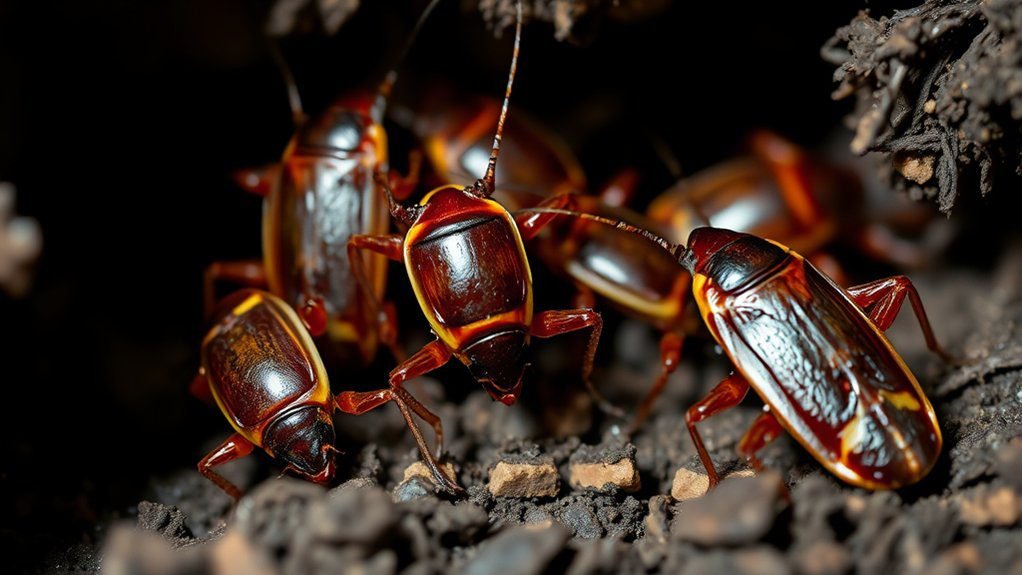
Although small, brown-banded cockroaches are easy to recognize once you know what to look for: adults measure about 0.5 to 0.6 inches (10–14 mm) and show two broad brown to reddish-brown bands across the wings and abdomen.
Small but distinctive: adults are 0.5–0.6 inches with two bold brown bands.
Look for light to medium brown coloration, with bands that may appear broken but remain obvious at the base and mid-abdomen. The pronotum often shows a darker, bell-shaped mark.
You can tell males from females quickly. Males are slender, about 1/2 inch long, with fully developed wings that cover the abdomen and allow short glides when disturbed. Males have longer wings and a lighter color than females.
Females are shorter and broader, with wings that don’t reach the tip of the abdomen, so they don’t fly. Nymphs are smaller yet display clear banding that later aligns with adult wing patterns.
Notice their long, slender antennae and well-developed mouthparts.
Five-segmented maxillary palps, rich in specialized sensilla, help them detect food and mates, reflecting their adaptation to warm, dry, elevated indoor spots.
Common Signs of Infestation
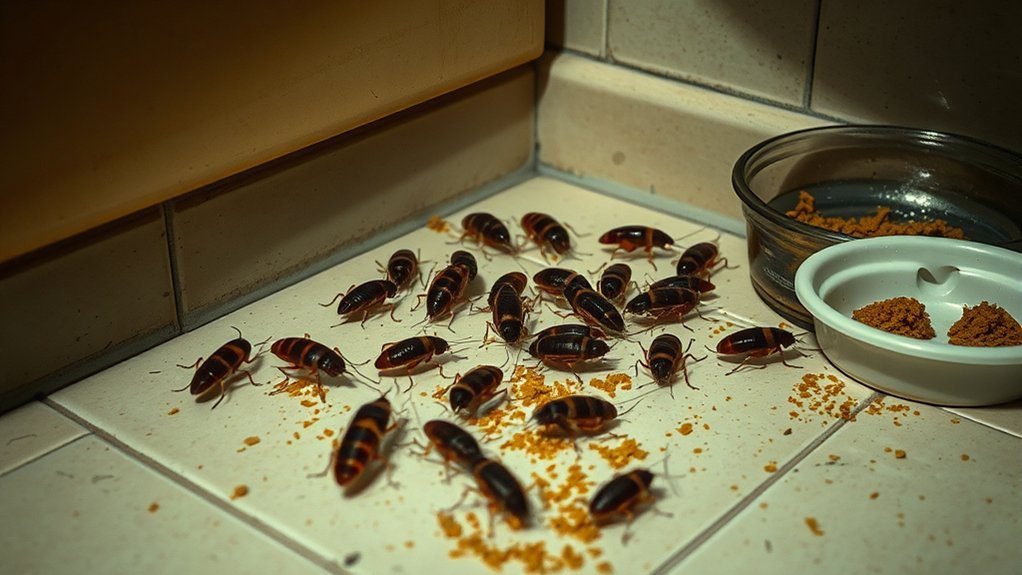
Four reliable clues quickly reveal a brown-banded cockroach problem: pepper-like droppings, glued egg capsules, shed skins or tiny nymphs, and a musty odor. Check corners, upper cabinets, light fixtures, and electronics for dark specks or smeared fecal spots. These marks cluster near travel routes and nesting spots and often trigger allergies. Next, look for reddish-brown to yellowish oothecae, under 5 mm, glued beneath furniture, inside cabinetry, or along ceilings—each holds many eggs, signaling active reproduction.
You may also find crisp, translucent shed skins in crevices and see small, wingless nymphs moving along baseboards or walls. Multiple life stages—eggs, nymphs, adults—mean the infestation’s established. A lingering, musty odor from secretions, droppings, and carcasses often confirms it. Brown-banded cockroaches prefer warm, dry indoor areas like upper cabinets, pantries, and behind picture frames, so inspect elevated spots carefully.
Use sticky traps in out-of-the-way areas to verify activity; a single roach usually means more nearby.
| What you see | What it means |
|---|---|
| Pepper-like specks | Heavy traffic and allergens |
| Glued egg cases | Active, reproducing population |
| Skins, nymphs, odor | Ongoing, entrenched infestation |
Behavior and Habitat Preferences
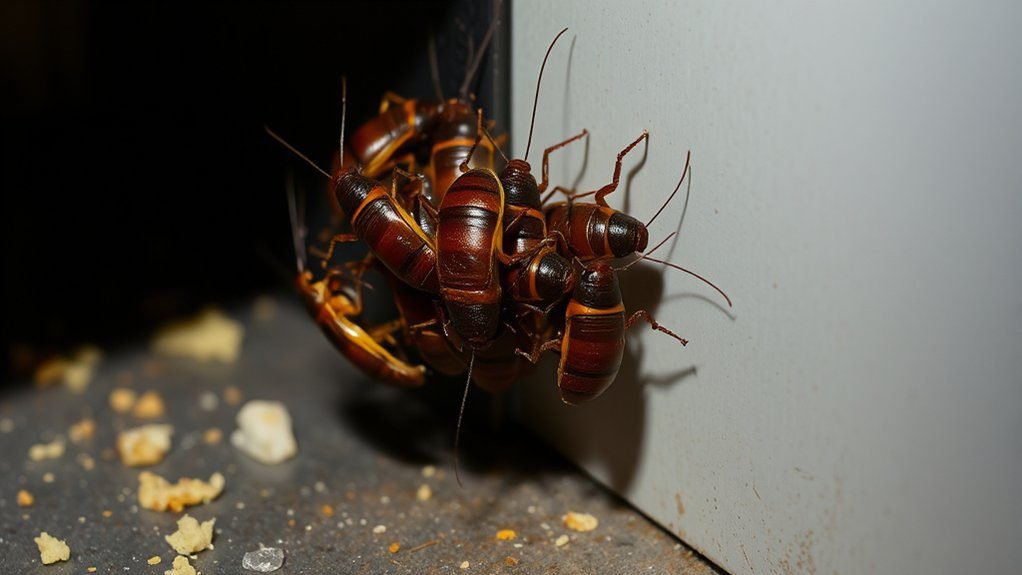
Brown-banded cockroaches favor warm, dry, elevated spots and roam well beyond kitchens. You’ll find them near ceilings, crown molding, and upper cabinets, not in basements or damp areas. They tuck into furniture, closets, picture frames, and electronics that hold heat—refrigerators, TVs, and dryers included. Because they climb well and avoid floors, they’re easy to overlook.
They’re nocturnal and shun light, so you rarely see them during the day even when they’re spread across multiple rooms, including bedrooms and living areas. Adult males can glide short distances, helping them reach new, higher hiding places. They can carry over 30 types of bacteria that contaminate food and surfaces and may trigger allergies and asthma.
Females seek warm, dark, secure sites for egg capsules, often on walls, ceilings, and furniture, which complicates detection.
Their diet is flexible: crumbs, starches, animal-based glues, dyes, book bindings, wallpaper paste, even clothing materials. This omnivory supports infestations away from kitchens and can damage stamps, draperies, and old books.
Seal cracks, crevices, ducts, and molding to limit shelter.
Health Risks and Allergen Concerns
Even when you don’t see them, these roaches can undermine your health by contaminating food and surfaces with bacteria and allergens.
Brown-banded cockroaches carry more than 30 disease-causing bacteria, including E. coli, Salmonella, Streptococcus, and Staphylococcus. Germs cling to their legs and bodies after contact with sewage and decomposing material, then spread onto kitchens, pantries, utensils, and prep areas via feces, shed parts, and secretions.
Resulting illnesses can include gastroenteritis, diarrhea, typhoid fever, cholera, dysentery, and food poisoning; rare outbreaks of salmonella and dysentery have been linked to these roaches. They are also linked to worsening asthma in children, making them a significant allergen source in homes and schools.
Their allergens—saliva, feces, skins, and body debris—become airborne particles that trigger itchy eyes, sneezing, rashes, wheezing, and asthma attacks.
Chronic exposure can create new sensitivities or worsen existing allergies, often unnoticed until symptoms escalate. Children, asthma sufferers, and immunocompromised people face higher risks.
Fecal specks that resemble black pepper accumulate in warm, dry areas and on household items, degrading indoor air quality and enabling cross-contamination.
Treatment and Control Strategies
Two priorities drive effective control: find every hotspot and cut off the roaches’ support system.
Start with a thorough inspection—focus on corners, cracks, ceilings, shelves, and furniture. Place baited sticky traps along walls, in corners, and inside drawers; run at least ten sites for a week to map hotspots and gauge population. Keep inspecting deliveries, furniture, and packages to prevent new introductions. In kitchens and bathrooms, check higher areas like the tops of cabinets and behind picture frames where brown banded cockroaches prefer warm, dry spots.
Tighten sanitation. Vacuum and wipe away crumbs, grease, and residues in all rooms. Bag garbage in sealed containers. Fix leaks and reduce moisture.
Seal cracks and gaps around doors, windows, plumbing, utilities, and baseboards; screen vents; inspect and seal furniture and appliances before they come inside.
Deploy chemistry strategically. Use cockroach baits (hydramethylnon, fipronil, sulfluramid, boric acid, abamectin). Dust lightly with boric acid, silica aerogel, or diatomaceous earth in crevices.
Apply residual sprays to baseboards, doors, windows, and furniture. Add IGRs (e.g., hydroprene). Use contact sprays to flush and kill. Rotate classes, monitor, educate occupants, and retreat as needed.
Frequently Asked Questions
How Do Brown-Banded Cockroaches Differ From German Roaches in Distribution?
They differ because you’ll find German roaches worldwide in warm, humid indoor spots near food and water, while brown-banded roaches favor warmer, drier areas, spread via furniture and electronics, and disperse widely across rooms, ceilings, and higher locations.
Are Brown-Banded Cockroaches Common in Apartments or Single-Family Homes?
Yes—they’re common in both. You’ll find them indoors wherever it’s warm, dry, and elevated: cabinets, ceilings, furniture, and electronics. In apartments, they spread through wiring and gaps. Clutter and warmth raise risk more than building type.
Can Moving Furniture or Electronics Spread an Infestation Between Homes?
Yes, moving furniture or electronics can spread an infestation. You might carry hidden roaches, eggs, or droppings inside warm, dry crevices. Inspect, vacuum, seal, and treat items with baits or insecticides before relocating; consider professional inspection.
Do Seasonal Temperature Changes Affect Their Activity or Visibility?
Yes. Warmer seasons boost their activity, reproduction, and visibility; you’ll notice more near ceilings and warm electronics. Cooler months depress movement, pushing them into heated microhabitats. In consistently warm homes, you’ll see steady, year-round activity with minimal seasonal change.
What Precautions Prevent Re-Infestation After Renovation or Moving?
Prevent re-infestation by deep-cleaning, sealing gaps, fixing leaks, and improving ventilation. Inspect and quarantine incoming items, deploy sticky monitors, and apply gel baits, IGRs, and boric dust in cracks. Store food airtight, empty trash daily, and maintain treatments.
Conclusion
By learning how to spot brown-banded cockroaches, recognize their behavior, and understand the risks, you’ll act fast and smart. Look for egg cases on furniture, droppings near warm appliances, and nocturnal activity in high spots. Reduce clutter, seal gaps, and fix leaks to cut off resources. Use bait stations, targeted insecticides, and sticky traps, and vacuum regularly. If activity persists, call a professional. Stay vigilant with ongoing monitoring so you prevent rebounds and keep your home healthy.
