
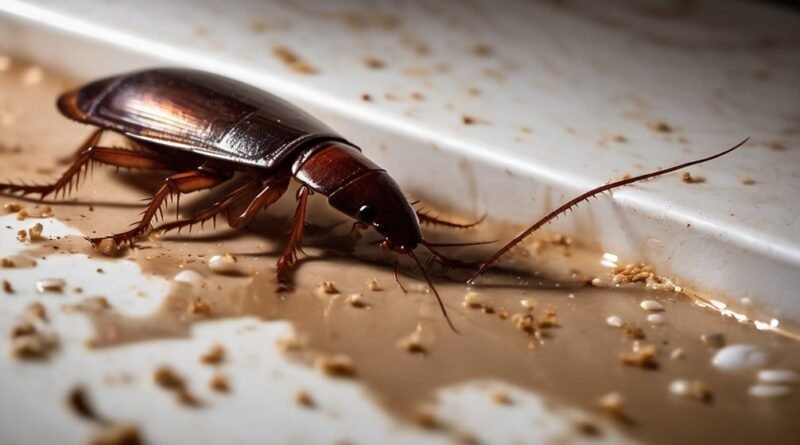
Cockroach Behavior: Nocturnal Habits & Hiding Spots
You’ve probably noticed that cockroaches scatter when you flip on the lights at night, but there’s more to their behavior than simple light avoidance. These resilient insects follow precise biological rhythms and environmental cues that determine their daily routines. Understanding why they emerge at night and where they hide during the day won’t just satisfy your curiosity – it’ll help you outsmart these unwanted houseguests and better protect your home.
Key Takeaways
- Cockroaches are primarily nocturnal, with peak activity occurring during the transition from light to dark due to their internal biological clock.
- They prefer hiding in warm, humid environments like under sinks, behind appliances, and near drains in kitchens and bathrooms.
- When exposed to sudden light, cockroaches exhibit immediate survival responses by either freezing in place or quickly seeking shelter.
- Their compound eyes enable effective navigation in low-light conditions, while their negative phototaxis drives them away from bright areas.
- Cockroaches thrive in temperatures between 70-90°F and humidity levels of 50-70%, actively seeking damp spots for survival.
Why Cockroaches Choose the Night Life
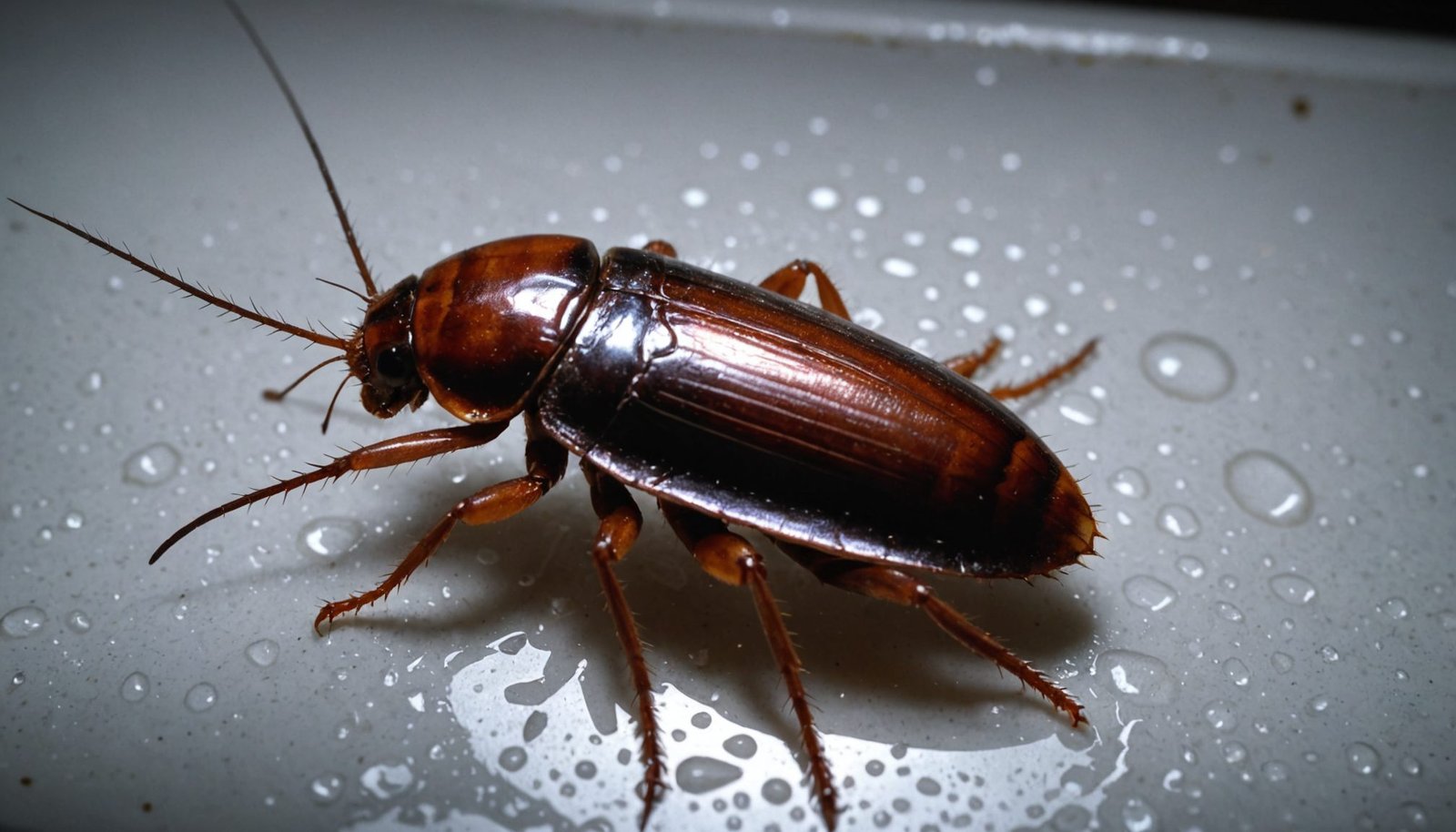
While many creatures thrive in daylight, cockroaches have evolved to master the night through a complex set of adaptations. You’ll find these insects most active during the shift from light to dark, when they can safely forage and mate while avoiding their primarily diurnal predators.
Their internal body clock, regulated by neurons in the optic lobes, perfectly synchronizes with environmental light cues to optimize nighttime activity.
You’ll notice they prefer temperatures around 27-28°C and higher humidity levels, conditions typically found after dark that help prevent water loss and support efficient movement. Their compound eye structure allows them to navigate effectively in various lighting conditions.
When exposed to sudden light, they’ll freeze or flee – a survival response triggered by their specialized light-sensing organs. This negative reaction to light, combined with their well-developed touch and smell senses, makes them expertly equipped for nocturnal living.
Prime Spots Where Cockroaches Hide During Day
Despite their nightly adventures, cockroaches spend their days tucked away in specific hideouts that offer darkness, moisture, and easy access to food. You’ll find these pests lurking in your kitchen’s hidden spots, especially under sinks and behind appliances where water leaks create their preferred humid environment. They’re also drawn to bathroom plumbing areas and structural voids within your walls. These insects take advantage of foundation cracks to enter homes and establish new hiding places. Don’t forget to check your electronics and appliances – roaches love the warmth from motors and coils, plus any food debris that might accumulate there. They’ll also make themselves at home in storage areas, particularly in cardboard boxes and paper piles.
| Location | Common Hiding Spots |
|---|---|
| Kitchen | Under sinks, behind appliances |
| Bathroom | Near drains, behind toilets |
| Storage | Cardboard boxes, cluttered areas |
| Electronics | Inside warm devices, behind TVs |
Environmental Factors That Drive Their Activity
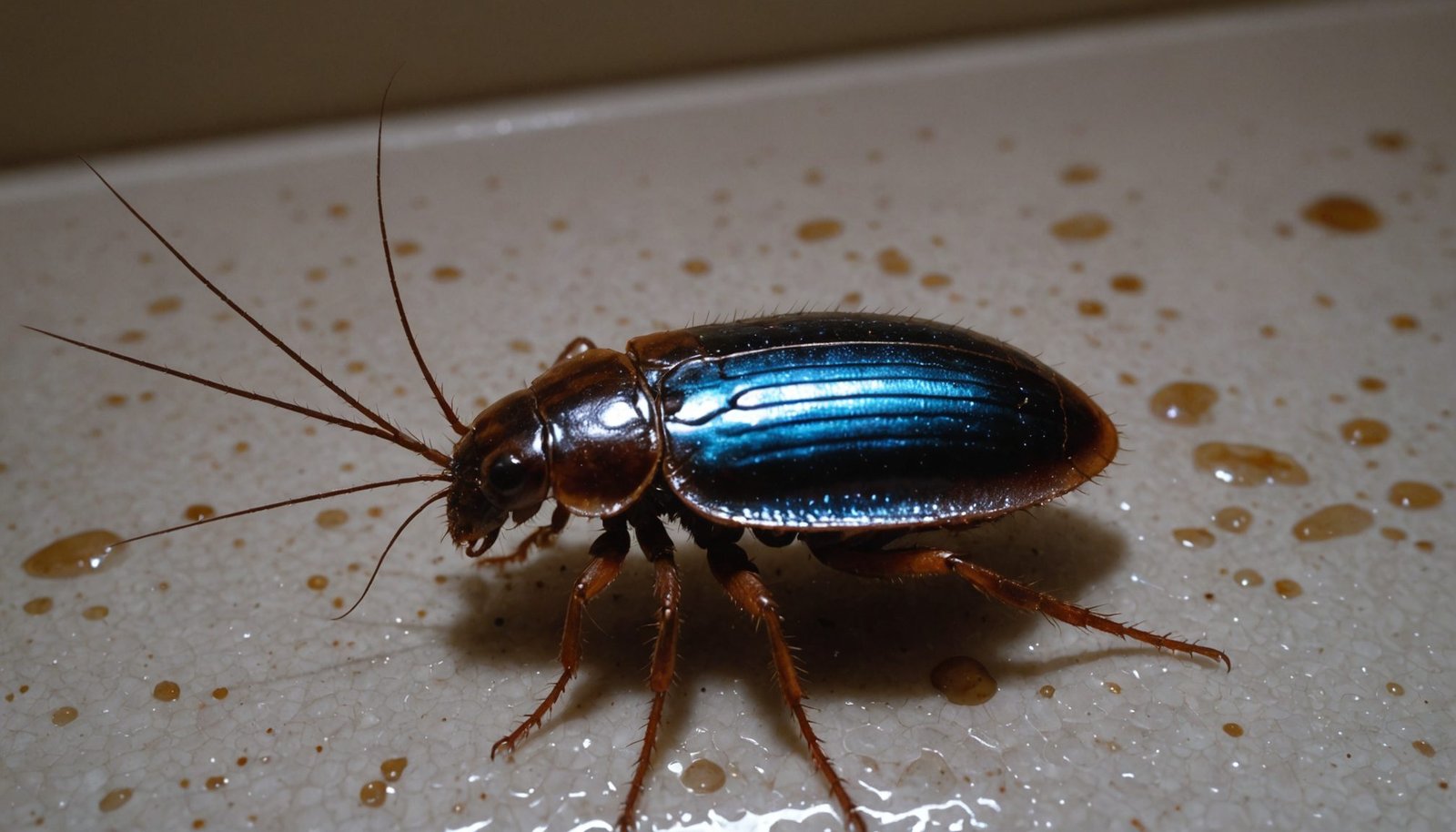
The environmental conditions in your home directly influence when and where you’ll encounter cockroaches. These pests thrive in temperatures between 70-90°F and humidity levels of 50-70%, making your indoor spaces an ideal habitat during extreme weather conditions.
- During heavy rainfall, you’ll notice more cockroaches indoors as they seek shelter from flooded outdoor areas.
- When humidity drops, they’ll gravitate toward damp spots in your kitchen and bathroom to avoid dehydration.
- They’ll become more active at night, avoiding light and taking advantage of higher nighttime humidity for foraging.
- You’ll see increased activity in cluttered, poorly sanitized areas where moisture and food debris accumulate, especially during warm seasons when their metabolism peaks. Female cockroaches will produce multiple egg cases during these optimal conditions, leading to rapid population growth.
Understanding Their Biological Clock
Much like humans, cockroaches operate on an internal biological clock that governs their daily routines and behaviors. Their circadian rhythms run on roughly 24-hour cycles, controlling everything from movement to learning abilities. Research using infrared sensor systems helps scientists track and understand these behavioral patterns in detail.
Cockroaches live by nature’s timekeeping, their daily activities guided by internal clocks that mirror our own biological rhythms.
You’ll notice cockroaches are most active at night, showing peak activity when darkness falls. Even in constant darkness, they’ll maintain this pattern through their internal clock.
What’s fascinating is that their ability to learn and remember is tied to these cycles – they’re better at learning new things during their active nighttime phase than during their rest period.
Their biological clock also influences social behaviors like mating and aggression. While social interactions can help coordinate timing within groups, each cockroach maintains its own independent internal rhythm that persists regardless of group living.
Light’s Impact on Cockroach Movement Patterns
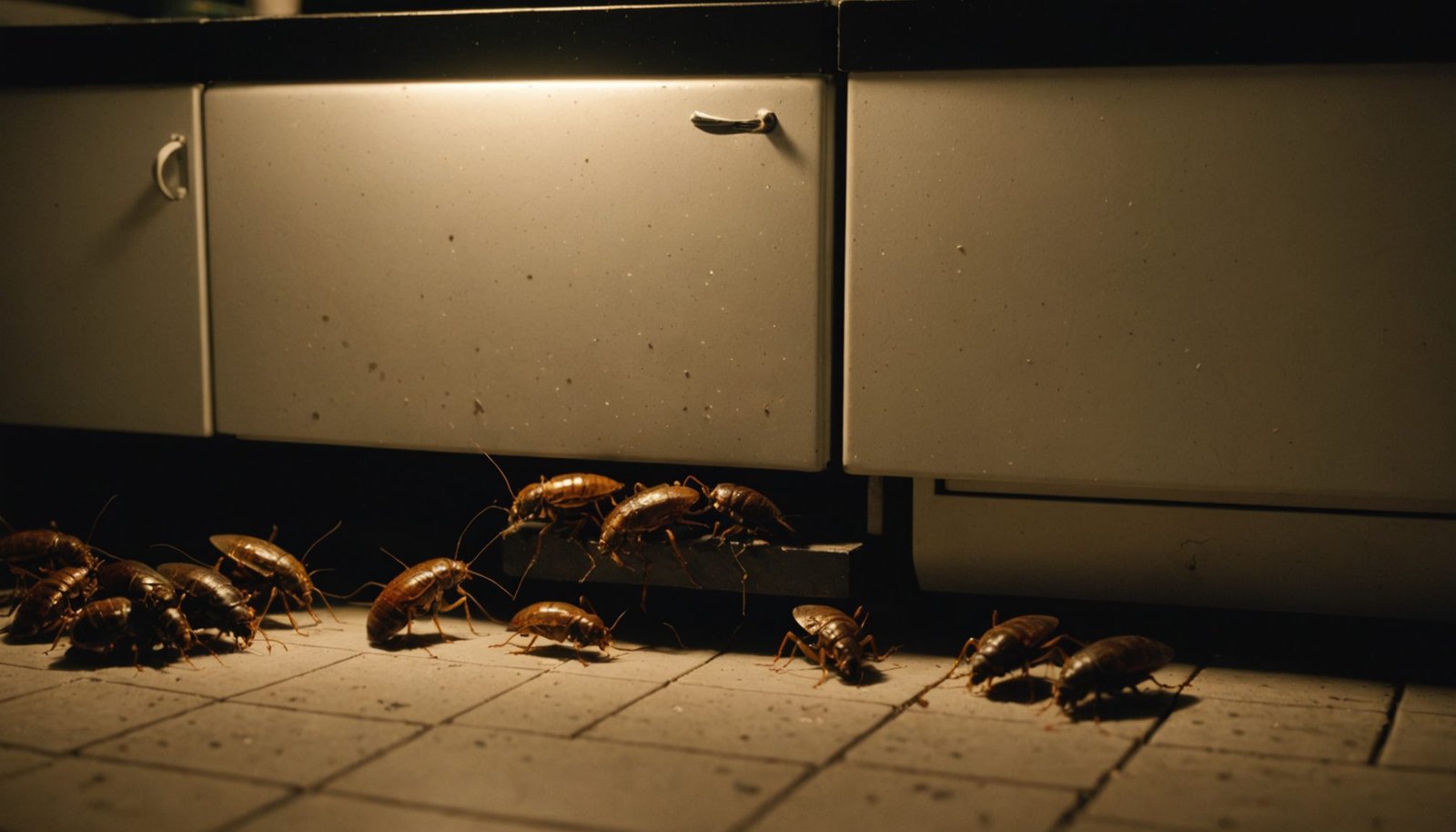
When observing cockroach behavior, you’ll quickly notice their strong aversion to light, known as negative phototaxis. Their sophisticated visual system, comprising both compound eyes and ocelli, enables them to detect even the faintest light changes and respond accordingly. Higher intensity lighting in urban environments causes cockroaches to seek concealed nesting locations.
- You’ll find cockroaches most active in low-light conditions, where they’ll readily explore and forage for food.
- They’ll immediately seek shelter when exposed to bright light, using their highly sensitive ocelli to detect light intensities as low as 0.003 lux.
- Watch how they respond to sudden light changes with startle responses, quickly running to dark hiding spots.
- You can observe their preference for quality dark refuges over poorly lit areas, as they’ll adjust their movement patterns based on available shelter options and environmental conditions.
Conclusion
You’ll find that cockroaches are masterful at adapting their behavior to survive. They’re driven by their internal clock to emerge at night, taking advantage of darkness while you’re asleep. Understanding their hiding patterns and biological rhythms can help you better control these pests. Remember, they’re seeking warm, dark, and humid spots in your home – knowledge that’s essential for effective prevention and management.
