
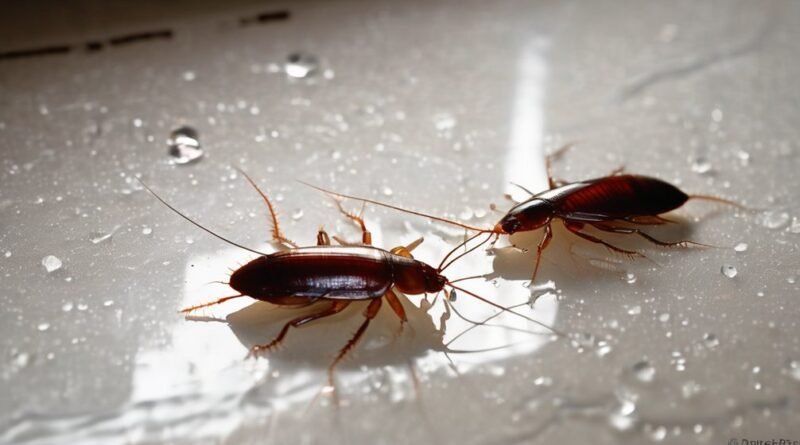
How Fast Do Cockroaches Reproduce?
Spotting one cockroach in your home is rarely the full picture. These insects rank among the most efficient reproducers of any common household pest, and the gap between a single roach and a full infestation is measured in weeks, not months, under the right conditions. A single female German cockroach can be responsible for hundreds of offspring in her lifetime, and a population can double in number every 48 days under optimal conditions. Understanding how fast cockroaches reproduce, which species breed fastest, and what conditions drive rapid population growth gives homeowners the information they need to act before colonies become entrenched.
Key Takeaways
- German cockroaches reproduce fastest, completing their lifecycle in 8-12 weeks and producing up to 400 offspring per female over her lifetime.
- Female cockroaches produce egg cases called oothecae containing an average of 35 eggs per capsule. Some species produce a new ootheca every 3-4 weeks under ideal conditions.
- Cockroach eggs hatch in approximately 28.6 days on average. Nymphs reach reproductive maturity in roughly 59.3 days after hatching.
- About 82% of cockroach nymphs survive to adulthood under optimal conditions, meaning nearly every egg produced contributes to population growth.
- A cockroach population can double in size every 48 days. One female entering your home already carrying a fertilized egg case can start a colony without any mating occurring indoors.
- Temperature between 70-80 degrees F, humidity above 70%, and access to food, water, and shelter are the primary drivers of rapid reproduction.
- Early inspection, consistent sanitation, and targeted treatments including Insect Growth Regulators (IGRs) are the most effective tools for disrupting colonies before populations multiply out of control.
Cockroach Species and Reproduction Rates
Not all cockroaches reproduce at the same speed. The four species most commonly found in homes and businesses differ significantly in how many eggs they produce, how quickly nymphs mature, and how rapidly colonies spread. Identifying which species is present is the first step toward understanding how fast a population can grow and which control methods will be most effective.
German Cockroach
The German cockroach (Blattella germanica) is the fastest-breeding and most prolific household roach species. Each female produces 4-8 oothecae over her lifetime, with each egg capsule containing 30-40 eggs. Under ideal conditions, a single female can generate up to 400 offspring. Adults reach reproductive maturity within days of the final molt, and the entire lifecycle from egg to reproducing adult completes in as little as 8-12 weeks. With multiple overlapping generations developing simultaneously, German cockroach populations spread and compound faster than most pest control interventions can keep pace with. The full timeline from egg to adult is covered in detail in the German cockroach life cycle breakdown.
German cockroaches concentrate in kitchens, bathrooms, and areas around appliances and sinks, where warmth, moisture, and food crumbs are consistently available. They are responsible for the majority of serious cockroach infestations in homes, restaurants, and food-handling businesses.
American Cockroach
The American cockroach (Periplaneta americana) reproduces more slowly but compensates with a long adult lifespan, sometimes reaching two years. Females produce 6-14 oothecae over their lifetime, each holding 14-16 eggs. Nymphs take 6-12 months to reach adulthood, progressing through 10-14 instars. The slower development rate limits how quickly populations multiply, but the extended reproductive window, combined with the American cockroach’s ability to produce oothecae steadily over many months, means infestations grow steadily and become deeply established in basements, walls, sewers, and utility areas before homeowners notice them. For a full stage-by-stage breakdown, the American cockroach life cycle covers each development phase in detail.
Oriental Cockroach
The Oriental cockroach (Blatta orientalis) is the slowest-reproducing of the common household species. Females produce 8-15 oothecae, each containing 12-18 eggs. Nymph development takes up to a year and is heavily influenced by seasonal temperature and moisture changes. Adults live only 5-26 weeks. Oriental cockroach populations grow more slowly and peak seasonally, typically in late spring and early summer, making pre-season intervention particularly effective. They favor cool, damp environments including crawl spaces, floor drains, and areas around leaking pipes. The Oriental cockroach life cycle explains how this species’ seasonal development pattern differs from faster-breeding species.
Brown-Banded Cockroach
Brown-banded cockroaches (Supella longipalpa) fall between the extremes of the German and Oriental cockroach in reproduction speed. Females produce 13-20 oothecae over their lifetime, each holding 10-18 eggs. Nymphs mature in approximately 90 days. Unlike other species, brown-banded females glue their egg cases to furniture, walls, ceilings, and inside cabinets across the entire home rather than concentrating near moisture sources. This dispersed egg-laying behavior makes inspection and treatment more challenging, as oothecae are spread throughout living spaces rather than clustered in a single harborage area.
| Species | Eggs per Ootheca | Oothecae per Lifetime | Nymph Stage | Time to Maturity |
|---|---|---|---|---|
| German | 30-40 | 4-8 | 40-65 days | 8-12 weeks |
| American | 14-16 | 6-14 | 6-12 months | 6-12 months |
| Oriental | 12-18 | 8-15 | ~10-12 months | Up to 12 months |
| Brown-Banded | 10-18 | 13-20 | ~90 days | 2-6 months |
The Lifecycle of a Cockroach
Cockroaches develop through incomplete metamorphosis, meaning they pass through three stages with no pupal phase: egg, nymph, and adult. Each stage has distinct characteristics that affect how quickly a population can grow and which treatments are most effective at disrupting the cycle. For a full breakdown of each species’ lifecycle timeline, see the cockroach life cycle by species guide.
Egg Stage and Ootheca Formation
After mating, female cockroaches produce an ootheca, a hardened protein egg capsule that protects developing embryos from physical damage, dehydration, and most household cleaning chemicals. The capsule is formed in the colleterial glands and hardens rapidly through a biochemical process, creating a tough exterior that resists surface sprays and cleaners. The average ootheca contains approximately 35 eggs across species, arranged in two rows within separate internal chambers. Understanding what these capsules look like and where females deposit them is essential for effective control, and a detailed visual guide to cockroach egg sacks and oothecae covers both identification and location patterns by species.
German cockroach females carry the ootheca attached to their abdomen until just before hatching, providing continuous protection. American cockroach females carry the case briefly before cementing it in a sheltered crevice near food and moisture. Brown-banded cockroach females glue cases immediately to surfaces throughout the home. Oriental cockroach females deposit cases in moist, sheltered locations early in incubation.
Because the ootheca’s hardened shell resists most common insecticides and cleaning products, treatments that target adult cockroaches alone consistently fail to eliminate an infestation. Hidden egg cases continue to hatch even after visible adults are killed, restarting the population cycle. Knowing exactly how many eggs a cockroach lays per capsule and over a lifetime helps explain why surface-only treatments so often fall short. This is one of the most important reasons professional cockroach control programs treat all life cycle stages simultaneously.
Incubation Period
Cockroach eggs hatch in approximately 28.6 days on average, though the range across species and temperatures is wide. German cockroach eggs incubate in roughly 28 days at 80 degrees F (27 degrees C). American cockroach eggs take 24-56 days depending on temperature. Oriental cockroach eggs incubate for 42-81 days. Brown-banded cockroach eggs take approximately 50 days at room temperature. The full picture of cockroach egg case hatch times, appearance, and early stage development shows how these timelines shift under different indoor conditions.
Temperature has a direct and significant effect on incubation speed. Warmer conditions accelerate hatching; cooler conditions extend it. At the upper end of the ideal range (near 86 degrees F), incubation times across all species can shorten by 30-40% compared to cooler indoor environments. Humidity also plays a role, the ootheca absorbs moisture through one end to maintain internal hydration for developing embryos, meaning very dry environments can reduce hatching success.
Nymph Development Stages
When eggs hatch, nymphs emerge as pale white, wingless miniatures of adults. They darken within hours as the exoskeleton hardens. Nymphs begin foraging immediately and are active from their first day outside the egg capsule. Knowing what these early-stage insects look like is important for early detection, which is why baby cockroach identification and nymph stages is a useful reference for anyone spotting small, unfamiliar insects in their home.
Growth occurs through a series of molts called instars. At each instar, the nymph sheds its old exoskeleton, briefly appearing pale and soft, then darkens as the new shell hardens. This temporary white appearance immediately after molting is what leads many people to confuse recently molted nymphs with a separate species. German cockroach nymphs pass through 5-7 instars over 40-65 days. American cockroach nymphs complete 10-14 instars over 6-12 months. Oriental cockroach nymphs molt up to 10 times over 10-12 months. Wing pads become visible in later instars but do not develop into functional wings until the final molt. The cockroach metamorphosis process from egg to adult explains how each instar progresses and what to look for at each stage.
Cockroaches reach reproductive maturity roughly 59.3 days after hatching on average across species, though German cockroaches achieve this faster and American cockroaches take considerably longer. About 82% of nymphs survive to adulthood under optimal conditions, meaning the overwhelming majority of each ootheca’s eggs contribute to population growth. Shed nymph skins left in crevices, behind appliances, and along baseboards are one of the most reliable early signs of an active infestation. Learning to identify cockroach nymphs at their earliest stages makes it far easier to catch infestations before they compound.
Factors Influencing Reproduction Speed
Cockroach reproduction rates respond strongly to environmental conditions. Understanding which factors drive rapid breeding allows homeowners to make targeted changes that slow population growth without waiting for a full infestation to develop.
Temperature and Humidity
Temperature between 70-80 degrees F (21-27 degrees C) creates peak breeding conditions for most species. Reproduction rates accelerate significantly as temperatures approach 80 degrees F, with female cockroaches producing oothecae more frequently and eggs incubating and hatching faster. Below 60 degrees F, development slows dramatically. Above 104 degrees F (40 degrees C), heat becomes lethal.
Humidity above 70% increases egg viability and nymph survival rates. This is why kitchens, bathrooms, and damp basements consistently produce the highest cockroach activity, the combination of warmth, moisture, and food access in these environments closely matches ideal breeding conditions. Oriental cockroaches are the most moisture-dependent and are rarely found far from a reliable water source.
Food, Water, and Shelter
Access to food and water directly controls how frequently females produce oothecae. Well-fed females with consistent water access can produce a new egg case every 3-4 weeks. Even small amounts of grease, crumbs, or standing water behind appliances, under sinks, or around drains provide enough resources to sustain rapid reproduction cycles. Cockroaches are not selective feeders. They consume food residue, cardboard, paper, soap, and organic debris, making kitchens and bathrooms with any level of sanitation lapse viable breeding environments.
Shelter quality shapes breeding success. Dark, tight crevices in walls, behind appliances, inside cabinets, and around pipes protect egg cases and molting nymphs from predators, desiccation, and surface-applied treatments. Females specifically seek out these protected spots for ootheca deposition, which is why gaps around plumbing, cracks along baseboards, and spaces behind appliances are the most critical areas to inspect and seal. Understanding what a cockroach nest looks like and how to find it helps identify exactly where breeding activity is concentrated.
Social Behavior and Pheromones
Social interaction within cockroach colonies accelerates reproduction in ways that many homeowners do not expect. Aggregation pheromones produced in fecal material draw both nymphs and adults into shared harborage sites, and physical contact between roaches stimulates hormone production that speeds up egg development cycles. The denser the colony, the faster individual females reproduce, up to a threshold where overcrowding begins to slow growth.
A single adult female entering a home already carrying a fertilized ootheca can establish a colony without any mating occurring indoors. This means even one roach spotted in a kitchen or bathroom warrants a thorough inspection of cracks, crevices, appliances, and cabinets for egg cases and nymph activity. The full mechanics behind this process are explained in the guide to how cockroaches reproduce and why it matters for infestation control.
Population Growth Dynamics
The mathematics of cockroach reproduction explain why infestations escalate so quickly and why early action is so consistently more effective than delayed response.
How Fast Populations Multiply
A cockroach population can double in size every 48 days under optimal conditions. In practical terms, this means a small group of 10 females, each producing oothecae on a 3-4 week cycle with 30-40 eggs per case and an 82% nymph survival rate, can generate thousands of roaches within a single season. German cockroach populations, where 75-80% of individuals at any given time are nymphs still developing toward reproductive maturity, demonstrate this compounding effect most clearly. A complete look at how the cockroach breeding cycle sustains and accelerates population growth explains why early treatment matters so much more than delayed response.
Overlapping generations accelerate the spread further. Because new oothecae are produced continuously while earlier nymphs are still developing, population growth is not linear. Each generation adds to a base that is already producing the next generation, creating exponential growth rather than steady linear increase. This is why a cockroach infestation that seems minor in spring can be severe and entrenched by summer without any visible change in the early stages.
Impact of Rapid Reproduction on Infestations
Rapid reproduction creates infestations that are qualitatively different from slower-breeding pests. By the time cockroach activity becomes visible, typically when overcrowding forces nymphs and adults into open areas during daylight, the population behind walls, under appliances, and inside cabinets is already large and well-established. The visible roaches represent a fraction of the actual colony.
Health risks scale with population size. Cockroach droppings, shed exoskeleton skins, saliva, and body parts are potent allergens linked to asthma and respiratory disease, particularly in children. Bacteria including salmonella and E. coli are spread across kitchen surfaces, food preparation areas, and stored food as populations grow. A larger colony contaminates more surfaces more rapidly, increasing both health risks and the difficulty of effective treatment. For a deeper look at the biology behind these risks, see the guide to cockroach biology and life cycle.
Environmental Conditions Affecting Growth
Beyond temperature and humidity, the broader environment of a property shapes how quickly cockroach populations can establish and spread. Several conditions directly increase or decrease breeding success.
| Factor | Ideal Conditions for Breeding | Impact on Reproduction |
|---|---|---|
| Temperature | 70-80 degrees F (21-27 degrees C) | Accelerates egg laying and incubation speed |
| Humidity | Above 70% relative humidity | Increases egg viability and nymph survival |
| Food | Crumbs, grease, organic debris | Increases ootheca production frequency |
| Water | Leaks, condensation, standing water | Essential for survival and reproduction |
| Shelter | Dark crevices, gaps, wall voids | Protects egg cases and molting nymphs |
| Sanitation | Cluttered, unwashed surfaces | Provides food resources and harborage sites |
Seasonal changes also drive reproduction cycles. Spring and summer warmth accelerates breeding across all species. Oriental cockroach populations, in particular, peak in late spring as overwintering nymphs mature and begin reproducing. American cockroach activity increases in summer as outdoor temperatures push populations into air-conditioned buildings through gaps around doors, windows, and entry points. During winter, indoor populations of German and brown-banded cockroaches continue reproducing year-round given the stable warmth of heated homes.
Methods to Control Cockroach Breeding
The most effective cockroach control programs address reproduction directly by targeting multiple life cycle stages simultaneously and eliminating the environmental conditions that sustain rapid breeding. Surface sprays targeting only visible adults leave egg cases and nymphs intact, restarting the population cycle within weeks.
Sanitation and Habitat Removal
Removing the resources that support reproduction is the most durable long-term prevention strategy. Fix leaks and eliminate standing water under sinks, around appliances, and in basements. Store food in airtight containers and clean up crumbs, grease residue, and food spills immediately. Empty pet food bowls overnight and keep garbage in sealed containers. Reduce clutter in storage areas, cabinets, and utility spaces, as stacked cardboard, paper, and debris provide both food and harborage for colonies.
Seal cracks and crevices along baseboards, around plumbing penetrations, behind appliances, and near entry points including gaps around doors, windows, and where pipes enter walls. These are the primary sites where females deposit egg cases and where nymph colonies establish earliest. A reduction in available harborage directly reduces breeding success even without any chemical treatment.
Targeted Treatments
When prevention alone is insufficient, targeted treatments that address all life cycle stages produce the most reliable results. Gel baits placed in crevices, along baseboards, and near harborage spots allow nymphs and adults to carry toxicant back to the colony, reaching individuals that never contact surface-applied products. Insect Growth Regulators (IGRs) are among the most effective treatments available specifically because they disrupt the reproductive cycle, preventing nymphs from molting into reproductive adults and blocking females from producing viable oothecae.
Residual insecticide dusts applied to wall voids, behind appliances, and around pipe penetrations target harborage areas that gel baits may not reach. Crevice vacuuming removes egg cases, shed skins, and nymph aggregations from tight spaces before treatment. For severe infestations, knowing how to get rid of cockroach eggs and nests safely and effectively is essential, as professional inspection is necessary to locate hidden egg cases that homeowners consistently miss, particularly for brown-banded cockroaches whose dispersed egg placement makes visual detection difficult without experience.
Professional Inspection and Integrated Management
Professional pest control services offer the most complete approach because they combine accurate species identification, targeted treatment of all life cycle stages, and scheduled follow-up timed to the cockroach lifecycle. A follow-up visit timed 2-3 weeks after initial treatment catches nymphs emerging from egg cases that survived the first application, breaking the breeding cycle before a new reproductive generation establishes. Integrated pest management programs that combine sanitation guidance, exclusion work around entry points and gaps, and multi-stage treatment plans consistently outperform single-application approaches for lasting population control. The full scope of what cockroach reproduction explained covers is useful context before beginning any treatment program, as understanding the cycle makes each intervention step more logical.
Frequently Asked Questions
How fast do cockroaches reproduce?
German cockroaches reproduce fastest, completing the full lifecycle from egg to reproducing adult in 8-12 weeks. A single female can produce up to 400 offspring over her lifetime through 4-8 oothecae of 30-40 eggs each. A cockroach population under optimal conditions can double in size every 48 days. American and Oriental cockroaches reproduce more slowly, taking 6-12 months to mature, but their longer adult lifespan sustains extended periods of egg production.
How many eggs does a cockroach lay at once?
Egg counts per ootheca (egg capsule) average approximately 35 across common species. German cockroaches produce 30-40 eggs per case. American cockroaches produce 14-16. Oriental cockroaches carry 12-18. Brown-banded cockroaches hold 10-18. The number of oothecae a female produces over her lifetime ranges from 4-8 (German) to 6-14 (American), giving a total lifetime egg production of up to 400 offspring for the most prolific species.
How long does it take for cockroach eggs to hatch?
Cockroach eggs hatch in approximately 28.6 days on average. German cockroach eggs incubate in about 28 days at 80 degrees F. American cockroach eggs take 24-56 days depending on temperature. Oriental cockroach eggs need 42-81 days. Brown-banded cockroach eggs take approximately 50 days. Warmer temperatures shorten incubation times significantly across all species.
Can cockroaches reproduce without mating?
Some cockroach species, including certain strains of German cockroach, can reproduce parthenogenetically, producing offspring without mating. However, this is not the primary reproduction mode for common household species. More practically relevant is the fact that a mated female can store sperm and produce multiple oothecae from a single mating event over many months. A female entering a home already carrying a fertilized egg case can establish a colony entirely without any further mating occurring indoors.
Which species of cockroach reproduces fastest?
The German cockroach is the fastest-reproducing of all common household species. It matures in 8-12 weeks, produces up to 400 offspring per female, and maintains populations where 75-80% of individuals are developing nymphs at any given time, evidence of continuous, overlapping reproduction. The brown-banded cockroach is the second fastest at roughly 2-6 months to maturity. American and Oriental cockroaches are the slowest at 6-12 months to reproductive maturity.
How does temperature affect cockroach reproduction speed?
Temperature is the single most powerful environmental driver of reproduction speed. Between 70-80 degrees F (21-27 degrees C), reproduction accelerates significantly across all species. Egg incubation shortens, nymph development speeds up, and females produce oothecae more frequently. Above 86 degrees F, incubation times shorten by 30-40% compared to cooler environments. Below 60 degrees F, development slows dramatically. Sustained temperatures below freezing are lethal to eggs and early nymphs of most species.
How can I slow down cockroach reproduction in my home?
The most effective steps combine habitat removal with targeted treatment. Fix leaks and eliminate moisture sources under sinks, around appliances, and in bathrooms and basements. Remove food access by cleaning crumbs and grease immediately, sealing food storage, and clearing organic debris. Seal cracks, crevices, and gaps around entry points, doors, windows, and plumbing. Apply gel baits in harborage areas and use IGRs to prevent nymphs from maturing into reproductive adults. Professional inspection adds the ability to locate and remove hidden egg cases that sustain populations through surface-level treatments.
Where do cockroaches lay their eggs?
Egg placement varies by species. German cockroach females carry the ootheca on their abdomen until just before hatching, depositing it in a sheltered crevice at the last moment. American cockroach females cement cases in warm, humid spots near food and water, including inside walls, under appliances, and near floor drains. Brown-banded cockroach females glue cases to furniture, walls, ceilings, and inside cabinets throughout the home. Oriental cockroach females deposit cases in moist outdoor or basement locations. In every case, oothecae are placed in dark, protected spots that are difficult to locate without a targeted inspection. The cockroach life cycle stages guide covers egg placement patterns alongside each developmental phase in greater detail.
Conclusion
Cockroaches reproduce faster than most homeowners realize until an infestation is already entrenched. A cockroach population that doubles every 48 days, with 82% of nymphs surviving to reproductive maturity, grows exponentially once conditions are right. German cockroaches are the most urgent threat, completing their lifecycle in 8-12 weeks and generating hundreds of offspring per female. American, Oriental, and brown-banded cockroaches reproduce more slowly but establish persistent colonies that spread through walls, floors, and utility areas over months. Adults also outlast what most people expect, and understanding how long cockroaches live gives important context for why populations remain active long after initial treatment.
The most effective response to rapid reproduction is early action. Eliminating moisture, food, and harborage removes the conditions that drive breeding. Targeted treatments with IGRs and gel baits disrupt the cycle at the nymph and egg stages, not just the adult stage. Professional inspection locates hidden egg cases that surface treatments miss. Homeowners who act at the first signs of cockroach activity, droppings, shed skins, oothecae, or a musty odor, consistently achieve faster, cheaper, and more lasting results than those who wait for visible populations to confirm a problem.
