
Cockroach Reproduction Explained, How Fast They Multiply and Why
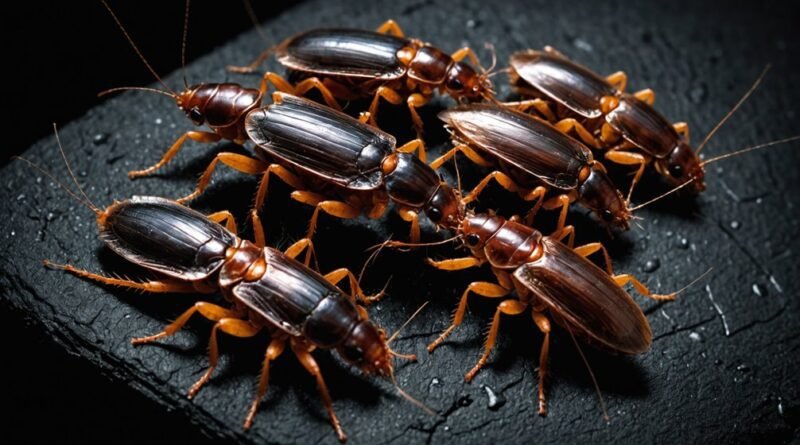
Cockroach reproduction is one of the primary reasons these pests are so difficult to eliminate. Each female produces oothecae — protective egg cases holding 16–50 embryos — and their lifecycle is built for speed. Eggs hatch in 3–8 weeks, nymphs start pale, molt 6–18 times, and some cockroach species reach adulthood in 70–100 days. German roaches carry 30–40 eggs and mature quickest; American and Oriental take months but thrive in moist habitats. Warmth (77–86°F), humidity, and cluttered, dark shelters fuel overlapping generations. If you’re seeing a few in your home, dozens more hide nearby — here’s how cockroach reproduction snowballs, what drives it, and what you can do to stop it.
Key Takeaways
- Cockroaches reproduce via oothecae — hard egg cases holding 10–50 embryos, which females carry or hide in humid, protected spots.
- Eggs hatch in 3–8 weeks; nymphs mature to adults in 2–12 months depending on species and conditions.
- German cockroaches multiply fastest: 30–40 eggs per ootheca, new adults in 70–100 days, with mating beginning almost immediately after the final molt.
- Warmth (77–86°F) and high humidity speed development, egg survival, and overlapping generations, making warm homes ideal breeding grounds.
- Hidden females and frequent ootheca production can turn a few roaches into thousands within 4–6 months, establishing a colony that’s hard to eradicate without professional pest control.
- Early inspection, sanitation, and targeted treatments that disrupt the cockroach life cycle at multiple stages are the most effective control strategy.
Life Cycle Stages: From Egg to Nymph to Adult
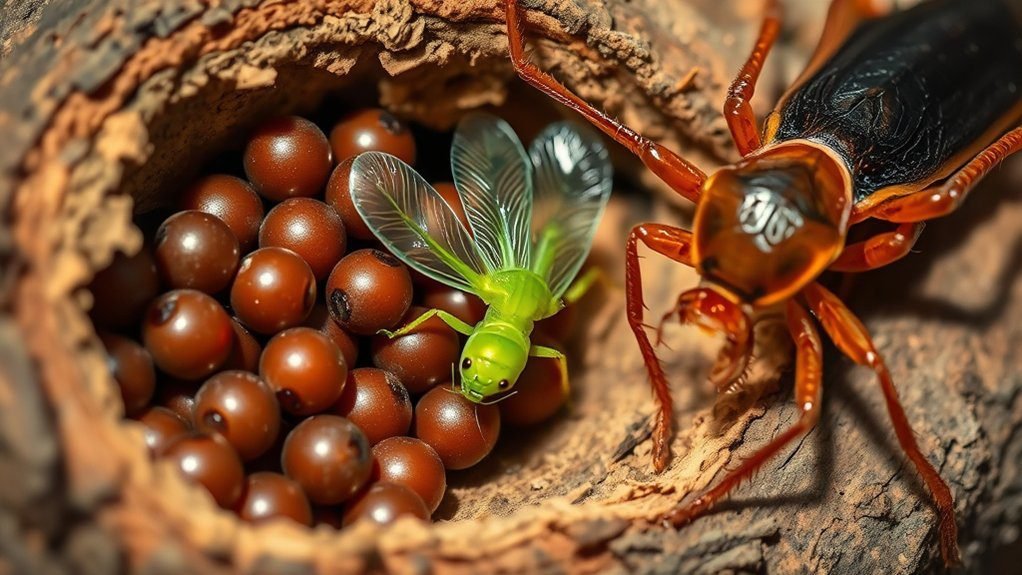
Although cockroaches undergo incomplete metamorphosis, their cockroach life cycle is straightforward: egg, nymph, and adult. You’ll see eggs incubate for about 6–8 weeks on average, though some species hatch in as little as 20 days or as long as 60. The speed of this lifecycle is what makes cockroach infestations so hard to contain once they take hold in a home or building.
Once nymphs emerge — sometimes called baby cockroaches — they’re pale or white at first, then darken as the cuticle hardens. During the nymph stage, growth happens through repeated molts. Depending on species, nymphs shed 6–18 times; after each molt, they briefly look white again. Identifying cockroach eggs early is crucial for effective infestation control.
Nymphs are wingless but progressively develop adult features, resembling smaller adults with each molt. Timing varies widely: German cockroaches can reach adulthood in about 103 days under ideal conditions, brown-banded often mature in 5–6 months, American cockroaches take roughly 600 days, and Oriental nymphs may need 300–800 days. Warmer temperatures, adequate humidity, and steady food shorten development. After the final molt, adults gain wings (in most species), sexual maturity, and begin mating and reproducing quickly — often within days.
Mating and Breeding Behavior
Mating in cockroaches involves a combination of chemical signaling and physical contact. Males detect pheromones released by receptive females and initiate courtship — a brief but essential stage in the breeding process. In German cockroaches, males become ready to mate within 6–10 days of their final molt, while females are receptive 4–6 days after adulthood. Remarkably, some species — including American, Oriental, and German cockroaches — can reproduce through parthenogenesis, meaning females can produce viable eggs without males present at all, though with reduced genetic diversity. This behavior allows a single gravid female introduced into a new home to seed an entire colony without any additional mating.
Ootheca Basics: What Egg Cases Are and How They Differ by Species
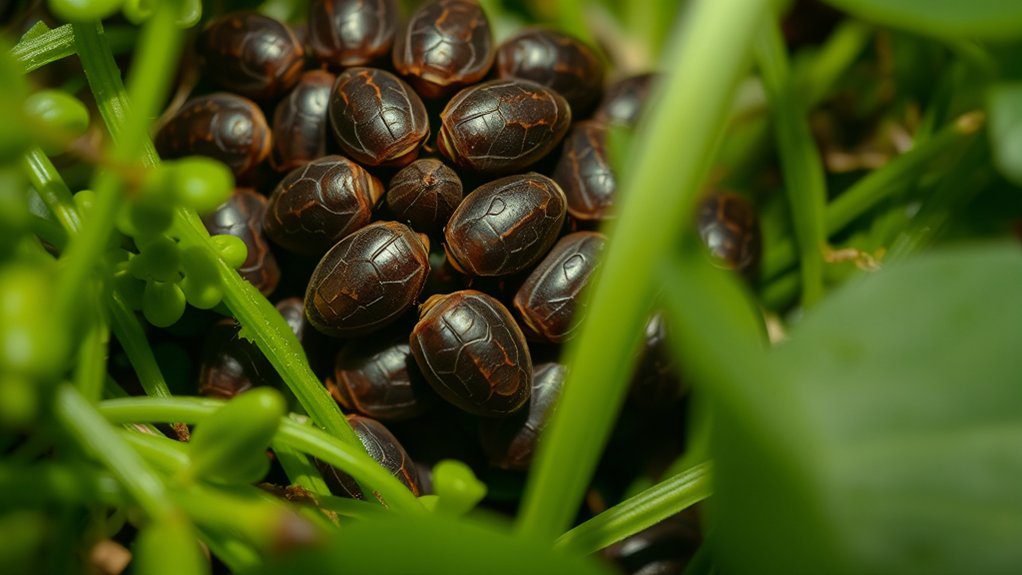
Once adults reach sexual maturity, cockroach reproduction hinges on a distinctive egg case called an ootheca. You can think of it as a protein-based capsule that groups many embryos into one protective package. Structural proteins and tanning agents harden the shell into a leathery barrier that resists drying, microbes, and predators. Most cases measure roughly 5–10 mm, with bean- or purse-like shapes and either smooth or ribbed textures — an adaptation that evolved to boost survival. Oothecae are typically 5–10 mm long, small and capsule-like, with colors ranging from light brown to nearly black.
You’ll notice species-level differences in color, size, and handling — understanding these is key to effective inspection and cockroach control. Some females carry the case until hatching; others stash it in hidden, humid spots near food and moisture, sometimes gluing it in place on furniture, inside cabinets, or along the body of appliances. Over a lifetime, a female may produce several to dozens of cases, depending on conditions — a key reason why even a small cockroach infestation can become a serious problem.
| Species/Type | Typical Size | Notable Traits |
|---|---|---|
| American | ~8 mm | Dark, tough; 14–16 eggs; deposited |
| German | ~6–9 mm | Light, ribbed; 30–50 eggs; carried |
| Oriental | 8–10 mm | Dark, inflated; ~16 eggs; placed |
| Brown-banded | ~5 mm | Small; 10–18 embryos; attached indoors |
| Florida woods | Larger | Dark; outdoor, moist habitats |
Where to Find Egg Cases During Inspection
During an inspection, check behind appliances, inside cabinet cracks, under sinks, along baseboards, in basements and crawl spaces, and near any debris or mulch at the building‘s foundation. Brown-banded cockroaches notably place their cases high up — on furniture, ceilings, and walls — while German and American roaches concentrate theirs in damp, dark areas near food sources. Finding and removing oothecae is one of the most important steps in breaking the cockroach life cycle before babies — the next generation of baby cockroaches — can hatch and grow the colony.
Species Snapshots: German, American, Oriental, and Brown-Banded Reproduction
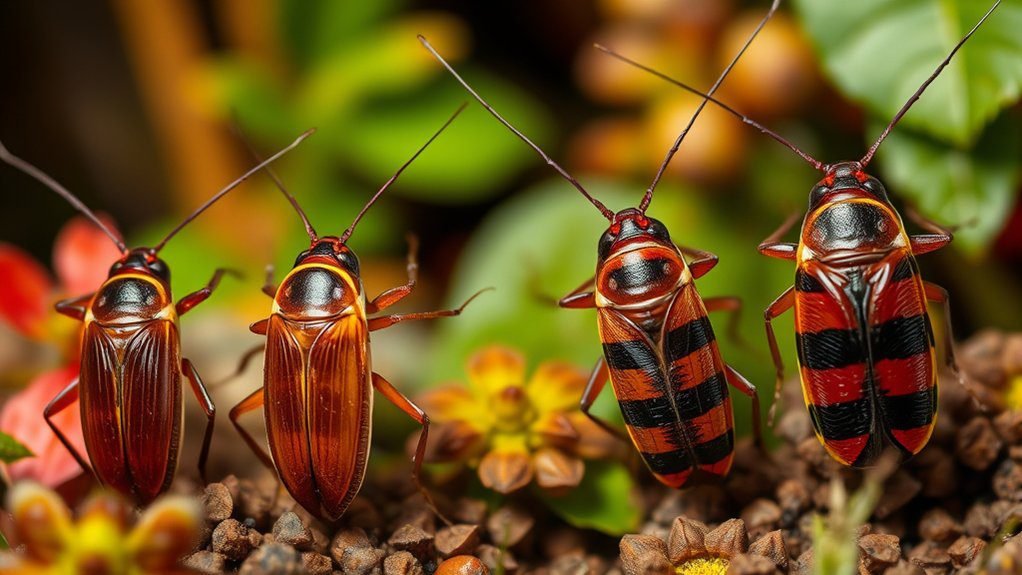
While all cockroaches rely on oothecae, the big four pest species diverge in speed, clutch size, and where they stash (or carry) their egg cases. Understanding these differences by cockroach species helps target pest control and inspection efforts more effectively.
All roaches use oothecae, but cockroach species differ in breeding speed, clutch size, and egg-case behavior — key information for targeted pest control.
You’ll meet German roaches first: females keep their oothecae until hatching, packing 30–40 eggs per case and producing 4–6 in a lifetime. They’re ready to breed days after adulthood, and nymphs reach maturity in roughly 40–60 days — the fastest lifecycle of any common cockroach species, which is why German cockroach infestations escalate so rapidly in homes and commercial buildings.
American roaches drop 14–16-egg cases in warm, hidden spots; nymphs emerge in 6–8 weeks but need 6–12 months to mature. Males typically have longer wings than females, a sexual dimorphism seen across common pest species. Their preferred habitat — sewers, crawl spaces, and damp basements — gives them access to consistent food, water, and shelter for sustained colony growth.
Oriental roaches place 16-egg cases in damp, dark areas; their nymphs take 10–12 months to become adults. Brown-banded roaches glue smaller 10–18-egg cases high on dry surfaces; nymphs mature in 2–6 months. Their behavior of attaching cases to furniture and walls makes them especially hard to detect without a thorough inspection.
- You notice oothecae tucked in steamy locations or glued near ceilings
- You realize one hidden female can seed rooms with future hatchlings and build a colony from scratch
- You feel urgency to locate and remove egg cases early — before eggs hatch and baby cockroaches disperse
Timing and Multiplication: How Fast Populations Explode
Two facts drive cockroach booms: big egg batches and short development clocks. A single female drops an ootheca roughly monthly, packing 16–50 eggs depending on species. Eggs hatch in weeks to two months, and high hatch counts kick-start rapid growth. Because females produce multiple oothecae across their lives, each generation builds on the last — creating a compounding population effect that’s one of the hardest problems in pest control.
You feel the surge when nymphs mature fast. German cockroaches can reach adulthood in about 70–100 days; others take longer, but all pass through 5–13 molts, then females begin mating and breeding almost immediately. That timing fuels exponential multiplication: one gravid female can seed an infestation, her offspring mature within 2–4 months, and then their broods stack on top. Visible roaches often mean 50–100 are hidden in the same environment; by 4–6 months, counts can hit 500–1,000+, and the colony spans multiple areas of the home or building.
Overlapping generations prevent pauses — adults, subadults, and new nymphs reproduce in parallel. With lifespans ranging from months to a year, females can yield hundreds of descendants, sustaining relentless growth. Professional pest control can disrupt all stages of this cycle to slow or stop population explosions before the colony becomes entrenched.
Environmental Drivers: Temperature, Humidity, and Habitat Preferences
Even before you see a roach, temperature, humidity, and shelter are deciding how fast they’ll multiply. The environment inside your home directly controls the speed of the cockroach lifecycle — which is why the same species can take dramatically different amounts of time to mature depending on where they’ve established their habitat.
Warmth speeds everything up: German cockroaches surge between 77–86°F, while American cockroaches push hardest above 82°F. As temperatures climb, densities rise — until extremes stall eggs and kill nymphs. When outdoor conditions turn harsh, American cockroaches migrate indoors for stable heat and moisture, moving from sewers and crawl spaces into living areas through plumbing and drains. American cockroaches can live an exceptionally long time, with a life cycle from egg to adult averaging about 600 days and adults surviving up to 400 more.
Humidity is the other throttle. Around 70% relative humidity boosts American cockroach survival and egg success. Moist basements, sewers, and drains turn into nurseries, especially for Oriental and American species that lose water quickly through their exoskeleton. Dry zones slow many species, though brown-banded roaches exploit warm, dry ceilings and upper cabinets — their preferred indoor habitat.
Shelter seals the deal. Dark, tight, food-adjacent harborage — clutter, cracks, pipes, sinks, appliances, furniture, and debris — creates safe microclimates and nonstop resources. German roaches crowd together, which stabilizes conditions, speeds development, and accelerates mating. The aggregation pheromones that draw cockroaches into tight locations are also the same signals that coordinate breeding, making established colonies exponentially more productive than isolated individuals. Humans, pets, and family members are all at risk when these colonies take hold in shared living spaces — not just from the bugs themselves but from the bacteria, allergens, and pathogens they spread as they forage for food.
Improve sanitation, fix leaks, and seal gaps to starve, dry, and expose them. Removing debris, clearing mulch from the building perimeter, and addressing moisture in crawl spaces reduces the outdoor habitat that feeds indoor colonies.
- Fix the drip — humidity is the most powerful driver of colony survival
- Clear the clutter — every dark corner is a potential breeding location
- Seal the gaps — cockroaches only need 3/8 inch to establish a new harborage
Signs of Cockroach Reproduction and When to Act
Catching cockroach reproduction early requires knowing what to look for. The most reliable signs of active breeding in your home or building include:
- Oothecae or egg cases — found behind appliances, inside cabinets, in crawl spaces, near debris, or attached to furniture
- Baby cockroaches — pale, tiny nymphs near food sources or water; their presence confirms active hatching
- Molted skins — shed exoskeletons in harborage areas indicate a growing colony
- Droppings — dark specks resembling pepper along baseboards, inside cabinets, and behind appliances
- Musty odor — colony pheromones create a distinctive smell in enclosed spaces
If you find any of these signs, the information most experts agree on is this: act immediately. Each week of delay allows another breeding cycle to progress. For a moderate cockroach infestation, professional pest control that targets oothecae, nymphs, and adults simultaneously — using gel baits, Insect Growth Regulators (IGRs), and targeted residuals — is the most effective solution. IGRs specifically disrupt the cockroach life cycle by preventing nymphs from molting into reproductive adults, cutting the colony‘s breeding capacity at its source. A thorough inspection by a pest control professional will identify all active harborage locations, egg case locations, and the cockroach species present — giving you the right control strategy for your specific problem.
Frequently Asked Questions
Can Cockroaches Reproduce Without Males, and Which Species Can Do This?
Yes — this is called parthenogenesis. Some cockroaches do reproduce without males. You’ll find this behavior in American, Oriental, and German cockroaches, plus Surinam and some Nocticola species; others occasionally attempt it, with limited success and reduced genetic diversity. From a pest control standpoint, this means a single female transported into a new home on furniture, packaging, or appliances can establish a colony entirely on her own.
How Long Can Females Store Sperm and Still Produce Eggs?
They can store sperm for months — often up to about six. You’ll see females use spermathecae to release sperm as needed, fertilizing successive oothecae. Species and conditions matter; warmer, ideal environments and healthy anatomy extend viable storage and output, meaning a single mating event can fuel months of continuous reproduction and colony growth.
Do Household Cleaning Products Affect Cockroach Fertility or Egg Viability?
They generally don’t. Your household products won’t reduce cockroach fertility or destroy egg cases. They may contaminate baits and reduce feeding. Use Insect Growth Regulators to disrupt development, and pair sanitation with baits for effective, long-term population control. This is one area where humans often underestimate the problem — surface cleaning feels like action but doesn’t address oothecae hidden deep in the environment.
Can Cockroaches Interbreed Across Different Species Successfully?
They rarely can. You’ll see most cockroach species blocked by mismatched genitalia, behaviors, and genetics. Closely related roaches sometimes hybridize, producing viable — but often less fertile — offspring. A few pairs yield fertile hybrids, but successful, stable breeding across species is uncommon in real-world infestations.
How Do Pest Treatments Target Oothecae Versus Live Nymphs and Adults?
You target oothecae with IGRs, residuals at deposit sites, and physical removal during inspection; you hit nymphs with baits, contact sprays, and IGRs; you control adults using baits, contact insecticides, sanitation, exclusions, and strategic placements along travel paths. A complete cockroach control program — one that addresses all three stages of the lifecycle simultaneously — is the only reliable solution for eliminating an established colony and preventing re-infestation. Call a licensed pest control company if DIY treatments haven’t resolved the problem within two to three weeks.
Conclusion
You’ve seen how cockroaches race from egg to nymph to adult, how oothecae protect future broods, how mating and breeding behaviors drive colony growth, and how each cockroach species reproduces differently. Now you know why warm, damp, cluttered spaces supercharge their lifecycle and turn a few intruders into a population boom. If you spot early signs — egg cases, shed skins, baby cockroaches, or droppings near food sources — act fast. Seal entry points, reduce moisture and food, eliminate debris and clutter, and bring in targeted treatments. Stay vigilant with regular inspection, and you’ll keep their multiplying machine in check before a manageable problem becomes a full cockroach infestation.
