
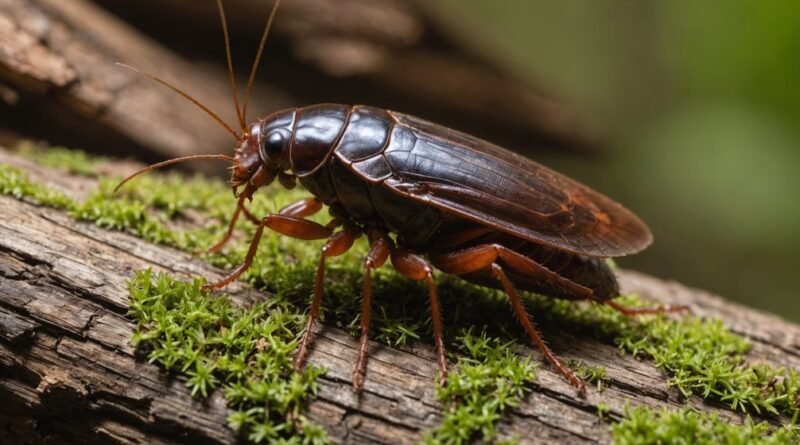
What Is a Palmetto Bug? Florida Woods Cockroach Explained
A palmetto bug is a cockroach — specifically, a large outdoor cockroach species common to the southeastern United States. Around 62% of households in the southeastern U.S. encounter palmetto bugs annually, palmetto bugs can grow up to 4.3 centimeters in length, and they can survive without food for nearly 28 days under harsh conditions. The term “palmetto bug” is not a scientific name — it is a regional nickname applied to several large cockroach species found near palmetto trees and humid outdoor environments. The Florida woods cockroach (Eurycotis floridana) is the species most directly associated with palmetto habitats, but the American cockroach and smokybrown cockroach are also commonly called palmetto bugs throughout the Southeast.
Key Takeaways
- A palmetto bug is any large outdoor cockroach in the southeastern U.S. — most often the Florida woods cockroach, American cockroach, or smokybrown cockroach.
- Palmetto bugs can grow up to 4.3 centimeters in length and are among the largest cockroach species found in American homes.
- Around 62% of households in the southeastern U.S. encounter palmetto bugs annually — far more than households in northern states.
- Palmetto bugs live up to approximately 9 months in urban environments, are mostly nocturnal, and prefer warm, humid outdoor habitats near palmetto trees, leaf litter, and mulch beds.
- They can survive without food for nearly 28 days, making starvation an ineffective control strategy — exclusion, moisture control, and targeted treatment are required.
What Is a Palmetto Bug?
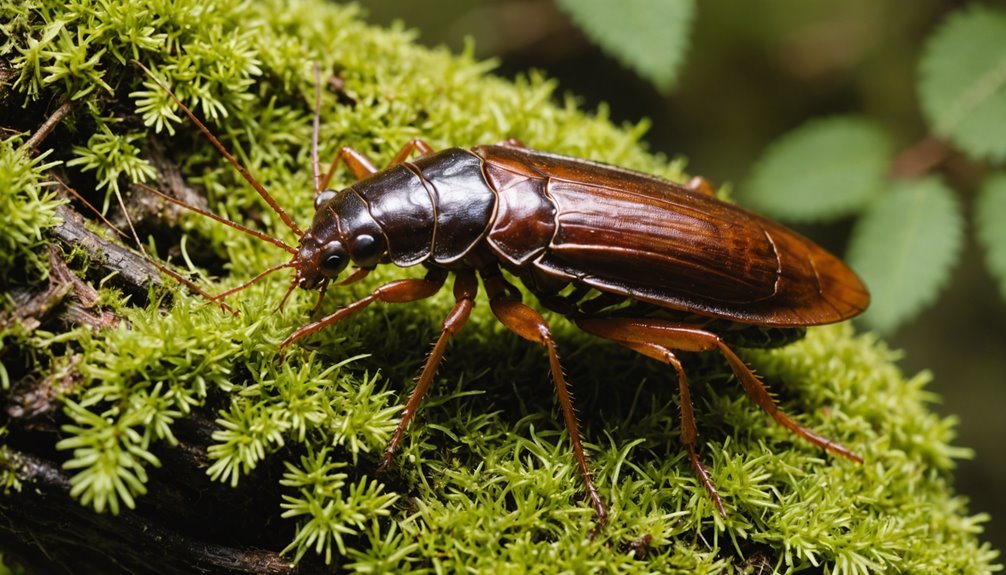
Palmetto bug is a colloquial southern term for large outdoor cockroach species native to the southeastern United States. The name comes from these insects’ association with the sabal palmetto — the state tree of both Florida and South Carolina — where large cockroach species shelter in the distinctive boot-shaped leaf base debris. Scientists do not recognize palmetto bug as a biological classification. Every palmetto bug belongs to the family Blattodea, the same insect family as all cockroaches.
Three species are most commonly called palmetto bugs. The Florida woods cockroach (Eurycotis floridana) is the original palmetto bug — a large, dark reddish-brown to nearly black species that lives directly in palmetto tree habitats and produces a distinctive foul-smelling defensive spray. The American cockroach (Periplaneta americana) is the species most widely called a palmetto bug across the broader Southeast — reddish-brown with a yellowish figure-eight head marking, capable of flight, and frequently found near drains and sewers. The smokybrown cockroach (Periplaneta fuliginosa) rounds out the three — uniform dark brown, a strong flier, and concentrated in tree holes, woodpiles, and gutters. All three share the same large body size, outdoor preference, and nocturnal behavior that earned them the palmetto bug label. See our full palmetto bug vs cockroach comparison for how each species differs in size, color, and behavior.
What Does a Palmetto Bug Look Like?
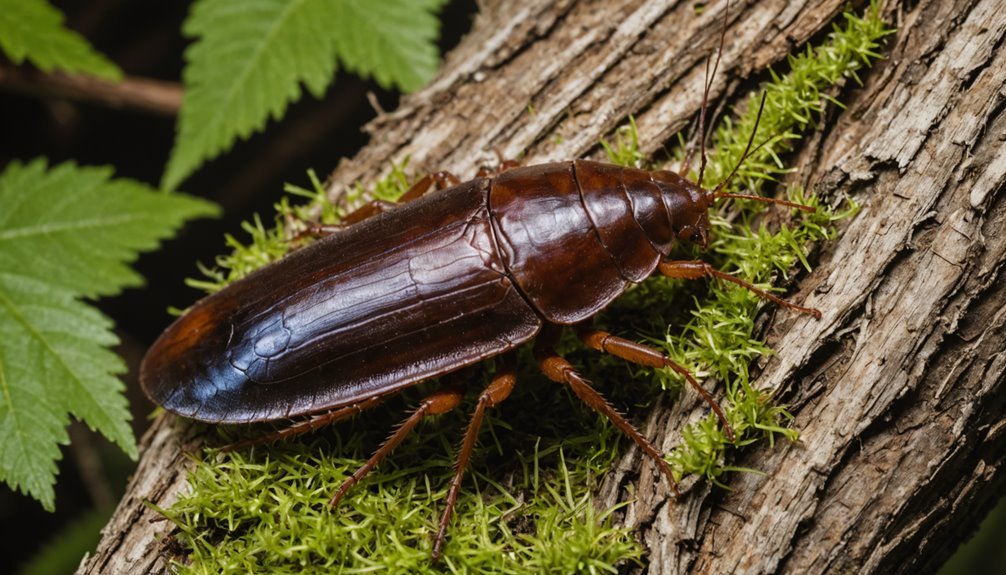
Palmetto bugs can grow up to 4.3 centimeters in length — roughly twice the size of a German cockroach and among the largest cockroach species encountered in American homes. The Florida woods cockroach specifically has a broad, flat, glossy body in dark reddish-brown to nearly black coloration with only vestigial wing pads, making it completely flightless. This is the most distinctive identification feature: if the large brown roach you spotted cannot fly, it is almost certainly a Florida woods cockroach.
The American cockroach, also called a palmetto bug, is similarly large at 35 to 53mm with a reddish-brown body and a clear yellowish figure-eight marking on the head. It has fully developed wings and can fly short distances when startled. The smokybrown cockroach is uniform dark mahogany-brown with no head markings and is a regular flier. All three species have long, threadlike antennae roughly equal to body length, spiny legs, and the flattened oval body shape typical of cockroaches.
Florida Woods Cockroach vs American Cockroach
These two species are most commonly confused because both are large, dark, and called palmetto bugs in Florida. The Florida woods cockroach is stockier, darker (near-black in many individuals), and has small non-functional wing pads — it never flies. The American cockroach is slightly longer, distinctly reddish-brown with the yellow head marking, and flies when disturbed. If you saw it fly, it is American. If it moved only by running, it is almost certainly Florida woods cockroach.
Where Palmetto Bugs Live
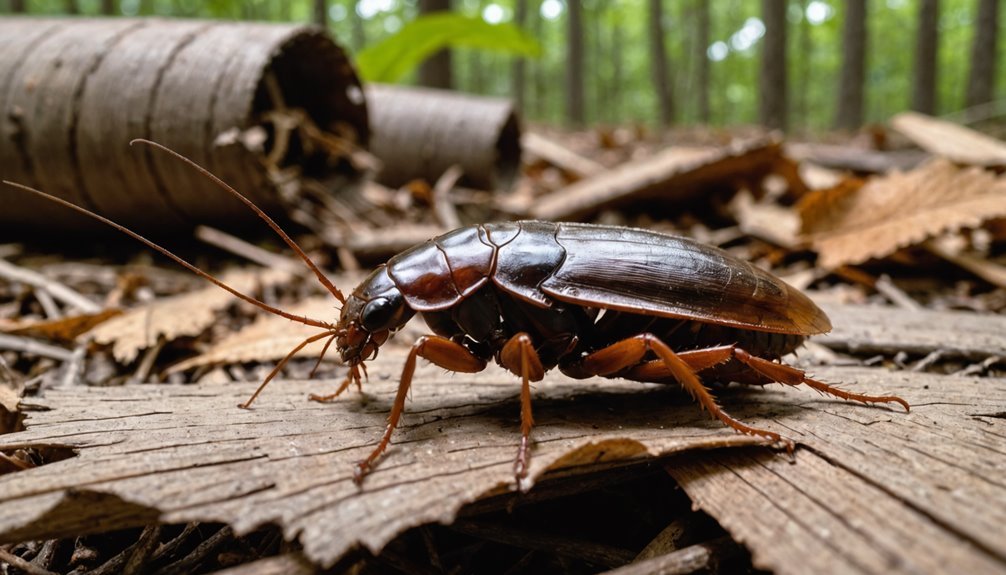
Palmetto bugs live outdoors in warm, humid environments with abundant organic debris. Palmetto trees, mulch beds, leaf litter, woodpiles, rotting logs, and tree holes are their primary habitats. Around 62% of households in the southeastern U.S. encounter palmetto bugs annually — concentrated in Florida, Georgia, South Carolina, Alabama, Mississippi, Louisiana, Texas, and coastal North Carolina where the subtropical climate sustains outdoor populations year-round. They are peridomestic insects, meaning they live near human structures rather than inside them.
Palmetto bugs enter homes accidentally rather than intentionally colonizing them. Entry routes include gaps around pipe penetrations, worn door sweeps, foundation cracks, floor drains, and open doors during nocturnal foraging. They can survive without food for nearly 28 days, which explains how they persist in outdoor environments through dry periods and why eliminating food sources alone cannot remove an established outdoor population. Once inside, they dehydrate and die within 48 to 72 hours — a single indoor sighting is almost always an accidental wanderer rather than an established infestation.
Seasonal Activity and Climate Effects
Palmetto bug activity follows seasonal temperature patterns closely. Peak activity occurs from late spring through early fall — May through October in most southeastern states — when warm temperatures and high humidity support maximum population density and foraging range. Palmetto bugs are mostly nocturnal throughout their active season, emerging after dark to forage and sheltering in mulch beds, leaf litter, and tree bases during daylight.
How Climate Affects Palmetto Bugs
Warmer climates extend palmetto bug activity seasons significantly. In Florida and coastal Gulf states, mild winters keep palmetto bugs active outdoors nearly year-round, with only brief cold snaps driving them toward heated building perimeters. In more temperate states like North Carolina and Virginia, populations become nearly dormant in winter and re-emerge with spring warming. Urban heat islands in cities like Miami, Tampa, and New Orleans extend active seasons past what surrounding rural areas experience. Climate warming trends are gradually expanding the northern range of Florida woods cockroach and smokybrown cockroach populations, increasing palmetto bug encounters in areas where they were previously rare. Heavy summer rainfall intensifies indoor entry events by flushing outdoor populations from ground-level harborage toward building foundations simultaneously.
Are Palmetto Bugs Dangerous?
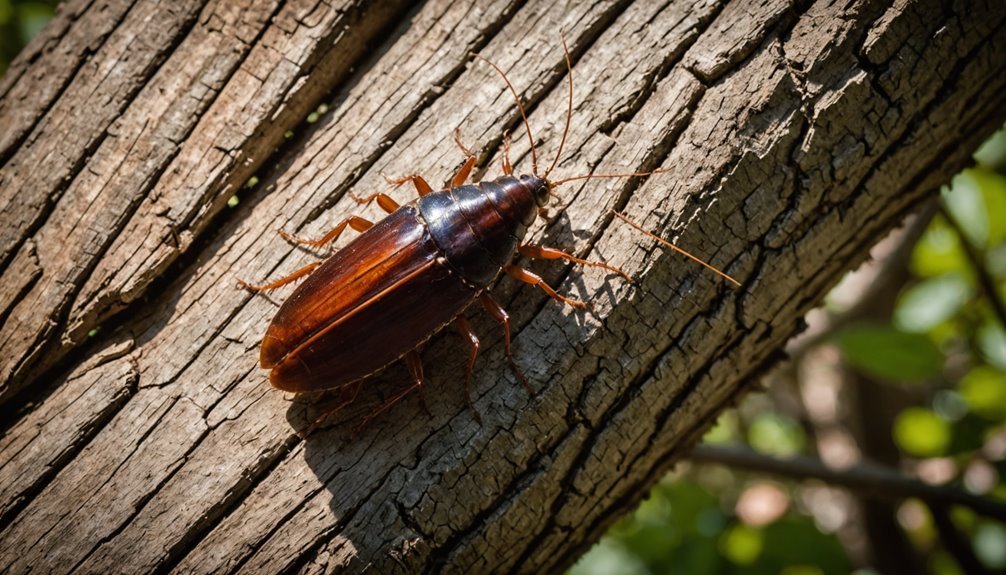
Palmetto bugs are not dangerous in the direct sense — they do not bite under normal circumstances and are not venomous. Their primary health risks are indirect. They carry bacteria including E. coli and Salmonella on their bodies and deposit these pathogens on surfaces as they move through kitchens and food storage areas. Allergens from their droppings, shed skins, and body fragments trigger asthma and allergic reactions in sensitive individuals, particularly children.
The Florida woods cockroach has one additional risk: when threatened, it sprays a foul-smelling sulfurous secretion containing E-2-hexenal that can reach up to three feet and causes mild skin irritation and significant eye pain on direct contact. This spray is what earned the species the nickname stink roach or skunk roach. It is a defensive mechanism rather than an aggressive behavior — stepping on or disturbing a Florida woods cockroach in leaf litter or woodpiles can trigger the response without any direct handling. Palmetto bugs live up to approximately 9 months in urban environments, during which time a single individual can deposit substantial allergen-generating material in and around a home.
How to Get Rid of Palmetto Bugs
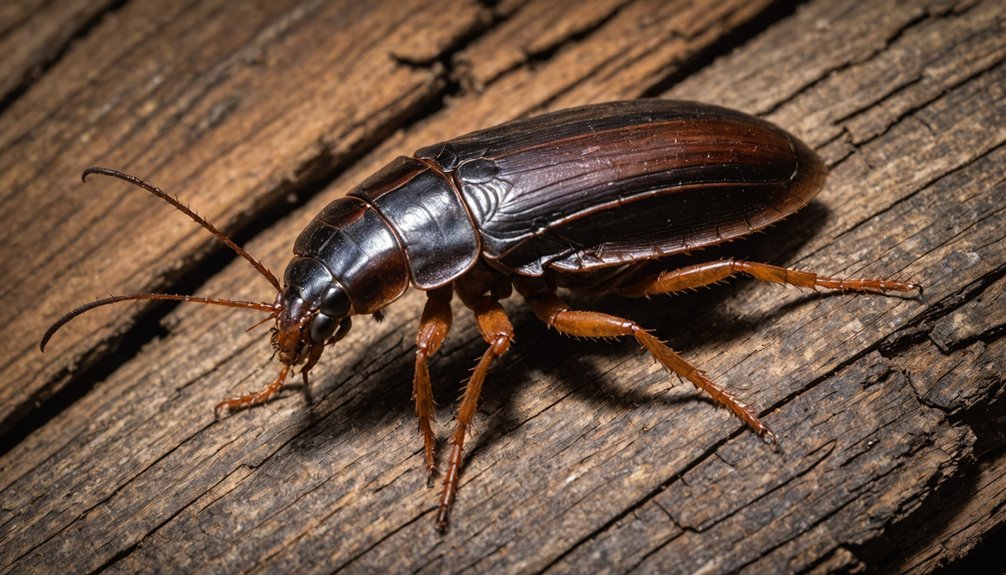
Getting rid of palmetto bugs requires addressing outdoor harborage conditions before deploying any interior treatment. Because they die indoors within 48 to 72 hours on their own, the goal is preventing entry rather than treating an interior infestation.
Outdoor habitat reduction: Clear mulch and leaf litter at least 6 inches away from the foundation. Move woodpiles at least 20 feet from the structure. Remove rotting logs, stumps, and organic debris from the foundation perimeter. These measures reduce the outdoor population density adjacent to entry points.
Structural exclusion: Seal all cracks around pipe penetrations, door and window frames, and foundation edges with silicone caulk. Install door sweeps on all exterior doors. Cover dryer vents and attic vents with fine mesh screens. Fix all leaky pipes and eliminate standing water near the foundation — palmetto bugs can survive without food for nearly 28 days but cannot survive long without water.
Lighting: Switch white porch and security lights to yellow or warm-spectrum LED bulbs. White light attracts flying male palmetto bugs during spring and summer mating season. Yellow light significantly reduces this attraction.
Chemical treatment: Perimeter residual insecticide applied around the foundation in spring before peak activity, combined with boric acid dust in crawl spaces and wall voids, provides direct population suppression for persistent infestations near wooded properties. Professional pest control assessment is appropriate when entry continues despite exclusion and outdoor habitat reduction.
Frequently Asked Questions About Palmetto Bugs
What Exactly Is a Palmetto Bug?
A palmetto bug is a large outdoor cockroach species common to the southeastern United States — most often the Florida woods cockroach, American cockroach, or smokybrown cockroach. The term is a regional nickname with no scientific meaning. Around 62% of southeastern households encounter them annually. Every palmetto bug is a cockroach belonging to family Blattodea.
Are Palmetto Bugs Dangerous to Humans?
Palmetto bugs are not directly dangerous — they do not bite under normal circumstances. Their risks are indirect: surface contamination with bacteria, allergen exposure from droppings and shed skins, and the Florida woods cockroach’s defensive spray which can irritate skin and eyes. They are not venomous and do not transmit disease through biting. The spray of the Florida woods cockroach is the species’ most distinctive and unpleasant characteristic but causes only temporary irritation rather than serious harm.
Can Palmetto Bugs Fly?
Some species can, others cannot. The Florida woods cockroach is entirely flightless despite having vestigial wing pads — if the palmetto bug you saw flew, it is not a Florida woods cockroach. American cockroaches and smokybrown cockroaches have functional wings and fly short distances when startled or during warm-weather dispersal. Flying palmetto bugs are most commonly spotted during late spring and summer mating season when males fly toward light sources at night.
Why Do Palmetto Bugs Come Inside?
Palmetto bugs enter homes accidentally, not intentionally. They follow moisture gradients, warmth, and light through structural gaps during nocturnal foraging. Heavy rain flushes them from outdoor harborage simultaneously. Male cockroaches fly toward indoor light visible through open doors and gaps during mating season. They can survive without food for nearly 28 days, which means food elimination alone does not prevent entry — structural sealing and outdoor habitat reduction are the effective responses.
How Long Do Palmetto Bugs Live?
Palmetto bugs live up to approximately 9 months in urban environments. The Florida woods cockroach can live up to 13 months in ideal outdoor conditions. Females produce multiple egg cases during their adult lifespan, each containing 14 to 20 eggs, making established outdoor populations self-sustaining without new individuals from outside the immediate area.
How Do I Get Rid of Palmetto Bugs?
Getting rid of palmetto bugs requires outdoor habitat reduction (clearing mulch, leaf litter, and woodpiles from the foundation), structural exclusion (sealing all gaps, installing door sweeps, covering vents), lighting changes (switching to yellow outdoor lights), and fixing moisture sources. Interior chemical treatment is largely unnecessary because palmetto bugs die indoors within 48 to 72 hours from dehydration. Address the outdoor source and entry points rather than treating the interior.
