
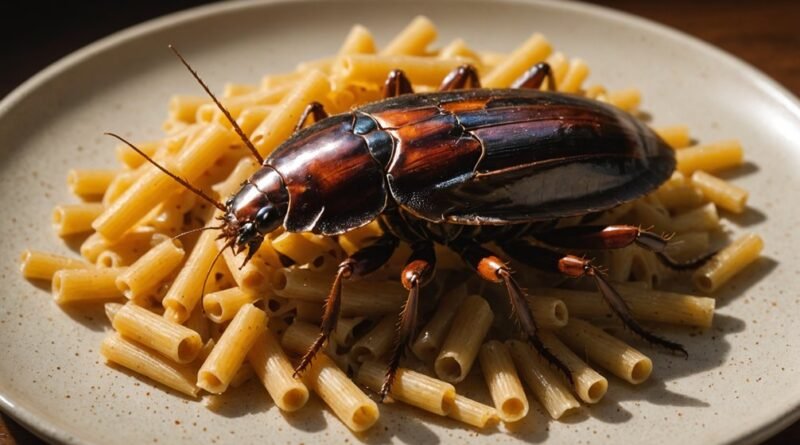
Can Cockroaches Spread Disease by Walking on Food?
Yes, cockroaches can spread disease by walking on food. They carry bacteria like _Salmonella_ and _E. coli_, transferring germs through contact. When they wander in kitchens, they contaminate exposed items with their bodies, saliva, and fecal matter. Cockroaches thrive in moist, cluttered areas, increasing contamination risk. To protect your space, store food in airtight containers and clean up spills promptly. Want more insights into effective prevention measures?
Key Takeaways
- Cockroaches transfer germs from their bodies to food by walking on it.
- They carry over 33 types of bacteria, including _Salmonella_ and _E. coli_.
- Cockroaches leave fecal matter in food areas, increasing contamination risk.
- Their regurgitation and saliva can further contaminate exposed food.
- Cockroaches act as mechanical vectors for viruses and parasites.
How Do Cockroaches Contaminate Our Food?
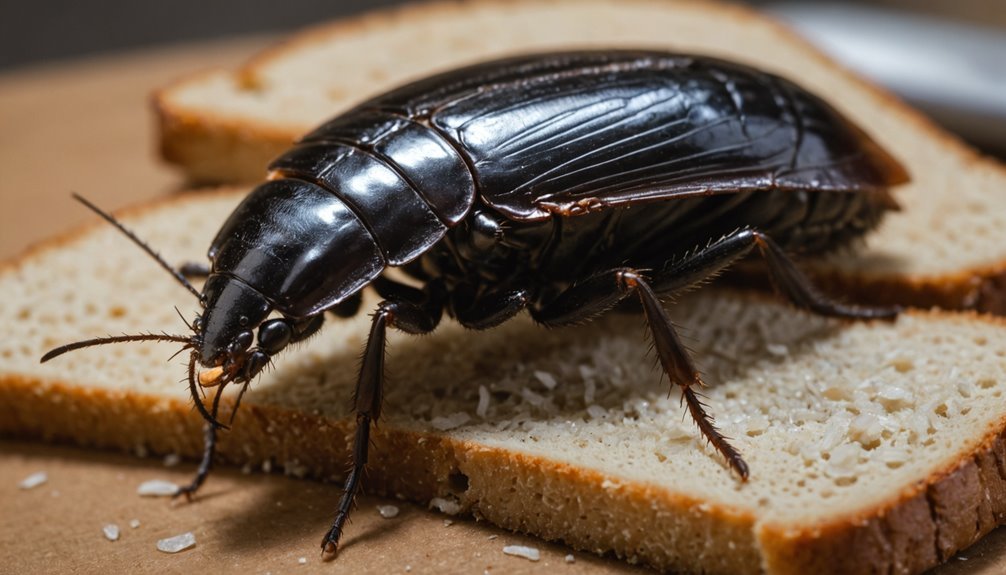
When cockroaches invade your kitchen, they don’t just wander around harmlessly; they actively contaminate your food. They do this by walking on exposed food and food-contact surfaces, transferring germs from their bodies. As mechanical vectors, they move contaminants from dirty areas directly onto your meals. Cockroaches also leave fecal matter in food-preparation spaces, increasing the risk of contamination.
Their droppings can spread microbes across counters and shelves, adding allergens to the mix. Additionally, they contaminate through regurgitation and saliva when feeding, especially on uncovered or poorly stored food. By nesting in cabinets and damaging packaging, cockroaches make stored food vulnerable, allowing further contamination through contact and debris. With approximately 25% of microorganisms from cockroaches identified as food-borne pathogens, maintaining your kitchen’s cleanliness is vital to preventing this.
What Germs Do Cockroaches Spread?
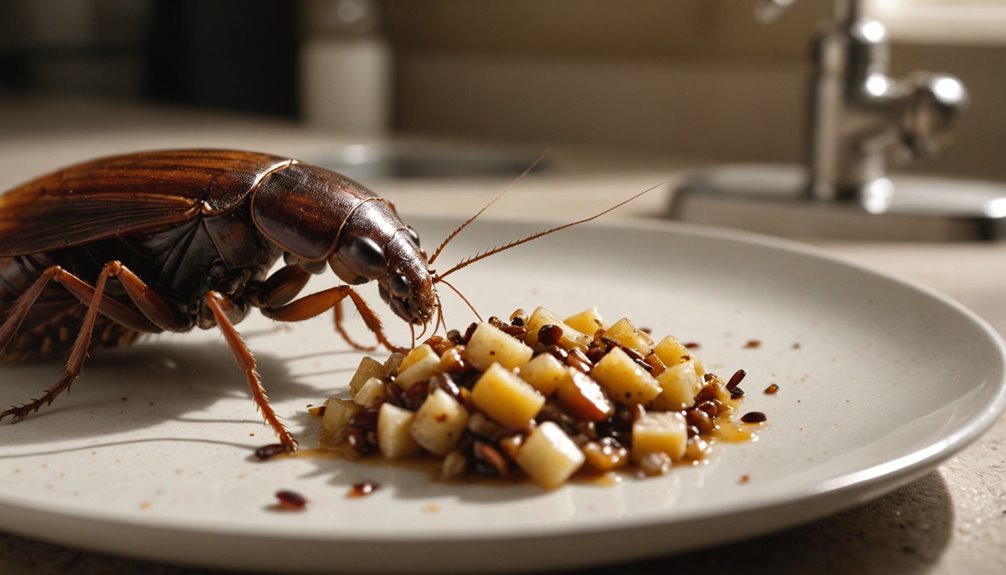
Although they might seem like mere nuisances, cockroaches actually spread a significant variety of germs that pose serious health risks. They carry over 33 types of bacteria, including _Salmonella_ species and _E. coli_. These pathogens can lead to foodborne illnesses. They also disseminate viruses, such as rotavirus, and serve as mechanical carriers of parasites. Cockroaches thrive in moist areas like sewers, pipes, and drains, which increases their potential to spread germs.
Here’s a quick overview:
| Germ Type | Examples |
|---|---|
| Bacteria | _E. coli_, _Salmonella_ |
| Viruses | Rotavirus |
| Parasites | Various intestinal worms |
Cockroaches are linked to diseases like diarrhea, cholera, and dysentery. They spread germs through contact with surfaces, mouth parts, and feces, making them a significant concern in hygiene-sensitive areas.
What Raises Kitchen Contamination Risks?
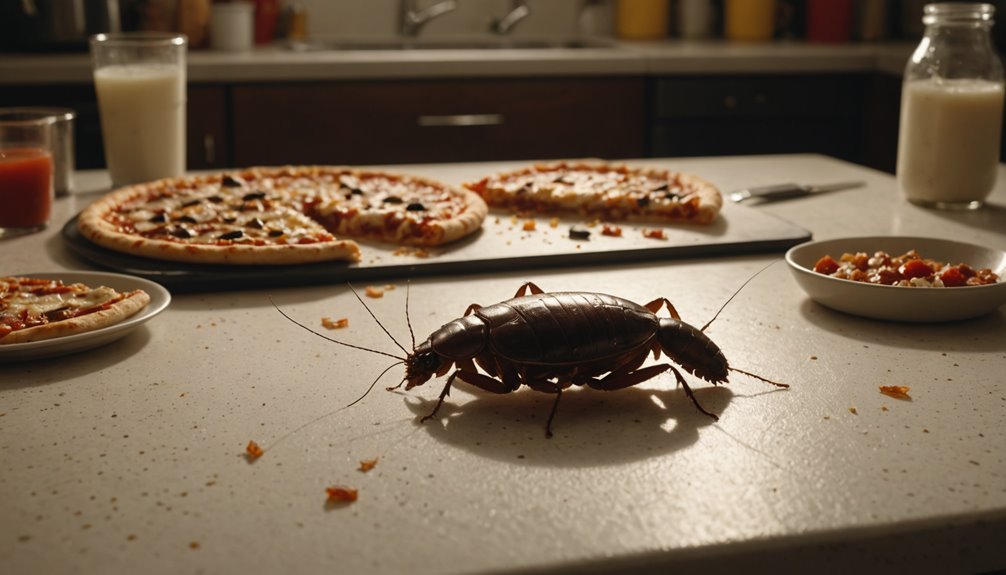
Cockroaches spread harmful germs, making it essential to understand what increases kitchen contamination risks. High moisture levels, exposed food debris, and clutter createy prevent cockroach contamination, prioritize controlling food sources and eliminating water access.
Store dry foods in airtight containers of glass or hard plastic. Clean spills and food residue immediately, and avoid leaving food or dirty dishes out overnight. Empty trash daily and use tight-fitting lids.
Repair leaky faucets and dry sinks, tubs, and dishes before leaving them overnight. Use exhaust fans and dehumidifiers to reduce humidity, and replace damp sponges and rags frequently ideal conditions for infestations. You’ll find that leaking faucets and standing water not only provide cockroaches with necessary hydration but also increase humidity, attracting more pests. Unsealed food and crumbs serve as easy meals, while cluttered areas offer perfect hiding spots. Cockroaches carry pathogens that can lead to severe food poisoning, emphasizing the importance of maintaining a pest-free environment.
- Moisture Sources: Leaks and standing water boost humidity, inviting cockroaches.
- Exposed Food: Unsealed containers and crumbs are easy targets for pests.
- Clutter: Piles of cardboard or newspapers create hiding spots and entry points.
Addressing these factors can reduce risks and help maintain a cleaner, safer kitchen environment.
How Can You Prevent Cockroach Contamination?
To effectivel.
Seal entry points by caulking cracks and filling gaps around pipes and fixtures. Use tight-fitting screens and door sweeps.
Reduce clutter by using plastic bins and organizing storage areas.
Monitor activity with sticky traps and baits, and consider professional pest control if needed.
Why Understanding Cockroach Behavior Is Key?
Understanding cockroach behavior is essential because it directly impacts their potential to spread contamination. Their foraging habits and nocturnal nature mean they’re most active when you’re not watching, especially in kitchens and bathrooms.
Cockroaches focus on areas rich in food, water, and shelter, often hidden from view. This makes targeted control vital.
- Scavenging habits: They feed on crumbs and garbage, linking contamination to their foraging paths.
- Nocturnal activity: They roam more at night, risking food contact when surfaces are unobserved.
- Hidden harborages: Preferring warm, dark spaces, they spread contamination unseen.
Frequently Asked Questions
Can Cockroaches Survive in Cold Environments?
Cockroaches struggle to survive in cold environments. They prefer warmer temperatures and can die quickly below 45°F. They seek shelter indoors to avoid the cold, but prolonged exposure to freezing conditions is often lethal.
How Long Do Cockroaches Live?
Cockroaches live anywhere from a few months to several years, depending on the species. You’ll find that factors like temperature, humidity, and food availability greatly affect their lifespan. Females often outlive males in many species.
Do Cockroaches Prefer Specific Types of Food?
Yes, cockroaches prefer sugary, starchy, greasy, and meaty foods. You’ll often find them drawn to crumbs, spills, and leftovers. Different species have specific preferences, but generally, they love calorie-rich and moist foods.
Are All Cockroach Species Equally Harmful?
Not all cockroach species are equally harmful. You should focus on German cockroaches, as they thrive indoors and spread diseases like salmonella. American cockroaches also pose a risk, while Oriental ones are less concerning indoors.
How Do Cockroaches Affect Allergies and Asthma?
Cockroaches can trigger allergies and asthma by releasing allergens from their body parts, saliva, and feces. These allergens become airborne, inflaming airways and causing symptoms like coughing, wheezing, and difficulty breathing, especially in sensitized individuals.
Conclusion
To keep your kitchen safe, stay vigilant against cockroach contamination. They spread germs like salmonella and E. coli just by walking on your food. Keep your kitchen clean and store food securely to reduce risks. Pay attention to cockroach behavior and seal entry points to prevent infestations. By understanding their habits and taking proactive steps, you’ll protect your home and health. Remember, a little prevention goes a long way in keeping your space pest-free.
