

Cockroach Allergy Symptoms in Children
If your child has a cockroach allergy, you’ll likely notice symptoms year-round, like sneezing, nasal congestion, itching, and watery eyes. These symptoms can overlap with eczema or asthma and may worsen at night or in infested areas. Early management is key, especially in urban settings where exposure is higher. Keeping your environment clean and clutter-free helps reduce allergens. Learn more about managing these symptoms and ensuring your child’s comfort and health.
Key Takeaways
- Cockroach allergy causes nasal congestion, sneezing, and runny noses in children.
- Itchy, red, or watery eyes are common symptoms of cockroach allergy.
- Children may experience skin reactions like hives or eczema flare-ups.
- Chronic nighttime coughing and wheezing suggest possible allergen exposure.
- Symptoms can lead to sinus and ear infections, needing careful monitoring.
Cockroach Allergy in Children: Key Facts
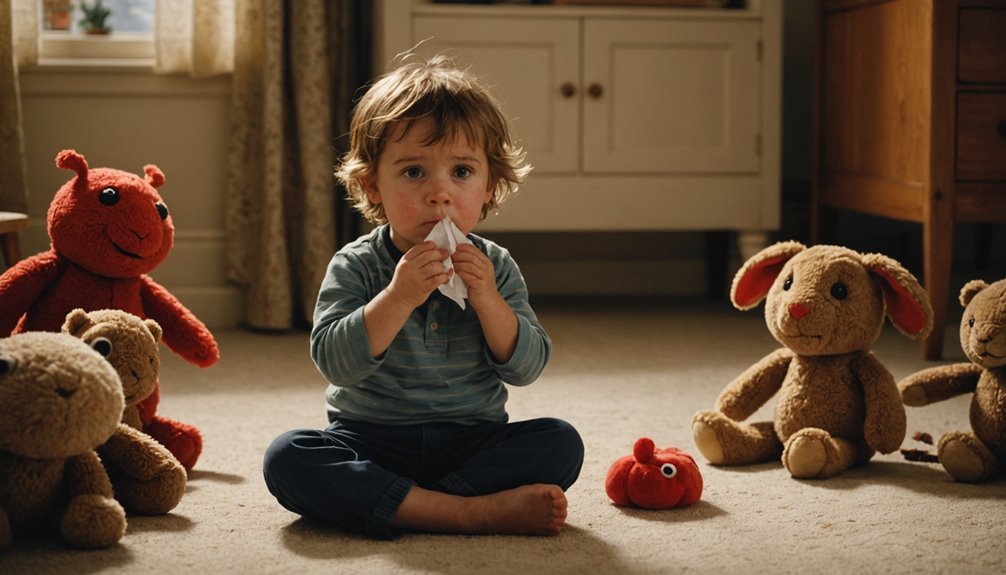
While cockroaches might seem like a mere nuisance, they can trigger significant allergic reactions in children. You’ll find that cockroach allergy stems from proteins found in their saliva, feces, and shed body parts. These particles can become airborne, making it easy for children to inhale them even without direct contact. They linger in the air and on surfaces, similar to dust mite allergens. For sensitized children, exposure can lead to allergic symptoms and worsen asthma. Early exposure is particularly concerning, as it’s linked to wheezing and asthma attacks in infants. If you live in a city, the risk is higher, with cockroach allergens more prevalent in urban environments, contributing to increased asthma morbidity in affected children. Long-term exposure can exacerbate allergic conditions, making early identification and management crucial for relief.
Common Nasal and Throat Symptoms
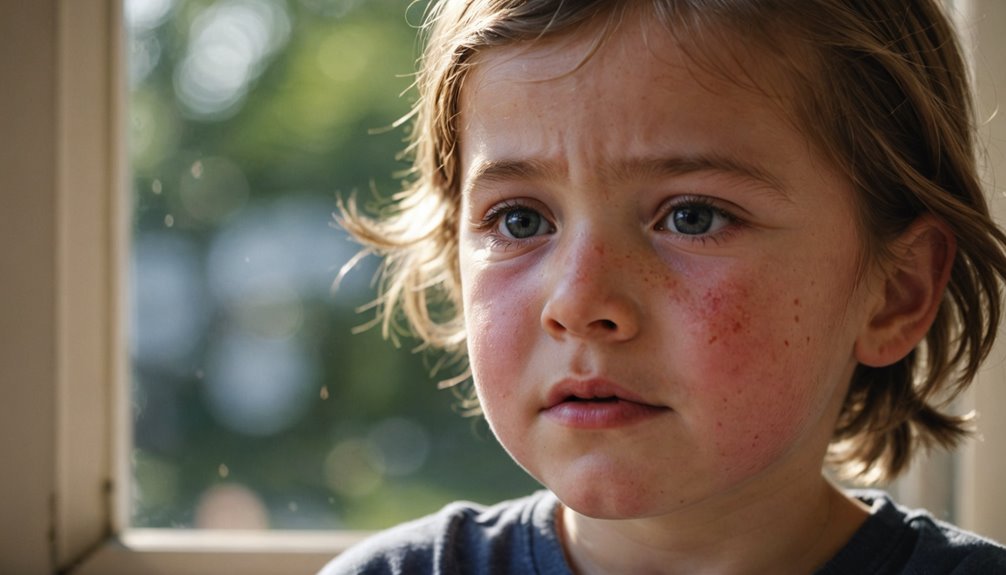
Nasal congestion often plagues children with cockroach allergies, leading to stuffy noses and sneezing fits. You might notice your child frequently dealing with a runny nose, as these symptoms are common.
Children with cockroach allergies often face nasal congestion, resulting in stuffy noses and frequent sneezing.
Throat itchiness can also be an issue, often resulting from postnasal drip, where mucus trickles down the throat. This can cause your child to cough or experience hoarseness. Additionally, the strong link between cockroach allergy, asthma, and allergic rhinitis (hay fever) highlights the importance of monitoring these symptoms closely.
These nasal symptoms can sometimes lead to more serious issues like sinus and ear infections. Keeping an eye on these symptoms is essential, as they can affect your child’s comfort and well-being. Monitoring and managing these reactions can help in reducing the frequency of infections, making it easier for your child to breathe and feel better overall.
Eye and Skin Reactions to Watch For
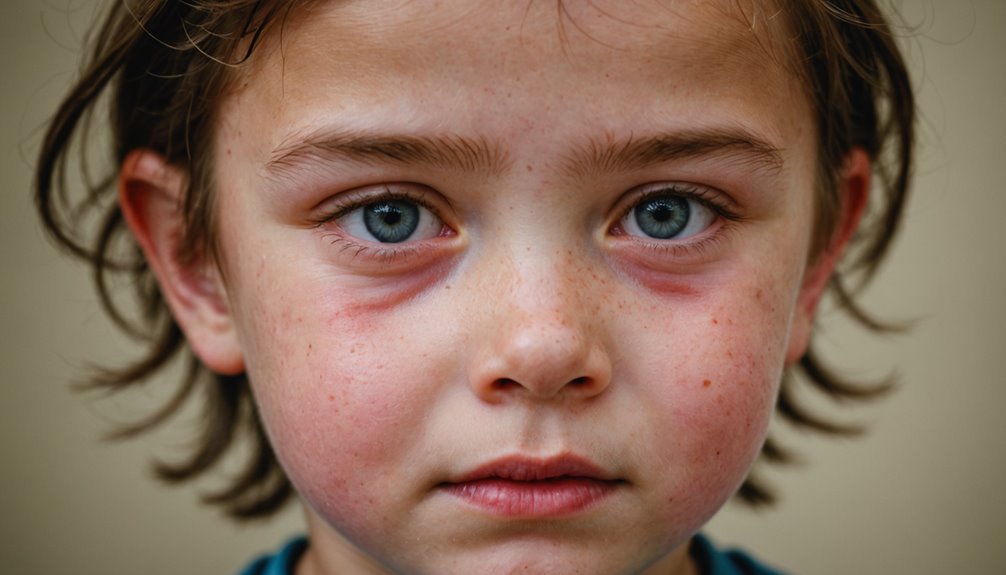
If your child has cockroach allergies, watch for itchy, red, or watery eyes, which can persist even after cockroaches are removed.
Check for skin reactions like hives or eczema flare-ups, especially after contact with allergens.
Managing these symptoms involves reducing allergen exposure and possibly consulting an allergist for effective treatments.
Common Eye Symptoms
When your child experiences itchy, red, or watery eyes, it might be a sign of a cockroach allergy. These symptoms often occur alongside nasal issues like sneezing or congestion. Eye irritation can result from allergens lingering in indoor environments, causing ongoing discomfort. Itchy eyes often lead to rubbing, which can worsen the irritation and swelling. Persistent exposure, especially indoors, may cause symptoms to flare up more frequently. It’s important to note that allergens like pollen and dust can also contribute to eye irritation, so reducing overall exposure is crucial.
Consider the following:
| Symptom | Cause | Response |
|---|---|---|
| Itchy eyes | Allergen exposure | Avoid rubbing, use cool compress |
| Redness | Inflammation | Antihistamine eye drops |
| Watery eyes | Allergic conjunctivitis | Lubricating tear drops |
| Swelling | Histamine activity | Cool compress, handwashing |
| Year-round symptoms | Indoor allergens | Reduce exposure |
Recognizing these signs and managing exposure can help ease your child’s discomfort.
Skin Reaction Indicators
Alongside eye symptoms, children with cockroach allergies often experience skin reactions that can be just as telling.
Look for itchy, red, or dry skin, which may appear with other allergy signs like sneezing or coughing. Your child might develop hives or a rash that worsens after exposure, signaling a stronger immune response.
Redness and itching are common, and these symptoms could mimic eczema. Keep an eye out for rashes that appear repeatedly in the same indoor setting, as this suggests an allergen trigger.
If you notice swelling or rapidly worsening symptoms, it’s important to seek medical advice.
Managing Allergic Conjunctivitis
Managing allergic conjunctivitis in children starts with recognizing key symptoms and taking proactive steps. Watch for itching, redness, and watery eyes. Swelling and discomfort often accompany these signs.
Allergens like dust mites, pollen, mold, and pet dander are common triggers. They reach the eyes through the air or direct contact when kids rub their eyes.
To alleviate symptoms, avoid eye rubbing. Rinse eyes with water or use a wet washcloth. Cold compresses and artificial tears can also help.
Prevent exposure by staying indoors during high pollen counts, wearing sunglasses, and washing bedding frequently. If symptoms persist, consider antihistamine eye drops or oral medications.
Persistent or severe issues should prompt a medical evaluation to rule out other causes.
Recognizing Cough and Breathing Issues
If you’ve noticed your child coughing at night or having trouble breathing, it might be more than just a cold. A chronic cough, especially one linked with postnasal drip, can be a sign of cockroach allergy.
Nighttime coughs and trouble sleeping are common, as allergens linger in the sleeping environment. These symptoms often go beyond typical seasonal allergies, suggesting constant exposure.
Breathing issues like wheezing, chest tightness, and shortness of breath may indicate airway involvement. Children can experience these symptoms more frequently if they’re sensitive to cockroach allergens.
If your child wakes at night due to breathing problems, it’s a red flag for potential allergen-triggered asthma. Observing these symptoms, especially alongside visible cockroaches, highlights a possible allergy.
How Cockroach Allergens Trigger Asthma in Kids
When cockroach allergens enter the home environment, they can greatly impact children’s respiratory health. These allergens, found in saliva, feces, and body parts, become airborne and are inhaled, triggering asthma symptoms.
Even without visible cockroaches, exposure can happen, leading to sensitization, a strong asthma risk factor. Early-life exposure increases the likelihood of developing asthma, particularly in low-income urban areas.
High exposure in bedrooms worsens the situation. Kids with both allergy and high exposure face more asthma attacks, sometimes requiring hospitalization.
The allergens intensify airway inflammation, making asthma more persistent. Inner-city children, facing high bedroom exposure, experience greater asthma morbidity.
Understanding these triggers can help in managing and reducing asthma risk in vulnerable children.
How to Diagnose Cockroach Allergy vs. Other Allergies
Diagnosing cockroach allergy versus other allergies requires a careful approach to identify specific triggers. Start with a detailed medical history, noting when and where symptoms appear, such as indoor exposure linked to pest sightings.
A physical exam can reveal signs like nasal congestion, sneezing, and itchy eyes. To confirm, consider a skin prick test or a cockroach-specific IgE blood test. These tests show sensitization but need symptom correlation for clinical relevance.
Cockroach allergy often presents with persistent, year-round symptoms, unlike seasonal allergies. Watch for symptom worsening in infested areas, and remember its strong association with asthma in inner-city children.
Shared symptoms with other allergens, like dust mites, mean history and context are essential for accurate diagnosis.
Reducing Cockroach Exposure and Managing Symptoms
Although cockroach allergies can be a persistent problem, you can take effective steps to reduce exposure and manage symptoms. Start by storing food in airtight containers and promptly cleaning dirty dishes. Wipe up crumbs, spills, and keep trash bins tightly covered.
Fix leaky pipes to reduce dampness, as cockroaches are attracted to moisture. Reduce clutter by avoiding piles of boxes, newspapers, and magazines. Seal cracks and gaps to block entry points, and keep storage areas dry and organized.
Use a HEPA-filter vacuum to clean areas with cockroach activity, and dispose of vacuum contents promptly. Set sticky traps to monitor infestations safely, and opt for bait stations over aerosol sprays.
Consider professional extermination for persistent infestations, focusing on integrated pest management.
Frequently Asked Questions
Can Cockroach Allergies Cause Ear Infections in Children?
Yes, cockroach allergies can lead to ear infections in children. Allergic reactions cause nasal and sinus inflammation, which can block the Eustachian tube, resulting in fluid buildup and ear infections. Reducing exposure helps prevent symptoms.
Are There Natural Remedies for Cockroach Allergy Symptoms?
You can use natural remedies like saline nasal rinses and cold compresses for symptom relief, but they shouldn’t replace environmental control or medical treatment. Always prioritize reducing exposure to cockroaches to manage the allergy effectively.
How Long Do Cockroach Allergens Remain in the Home?
Cockroach allergens can linger in your home for months to years after extermination. They settle in dust, bedding, and hidden areas. Even with effective pest control and cleaning, allergens may take considerable time to fully diminish.
Can Cockroach Allergies Affect a Child’s Sleep Quality?
Yes, cockroach allergies can affect your child’s sleep quality. They may experience coughing, wheezing, and chest tightness, leading to disrupted sleep. This can cause daytime impairment, such as reduced functioning and missed school days.
Are There Any Dietary Changes That Help With Cockroach Allergies?
There aren’t any dietary changes that directly help cockroach allergies. Focus on keeping your kitchen clean and food stored securely to reduce cockroach attraction. This indirectly lowers allergen exposure, aiding in managing symptoms effectively.
Conclusion
In dealing with cockroach allergies in children, it’s essential to recognize symptoms like nasal congestion, eye irritation, and breathing issues. You’ll want to be vigilant about how these allergens can trigger asthma. Diagnosing the allergy correctly is key, so don’t hesitate to consult a specialist. To manage symptoms, focus on reducing your child’s exposure to cockroaches. By taking proactive steps, you can help your child breathe easier and improve their quality of life.
