
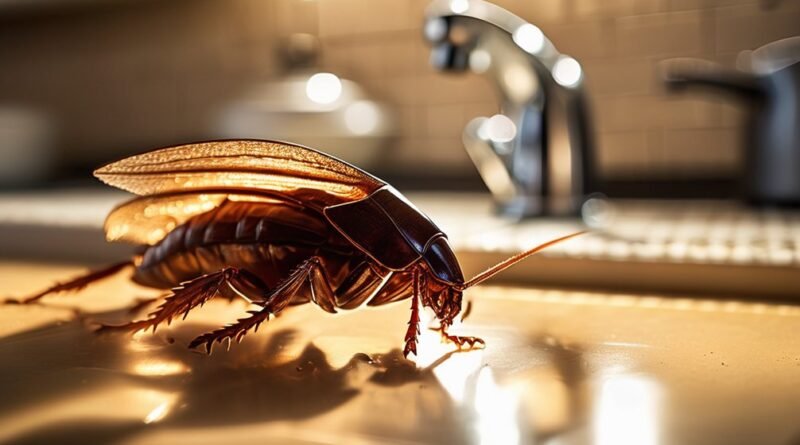
Flying Cockroaches: Fact or Myth?
You’ve probably heard stories about cockroaches that fly, and maybe you’ve dismissed them as urban legends. But these aerial acrobats are very real, and they’re more common than you might think. While not all species take to the sky, several types of cockroaches can indeed spread their wings and soar through your personal space. Understanding their flight patterns and triggers can help you avoid an unwanted close encounter.
Key Takeaways
- Flying cockroaches are real, with sophisticated neural mechanisms and physical adaptations that enable controlled flight and aerial maneuvers.
- Most cockroach species can fly, but they prefer to run and only take flight under specific conditions like warmth and high humidity.
- Male cockroaches are more likely to fly than females, especially during mating season and in search of food.
- Flying activity increases during warm nights above 85°F, high humidity over 60%, and often before storms.
- Cockroaches possess specialized sensory systems that trigger instant flight responses within milliseconds when threatened.
The Science Behind Cockroach Flight
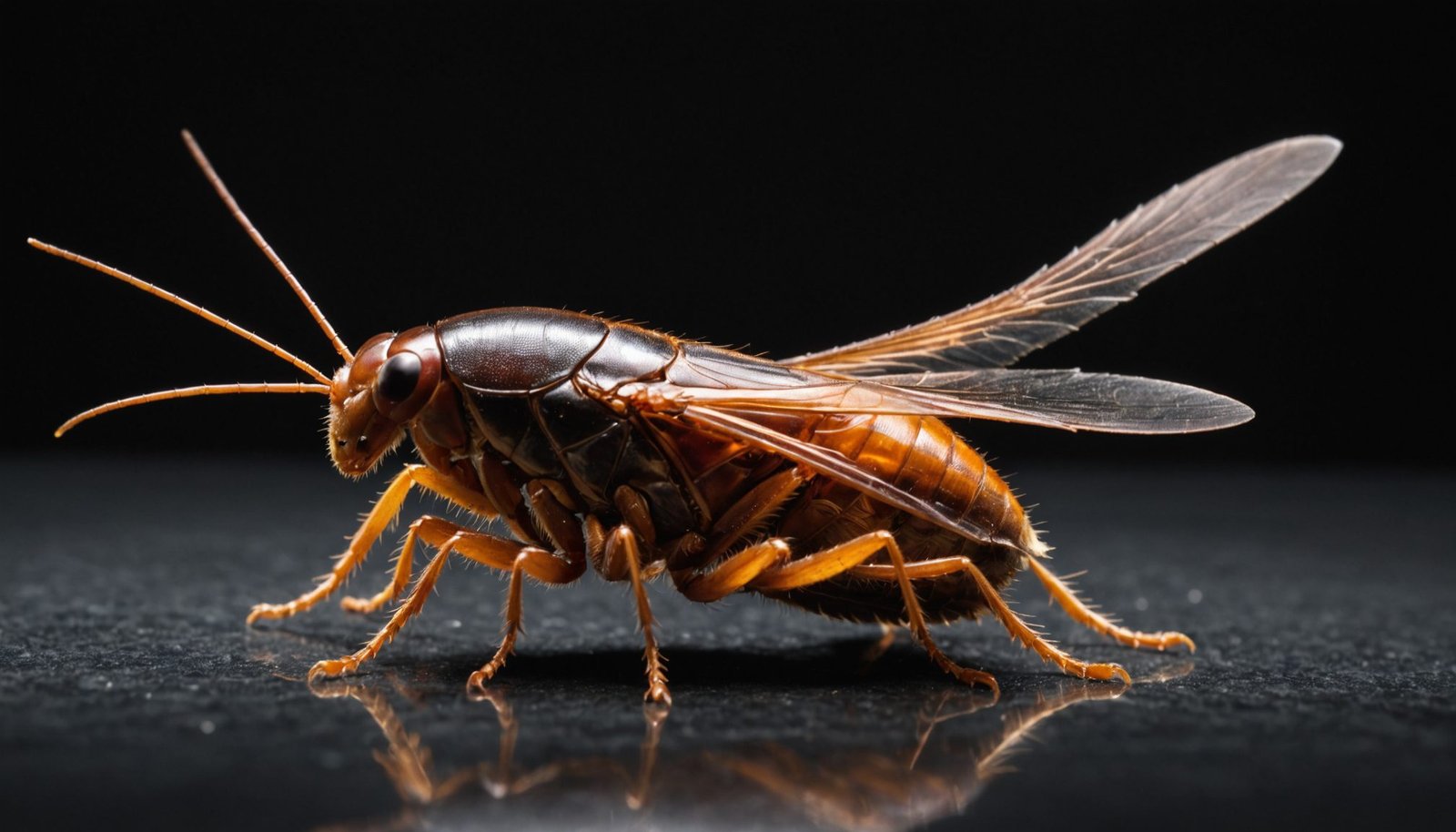
While many people believe cockroaches simply scuttle across floors, these resilient insects possess sophisticated neural and physical mechanisms for flight. You’ll find their antennal mechanoreceptors work with specialized pathways to trigger flight responses when touched. These signals travel through dual large-diameter axons to control flight muscles with remarkable speed.
Male cockroaches can execute controlled aerial descents, including body righting and wing deployment. Their exoskeletons are incredibly tough, withstanding forces up to 900 times their body weight during flight-related impacts. This resilience comes from soft, compliant membranes that allow flexibility during flight maneuvers. When navigating tight spaces, they can achieve crawling speeds of 60 cm/s while maintaining controlled movement.
When they’re airborne, their bodies maintain stability through distinct phases: initial fall, wing deployment, and landing approach. Though not as sophisticated as other flying insects, their flight capabilities are supported by robust neural and physical adaptations.
When and Why Cockroaches Take to the Air
Although cockroaches are notorious ground-dwellers, specific conditions trigger their flight capabilities. You’ll most likely encounter these flying pests during warm, humid nights when temperatures exceed 85°F and humidity rises above 60%. Many species are actually gliders not fliers, relying more on controlled descents than powered flight.
Despite their ground-dwelling nature, cockroaches take flight when conditions are just right – warm nights with high humidity and temperatures above 85°F.
They’re particularly active during late summer months and after heavy rainfall, when environmental conditions are ideal for their cold-blooded bodies to generate sufficient energy for flight.
- Weather changes often precede increased flying activity, with cockroaches taking to the air before storms or during significant air pressure shifts.
- Darkness provides safety, prompting these insects to fly while searching for food, water, or mates.
- When threatened, they’ll use flight as an escape mechanism, sometimes even flying toward perceived threats as a defensive strategy.
Geographic Patterns of Flying Behavior
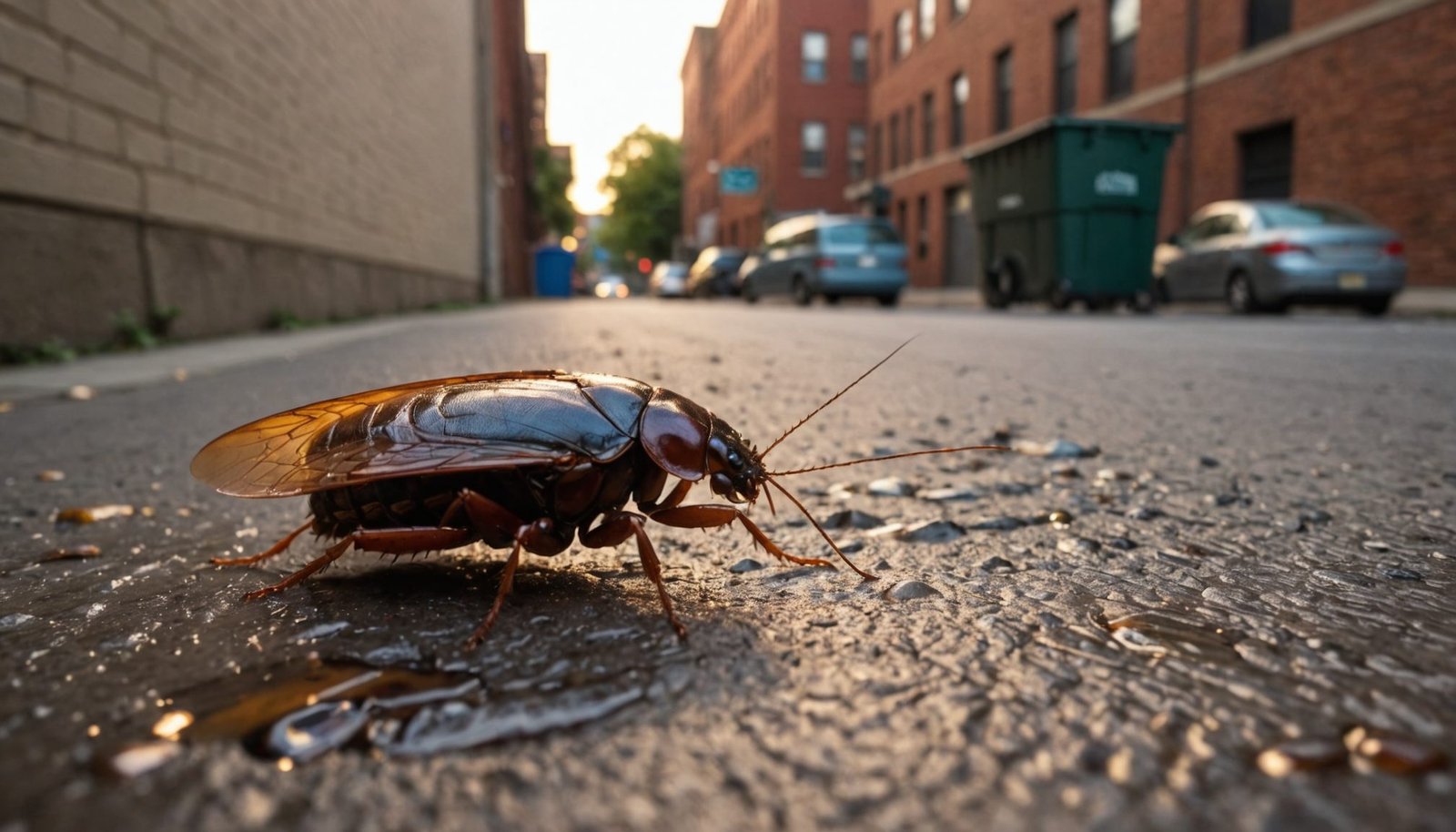
Since flying cockroach species thrive in warm, humid environments, you’ll find them primarily in tropical and subtropical regions worldwide. The American cockroach, though native to Africa and the Middle East, has spread globally through human activity, particularly in humid climates.
You’ll notice distinct regional patterns in flying behavior. In tropical forest canopies, cockroaches actively fly at night while foraging. However, in arid regions, you’ll find species that fly less frequently to conserve water. These adaptations reflect their ancient lineage, as Jurassic-era ancestors first developed survival mechanisms.
Coastal areas and southern U.S. regions mark the northern boundary for species like the smoky brown cockroach, which needs high humidity to maintain flight activity.
In urban settings, you’re more likely to encounter male brown-banded cockroaches flying indoors, while their female counterparts remain flightless, preferring drier spaces behind furniture or electronics.
Weather’s Impact on Aerial Activity
When temperatures rise above 85°F, you’ll notice a dramatic increase in flying cockroach activity due to their ectothermic nature.
Flying cockroaches become more active in hot weather because their cold-blooded bodies respond directly to rising environmental temperatures.
These pests become particularly active during warm, humid nights, especially when humidity levels exceed 60%. Weather changes, including approaching storms and fluctuating barometric pressure, can trigger mass flight behavior as cockroaches seek shelter or new territories. In urban environments like New York City, roaches typically engage in short distance gliding rather than sustained flight.
- You’re most likely to spot flying cockroaches during late spring and summer evenings, particularly near artificial lights.
- If you live in areas with high humidity and temperatures like Florida or Texas, you’ll encounter more airborne cockroaches than in cooler regions.
- You can expect increased flight activity before storms when the air pressure changes, or during nighttime hours when humidity peaks.
Health Risks of Airborne Roaches

When cockroaches take flight in your home, they’re not just an unsettling sight – they’re actively dispersing allergens and pathogens through the air you breathe.
You’ll find the highest concentrations of airborne cockroach debris in kitchens, where cooking activities stir up particles small enough to remain suspended and travel to other rooms. Integrated pest management techniques provide the safest and most effective approach to eliminating these flying pests.
These airborne particles carry bacteria like Salmonella and Staphylococcus while distributing potent allergens that can trigger asthma attacks and respiratory symptoms, especially in children.
Disease Spread Through Air
Flying cockroaches pose three significant airborne health risks through their ability to spread diseases.
You’ll find they’re particularly dangerous because they carry potential pathogenic bacteria like Acinetobacter, Streptococcus, and Pseudomonas that can contaminate indoor air and dust. These bacteria can cause serious respiratory infections, including pneumonia and strep throat.
- They release allergens from their body parts, saliva, and feces that become airborne particles, which you can inhale from settled dust in fabrics and bedding.
- They spread bacteria through the air even in homes without visible infestations, especially in kitchens and bathrooms.
- Their presence contributes to indoor bacterial contamination with a high prevalence (31.1%) of Acinetobacter that aligns with air sample findings.
Indoor Allergen Distribution Patterns
The presence of cockroach allergens in indoor environments follows distinct patterns that affect your exposure risk. You’ll find the highest concentrations in kitchen floors, where 13% of homes exceed sensitization thresholds.
However, your living room likely has the most prevalent allergen dust due to the extended time you spend there.
If you live in an urban, low-income area, you’re more likely to encounter higher allergen levels, with about 50% of inner-city homes showing elevated concentrations in bedrooms.
This contrasts with suburban homes, where only 30% show considerable allergen presence.
Your exposure risk also depends on your home’s condition – factors like ventilation, cleanliness, and pest control considerably impact how allergens distribute through indoor air and settled dust.
Natural Defense Mechanisms in Flight
As predators emerge from unexpected angles, cockroaches deploy an impressive array of natural defenses during flight.
You’ll find these insects equipped with mechanoreceptive hairs that detect air movements, triggering escape responses within milliseconds.
They’re also protected by tough exoskeletons and foul-smelling secretions that ward off attackers.
- Their sensory system acts like an early warning radar – mechanoreceptive hairs on their cerci detect the slightest air pressure changes, enabling instant flight response.
- Chemical warfare comes into play with their ability to release repellent secretions that can disable or confuse predators mid-flight.
- Physical defenses include a reinforced exoskeleton with chitin and sclerotin, protecting them during rapid maneuvers and potential collisions.
Conclusion
You’ve learned that flying cockroaches are more than urban legends – they’re a scientific reality. When you spot these insects taking flight, you’re witnessing complex survival behaviors triggered by specific environmental conditions. While you might find their aerial abilities unsettling, understanding their flight patterns and behaviors can help you better prepare for and manage encounters with these remarkable yet unwanted house guests.
