
Do Cockroaches Carry Salmonella and Other Diseases?
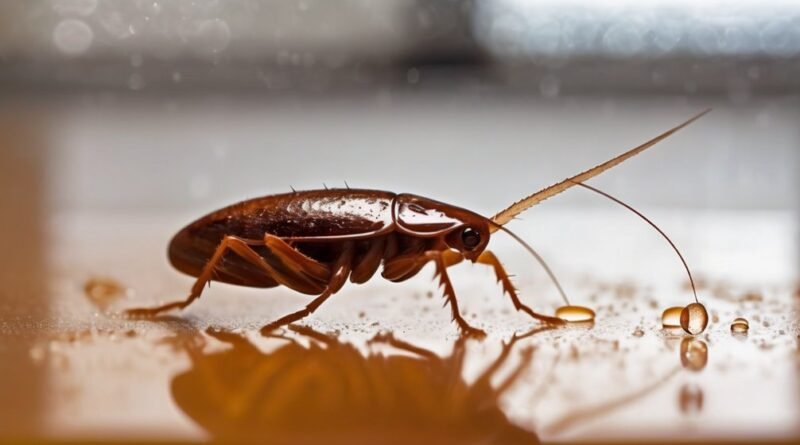
Yes, cockroaches carry Salmonella and spread it to humans through direct surface contamination, droppings, and regurgitation. They pick up the bacteria in drains, garbage, feces, and sewers, then track it across kitchen surfaces, food preparation areas, and stored food. German cockroaches are the most common culprit in residential kitchens and restaurants because of their proximity to food and their tendency to feed on feces, which amplifies bacterial loads within the colony.
Key Takeaways
Cockroaches are mechanical vectors of Salmonella and dozens of other pathogens. Here is what the evidence shows about how transmission works and how to reduce your risk.
- Cockroaches pick up Salmonella, E. coli, norovirus, and other bacteria in garbage, drains, feces, and sewers, then deposit them on kitchen surfaces and food.
- German cockroaches are the most significant kitchen threat because they breed rapidly near food and water sources and feed on feces, which concentrates bacterial loads.
- Harborage zones test positive for Salmonella 100 percent of the time in infested spaces, creating a persistent reservoir that sustains contamination risk over time.
- Cockroach gut bacteria include strains resistant to multiple antibiotics, raising serious public health concerns beyond basic food safety.
- Sanitation, moisture control, gap sealing, and IPM-based gel baiting are the most effective strategies for reducing disease transmission risk from cockroach infestations.
How Cockroaches Transmit Salmonella in Homes and Kitchens
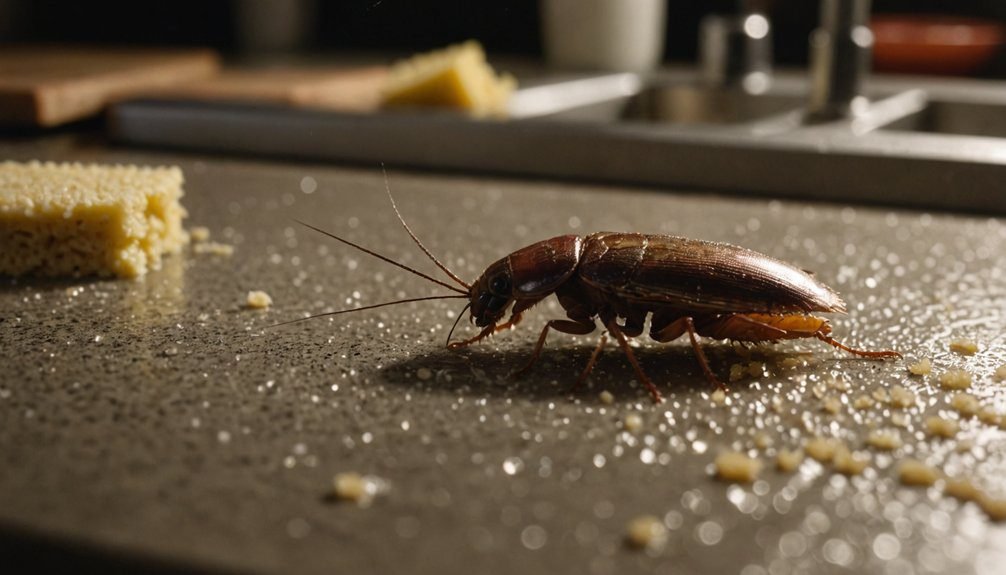
Cockroaches are mechanical transmitters of infectious diseases, meaning they carry and deposit pathogens on surfaces without becoming infected themselves in the way a biological vector like a mosquito does. This distinction matters practically: cockroaches contaminate food, dishes, and kitchen surfaces simply by moving through spaces where they have previously contacted feces, garbage, drain slime, and sewers.
German cockroaches are the dominant infestation species in residential kitchens and restaurant environments. Their proximity to food preparation areas and their behavioral habit of feeding on feces from nestmates creates a continuous contamination cycle. Both adults and nymphs can carry Salmonella Typhimurium internally in their hindgut and shed viable bacteria in feces for extended periods after initial exposure. When food is scarce, colony members consume each other’s droppings, which amplifies bacterial loads within the population and increases the concentration of Salmonella being deposited in food zones.
Conditions That Increase Salmonella Transmission Risk
Certain environmental conditions significantly increase how efficiently cockroaches transmit Salmonella to food and surfaces in homes and commercial kitchens.
- Warmer temperatures accelerate cockroach metabolism, foraging frequency, and reproduction, increasing the number of contamination events per night
- Poor sanitation provides more food sources that draw cockroaches into food preparation areas during overnight foraging
- High harborage density concentrates fecal deposition in areas near food storage and preparation zones
- Humid environments extend the survival time of bacteria deposited in feces and on surfaces, prolonging the contamination window after each foraging cycle
- Cockroach infestation in buildings with multiple units creates building-wide transmission networks as roaches move through shared plumbing and wall voids
From Feces to Food: The Pathway of Contamination
The contamination pathway from cockroach to human food is direct and requires no intermediate host. Cockroaches move between refuse areas, sewers, drains, and food zones within the same nightly foraging cycle. As they travel, they trail fecal particles and deposit contaminated body film from their legs, antennae, and abdomens onto every surface they contact.
German cockroaches intensify this risk because they feed on decaying organic matter and feces, then deposit pathogen-laden feces wherever they rest and forage. Salmonella deposited in cockroach droppings can remain viable on surfaces for 3 to 20 days under typical indoor conditions. Warm, humid environments extend survival further, while cooler or drier conditions shorten the window. The practical consequence is that a cockroach infestation in a kitchen does not require direct food contact to create contamination risk; droppings left on shelf surfaces, inside cabinet bases, or on the outside of food containers are sufficient.
Three Routes of Cockroach Contamination
Cockroaches contaminate food and surfaces through three distinct mechanisms, each with different implications for hygiene and control.
- Surface contact: bacteria on legs and body cuticle transfer to cutting boards, utensils, dishes, and food packaging during movement
- Fecal deposition: droppings deposited on uncovered food, shelves, and food preparation surfaces deliver viable Salmonella, E. coli, and other enteric pathogens directly
- Regurgitation: cockroaches regurgitate digestive fluids during feeding, depositing internally carried bacteria onto food and surfaces in a different pattern than surface contact alone
E. coli, norovirus, hepatitis A virus, and intestinal parasites including Giardia and Cryptosporidium can all survive in cockroach feces or on their bodies, sustaining multiple parallel contamination cycles in infested kitchens simultaneously.
Horizontal Spread of Salmonella Within Cockroach Populations
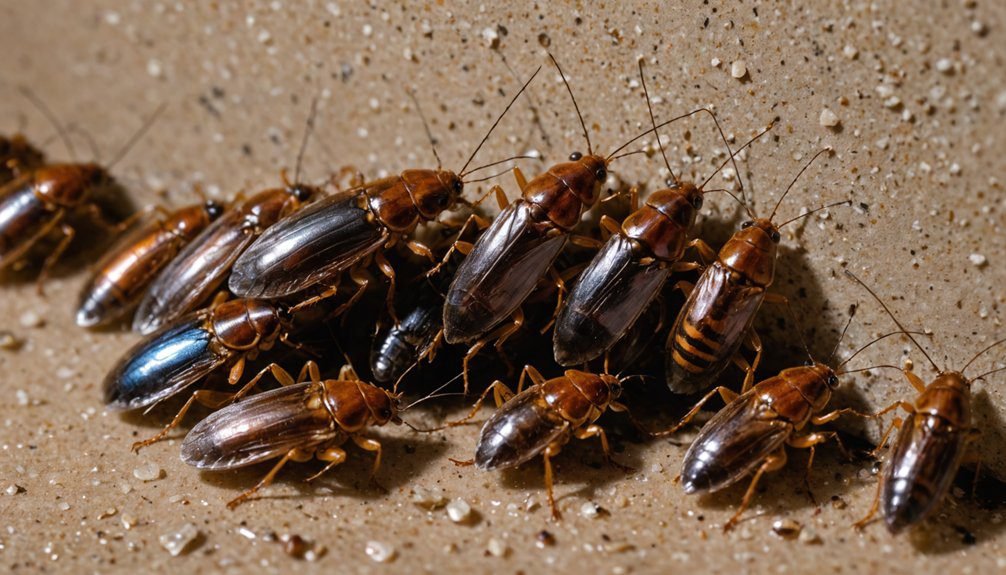
Beyond surface contamination of kitchens, Salmonella circulates within cockroach colonies through horizontal transmission between individuals. This internal amplification is what makes cockroach infestations a persistent disease risk even when surface hygiene is maintained. Cleaning kitchen surfaces does not eliminate the bacterial reservoir inside the harborage colony.
Research demonstrates that Salmonella Typhimurium spreads between cockroaches through fecal feeding and direct contact within shared harborage zones. Harborage areas test positive for Salmonella 100 percent of the time in infested environments, confirming that the colony itself functions as a sustained bacterial reservoir rather than just a passive carrier that picks up bacteria from external sources.
| Transmission Driver | Evidence | Implication for Disease Risk |
|---|---|---|
| Adult male transmission | Approximately 23 percent of adult males test positive | Adults are the primary spread mechanism across food zones |
| Harborage feces | 100 percent positive in infested sites | Persistent bacterial reservoir sustains risk continuously |
| Social clustering | Aggregation pheromones draw colony to shared fecal sites | More contact events per individual accelerate spread |
| Internal gut carriage | Salmonella persists in hindgut post-surface disinfection | External cleaning does not eliminate colony reservoir |
Coprophagy and Bacterial Amplification
Coprophagy, the behavior of feeding on feces from nestmates, is a key driver of Salmonella amplification within cockroach colonies. Aggregation pheromones present in cockroach feces attract colony members to feed at shared fecal sites, creating a concentrated transmission event where multiple individuals ingest bacteria from a single deposit. This cycle sustains higher bacterial loads in the gut of each individual and increases the pathogen concentration deposited on kitchen surfaces during subsequent foraging. Research shows that uninfected cockroaches reliably acquire Salmonella through fecal feeding alone, confirming that direct contact with external contamination sources is not required to sustain infection within a colony.
Adults vs Nymphs: Who Spreads More Pathogens?
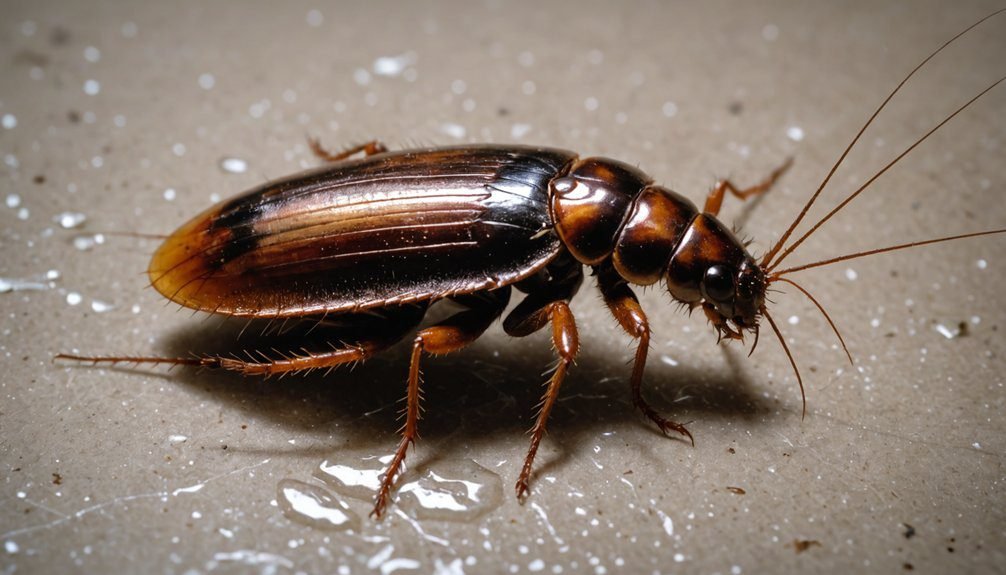
Adults are the primary mechanism of kitchen contamination because of their larger body size, faster movement, and wider foraging range. Adult cockroaches cover more surface area during nightly foraging, contact more food preparation surfaces, and deposit contaminated feces and body films across a broader area than nymphs. Their ability to move between garbage, drains, bathrooms, and kitchen surfaces within a single foraging cycle creates the cross-contamination pathway that produces foodborne illness risk for humans.
Nymphs carry significant internal bacterial loads because of their clustering behavior and coprophagy, but their more limited foraging range keeps contamination concentrated near the harborage zone rather than distributed across the kitchen. Their shed exoskeletons during molting accumulate in hiding spots and contribute to allergen exposure, which is a distinct health concern from direct pathogen transmission but affects a large number of people with asthma and cockroach-related allergies.
The practical conclusion is that reducing adult cockroach populations through effective gel bait and IGR programs provides the fastest reduction in direct Salmonella contamination risk, while eliminating harborage zones addresses the sustained bacterial reservoir that nymphs maintain.
Mechanical vs Internal Carriage: What the Evidence Shows
The distinction between mechanical and internal carriage has practical implications for understanding why surface cleaning alone does not adequately manage the disease risk from cockroach infestations. Mechanical contamination occurs when bacteria adhere to the cockroach exoskeleton from external sources such as dirty floors, garbage bins, and drain surfaces. Internal carriage occurs when bacteria are ingested and survive passage through the gut, emerging in feces or regurgitation at subsequent locations.
Research demonstrates that Salmonella Typhimurium survives gut passage and is shed in feces within 24 hours of ingestion, with viable bacteria detectable in cockroach hindguts for longer periods than on external surfaces under the same conditions. This means even cockroaches that have not recently contacted an external contamination source can continue to deposit viable Salmonella from internal gut reservoirs during foraging.
Environmental Factors That Affect Bacterial Survival
- High humidity extends the viability of bacteria deposited in feces and on surfaces, prolonging contamination windows between cleaning cycles
- Warm kitchen temperatures accelerate cockroach metabolism and foraging frequency, increasing contamination events per night
- Sanitation quality shifts the balance between surface-borne and gut-borne bacterial loads; clean surfaces make gut carriage the dominant transmission route
- Food debris availability determines how deeply cockroaches penetrate food preparation zones and how frequently they contact stored food directly
Beyond Salmonella: Other Bacteria, Viruses, and Parasites
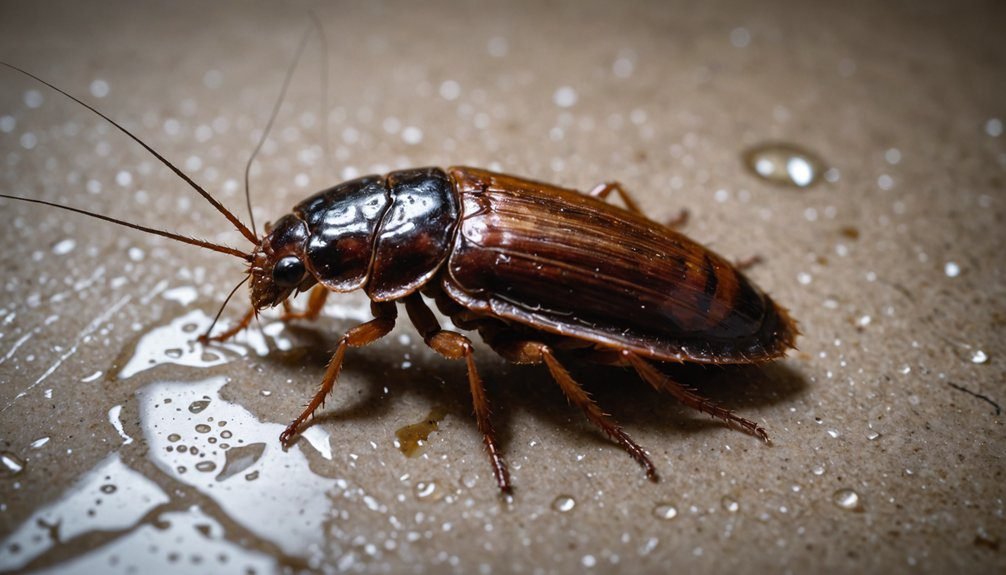
Salmonella is the most commonly cited cockroach-associated pathogen, but the full range of diseases linked to cockroach infestations is substantially broader. Cockroaches mechanically carry and deposit Escherichia coli O157:H7, Staphylococcus aureus, Bacillus cereus, Klebsiella pneumoniae, Enterobacteriaceae species, and Streptococcus species on the surfaces and food they contact. Hospital surveys routinely isolate Staphylococcus aureus from cockroaches collected in patient care environments, highlighting infection risks beyond residential kitchens.
Viruses transmitted through cockroach mechanical contact include hepatitis A, with documented declines in hepatitis A outbreak rates observed following aggressive cockroach control programs in affected communities. Polio virus has been detected in wild cockroach populations, supporting their classification as mechanical vectors in fecal-oral transmission pathways.
The parasite burden carried by cockroaches includes six helminth varieties and protozoa including Cryptosporidium and Giardia. Parasite eggs and cysts adhere to cockroach exoskeletons or survive gut passage, then contaminate kitchen surfaces and water sources in homes and food service buildings. Children are disproportionately affected by both the infection risk and the allergic and asthma symptoms triggered by cockroach droppings and shed skins.
Allergies, Asthma, and Non-Infectious Health Effects
Beyond direct pathogen transmission, cockroach infestations produce significant non-infectious health effects through allergen exposure. Cockroach droppings, shed exoskeletons, saliva, and body fragments contain proteins that trigger allergic reactions and asthma symptoms in sensitized individuals.
- Cockroach allergens are a documented trigger for asthma attacks in children, with high infestation density associated with increased emergency department visits and symptom severity
- Cockroach-related asthma disproportionately affects children living in urban apartment buildings where German cockroach infestations are most prevalent
- Allergens persist in household dust long after a cockroach infestation is eliminated, requiring thorough cleaning with HEPA filtration to reduce ongoing exposure
- Symptoms from allergen exposure include respiratory issues, skin reactions, nasal congestion, and in sensitized individuals, severe asthma requiring medical treatment
Antibiotic Resistance and Gene Exchange in Cockroach Guts
Cockroach guts host diverse bacterial communities that include significant proportions of antibiotic-resistant strains. Research has found Gram-negative bacteria with high resistance rates to beta-lactams, sulfamethoxazole/trimethoprim, and ampicillin; strains of Klebsiella, Pseudomonas, Escherichia, and Proteus frequently resist 50 to 100 percent of antibiotics tested in laboratory conditions. Multi-drug resistant E. coli strains capable of withstanding up to seven antibiotics simultaneously have been isolated from cockroach samples collected in residential and hospital environments.
The disease risk from antibiotic-resistant bacteria in cockroach guts extends beyond simple foodborne illness. When resistant strains are deposited on food preparation surfaces or directly on food, subsequent human infections may be significantly more difficult to treat, particularly in children, elderly individuals, and immunocompromised people whose baseline infection resistance is already reduced.
How Antibiotic Resistance Spreads Through Cockroach Populations
- Conjugative transposons and plasmids carrying tetracycline resistance genes including tet(M), tet(S/M), and tet(O) transfer between bacterial species within the cockroach gut
- Antibiotic exposure reshapes cockroach gut bacterial communities and increases antibiotic resistance gene diversity within the surviving population
- Experiments demonstrate antibiotic resistance gene transfer between treated and untreated cockroach populations through coprophagy and social contact
- Hospital-dwelling cockroaches carry higher concentrations of antibiotic resistance genes, reflecting the selection pressure of antibiotic use in clinical environments
Real-World Outbreaks and Public Health Connections
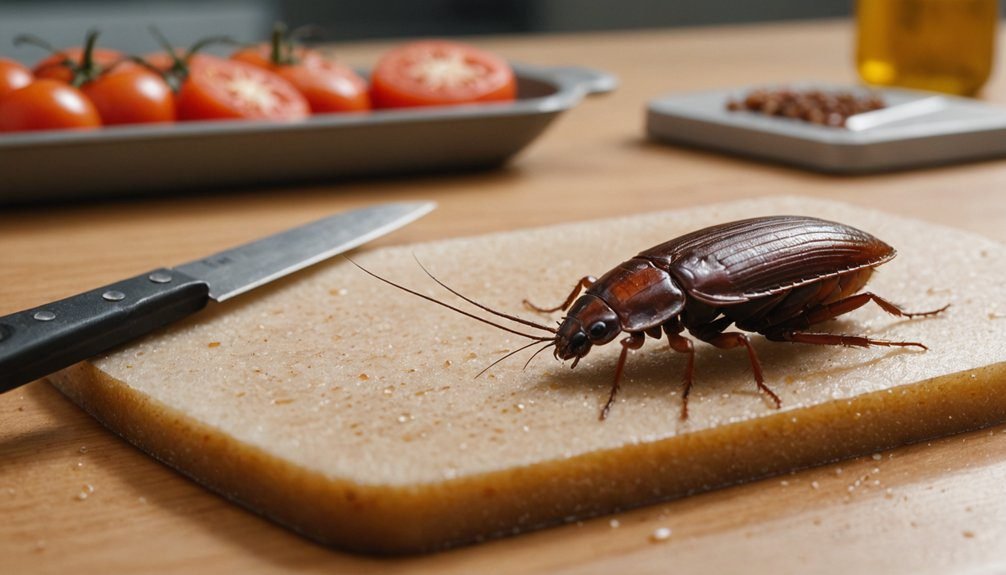
The connection between cockroach infestations and foodborne illness outbreaks is documented across multiple investigation types. Epidemiological investigations have linked Salmonella outbreaks in food service buildings and residential environments to cockroach infestations, particularly in settings where sanitation lapses allowed simultaneous infestation and food contamination. German cockroaches collected from catering environments and urban kitchens consistently test positive for Salmonella on their body surfaces and internally.
The public health impact falls most heavily on children and immunocompromised people. Children are more susceptible to the gastroenteritis, nausea, diarrhea, and vomiting caused by Salmonella infection, and their lower body weight means lower bacterial doses produce more severe symptoms. Immunocompromised people face risk of systemic infections that can progress to serious illness requiring hospitalization. The documented decline in hepatitis A rates following targeted cockroach control programs in affected communities provides direct evidence that reducing cockroach infestations produces measurable improvements in community disease burden.
Effective Control Strategies to Reduce Disease Risk
Reducing Salmonella and disease transmission risk from cockroaches requires addressing both the cockroach population itself and the environmental conditions that sustain it. Cleaning kitchen surfaces removes deposited bacteria but does not address the harborage colony that continues producing contaminated feces and foraging insects each night. A complete risk reduction approach combines sanitation, moisture control, exclusion, and targeted pest control into a coordinated program.
Clean all food preparation surfaces after every use with a disinfecting solution that kills enteric bacteria. Store food and pet food in sealed airtight containers to deny cockroaches access to food sources that draw foraging into kitchen zones. Wash dishes immediately after use and never leave dirty dishes overnight, which provides an overnight food source and moisture supply for cockroaches.
Sanitation and Exclusion Steps That Reduce Transmission Risk
- Empty kitchen trash cans nightly into sealed outdoor bins to eliminate the most significant overnight food source for cockroaches
- Fix all water leaks promptly and dry sinks, countertops, and pet water bowls overnight to remove moisture resources
- Seal cracks along baseboards, around pipe penetrations, and behind appliances to block the entry points cockroaches use to access kitchens from wall voids and sewers
- Remove clutter from kitchen and pantry storage areas to eliminate harborage that allows cockroaches to shelter near food zones
- Maintain tight-fitting lids on all indoor garbage containers and clean the bins themselves regularly to remove bacterial-laden residues
IPM Approaches for Disease Risk Reduction
For active infestations, gel baits and insect growth regulators placed in harborage zones deliver more effective colony-level control than spray applications, and they minimize the chemical exposure risk in food preparation environments. The best gel baits for cockroach control use slow-acting active ingredients that allow foraging cockroaches to return to the harborage before dying, maximizing transfer kill within the colony and reaching the individuals that sustain the Salmonella reservoir.
Sticky monitoring traps deployed in active zones provide weekly data on population trends and guide bait placement decisions. Deploy traps inside cabinet bases, beneath refrigerators, and under sinks where cockroach activity concentrates. Escalate to professional cockroach extermination when monitoring indicates a heavy infestation or when gel bait programs do not produce consistent population decline within two to four weeks.
Cockroach health risks extend beyond Salmonella to include allergens, viruses, and antibiotic-resistant bacteria, making comprehensive infestation control a public health priority rather than a convenience matter.
Frequently Asked Questions
Can Cockroaches Transmit Pathogens Through Airborne Particles or Dust?
Cockroaches transmit pathogens primarily through surface contact and fecal deposition rather than directly through the air. However, cockroach-contaminated dust resuspended during cleaning, ventilation, or foot traffic can carry bacteria and allergens through indoor air. Cockroach droppings deposited on floor surfaces and in cracks contribute measurably to the indoor air microbiome when disturbed. The more significant airborne health risk from cockroach infestations is allergen exposure from shed exoskeletons, droppings, and body fragments that trigger asthma symptoms and allergic reactions in sensitized individuals. Eliminating infestations and using HEPA filtration during cleaning reduces both surface contamination and airborne allergen exposure simultaneously.
Do Pet Cockroaches Pose Similar Disease Risks as Wild Ones?
Pet cockroaches can carry Salmonella, E. coli, fungi, and intestinal parasites on their bodies and in their feces, and they can transmit these organisms to humans through handling and through contamination of surfaces and pet food. The disease risk is generally lower than from wild infestations because pet cockroaches are not foraging through sewers, garbage, and drains. However, poor enclosure hygiene allows bacterial loads to build to levels that create real transmission risk. Wash hands thoroughly after handling pet cockroaches, clean enclosures regularly, and keep pet roach enclosures physically separated from food preparation areas.
How Long Do Pathogens Survive on Cockroach Bodies and Droppings?
Salmonella survives in cockroach droppings for 3 to 20 days under typical indoor conditions, with warmer and more humid environments extending viability. Internal gut carriage can sustain viable Salmonella for longer than external surface survival under the same conditions, meaning cockroaches continue to deposit viable bacteria in feces even days after their last contact with an external contamination source. E. coli can persist in feces for up to 8 days. Fresh feces carry the highest bacterial loads and pose the greatest immediate contamination risk, while older droppings present lower but still measurable hazard depending on temperature and humidity.
Are Certain Home Surfaces More Prone to Cockroach Contamination?
Porous surfaces including wood, cardboard, fabrics, and paper absorb cockroach excretions and hold bacteria longer than smooth non-porous surfaces, making them higher-risk contamination sites. Smooth surfaces like stainless steel, ceramic tile, and plastic still receive contamination but are easier to disinfect thoroughly. The highest-risk contamination zones in kitchens are cutting boards and food preparation surfaces, the outside of food containers and packaging, cabinet shelf interiors, the areas beneath and behind appliances, and surfaces near drains and sinks where cockroaches concentrate foraging activity. Disinfecting these specific high-risk surfaces daily is more effective at reducing transmission risk than general cleaning of low-contact areas.
Can Professional Lab Tests Detect Cockroach-Borne Pathogens in Homes?
Yes. Professional laboratory testing can identify cockroach species from collected specimens, quantify infestation severity, and screen for specific pathogens including Salmonella through PCR and culture methods. Surface swabs from high-contact kitchen areas can detect viable Salmonella and E. coli independently of cockroach collection. Allergen testing using ELISA assays can measure concentrations of cockroach allergens Bla g 1 and Bla g 2 in household dust, which guides both infestation severity assessment and post-treatment verification that allergen loads have declined to safer levels. Repeated sampling increases accuracy and provides data for targeted pest control and health intervention decisions.
{
“@context”: “https://schema.org”,
“@type”: “FAQPage”,
“mainEntity”: [
{
“@type”: “Question”,
“name”: “Can Cockroaches Transmit Pathogens Through Airborne Particles or Dust?”,
“acceptedAnswer”: {
“@type”: “Answer”,
“text”: “Cockroaches transmit pathogens primarily through surface contact and fecal deposition rather than directly through the air. However, cockroach-contaminated dust resuspended during cleaning, ventilation, or foot traffic can carry bacteria and allergens through indoor air. The more significant airborne health risk from cockroach infestations is allergen exposure from shed exoskeletons, droppings, and body fragments that trigger asthma symptoms and allergic reactions in sensitized individuals. Eliminating infestations and using HEPA filtration during cleaning reduces both surface contamination and airborne allergen exposure simultaneously.”
}
},
{
“@type”: “Question”,
“name”: “Do Pet Cockroaches Pose Similar Disease Risks as Wild Ones?”,
“acceptedAnswer”: {
“@type”: “Answer”,
“text”: “Pet cockroaches can carry Salmonella, E. coli, fungi, and intestinal parasites on their bodies and in their feces, and they can transmit these organisms to humans through handling and through contamination of surfaces and pet food. The disease risk is generally lower than from wild infestations because pet cockroaches are not foraging through sewers, garbage, and drains. However, poor enclosure hygiene allows bacterial loads to build to levels that create real transmission risk. Wash hands thoroughly after handling pet cockroaches, clean enclosures regularly, and keep pet roach enclosures physically separated from food preparation areas.”
}
},
{
“@type”: “Question”,
“name”: “How Long Do Pathogens Survive on Cockroach Bodies and Droppings?”,
“acceptedAnswer”: {
“@type”: “Answer”,
“text”: “Salmonella survives in cockroach droppings for 3 to 20 days under typical indoor conditions, with warmer and more humid environments extending viability. Internal gut carriage can sustain viable Salmonella for longer than external surface survival under the same conditions. E. coli can persist in feces for up to 8 days. Fresh feces carry the highest bacterial loads and pose the greatest immediate contamination risk, while older droppings present lower but still measurable hazard depending on temperature and humidity.”
}
},
{
“@type”: “Question”,
“name”: “Are Certain Home Surfaces More Prone to Cockroach Contamination?”,
“acceptedAnswer”: {
“@type”: “Answer”,
“text”: “Porous surfaces including wood, cardboard, fabrics, and paper absorb cockroach excretions and hold bacteria longer than smooth non-porous surfaces, making them higher-risk contamination sites. The highest-risk contamination zones in kitchens are cutting boards and food preparation surfaces, the outside of food containers and packaging, cabinet shelf interiors, the areas beneath and behind appliances, and surfaces near drains and sinks where cockroaches concentrate foraging activity. Disinfecting these specific high-risk surfaces daily is more effective at reducing transmission risk than general cleaning of low-contact areas.”
}
},
{
“@type”: “Question”,
“name”: “Can Professional Lab Tests Detect Cockroach-Borne Pathogens in Homes?”,
“acceptedAnswer”: {
“@type”: “Answer”,
“text”: “Yes. Professional laboratory testing can identify cockroach species from collected specimens, quantify infestation severity, and screen for specific pathogens including Salmonella through PCR and culture methods. Surface swabs from high-contact kitchen areas can detect viable Salmonella and E. coli independently of cockroach collection. Allergen testing using ELISA assays can measure concentrations of cockroach allergens in household dust, which guides both infestation severity assessment and post-treatment verification that allergen loads have declined to safer levels.”
}
}
]
}
