
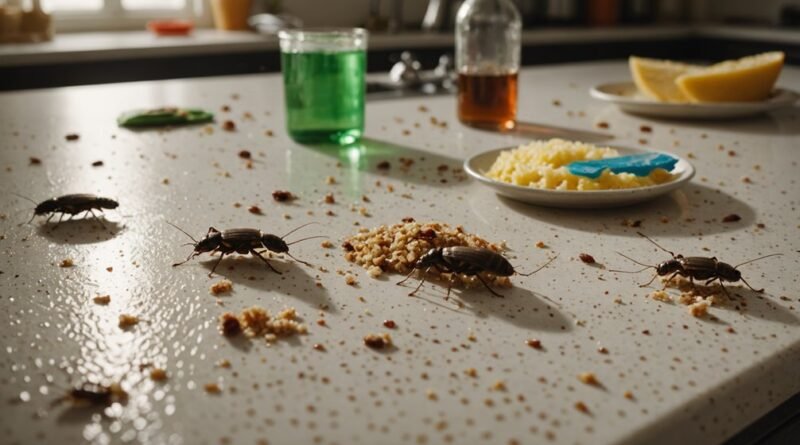
How Cockroaches Contaminate Food and Surfaces, Prevention and Clean-Up
Cockroaches track Salmonella, E. coli, and Staph from garbage and drains onto counters via legs, saliva, and feces. Their droppings and shed parts trigger asthma, especially in kids. You’ll reduce risk by sealing cracks, fixing leaks, storing food tight, decluttering cardboard, and using sticky traps. Clean with hot water and bleach or hospital-grade disinfectant; steam toys, wash bedding, and sanitize bins. Use gel baits and light dusts in crevices—avoid sprays on food areas. There’s more you can do next.
Key Takeaways
- Cockroaches contaminate food and surfaces via legs, feces, regurgitated saliva, and digestive fluids after contact with garbage and sewage.
- Their droppings and body parts carry Salmonella, E. coli, and allergens that trigger asthma and respiratory symptoms.
- Prevent entry by sealing cracks, fixing leaks, decluttering, and storing food in sealed containers.
- Clean and disinfect kitchens and bathrooms regularly; sanitize bins, wash bedding and toys, and steam or launder items.
- Use integrated pest management: monitor with traps, deploy baits, apply boric acid or silica dusts in crevices, and avoid sprays on food surfaces.
Pathogens Carried by Cockroaches

Silent hitchhikers on six legs, cockroaches carry a wide range of pathogens that threaten food safety and health. You face risks from bacteria like Salmonella, which causes salmonellosis with diarrhea, fever, and cramps.
Silent six-legged hitchhikers, cockroaches spread pathogens like Salmonella, causing diarrhea, fever, and cramps.
They also harbor Staphylococcus, often heat-resistant, leading to gastrointestinal illness, and E. coli, which triggers severe intestinal disease. Streptococcus organisms appear on roaches and can cause intestinal infections. Listeria monocytogenes is especially dangerous for pregnant women, newborns, and immunocompromised people. Cockroaches are carriers of indoor allergens that can provoke asthma attacks.
You’re also at risk from viral and parasitic threats. Roaches can transport poliovirus and other intestinal viruses onto food-contact surfaces. They’ve been linked to cholera bacteria and Salmonella Typhi, which can progress to life-threatening infections.
Campylobacter, a leading cause of diarrhea in the U.S., can also be spread.
Beyond microbes, cockroach feces, saliva, egg casings, and shed parts release allergens that provoke wheezing, coughing, sneezing, and nausea, and they’re major asthma triggers in children.
Enzymes in secretions drive these reactions.
How Cockroaches Spread Contaminants
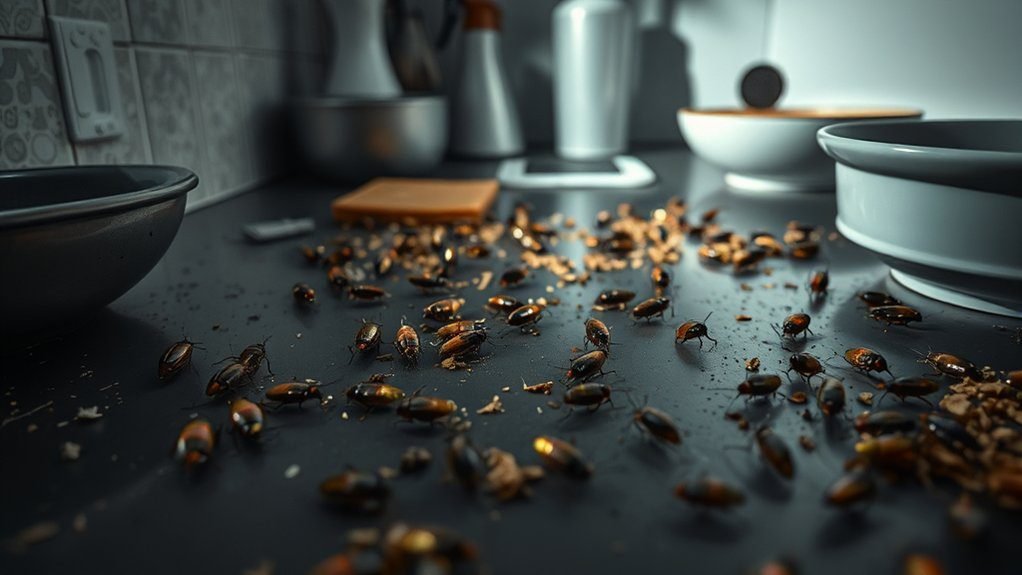
Three main behaviors let cockroaches turn kitchens into contamination zones: they mechanically ferry microbes on their legs and spined bodies after trekking through garbage and sewage; they shed infectious feces and allergen-laden droppings wherever they roam; and they regurgitate saliva and digestive fluids while feeding, seeding bacteria directly onto exposed food and prep surfaces.
When roaches cross counters, packaging, or ready-to-eat items, pathogens clinging to their exoskeleton transfer by touch—no bite required. Like flies, they move microbes efficiently across sinks, cutting boards, and dining areas, turning small hotspots into widespread exposure. In real-world surveys, cockroaches from catering areas frequently carried norovirus and E. coli, underscoring their role as mechanical vectors of foodborne disease.
Their droppings add a second hazard. Feces can carry Salmonella, E. coli, parasite eggs, and potent allergens. As roaches defecate while foraging, they contaminate multiple surfaces and contribute allergenic dust that aggravates airways.
Feeding introduces a third route. Regurgitated fluids and saliva can inoculate food with bacteria and embed contaminants into soft or moist items, making cleanup harder.
Roaches also transport parasite eggs externally or via feces, spreading cysts and sustaining infections through simple contact with food or surfaces.
High-Risk Environments and Signs of Infestation
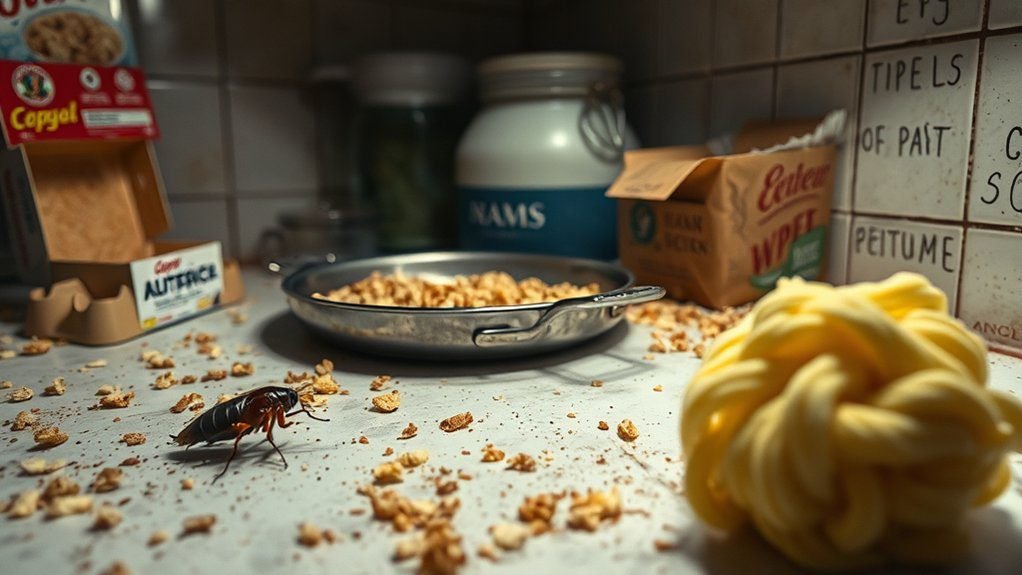
Even if your kitchen looks clean, certain conditions quietly favor cockroaches and make early clues easy to miss. Warmth and moisture draw them to kitchens, bathrooms, basements, drains, and any spot with leaks or poor ventilation. Large daytime sightings may indicate significant infestations.
Urban density, shared walls, and trash rooms in multi-occupant buildings amplify risk; clutter, cracks, and crevices give them cover. Southern, humid climates see more activity, but heated interiors let them persist even in colder regions.
Seasonal shifts—dry cold snaps or rainy spells—push them indoors and boost breeding.
Watch for night sightings near sinks, stoves, and baseboards. Check for pepper-like droppings along walls, inside cabinets, and behind appliances.
Scan for egg cases and shed skins in drawer tracks and under sinks. A musty, oily odor signals a large population. Use sticky traps under appliances and along wall edges to gauge activity.
Expect German cockroaches near warm, humid kitchens; look for American cockroaches in basements, sewers, and drains.
Health Risks Linked to Cockroach Exposure
Although cockroaches seem like a nuisance, their presence poses clear health risks—especially for children and people with asthma. You’re breathing their allergens from body parts, saliva, feces, and shed skins. These particles settle on surfaces, then go airborne during routine activity—like vacuuming—driving wheezing, coughing, chest tightness, and nighttime symptoms. Cockroaches also contaminate food and surfaces, creating additional risk for gastrointestinal illness.
Children sensitized to cockroach allergens suffer more frequent attacks, poorer lung function, 3.4 times more hospitalizations, and 78% more unscheduled visits.
Children sensitized to cockroach allergens face more attacks, worse lung function, and sharply higher hospitalizations and unscheduled visits.
You can also experience allergy symptoms beyond asthma: sneezing, runny or stuffy nose, watery or itchy eyes, postnasal drip, cough, itchy rashes, and even sinus or ear infections. Dead roaches and dried droppings still trigger immune reactions, and exposure occurs in both rural and urban areas, with inner-city homes hit hardest.
Cockroaches mechanically spread bacteria like Salmonella, Staphylococcus, and Streptococcus onto food and surfaces, contributing to diarrheal disease risks. Misused pesticides add chemical exposures that can irritate airways and aggravate asthma.
Prevention Strategies and Integrated Pest Management
While treating outbreaks matters, you’ll prevent most cockroach problems by adopting integrated pest management (IPM): cut off entry, food, water, and harborage, then monitor and target what remains.
Seal cracks, crevices, and gaps around doors, windows, and walls with caulk or weatherstripping. Store food and pet food in sealed containers and avoid overnight exposure. Fix leaks, dripping taps, and soggy gutters; dry damp wood. Declutter, remove cardboard after unpacking, and seal voids to reduce hiding sites. IPM often leads to long-term savings by preventing repeat infestations and reducing the need for frequent treatments.
Monitor relentlessly. Place sticky traps along walls, under sinks, behind appliances, and near recycling. Inspect kitchens, storage rooms, and damp spots on a schedule. Check incoming shipments or groceries and isolate anything suspect. Track humidity and temperature, and log trap counts and inspection findings to guide adjustments.
Use nonchemical controls first: HEPA vacuum live roaches and debris, install door sweeps and vent screens, secure trash, and switch exterior bulbs to yellow or sodium vapor.
When needed, deploy bait stations and IGRs precisely.
Effective Clean-Up and Disinfection Procedures
Start by removing contamination before you disinfect. Put on gloves and a mask, then vacuum dead roaches, egg cases, and droppings from cracks, crevices, and under appliances using attachments. Move appliances and furniture to reach hidden areas. Immediately empty the vacuum or swept debris into sealed bags and place them in outdoor bins.
Use sweeping or vacuuming as your non-chemical step before any disinfectant or pesticide.
Wash kitchenware in hot, soapy water. Clean countertops, sinks, and floors with a bleach-and-hot-water solution or a hospital-grade disinfectant. Disinfect bathrooms thoroughly—tubs, toilets, soap dishes, mats, and hand towels—using appropriate cleaners or machine washing.
Steam clean or wash children’s toys, bedding, and pet bowls. After vacuuming, apply disinfectant sprays to reduce bacteria and allergens.
Use boric acid or silica gel dusts sparingly in cracks, wall voids, and under/behind appliances; combine with bait stations. Avoid insecticide sprays on food surfaces.
Discard food waste promptly, sanitize bins, remove cardboard clutter, fix moisture, and wash or discard heavily infested materials.
Frequently Asked Questions
Are Cockroach Allergies Linked to Asthma Symptoms Worsening?
Yes. You’re more likely to have worse asthma with cockroach allergy. Early-life exposure increases wheeze; sensitization triggers flares, ER visits, and hospitalizations, especially in inner-city settings. Reduce exposure, address smoking, and seek guideline-based asthma and allergy care.
Do Cockroaches Develop Resistance to Common Household Insecticides?
Yes. You’ll face German cockroaches rapidly evolving physiological and behavioral resistance, including cross-resistance. Rotating modes helps only stabilize numbers. Pyrethroids falter; mixtures often fail. Use IPM: sanitation, exclusion, traps, targeted baits (abamectin cautiously), and monitor resistance regularly.
Can Cockroach Infestations Affect Restaurant Inspection Scores or Closures?
Yes. You’ll see lower inspection scores when cockroaches are present, especially in kitchens or storage. Repeated or severe infestations trigger citations, re-inspections, and can force temporary closures until you document effective pest control and compliance improvements.
What Legal Obligations Do Landlords Have for Pest Control?
You must keep rentals habitable and pest-free, fix entry points, and use licensed pros with an IPM plan. Give notice to enter, document treatments, and inspect regularly. If tenants cause infestations, leases can shift costs with proof.
Are Natural Predators Effective for Long-Term Cockroach Control?
Yes, but only as part of Integrated Pest Management. You’ll see slower, partial reductions—often around 40%—not eradication. Pair predators with baits, traps, sanitation, and exclusion. Avoid broad pesticides that kill allies, and monitor hotspots for targeted interventions.
Conclusion
You’ve seen how cockroaches carry pathogens, spread them across food and surfaces, and pose real health risks—especially in high‑risk environments. Stay proactive: seal entry points, reduce moisture, store food tightly, and use integrated pest management to keep populations down. If you spot signs, act fast. Clean thoroughly, disinfect correctly, and dispose of waste promptly. Partner with professionals when needed. With consistent prevention and proper clean‑up, you’ll protect your home, your food, and your health.
