
Vinegar to Kill Cockroaches
If you’ve ever spotted a cockroach scurrying across your kitchen floor, you’ve probably searched for any quick fix available. Vinegar often tops the list of natural remedies, but does it actually work? The answer is more complicated than a simple yes or no. Understanding what vinegar can and can’t do could save you time, money, and a lot of frustration.
Key Takeaways
- Vinegar does not kill cockroaches; pest-control experts classify it only as a cleaning tool with no insecticidal properties.
- Its strong acidic smell may temporarily disrupt roach pheromone trails but cannot eliminate nesting sites or egg cases.
- The repellent effect fades quickly, requiring daily reapplication in high-traffic areas to maintain even limited deterrence.
- Vinegar cannot reach deep cracks or nesting sites, making it unreliable as a standalone cockroach control method.
- Effective alternatives include boric acid, gel baits, sealing entry points, and professional treatment for serious infestations.
Does Vinegar Actually Kill Cockroaches?
Despite what many home remedy blogs claim, vinegar doesn’t actually kill cockroaches. Pest-control experts, including Terminix and Orkin, consistently describe it as a cleaning tool rather than an insecticide. It won’t eliminate roaches, and it certainly won’t destroy their eggs.
Vinegar doesn’t kill cockroaches — pest-control experts at Terminix and Orkin classify it as a cleaning tool, not an insecticide.
What vinegar does do is produce a strong acidic smell that may interfere with roach pheromone trails, temporarily making treated areas less attractive. That’s deterrence, not extermination.
If you’re dealing with an active infestation, vinegar won’t solve your problem. Effective control requires sealing entry points, eliminating food and water sources, maintaining sanitation, and using proven pest-control methods like baiting.
You can use vinegar to keep surfaces clean, but don’t rely on it to protect your home from cockroaches. Cockroaches lay eggs in deep cracks and inaccessible areas that vinegar simply cannot reach.
Vinegar Repels Roaches Temporarily but Doesn’t Kill Them
So vinegar won’t kill roaches, but does it at least keep them away? Somewhat — but only briefly. The strong smell of vinegar can make treated surfaces less attractive to roaches, which means they may avoid those areas for a short time.
However, that effect fades quickly, and you’ll need to reapply it repeatedly to maintain even that limited deterrence.
More importantly, vinegar doesn’t address the real problem. It won’t reach nesting sites, destroy egg cases, or eliminate harborage areas.
Roaches will simply move around treated spots and continue thriving wherever food, water, and shelter remain available.
Pest-control guidance consistently treats vinegar as an unreliable standalone deterrent — not a solution. At best, it mildly discourages roaches temporarily without doing anything to reduce their population. Of the vinegar types available, white vinegar is considered the most effective for pest control due to its higher acidity and stronger smell.
How to Use Vinegar as a Cockroach Repellent
If you’re going to use vinegar as a repellent, white vinegar is your best option — its stronger acidity makes it more effective than apple cider or distilled varieties.
Mix equal parts white vinegar and water in a spray bottle for general use, or use it undiluted for a stronger effect. You can also add dish soap or salt to boost its repelling properties.
Apply the solution by wiping down counters, floors, and cabinets daily in high-traffic areas.
Refresh less-accessed spots like baseboards and behind furniture every two to three days, since the odor fades over time.
Pair this routine with food source removal and moisture control — vinegar alone won’t eliminate an infestation, but it supports a broader pest-management approach.
Where to Spray Vinegar to Keep Roaches Away
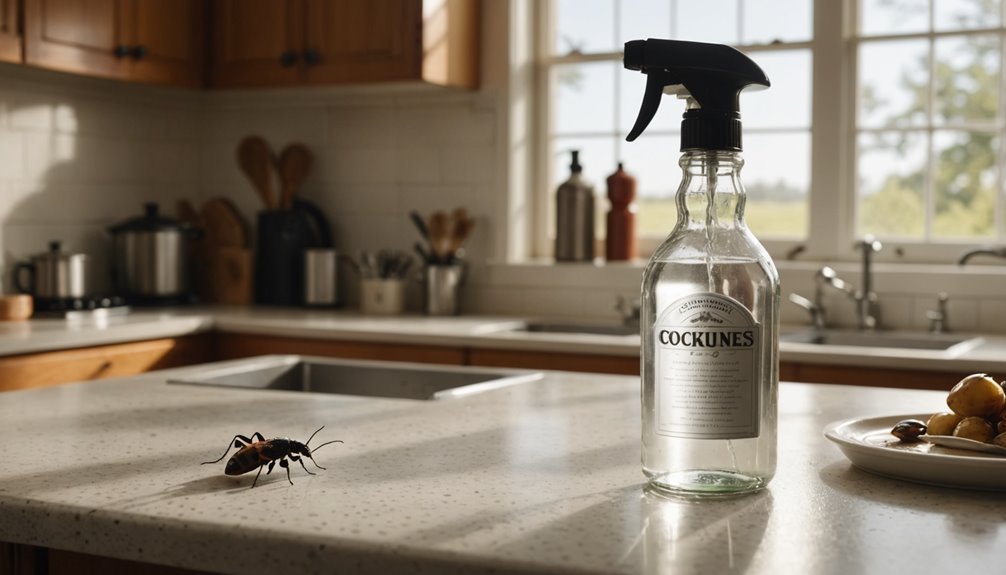
To keep roaches away, you’ll want to focus your vinegar spraying on the spots where they hide, travel, and feed.
Target kitchen countertops, cabinet interiors, baseboards, and cracks or crevices where roaches shelter during the day and move between walls.
Don’t overlook tight hiding spots like the areas under appliances, around pipes, and behind furniture, since these low-traffic zones give roaches the undisturbed harborage they need to thrive.
Best Spray Locations
Knowing the five best spray locations can make your vinegar routine far more effective. Target kitchen counters, baseboards, under-sink areas, behind appliances, and cabinet edges. These zones concentrate roach activity because they offer food residue, moisture, and shelter.
- Dry surfaces after spraying — leftover moisture attracts pests, defeating your purpose.
- Reapply regularly — vinegar’s repellent effect fades quickly, so consistency matters.
- Pair spraying with cleaning — removing grease and crumbs first makes the spray more effective.
Don’t neglect door and window seals, since roaches use draft gaps as entry points. Behind refrigerators and stoves also deserves attention because grease builds up fast. Roaches are also drawn to these areas because leaky pipes and damp sinks supply the hydration they need to survive.
Your spray bottle’s pattern matters too — a wider spray covers appliance gaps more efficiently.
Cracks and Hiding Spots
Roaches don’t just wander in the open — they hug walls, squeeze into cracks, and tuck themselves into the tightest gaps they can find.
Spray along wall-floor and wall-ceiling junctions, baseboards, and door and window moldings. Hit cabinet seams, joints, and the splash board areas around sinks where moisture and food residue build up.
Behind appliances like refrigerators, stoves, and dishwashers are prime harborages, so don’t skip them. Treat under and around sinks, near pipe penetrations, and inside cluttered drawers, closets, and shelves.
Target corners, edges, and anywhere you spot fecal spotting — that’s where roaches repeatedly congregate. Cockroaches are drawn back to these same spots because aggregating odors in feces signal to others that the area is a safe harborage.
Vinegar works as a repellent and cleaner here, not a killer, so dry treated surfaces afterward and combine it with sealant to close off hiding spots long-term.
Why Vinegar Can’t Eliminate a Cockroach Infestation
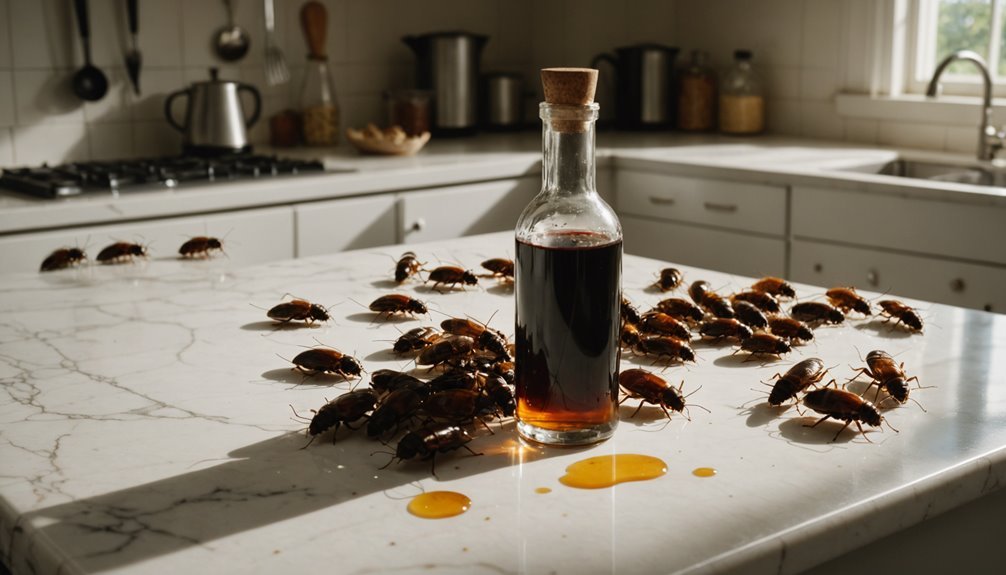
While vinegar can disrupt scent trails and make surfaces temporarily less inviting, it can’t kill cockroaches or eliminate an infestation. It’s a surface-level fix that doesn’t reach the hidden colony driving continued activity.
Eggs, nymphs, and adults stay protected inside wall voids, under appliances, and behind cabinets—completely untouched by any spray you apply to visible areas.
Vinegar also doesn’t fix what’s attracting roaches in the first place:
- Food scraps, moisture, and harborage remain available even after you spray
- The repellent effect fades quickly, letting roaches re-enter treated areas
- Repeated reapplication manages odor, not the population
Think of vinegar as a band-aid, not a cure. Distilled vinegar does not kill or repel roaches, meaning no concentration or frequency of application will produce meaningful results against an active infestation.
Without addressing the root conditions, your infestation continues regardless of how consistently you apply it.
What Actually Works for Getting Rid of Cockroaches
Since vinegar won’t eliminate a cockroach infestation, you’ll need to rely on methods that actually work.
Start by sealing cracks and gaps, fixing moisture problems, and removing food sources that keep roaches coming back.
From there, you can deploy boric acid, gel baits, and traps to target the roaches that remain.
Proven Cockroach Control Methods
When vinegar fails—and it will—you’ll need methods that actually eliminate cockroaches rather than just clean your countertops. Proven control combines gel baits, dusts, and monitoring tools that target roaches where they actually live.
- Gel baits should be placed in small dabs inside cracks, crevices, and under sinks—close to harborages, not spread across open surfaces.
- Dusts like boric acid, silica gel, or diatomaceous earth work through contact and ingestion inside wall voids and hidden spaces where roaches shelter.
- Sticky traps help you identify hotspots so your treatments hit the right locations; check them daily at first.
Purdue Extension confirms that combining bait and dust outperforms any single method, so layering these approaches gives you the strongest results.
Sealing and Sanitizing Your Home
Sealing and sanitizing won’t kill the cockroaches already inside your home, but they cut off the resources that keep infestations alive and block new ones from entering.
Use caulk, foam, or copper mesh to seal gaps around pipes, wires, and cables. Install door sweeps and tight-fitting window screens to stop outdoor species. Check your foundation and walls twice a year and reseal as needed.
For sanitation, clean up spills immediately and don’t leave dirty dishes overnight. Store food in airtight containers, not cardboard or loose packaging.
Don’t leave pet food or water out continuously. Clean regularly under appliances, behind sinks, and inside cabinets. Fix leaky pipes, reduce humidity, and dry sinks before bed.
Discard stacked newspapers, paper bags, and cardboard that give cockroaches places to hide.
Traps, Baits, and Insecticides
While vinegar can make your kitchen less inviting to cockroaches, it won’t eliminate an infestation on its own. For real results, you’ll need to combine stronger methods that actually kill roaches rather than simply repel them.
Here’s what works:
- Boric acid baits attract and kill roaches after ingestion when placed along travel paths and harborage areas.
- Glue traps help you monitor activity levels and confirm whether your control methods are working over time.
- Baking soda mixed with sugar offers a DIY bait option, since the sugar lures roaches toward the deadly ingredient.
No single method eliminates an infestation completely.
Combining targeted baits, monitoring traps, and appropriate insecticides gives you the best chance of long-term control.
Signs Your Roach Problem Is Beyond Vinegar and DIY Fixes
If vinegar and routine cleaning haven’t reduced roach sightings, your infestation has likely grown beyond what surface-level DIY fixes can handle.
Roaches appearing during the day, in multiple rooms, or in appliances and wall voids signal an established colony, not isolated wanderers. Finding egg cases, shed skins, or roaches in multiple life stages confirms active breeding in hidden harborages that vinegar simply can’t reach.
Persistent moisture, unsealed food, and dirty drains continue feeding the population regardless of how often you clean visible surfaces.
Over-the-counter sprays often scatter roaches rather than eliminate them, making the problem harder to control.
If activity continues after sealing food, fixing leaks, and decluttering, you need professional-grade baiting, monitoring, and targeted treatment to address the infestation at its source.
Frequently Asked Questions
Can Vinegar Harm Pets or Children if Used Around the Home?
Yes, vinegar can harm your pets and children. It’ll irritate their eyes, skin, and mucous membranes. Keep them away until surfaces dry, and never spray it near their faces or eyes.
Does Vinegar Affect Cockroach Eggs Already Laid Inside Walls?
Vinegar won’t kill cockroach eggs already laid inside your walls. The eggs survive even when soaked in it. You’ll need residual pesticides, boric acid, or IGRs to effectively target hidden egg cases.
Is Apple Cider Vinegar Just as Effective as White Vinegar?
No, apple cider vinegar isn’t as effective as white vinegar. White vinegar’s stronger acidity and smell make it the better choice for repelling roaches and cleaning surfaces that attract them.
How Long Does Vinegar’s Repelling Smell Last After Application?
You’ll typically get a few hours of repelling effect after applying vinegar, but it fades as the smell dissipates. Reapply regularly since it’s only a short-term deterrent, not a lasting solution.
Can Cockroaches Become Accustomed to Vinegar Over Time?
Cockroaches don’t truly become accustomed to vinegar. Instead, you’ll find that its repellent effect is simply too weak and inconsistent to matter, especially when food, moisture, and shelter keep drawing roaches back.
Conclusion
Vinegar can temporarily mask pheromone trails, but it won’t solve your cockroach problem. If you’re dealing with a serious infestation, you’ll need more than a spray bottle of white vinegar. You should seal entry points, eliminate food sources, and use proven insecticides or professional pest control. Don’t waste time relying on a partial fix when roaches are multiplying in your walls. Act fast and use methods that actually work.
