
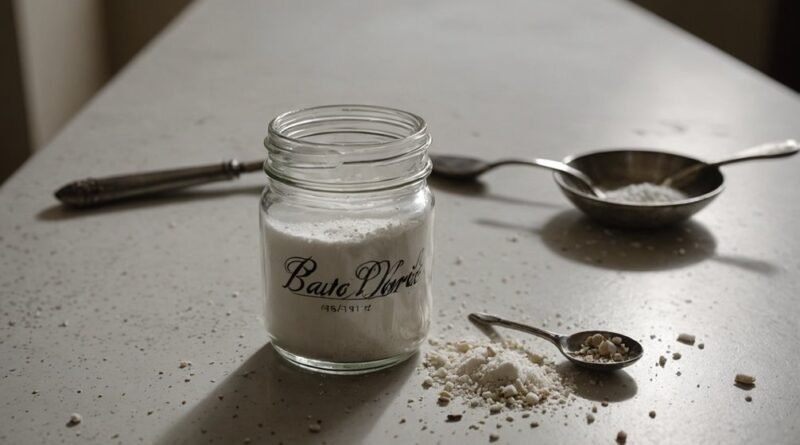
Boric Acid for Cockroaches How to Use
Cockroaches are stubborn, and most store-bought sprays only push them around. Boric acid works differently — it kills them quietly and keeps working long after you apply it. But most people use it wrong, which is why they see zero results. The right technique makes all the difference between a roach problem that fades and one that gets worse.
Key Takeaways
- Boric acid kills cockroaches by scratching their cuticle, causing dehydration, and acting as a stomach poison when ingested.
- Apply thin layers in cracks, crevices, behind appliances, and under sinks using a bulb duster for precise placement.
- Mix boric acid with peanut butter or powdered sugar at a 3-to-1 ratio to create effective cockroach bait.
- Never apply boric acid on food-preparation surfaces, wet areas, or locations accessible to children and pets.
- Reapply dust every two to three weeks and replace bait every two to four weeks for lasting control.
What Does Boric Acid Actually Do to Cockroaches?
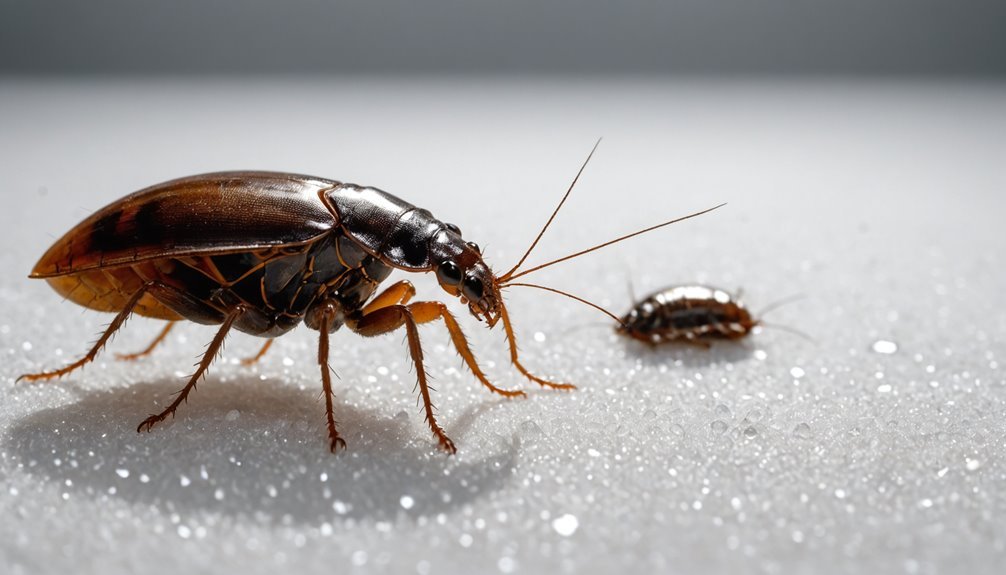
Boric acid kills cockroaches through three overlapping mechanisms: physical damage, ingestion, and transfer. Its fine particles scratch the waxy cuticle, stripping the roach’s ability to retain moisture and accelerating dehydration. The powder clings to the body as the roach walks through treated areas, increasing cumulative exposure.
When the roach grooms itself, it ingests the powder. Inside the digestive system, boric acid acts as a stomach poison, reducing feeding efficiency and contributing to starvation. At sufficient doses, it also disrupts the nervous system, causing loss of coordination and eventual death.
Contaminated roaches carry the powder back to hiding spots, spreading exposure through direct contact, grooming, and cannibalism. This colony-level transfer is what makes boric acid effective against entire infestations, not just individual insects. Unlike most chemical insecticides, boric acid’s different mode of action means populations that have developed resistance to conventional treatments remain vulnerable to it.
Where to Apply Boric Acid for the Best Results
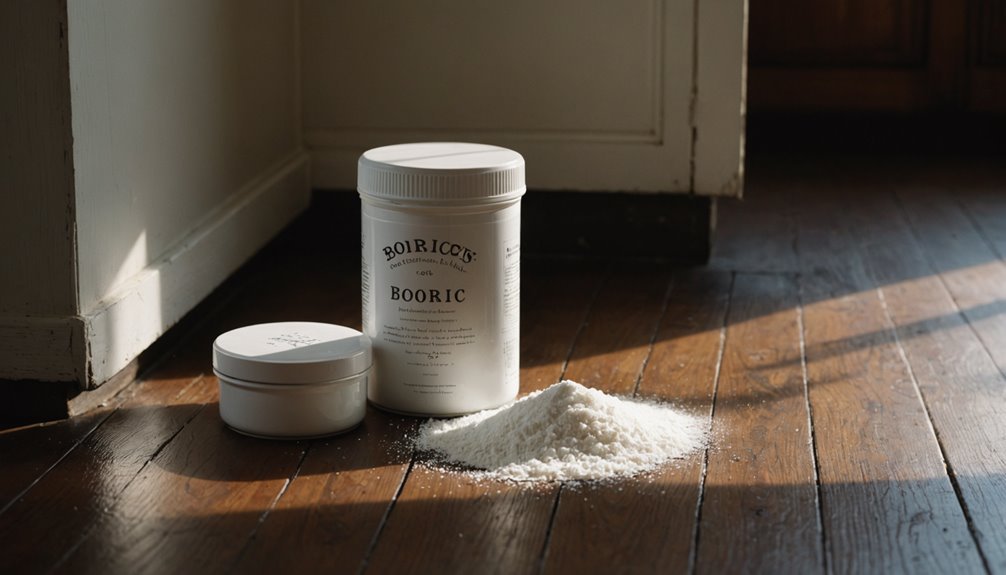
Knowing where to apply boric acid matters as much as how you apply it. Focus on cracks, crevices, and gaps along baseboards, corners, and wall edges where roaches travel.
Treat the space under sinks near pipe penetrations, and apply lightly behind refrigerators, ovens, and dishwashers where roaches hide undisturbed.
Target pipe penetrations under sinks and the hidden spaces behind large appliances where roaches shelter undisturbed.
Place thin layers inside cabinet interiors, drawer edges, and wall voids rather than open surfaces. Target dark, moist hotspots that match roach harborage behavior, and use multiple small placements near known activity rather than spreading broadly across a room.
Keep all treated areas dry, and reapply every two to three weeks or after cleaning disturbs existing treatment. Precise placement beats wide coverage every time. Boric acid sticks to cockroach legs and bodies as they travel through treated areas, making high-traffic pathways the most strategic locations for application.
Where You Should Never Apply Boric Acid

Knowing where *not* to apply boric acid is just as important as knowing where to place it.
You should never apply it on food-preparation surfaces, in wet or damp spots, or anywhere children and pets can easily reach.
These mistakes reduce effectiveness and create unnecessary health risks for your household. Avoid outdoor applications near gardens or flowering plants, as boric acid can negatively impact beneficial insect populations.
Food Preparation Areas
When using boric acid in the kitchen, there are certain areas you should never treat. Keep it away from countertops, cutting boards, and any surface that directly contacts food. Even small amounts of powder on these surfaces can transfer to food and create serious contamination concerns.
Don’t apply it inside pantries where shelves, containers, and packaged foods are exposed to drift or residue. Areas where unwashed dishes, utensils, or pet food sit out should also remain untreated.
Instead, clean up food debris and dirty dishes first, then focus treatment on hidden cracks, voids, and harborages. Cockroaches prefer to hide in warm, dark, moist areas, so targeting these locations is far more effective than treating open surfaces anyway.
In food processing environments, restrict all applications strictly to crack-and-crevice treatments. Broad surface application has no place near food preparation zones.
Wet or Damp Spots
Boric acid has one critical weakness: moisture. Once it contacts water, it clumps, washes away, and stops working. You’ll waste product and miss your target entirely.
Avoid these locations completely:
- Under sinks and around plumbing leaks – condensation and pooled water destroy residue fast; fix leaks first, then treat only adjacent dry crevices.
- Around drains and splash zones – rinsing, mopping, and runoff carry the dust away from roach pathways and into unintended areas.
- Bathrooms and laundry rooms – steam, humidity, and repeated cleaning make loose powder applications unreliable; target dry wall gaps and baseboard seams instead.
Where moisture can’t be eliminated, switch to bait stations rather than forcing a dust application that won’t hold. For effective pest control, boric acid works by abrading roach exoskeletons, which requires the powder to remain dry and undisturbed in areas where roaches actively travel.
Near Children and Pets
The most important rule with boric acid is simple: never apply it anywhere children or pets can reach. Floors, carpets, and low surfaces are off-limits because toddlers and pets contact these areas directly. Use bait stations instead of loose powder, and place treatments only in hidden, inaccessible spots like wall voids or behind appliances.
| Location | Children Risk | Pets Risk |
|---|---|---|
| Floors & carpets | Crawling contact | Walking/licking |
| Feeding/food areas | Ingestion risk | Direct exposure |
| Low shelves | Hand contact | Sniffing/licking |
Store all boric acid materials in locked cabinets. If infants or toddlers live in your home, consider professional application instead. Monitor pets for vomiting, diarrhea, or lethargy after any treatment.
How to Apply Boric Acid Dust Without Wasting It
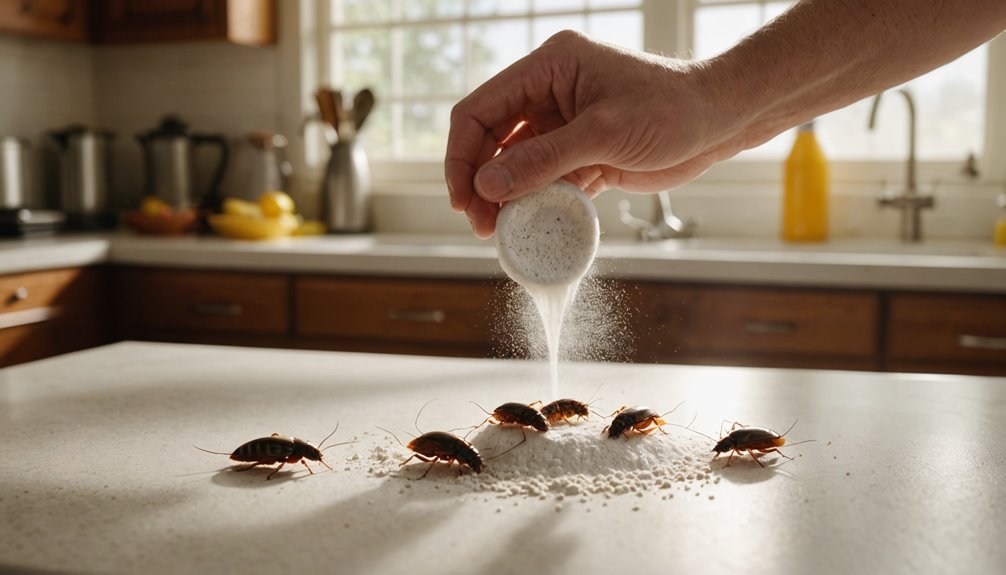
Applying boric acid dust correctly makes the difference between an effective treatment and wasted product. Use a bulb duster or bellows hand duster instead of pouring directly from the container. Target hidden travel routes, not open surfaces, and keep every deposit thin enough that it’s barely visible.
Follow these three rules to avoid wasting product:
- Apply a light puff, not a pile — visible dust repels roaches rather than killing them.
- Place dust in cracks, crevices, and wall-floor junctions where roaches actually travel, such as behind appliances and under sinks.
- Skip reapplication unless necessary — undisturbed, dry dust remains effective, making this typically a once-a-year treatment when done right.
Make a Boric Acid Bait That Roaches Can’t Resist
Making a boric acid bait starts with picking the right food base—peanut butter, flour, powdered sugar, or egg yolk all work well to draw roaches in.
You’ll mix your chosen attractant with boric acid at roughly a 3-to-1 or 5-to-1 ratio, blending dry ingredients first before adding any liquid a little at a time until you reach a firm, Play-Doh-like consistency.
Once your bait is shaped into small balls or portioned into bottle caps, you’ll place it in tight spots near roach activity, like under sinks, behind appliances, and along cabinet edges.
Choosing Your Bait Ingredients
Boric acid alone won’t do much if roaches won’t eat it, so pairing it with the right attractants is what makes your bait actually work.
Aim for a balance where attractants outweigh boric acid, since too much powder kills palatability.
Choose ingredients from these three categories:
- Sweets – Powdered sugar, honey, or syrup draw roaches in and help bind dry ingredients together.
- Starches – Flour or cornstarch give your bait structure, creating a stiff, Play-Doh-like consistency that’s easy to portion.
- Protein and fat – Peanut butter or egg yolk adds aroma and appeal, especially where sweet baits underperform.
Use 99–100% pure boric acid powder, which is odorless and won’t repel roaches when mixed correctly.
Mixing And Forming Bait
Once you’ve got your ingredients, mixing bait comes down to three variables: ratio, texture, and size.
Keep boric acid at roughly 1 part to 3–5 parts attractant—too much makes the bait unpalatable or kills roaches before they return to the nest. Wear gloves and, if you’re working with loose powder indoors, a dust mask.
Add liquid drop by drop until you reach a thick, non-runny consistency. A paste using sugar and water, a dough built from flour and syrup, or an egg-yolk blend all work depending on what you’re targeting.
Once mixed, roll the bait into balls roughly ½ inch wide or place pea-sized dabs directly onto surfaces.
Let them air-dry for a few hours before placement so they hold their shape.
Placing Bait Correctly
Even the best bait goes to waste if you put it in the wrong spot. Skip open floor space and target areas where roaches already travel — behind appliances, under sinks, along baseboards, and inside cabinet corners.
Use small, pea-sized dabs rather than large piles, and set them on bottle caps or foil squares for cleaner placement.
Follow these three rules for consistent results:
- Stay off food surfaces — never place bait on countertops or anywhere near direct food contact.
- Avoid wet zones — moisture dissolves boric acid bait and kills its effectiveness fast.
- Spread it out — multiple small placements along roach pathways outperform one large station every time.
Check placements every one to two weeks and replace dried or contaminated bait promptly.
How Much Boric Acid Do You Actually Need?
When it comes to boric acid, less is genuinely more. You’re not packing powder into corners — you’re leaving a barely visible trace that roaches walk through. Heavy deposits actually repel them.
| Application Type | Recommended Amount | Target Location |
|---|---|---|
| Dry dust | Barely visible film | Cracks, voids, baseboards |
| Simple bait | Equal parts boric acid + sugar | Bottle caps, cardboard |
| Cocoa bait | Equal parts boric acid + cocoa | Corners, cabinet edges |
| Dough bait | 2 tbsp boric acid + 2 tbsp cocoa + 4 tbsp flour | Small balls in hidden spots |
| Paste bait | 2 tbsp boric acid + 2 tbsp peanut butter | Near plumbing openings |
Use a bulb duster for dust, and shape baits into small pellets — enough for multiple placements, never one large deposit.
How Often Should You Reapply Boric Acid?
Reapplication timing depends more on what form you’re using than on a fixed calendar. Dust in sheltered cracks lasts considerably longer than bait exposed to kitchen grease or bathroom moisture.
Follow these general intervals:
- Bait placements — Replace every 2–4 weeks, or sooner if the bait dries out, molds, or gets covered in debris.
- Dust applications — Reapply every 3–4 months unless moisture, cleaning, or physical disturbance removes the deposit.
- Outdoor treatments — Reapply around every 90 days, shortening that interval after heavy rain or major weather events.
Inspect treated areas weekly regardless of form. If cockroach activity stays high after the first treatment cycle, stay on the shorter end of each range.
Is Boric Acid Safe Around Kids and Pets?
Boric acid isn’t harmless, and how safe it is around kids and pets depends on the dose, formulation, and how exposure happens. The EPA classifies it as moderately acutely toxic, and children are more sensitive to pesticides than adults. Infants have experienced seizures and death from prolonged exposure.
| Factor | Children | Pets |
|---|---|---|
| Sensitivity | Higher than adults | Higher in smaller animals |
| Ingestion symptoms | Vomiting, seizures, kidney damage | Vomiting, tremors, seizures |
| Contact symptoms | Skin and eye irritation | Skin and eye irritation |
| Exposure route | Ingestion, skin, inhalation | Ingestion, skin, inhalation |
Apply boric acid only in cracks and hidden voids they can’t reach. If exposure occurs, contact Poison Control immediately.
What to Use Alongside Boric Acid to Stop Roaches for Good
Keeping boric acid away from kids and pets matters, but placement alone won’t stop a roach problem for good.
Pair boric acid with these three strategies to cut off what roaches need to survive:
1. Non-repellent gel bait — Apply it in cracks, crevices, and wet zones where dust performs poorly.
Keep gel and dust separated so roaches don’t avoid treated areas.
2. Sanitation — Remove crumbs, seal food in tight containers, and empty garbage regularly.
Without food sources, treatments work faster.
3. Entry-point sealing — Close cracks, wall gaps, and plumbing openings roaches use to move and hide.
Rotate gel bait placements when activity continues, since roaches shift feeding patterns after repeated exposure.
Combining all three with boric acid gives you lasting control.
Frequently Asked Questions
Can Boric Acid Eliminate an Entire Cockroach Colony Over Time?
Yes, boric acid can eliminate an entire cockroach colony over time. You’ll see results in 3–5 days, but full elimination of smaller infestations may take 4–8 weeks with consistent application.
Does Boric Acid Work on Cockroach Eggs or Only Adult Roaches?
Boric acid doesn’t work on cockroach eggs—it can’t penetrate the protective egg case. It’s most effective on adult roaches and nymphs after they hatch and walk through treated dust, ingesting it during grooming.
How Long Does Boric Acid Take to Kill Cockroaches After Contact?
After contact, you won’t see instant results. Boric acid typically kills cockroaches within 1–3 days once they’ve ingested it through grooming. Full population reduction can take 2–3 weeks, depending on infestation size and placement quality.
Can Cockroaches Develop Resistance to Boric Acid With Repeated Exposure?
You don’t need to worry about cockroaches developing resistance to boric acid—there’s no documented evidence of it. However, they can learn to avoid treated areas, so proper thin-layer application remains essential.
Is Boric Acid Effective Against All Cockroach Species Found Indoors?
Boric acid isn’t equally effective against all indoor cockroach species. It works best on German cockroaches, but you’ll need adequate ingestion for Oriental and American species. Eggs remain unaffected, so you may need additional control methods.
Conclusion
You now have everything you need to use boric acid effectively against cockroaches. Apply it in the right spots, keep the layers thin, and pair it with bait for faster results. Don’t forget to reapply every few weeks and keep it away from kids and pets. Stick to the strategy, stay consistent, and you’ll see a noticeable difference in your roach problem before long.
