
Cockroach Gel Bait Vs Spray
You’ve got roaches, and you’re staring at two options: gel bait or spray. Both promise results, but they work in completely different ways. Pick the wrong one for your situation, and you’ll waste time and money while the infestation grows. Understanding how each method actually attacks roaches changes everything about how you approach the problem.
Key Takeaways
- Gel bait spreads toxins colony-wide through cannibalism and droppings, while sprays only kill roaches they directly contact.
- Sprays provide faster knockdown for visible roaches, whereas gel bait delivers slower, deeper, longer-lasting control.
- Gel bait remains effective for months; sprays dry out quickly and require more frequent reapplication.
- Sprays may repel roaches into hiding, potentially worsening infestations, while gel bait draws them out to feed.
- Combining both methods works best: use gel bait in concealed areas and spray only along perimeters without overlapping.
Gel Bait vs Spray: How Each One Actually Attacks Roaches
When a roach walks across a sprayed surface, it dies from direct contact with the chemical—no feeding required.
That’s the core mechanic of sprays: they kill through surface contact, targeting roaches that are visible and actively moving. You get fast knockdown, but only for what’s already exposed.
Gel baits work differently.
You’re deploying a food-based attractant laced with slow-acting poison. The roach eats it, then returns to its hiding spot before dying.
Gel bait lures roaches in with food, then poisons them slowly—letting them carry death back to the nest.
That delay is intentional—it allows the roach to reach the harborage where others are nesting. Dead roaches are then consumed by others, spreading the toxin through droppings and regurgitation.
How Cockroach Gel Bait Kills the Whole Colony
Unlike sprays, gel bait doesn’t stop at the first roach it kills—it’s designed to spread. The slow-acting formula lets a roach feed, return to the nest, and die there. Other roaches then pick up the toxicant through contact, droppings, and cannibalism.
| Transfer Route | Who It Reaches | Why It Works |
|---|---|---|
| Direct feeding | Foraging adults | First exposure point |
| Body contact | Nestmates | Shared harborage space |
| Droppings | Nymphs and adults | Normal scavenging behavior |
| Cannibalism | Colony-wide | Roaches eat their dead |
| Residue contact | Hidden individuals | Reaches spray-inaccessible spots |
This chain reaction targets roaches that never touched the bait. You can expect noticeable reduction within a week and near-elimination within a month with correct placement and fresh product. To maximize this effect, eliminating other food sources through deep cleaning forces roaches to rely solely on the bait, making the entire process significantly more efficient.
How Roach Spray Works and Where It Falls Short
When you spray a roach directly, the synthetic pyrethroids absorb through its body and disrupt its nervous system, causing paralysis and death within seconds to minutes.
The problem is that spray only kills what it hits, leaving roaches hidden in wall voids, behind appliances, and inside nesting areas completely unaffected.
You’re also fighting an uphill battle against pyrethroid-resistant populations, and without addressing food, water, and entry points, reinfestation is nearly inevitable. Storing food in airtight containers and repairing leaks removes the resources roaches need to survive and repopulate after a spray treatment.
Contact Kill Mechanism
Roach sprays work by depositing insecticide directly onto the insect’s body, where it’s absorbed through the cuticle — the hard outer covering. Most common sprays use synthetic pyrethrins or pyrethroids, which are neurotoxins that disrupt the insect’s nervous system.
Once absorbed, you’ll typically see three distinct effects:
- Immediate paralysis and loss of muscle control
- Involuntary twitching and flipping onto the back
- Death from complete nervous system failure
The insecticide can also enter during grooming, which adds another absorption pathway.
These sprays are designed as “contact killers,” meaning you need to directly hit visible roaches for immediate results. Some products also leave a residual film on surfaces, so roaches crawling across treated areas pick up poison even after your initial application. Unlike gel baits, sprays lack a secondary kill mechanism, meaning roaches that never come into direct contact with the treated area or spray remain completely unaffected.
Spray’s Key Limitations
Despite delivering fast contact kills, roach sprays have serious limitations that let infestations survive and rebound. Their residual control is weak—in one study, fewer than 25% of roaches died within 24 hours on treated surfaces, and full mortality required 8–24 hours of continuous exposure.
Sprays also can’t reach hidden harborage zones like wall voids and cracks where roaches nest and lay egg cases. Those eggs survive treatment entirely, restarting the infestation later.
Resistance compounds the problem. Roaches from real-world infestations survived exposure to five common pesticides in five of six tested trials.
Worse, many sprays repel rather than kill, scattering roaches deeper into walls. You may see fewer visible roaches temporarily, but the source population stays intact. Over time, repeated spray applications can cause roaches to develop chemical resistance, rendering previously effective products increasingly useless against the same population.
Cockroach Gel Bait vs Spray: Which Lasts Longer?
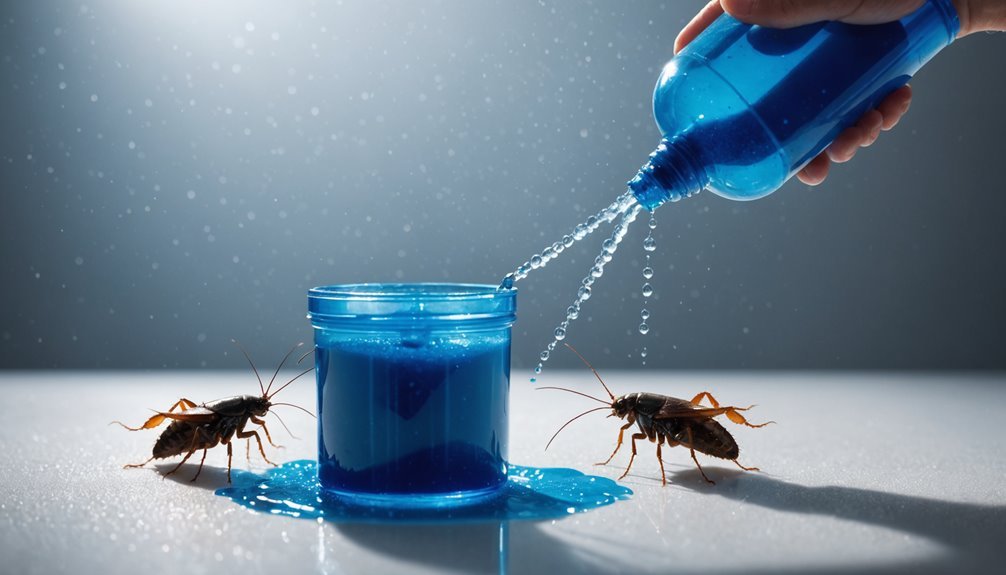
How long a treatment lasts can determine whether you’re managing a cockroach problem or just delaying it. Gel bait consistently outlasts spray in three key ways:
- Residual activity – Gel bait stays active at cracks and crevices until consumed, while spray thins out quickly after drying.
- Colony-wide reach – Roaches carry bait back to hiding spots, extending the kill beyond the original placement. Spray only affects what it directly contacts.
- Reapplication frequency – Gel bait needs reapplication every 2–4 weeks during active infestations. Sprays often require retreatment every few days.
Professional gel treatments can remain effective for 3–6 months.
If you’re dealing with a persistent infestation, gel bait’s longer residual action makes it the more practical, durable choice.
Is Gel Bait Safer Than Spray Around Kids and Pets?
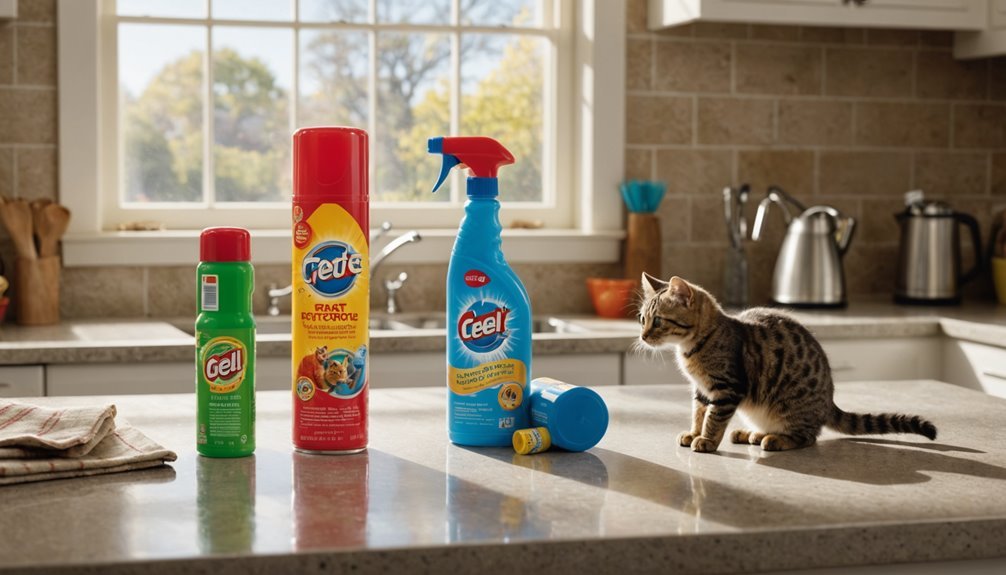
When you use gel bait, you place it in cracks and crevices where roaches travel, which keeps it out of your kids’ and pets’ normal reach.
That targeted placement reduces broad surface exposure, but it doesn’t eliminate risk if a curious toddler or pet finds and eats the product directly.
Sprays, on the other hand, leave wet residue across floors and baseboards that your pet can step in, transfer to their coat, and then ingest while grooming.
Gel Bait Placement Risks
Gel bait is generally safer than spray around kids and pets, but that safety depends almost entirely on where you put it.
Open surfaces, low edges, and frequently cleaned areas turn a low-risk product into a direct hazard. Placement mistakes are where most exposure problems start.
Three placement risks you need to avoid:
- Accessible spots — Never apply bait where kids or pets can lick, chew, or touch it directly.
- High-traffic surfaces — Cleaning removes bait and spreads it, increasing accidental contact.
- Open blobs instead of small dots — Larger amounts raise exposure without improving control.
Stick to deep crevices, cracks, and protected harborage points.
Small animals like hamsters and guinea pigs face greater risk, so truly inaccessible placement isn’t optional — it’s the whole strategy.
Spray Exposure Concerns
Spray creates a different kind of exposure problem than gel bait, and the timing matters most. When a spray is wet, it transfers easily onto paws, fur, hands, and floors.
Once your pet walks through a treated baseboard or your child touches a sprayed surface, contact happens fast.
The American Academy of Pediatrics advises against broad spraying when children are present, recommending baits and gels instead because they limit incidental contact.
Spray residues can settle on furniture, flooring, and toys, meaning exposure isn’t limited to where you aimed the product.
You should keep pets and children out of treated areas until the spray dries completely.
Label directions set the minimum re-entry time, and following them isn’t optional if you want to reduce risk.
When to Use Cockroach Gel Bait Over Spray
Choosing gel bait over spray comes down to where roaches are hiding and what you’re trying to achieve. If roaches are feeding in concealed cracks, sprays can’t reach them effectively — but gel bait can.
Use gel bait when:
- Precision matters — Place small dots directly into hinges, toe-kicks, and pipe cut-outs where roaches travel, spacing placements 30–45 cm apart.
- Long-term control is the goal — Gel’s slow-acting formula lets roaches carry toxicant back to the colony, reducing populations over time rather than just triggering scatter.
- Sprays would interfere — Never apply spray near bait placements, as residue contaminates the gel and kills its attractiveness.
Recheck placements every 48–72 hours and replenish consumed or dried bait to maintain results.
When Roach Spray Actually Makes Sense
While gel bait handles long-term colony reduction, roach spray earns its place in specific, time-sensitive situations. If a roach is crawling across your counter right now, spray makes sense. Contact killers work within seconds, giving you immediate knockdown when waiting isn’t an option.
Spray also fits crack-and-crevice treatment along baseboards and cabinet seams, where residual films can keep killing for two to four weeks as roaches travel the same routes repeatedly.
Before guests arrive or during a professional service call targeting visible hotspots, spray delivers quick suppression that gel bait simply can’t match on short notice.
Just don’t confuse fast results with a full solution. Egg capsules survive spray treatments, and hidden colonies stay active, so spray works best when you’re combining it with longer-term control methods.
How to Use Gel Bait and Spray Together for Full Control
Getting the most from both products comes down to one rule: never let them overlap. Treat your space as two separate zones — one for bait, one for spray — and keep them from crossing.
Here’s how to split the work:
- Place gel bait inside cabinets, under appliances, behind toilets, and near pipes where roaches already travel.
- Apply spray only along perimeters, seams, and structural edges that have no active bait placements.
- Never spray over or near bait dots — repellents, fogging, and wet treatments reduce bait uptake and break the transfer effect that kills the colony.
Keep bait as your primary control tool. Spray supports coverage without replacing it.
Recheck placements regularly, replace gel around every three months, and adjust both zones as activity shifts.
How to Tell Whether Your Gel Bait or Spray Is Working
Telling whether your treatment is working starts with having something to measure against. Before applying anything, record how many roaches you’re seeing so you have a baseline for comparison.
For gel bait, don’t judge results too quickly. Some reduction may appear within a few days, but one week is often too soon to draw conclusions.
Check whether bait is being consumed at multiple placement points. Untouched bait signals poor placement, not product failure.
Untouched bait means wrong placement, not a failing product. Check consumption across every application point.
For spray, faster knockdown is expected, but dead roaches appearing early don’t guarantee long-term control.
With either method, a steady decline in sightings over time is your clearest indicator of success. Rising activity or no change means you need to reassess placement, coverage, or product choice.
Frequently Asked Questions
Can Cockroach Gel Bait Expire or Lose Effectiveness Before Being Used?
Yes, your cockroach gel bait can expire or lose effectiveness before you use it. It’ll mainly dry out, harden, or lose its attractiveness to roaches, even if the active ingredient remains potent longer.
Do Roaches Ever Develop Resistance to Gel Bait or Spray Ingredients?
Yes, roaches can develop resistance to both gel bait actives and spray insecticides. You’ll want to rotate products with different modes of action every three to four months to stay ahead of resistance.
Should Gel Bait Be Removed and Replaced After a Certain Time Period?
You should replace gel bait every 1–2 weeks during active infestations, or sooner if it’s consumed, hardened, or contaminated. Even untouched bait needs replacement every 2–4 weeks to offset drying.
Can Weather or Humidity Affect How Well Gel Bait or Spray Performs?
Yes, humidity can affect performance. You’ll find gel bait stays effective in dry to moderate conditions, but very high humidity causes mold growth. Spray data across humidity levels isn’t well-documented in current research.
Are There Specific Roach Species That Completely Ignore Gel Bait?
No roach species completely ignores gel bait. You’ll find some, like brownbanded cockroaches, respond less reliably, but placement, competing food sources, and resistance matter more than species alone in determining bait acceptance.
Conclusion
When dealing with roaches, you don’t have to choose just one solution. Gel bait tackles the hidden colony while spray handles what’s right in front of you. Together, they cover every angle of an infestation. You’ll get faster results when you’re using both strategically rather than relying on a single method. Understand your situation, apply each product where it works best, and you’ll take control of your roach problem for good.
