
Cockroaches in the Basement? Causes & How to Stop Them
If you’ve spotted cockroaches in your basement, you’re not alone. These resilient pests are drawn to dark, damp spaces, and basements offer everything they need to thrive. Ignoring the problem won’t make it go away — it’ll only get worse. Understanding why they’re there and how to eliminate them is your best defense. What you discover might surprise you.
Key Takeaways
- Basements attract cockroaches because they offer moisture, darkness, clutter, and low foot traffic—ideal conditions for roaches to thrive.
- Signs of infestation include dark droppings, smear marks, egg cases, shed skins, musty odors, and daytime sightings.
- Eliminate cockroaches by removing clutter, fixing leaks, sealing food, and applying roach baits or boric acid in hidden areas.
- Seal foundation cracks, wall gaps, and utility penetrations, and install door sweeps to prevent cockroaches from entering your basement.
- Long-term prevention requires consistent sanitation, moisture control, plastic storage containers, and sticky traps for early detection.
Why Cockroaches Are Drawn to Basements
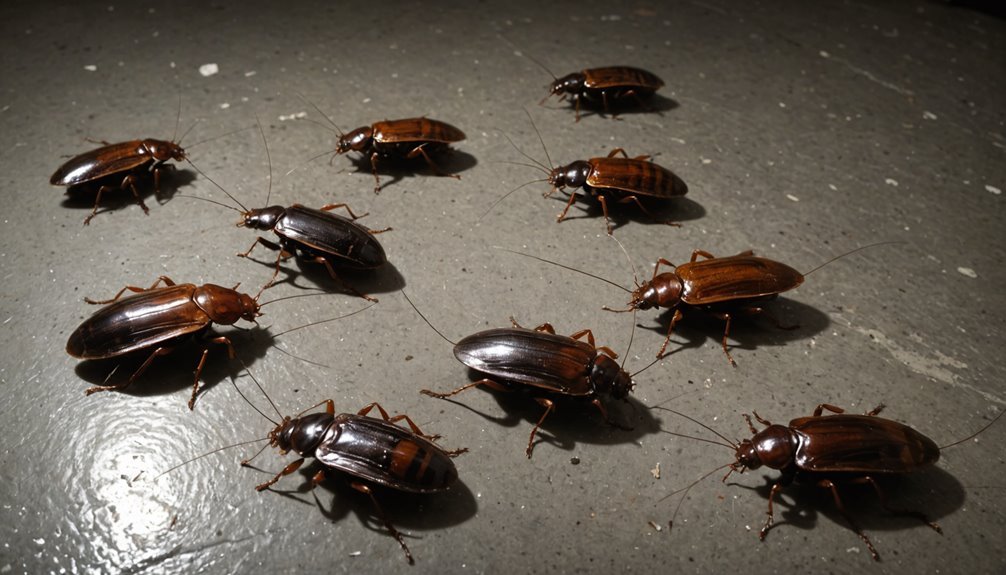
Basements give cockroaches nearly everything they need to survive: moisture, darkness, shelter, and food. Leaky pipes, condensation, and standing water create persistent moisture sources, while high humidity alone can sustain roach activity even when food is scarce.
Basements offer cockroaches exactly what they need — moisture, darkness, and shelter — making them a prime target for infestation.
The darkness and low foot traffic make basements ideal hiding spots, and cracks, gaps, and utility openings provide protected travel routes and nesting areas. Clutter and stored materials only add more cover.
Food is rarely a problem either. Cardboard boxes, stored birdseed, pet food, and organic debris can all sustain a roach population.
Entry is equally easy — cockroaches reach your basement through foundation cracks, plumbing lines, drains, and damaged window seals. When exterior conditions like wet mulch and poor drainage exist nearby, they push even more roaches toward your foundation. During colder months, cockroaches are also drawn to heating systems in basements, increasing activity in areas near furnaces and water heaters.
Signs of a Cockroach Problem in Your Basement

Cockroaches are secretive by nature, so an infestation can grow for weeks before you notice it. Knowing what to look for helps you catch the problem early.
Watch for small, dark droppings resembling coffee grounds or black pepper near baseboards, wall-floor junctions, and storage areas. Brown smear marks along surfaces and tucked-away corners also signal activity.
Check protected, dark spaces for egg cases and shed skins, which confirm an active life cycle. Even a single daytime roach sighting is a serious red flag, since cockroaches are nocturnal and typically stay hidden.
Sticky traps can help gauge population size. A strong, musty, or oily odor points to a heavier infestation. Damaged packaging or contaminated stored goods are additional warning signs worth investigating. Cockroaches are known carriers of serious diseases like salmonella and E. coli, making early detection essential for protecting your household’s health.
How to Get Rid of Cockroaches in Your Basement
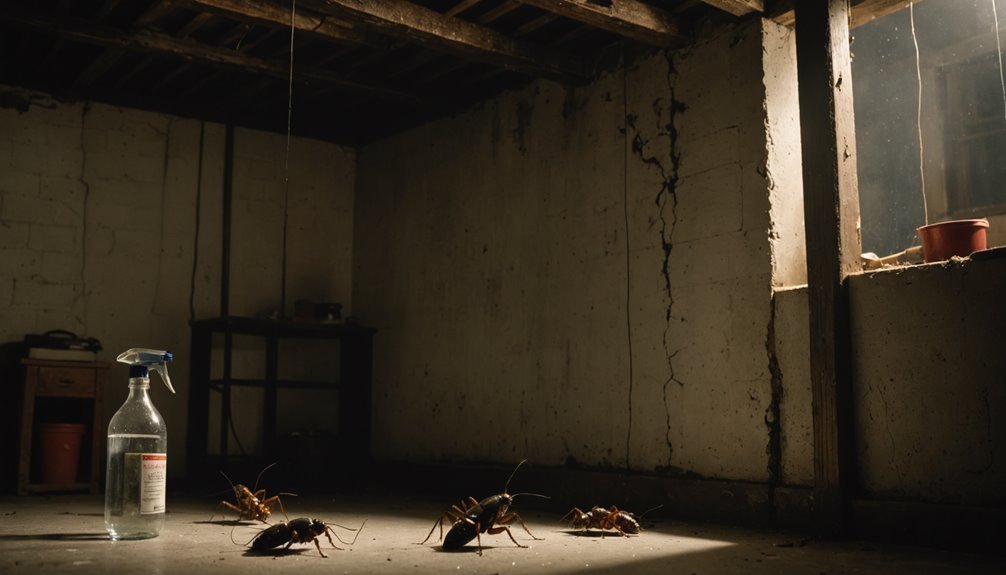
Once you’ve spotted the signs of a basement cockroach problem, acting quickly gives you the best chance of getting it under control before numbers climb.
Start by removing clutter, food debris, and organic waste, then fix leaks and run a dehumidifier to eliminate moisture. Store food in sealed containers and rinse recyclables before storing them.
For treatment, place roach baits near baseboards, plumbing, and hiding spots. Apply boric acid dust in hidden voids and behind appliances. Use sprays only in targeted cracks and crevices rather than broad surfaces.
Combining bait and dust typically delivers the best results.
Set sticky traps in corners and along wall-floor junctions to identify hot spots. Recheck treated areas after one to two weeks and reapply as needed.
Seal cracks and openings with caulk around pipes, baseboards, and foundation gaps to prevent cockroaches from moving between areas of your home.
How to Block Every Entry Point Cockroaches Use
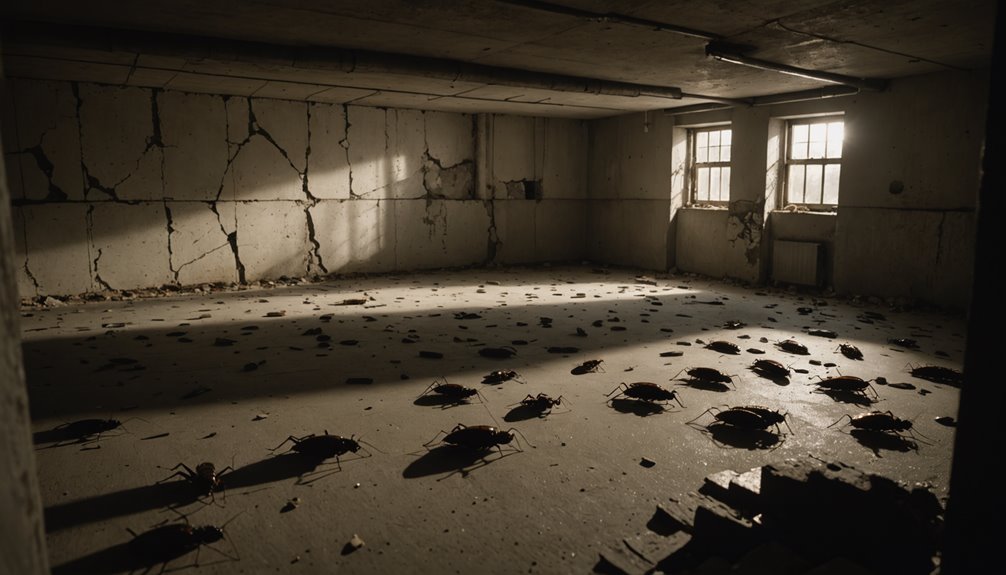
Even after treating an active infestation, roaches will keep returning if entry points stay open. Start by inspecting foundation cracks where concrete meets soil and seal them with masonry caulk, silicone filler, or hydraulic cement.
Fill wall-floor gaps and baseboard seams with silicone sealant or expanding foam.
Check every door for light gaps at the bottom and install door sweeps that make firm contact with the threshold.
Replace worn weatherstripping around windows and repair any torn screens.
Seal utility penetrations around plumbing, electrical conduits, and gas lines with expanding foam or fitted grommets.
Cover vents and drains with fine mesh screens to block access while maintaining airflow.
Recheck all sealed points regularly because small gaps reopen over time and restore cockroach access. Consistent regular maintenance significantly lowers the chance of re-infestation by ensuring no new entry points go undetected.
How to Keep Cockroaches From Coming Back to Your Basement
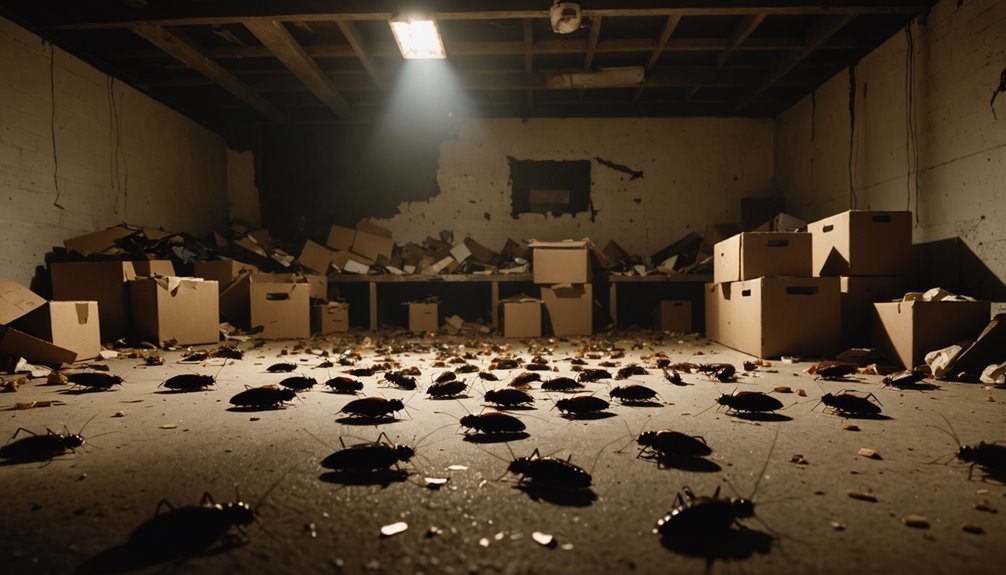
Keeping cockroaches out of your basement for good requires consistent attention to sanitation, moisture, and clutter. Store food in sealed containers, rinse recyclables before storage, and remove trash regularly in tightly covered bins.
Consistent attention to sanitation, moisture, and clutter is the foundation of keeping cockroaches out of your basement for good.
Fix leaking pipes promptly, run a dehumidifier to keep humidity near 50%, and eliminate standing water or damp floors.
Replace cardboard boxes with sealed plastic containers, and clear out unused furniture and appliances that create harborage. Keep baseboards and corners accessible for regular cleaning and vacuuming.
Place sticky traps near plumbing, corners, and baseboards to catch new activity early. Use targeted bait near hiding spots rather than broad spraying.
If you’re in a multifamily building, coordinate prevention efforts with neighbors, since roaches move freely through shared walls and pipe junctures. Inspect your foundation regularly for cracks and gaps, as small entry points in walls and floors are common pathways cockroaches use to enter from outside.
Frequently Asked Questions
Can Cockroaches in the Basement Spread Diseases to People Upstairs?
Yes, cockroaches in your basement can spread diseases upstairs. They’ll carry bacteria, fungi, and parasites through cracks, pipe gaps, and wall voids, contaminating your food and surfaces, which can cause gastrointestinal illness and trigger asthma.
How Long Does a Cockroach Infestation Take to Fully Eliminate?
You’ll typically need a few days to 2 weeks for small infestations, 3–6 weeks for moderate ones, and up to 6 months for severe basement cases requiring repeated professional treatments and follow-up monitoring.
Are Certain Basement Cockroach Species Harder to Control Than Others?
Yes, certain species are harder for you to control. German cockroaches resist pesticides strongly, while Oriental cockroaches thrive in your basement’s moisture-rich voids, making both species especially stubborn without integrated treatment methods.
Do Cockroaches in Basements Indicate a Larger Structural Problem?
Cockroaches in your basement don’t usually indicate a structural problem, but they can coexist with one. If you’re also noticing cracks, bowing walls, or sticking doors, you’ll want a professional evaluation soon.
Can Professional Exterminators Guarantee Cockroaches Won’t Return to Basements?
No, professional exterminators can’t guarantee cockroaches won’t return to your basement. Hidden eggs, new entry points, and lingering moisture can trigger reinfestation, so you’ll need follow-up treatments and ongoing prevention to maintain lasting control.
Conclusion
Keeping cockroaches out of your basement doesn’t have to be an ongoing battle. By understanding what draws them in, spotting the warning signs early, and taking action to eliminate entry points and moisture, you’ll protect your home from these persistent pests. Stay consistent with your prevention efforts, and you won’t give cockroaches a chance to settle in. A clean, dry, and well-sealed basement is your best defense.
