
Can Cockroaches Climb Walls
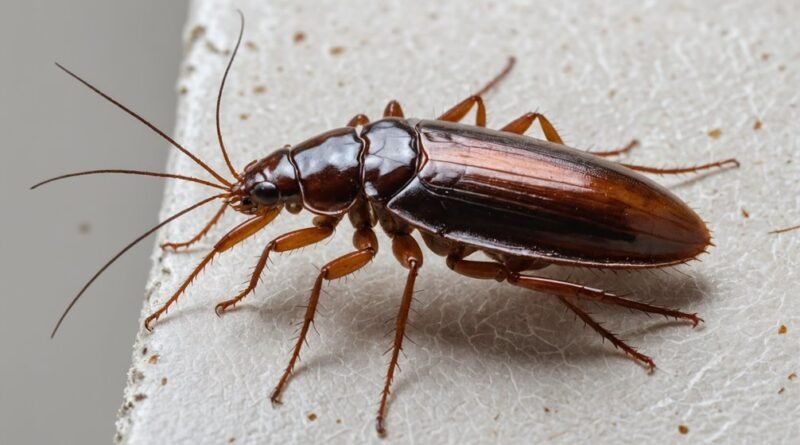
Yes, cockroaches can climb walls, and they’re remarkably skilled at it. They use tiny claws, adhesive pads, and hair-like structures on their feet to grip almost any surface. They prefer rough, porous surfaces like brick or wood, but smooth surfaces like glass can slow them down. You’ll find species like German and American cockroaches scaling your walls most often. Stick around to find out everything you need to know about these unsettling acrobats.
Key Takeaways
- Cockroaches can climb walls using claws, adhesive pads, and tiny leg hairs that increase grip and prevent slipping.
- They prefer rough, porous surfaces like wood and brick, while smooth surfaces like glass significantly reduce their climbing ability.
- Cockroaches climb to access food, water, and shelter in cracks, gaps, and hidden spaces within homes.
- German and American cockroaches are the most common wall-climbing species, while Oriental cockroaches are the least likely to climb.
- Spotting cockroaches on walls often signals an active infestation, particularly near kitchens, sinks, or damp areas.
Can Cockroaches Really Climb Walls?
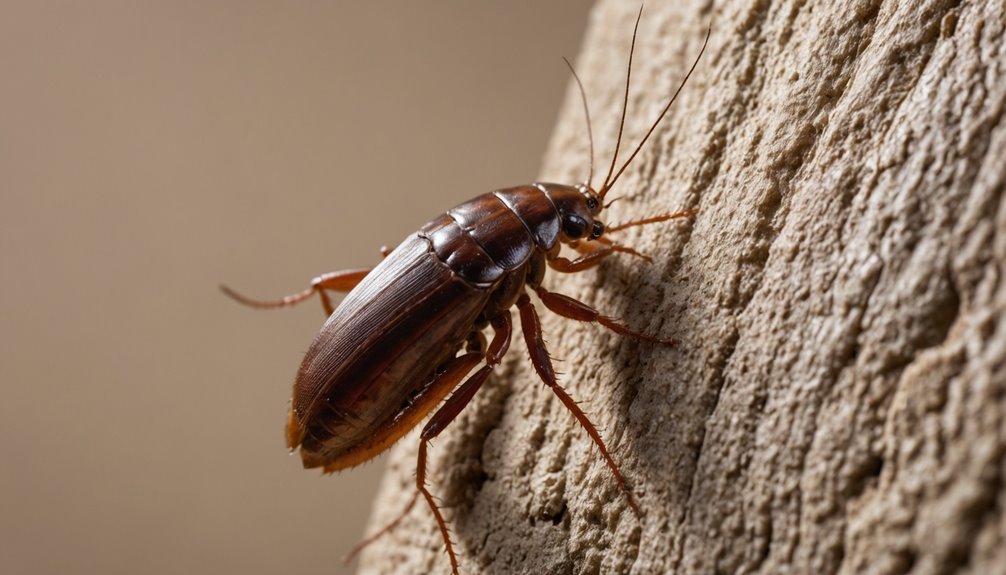
Cockroaches can climb walls, and they do it regularly. If you’ve ever spotted one scurrying up a surface in your home, you weren’t imagining things. Wall climbing is a normal part of how cockroaches move through their environment.
Cockroaches climb walls regularly. If you’ve spotted one scurrying up a surface in your home, you weren’t imagining things.
They don’t use suction cups. Instead, they rely on claws and pad-like structures on their legs that grip small cracks, rough textures, and surface irregularities. This makes materials like drywall, wood, brick, and stone easy for them to scale.
It doesn’t stop at walls, either. Many common household species, including German and American cockroaches, can shift from a vertical wall directly onto a ceiling without pausing.
The one surface type that slows them down is very smooth material. Glass and mirrors offer little for their leg structures to grip. Outside of that, most surfaces you’d find in your home are fair game. Cockroaches can reach speeds of up to 3 mph when climbing, allowing them to move quickly across surfaces and evade threats.
How Cockroach Feet Let Them Climb Walls
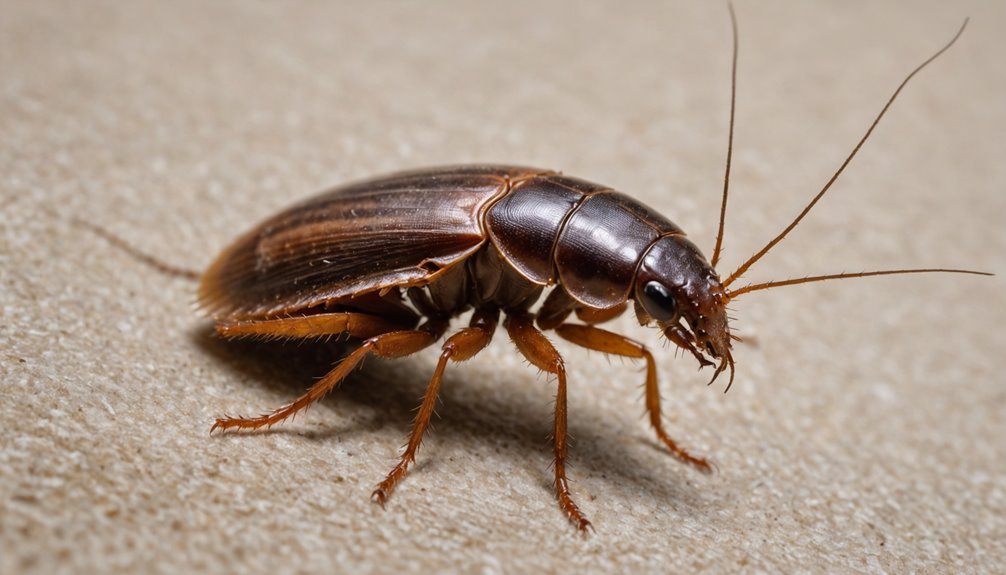
The secret to how cockroaches pull this off comes down to their feet. Their legs feature multiple tarsal segments that increase surface contact, while tiny hairs expand grip area and reduce slipping. Six legs spread their body weight across several contact points, giving them remarkable climbing stability.
Their feet also carry two types of adhesive pads. Arolia grip smooth surfaces through a fluid-based, glue-like adhesion, while euplantulae conform to uneven textures by flattening against irregular surfaces. These pads are switchable, meaning they engage during pulling and release during pushing, letting cockroaches move quickly without getting stuck.
On rougher surfaces, claws take over. They function like tiny grappling hooks, interlocking with surface irregularities to generate the lateral forces needed for upward movement.
Claws and adhesive pads don’t work in isolation — they work together, giving cockroaches a reliable grip on nearly any surface you can think of. Flexible joints also play a critical role, allowing cockroaches to push and pull effectively as they navigate vertical surfaces.
Which Surfaces Can Cockroaches Climb?
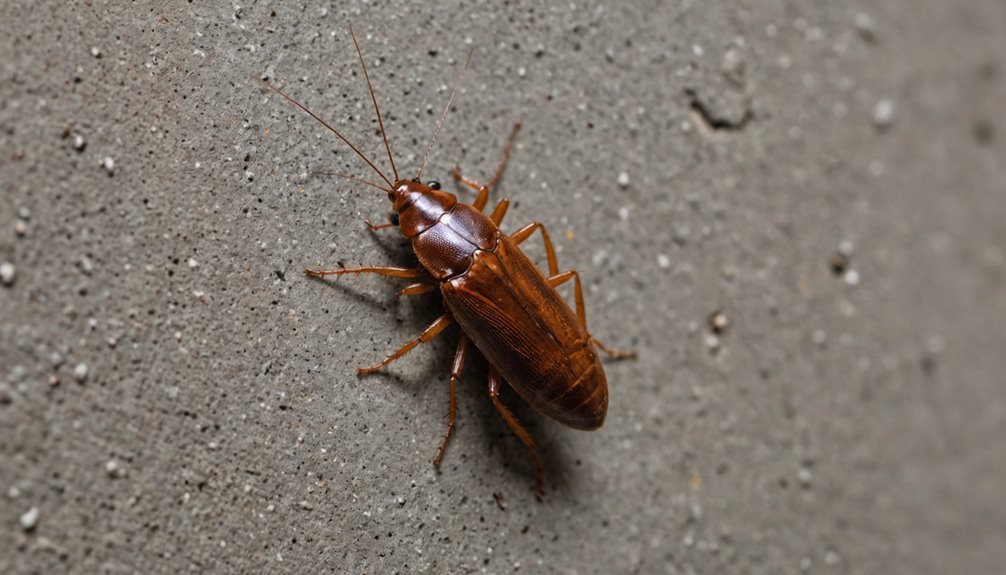
The surface beneath a cockroach’s feet determines whether it can climb or not, and you’ll find them moving easily across wood, brick, drywall, and other rough or porous materials that give their claws and adhesive pads plenty to grip.
Smooth surfaces like glass, porcelain, and polished metal are a different story, as cockroaches struggle to gain traction and often can’t make it up at all.
In your home, that means textured walls, unfinished furniture, and rough countertop edges are all fair game, while sealed granite or marble countertops offer much less of a foothold. Cockroaches are able to grip and move across so many surfaces because their legs end in a claw-like tarsus that provides mechanical grip on textured materials.
Rough Surfaces They Prefer
When it comes to climbing, cockroaches prefer rough, porous surfaces that give their claws and sticky foot pads something to grip.
You’ll find them moving easily across materials like:
- Wood – grooves and pores create natural handholds for claws and pads
- Brick – small gripping points make vertical travel notably easier
- Unfinished cement or stone – natural roughness provides consistent traction
Sealed or polished versions of these materials reduce grip considerably, which is why surface finish matters as much as material type.
Weathered, unsealed surfaces give cockroaches the micro-irregularities they need to move quickly upward.
If your home has exposed brick, rough drywall, or unfinished wood, you’re dealing with surfaces cockroaches can scale without much effort. Their rapid inversion ability also helps them navigate these vertical spaces with surprising speed and control.
Smooth Surfaces They Struggle
While cockroaches are capable climbers, they struggle most on smooth, polished, vertical surfaces where their claws and sticky foot pads can’t find enough grip. They rely on microscopic irregularities to latch onto surfaces, so when those are absent, climbing efficiency drops sharply.
| Surface | Why It’s Difficult |
|---|---|
| Glass | Extremely low texture and friction |
| Porcelain | Polished finish offers minimal grip |
| Smooth Metal | Few microscopic edges to latch onto |
| Granite/Marble | Polished versions reduce claw purchase |
Keep in mind that no surface is perfectly smooth. Dirt, moisture, or scratches can give cockroaches just enough traction to climb. Clean, dry, and polished vertical surfaces remain your best natural barrier against roach movement. Among the species that struggle most with smooth surfaces, American cockroaches are particularly hindered due to their heavier body weight compared to smaller species like the German cockroach.
Common Home Materials
Cockroaches climb most common home materials with little difficulty because everyday surfaces like wood, drywall, brick, and cardboard offer exactly the texture and grip points their feet need.
Your home’s materials likely work in their favor:
- Wood and cabinetry – Grooves, pores, and unsealed seams give their claws reliable purchase on vertical surfaces.
- Drywall and textured walls – Paper facings, imperfections, and corners create micro-grips their sticky pads exploit easily.
- Brick, masonry, and cardboard – Mortar lines, rough faces, and corrugated folds support both vertical and inverted movement.
Cluttered storage stacks the problem further, since boxes and piled materials near walls act as stepping points to higher surfaces.
Sealing cracks, replacing cardboard with plastic bins, and reducing clutter directly cuts their climbing routes.
Which Cockroaches Are Most Likely Climbing Your Walls?
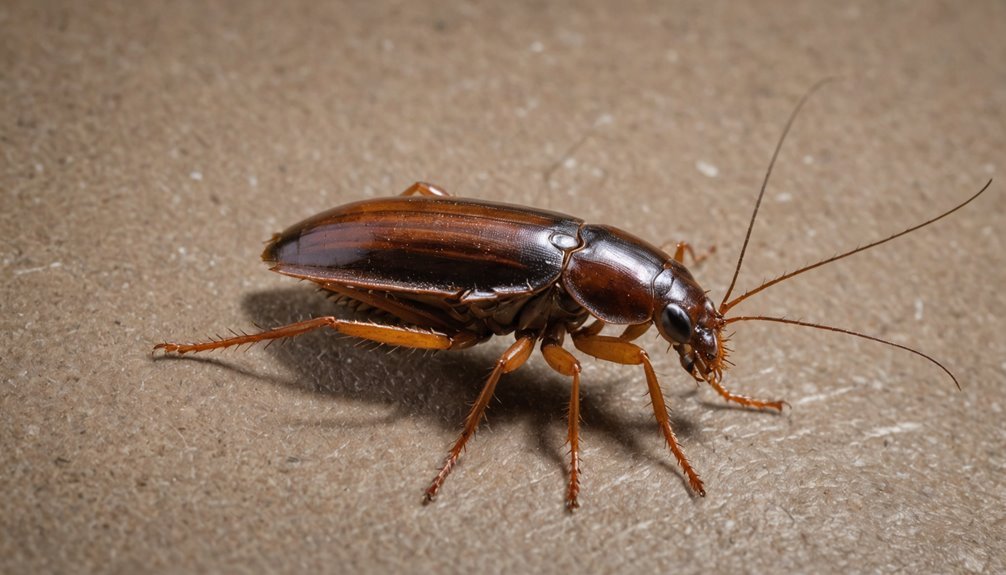
German cockroaches are frequent indoor climbers. Their legs have tiny hair-like setae that grip rough surfaces well, letting them move easily across walls, countertops, and ceilings.
Seeing one on your wall often signals an active infestation near food or moisture.
Spotting a cockroach on your wall is rarely a fluke — it likely means an infestation is already developing nearby.
American cockroaches are large, reddish-brown, and one of the most common wall climbers you’ll encounter. They frequently hide near ceiling lines and can glide from elevated spots using their long wings.
Woods cockroach males can climb, but they’re seasonal visitors rather than established indoor pests.
Oriental cockroaches are the least likely to appear on your walls. They can’t climb smooth surfaces and tend to stay near floors, drains, and damp corners instead.
Why Cockroaches Climb Walls in the First Place?
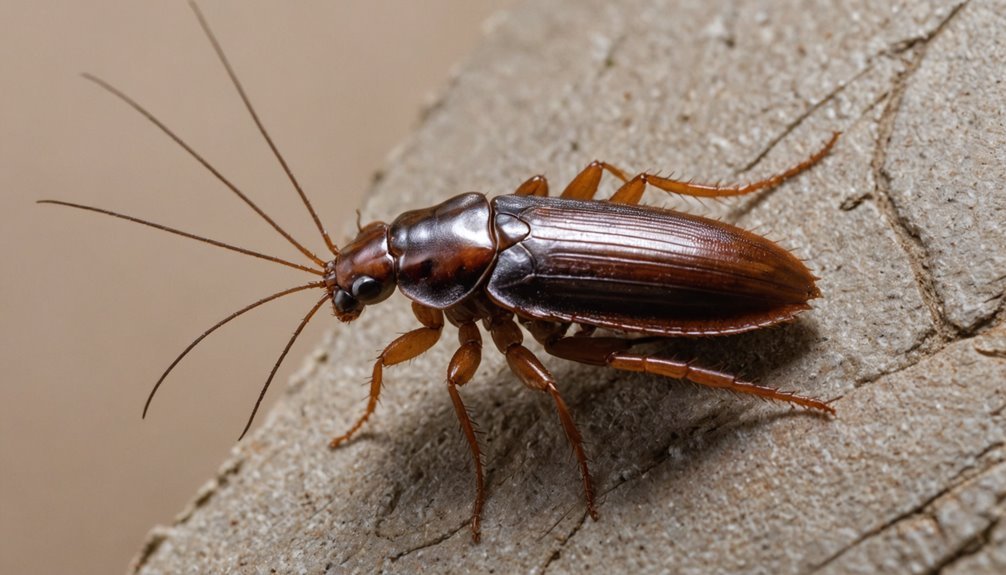
When a cockroach climbs your walls, it’s not doing so randomly — it’s driven by clear survival instincts tied to finding food, water, and shelter.
Your kitchen walls, cabinet edges, and damp bathroom surfaces all signal resources that cockroaches actively pursue through vertical travel.
Beyond resource access, climbing also gives cockroaches a fast escape route when you, a pet, or any other threat enters the room.
Survival and Resource Access
Wall climbing isn’t random behavior—it’s driven by access to the resources cockroaches need to survive. When roaches scale your walls, they’re actively searching for three critical things:
- Food – Countertops, cabinet edges, and shelves hold crumbs and grease residue that floor-level travel can’t reach.
- Water – Sinks, leaky pipes, and condensation on elevated surfaces attract roaches into your kitchen and bathroom.
- Shelter – Cracks, wall voids, and gaps behind cabinets offer protected hiding spots that roaches access by climbing.
Your home provides all three, making it an ideal environment for an infestation to grow quickly.
Climbing expands their search area beyond the floor, letting roaches exploit overlooked residues and moisture pockets throughout your living space.
Escaping Danger and Threats
Cockroaches don’t climb walls just to find food or water—they also do it to survive immediate threats. When you disturb a roach by turning on lights, cleaning, or creating vibrations, it often shoots straight up the nearest wall. That’s not random—it’s a calculated escape response.
Vertical movement gives cockroaches immediate advantages. They leave ground-level predators behind, reach hidden upper routes, and access ceiling spaces that most threats can’t easily follow. When floor cover disappears, walls become their fastest exit.
Roaches also climb when their nesting areas get disrupted. Once exposed, they use wall gaps, windows, and door frames as both escape paths and entry points into new hiding spots.
Their six-legged coordination lets them change direction rapidly, making capture notably harder.
What It Actually Means When You See Cockroaches on Your Walls
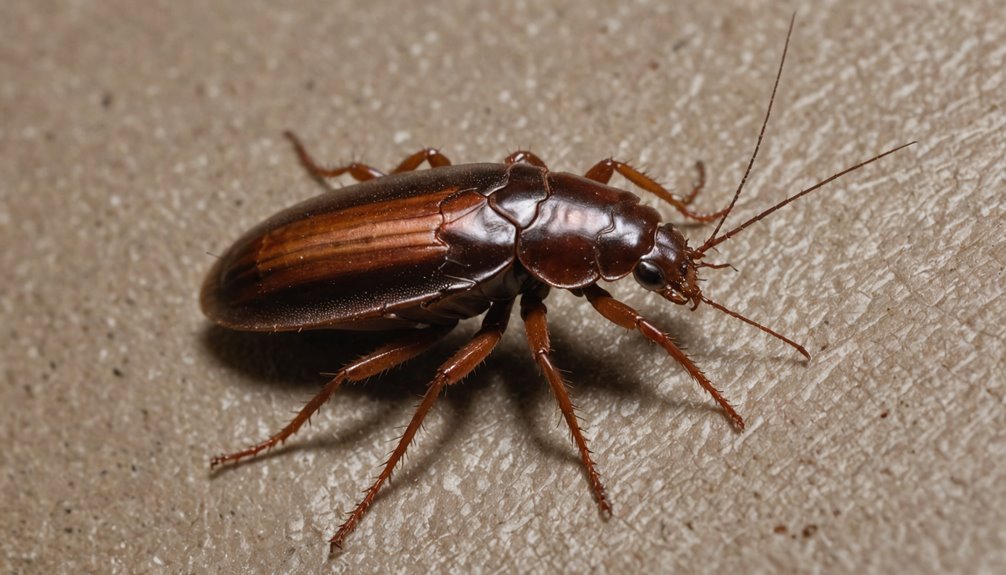
Spotting a cockroach on your wall isn’t just an unsettling moment — it’s a signal worth reading carefully. Wall sightings typically mean roaches are already active inside your home, not just passing through. They climb to find food, water, and shelter, so where you spot them matters.
Pay attention to these patterns:
- Near kitchens or sinks — suggests accessible food residue, grease, or plumbing moisture
- Multiple rooms or repeated sightings — points to an established infestation with hidden nesting nearby
- Along baseboards or pipe areas — indicates damp wall voids or pipe chases providing shelter and water
A single roach on your wall is often a forager from a larger, concealed population. The species matters too — German and American cockroaches are both active climbers commonly linked to indoor infestations.
Don’t treat it as random; treat it as a warning that conditions inside your home are favorable for roaches.
How Do You Stop Cockroaches From Climbing Into Your Home?
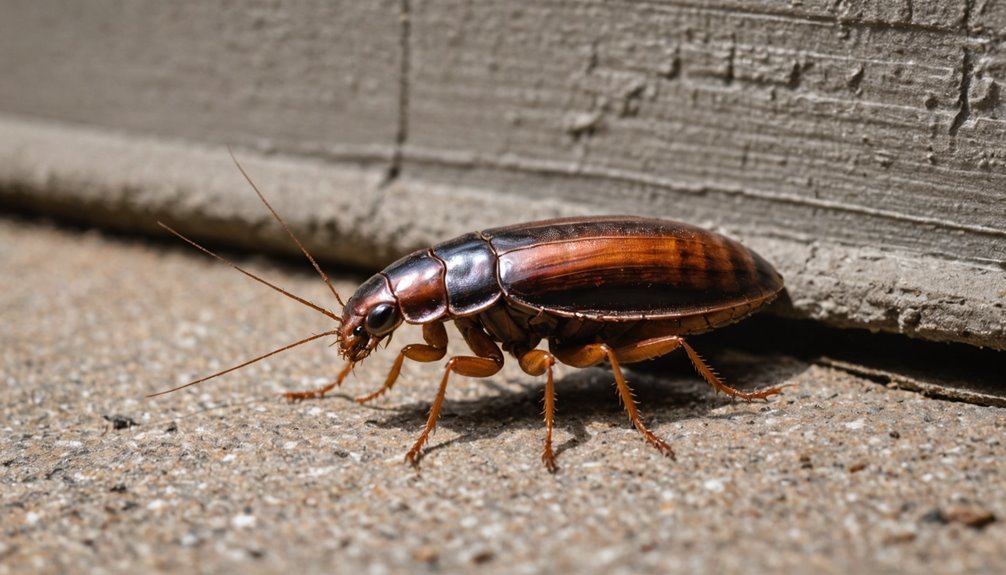
Stopping cockroaches from climbing into your home comes down to cutting off what draws them in — entry points, food, water, and shelter. Seal cracks in baseboards and around pipes with caulk, and install door sweeps on exterior doors. Store food in sealed containers, clean kitchens nightly, and vacuum crevices regularly. Fix leaks fast, eliminate standing moisture, and clean drains to remove damp organic buildup. Reduce clutter and cardboard piles that create hiding spots.
| Prevention Area | Key Action |
|---|---|
| Entry Points | Seal cracks, gaps, and pipe openings |
| Food Access | Store food sealed; clean nightly |
| Water Sources | Fix leaks; eliminate standing moisture |
| Hiding Places | Declutter; remove cardboard and debris |
| Exterior Sources | Seal bins; inspect incoming packages |
Use monitoring traps near suspected entry points to catch pressure early before an infestation spreads indoors.
Frequently Asked Questions
Can Cockroaches Climb Walls While Carrying Food or Eggs?
Yes, cockroaches can climb walls while carrying food or eggs. They rely on their leg grip rather than body weight, so neither load stops them from scaling walls in your home.
Do Cockroaches Climb Walls More at Night Than During the Day?
Yes, you’ll notice cockroaches climb walls more at night since they’re nocturnal foragers who avoid light. They use walls as covered travel routes between hiding spots and food sources after dark.
Can Baby Cockroaches Climb Walls as Well as Adults?
Yes, baby cockroaches can climb walls just as well as adults. They’ve got six spiny legs that grip surfaces effectively. You’ll also find they’re faster and more agile than adults in tight spaces.
How Fast Can a Cockroach Climb a Vertical Wall?
You’d be surprised how fast cockroaches can climb vertical walls — they reach speeds between 0.10 and 0.35 m/s, averaging around 0.20 m/s, which equals roughly 20 cm/s or 0.72 km/h.
Do Cockroaches Fall off Walls and Ceilings Very Often?
Cockroaches don’t fall off walls and ceilings very often. You’ll mostly see them gripping surfaces confidently. They’re more likely to slip on smooth, wet, or dusty surfaces, but climbing remains their dominant movement pattern.
Conclusion
Now you know that cockroaches can absolutely climb walls, and they’re doing it with specialized feet built for the job. If you’re spotting them on your walls, you’ve got an infestation that’s growing. Don’t wait to take action. Seal your cracks, eliminate food sources, and use targeted treatments to stop them before they multiply. The sooner you act, the easier it’ll be to reclaim your home.
