
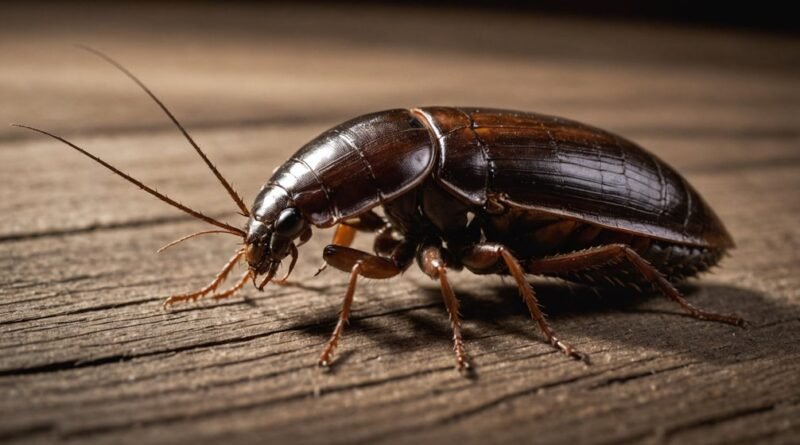
Do Cockroaches Sleep? Facts About Their Rest Patterns
Yes, cockroaches do sleep, but you won’t catch them snoozing the way you do. Instead of closing their eyes and lying down, they enter periods of complete immobility that function as sleep. They’re wired to rest during the day and stay active at night, following a predictable circadian rhythm. They can even experience something like sleep deprivation. Keep going to uncover everything their rest patterns reveal.
Key Takeaways
- Cockroaches do sleep, but differently from humans — they experience periods of complete immobility that function as their version of sleep.
- Researchers identify three activity states in cockroaches: full locomotion, minor limb movement, and complete immobility, with immobility serving as sleep.
- Cockroaches follow a circadian rhythm, resting during the day starting around 4–5 a.m. and becoming active at night.
- On average, cockroaches rest approximately 18 hours daily, remaining active for only about four hours after dark.
- Factors like temperature, light exposure, food availability, and infestation size can all influence how long cockroaches rest.
Do Cockroaches Actually Sleep?
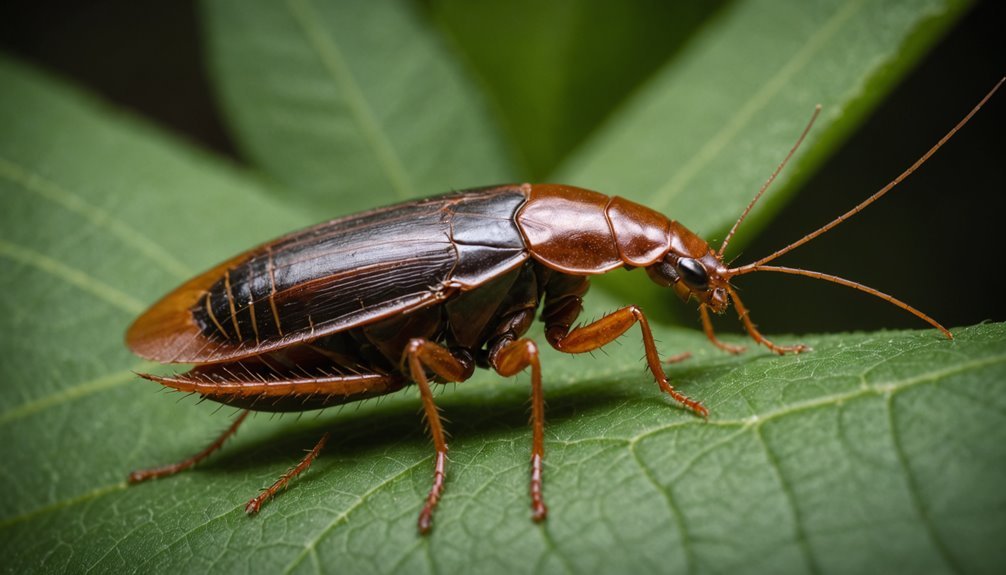
Whether cockroaches actually sleep is a question that depends on how you define sleep. If you mean lying down with closed eyes, then no, cockroaches don’t sleep that way.
But if you define sleep as a recurring period of reduced activity and immobility, then yes, they do.
Researchers have identified three distinct activity states in cockroaches. The first is full locomotion, when they’re actively moving. The second involves minor limb and antenna movement without travel. The third is complete immobility, which scientists treat as the closest equivalent to sleep.
Cockroaches cycle through three states: active movement, minor limb activity, and complete immobility — their version of sleep.
You can also look at behavioral evidence. When researchers keep cockroaches from resting, the insects compensate by resting more later, which mirrors how sleep deprivation works in other animals.
Their immobile periods follow a predictable circadian rhythm, dominating daytime hours while active movement dominates the night. That pattern strongly supports the conclusion that cockroaches do experience sleep-like rest. Studies have also shown that sleep deprivation affects both metabolic rates and mortality rates in cockroaches.
How Cockroach Sleep Differs From Human Sleep
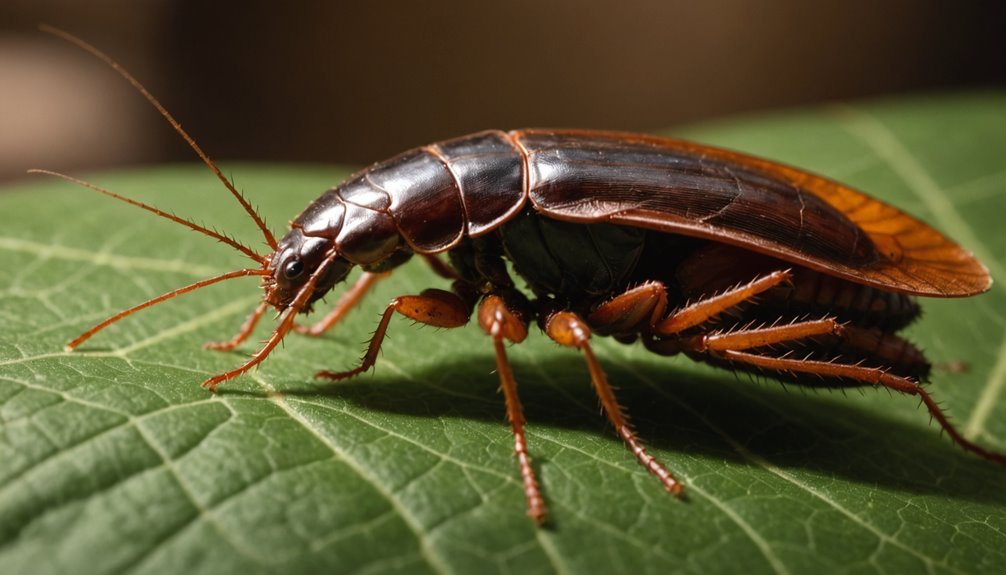
Cockroach sleep shares some functional similarities with human sleep, but the two differ in almost every measurable way. You can’t measure cockroach sleep with EEG the way you’d measure yours—their brains are too small for standard techniques. Instead, researchers track behavioral signals like prolonged stillness, reduced antenna movement, and elevated arousal thresholds.
Timing also diverges sharply. You likely sleep at night, but cockroaches are nocturnal, concentrating their rest during the light phase and their activity around sunset or early darkness. In *Diploptera punctata*, most sleep happens during the photophase, fundamentally the opposite of your pattern.
Sleep patterns also vary by species and life stage. Pregnancy shifts activity rhythms in some cockroaches, affecting gestational duration and milk protein production. Your sleep changes with life stage too, but cockroach variation runs deeper across species, making it impossible to describe a single uniform cockroach sleep pattern. A neuropeptide called Pigment Dispersing Factor plays a key role in regulating how active cockroaches are during their nightly waking hours.
What Are the Three Activity States in Cockroaches?
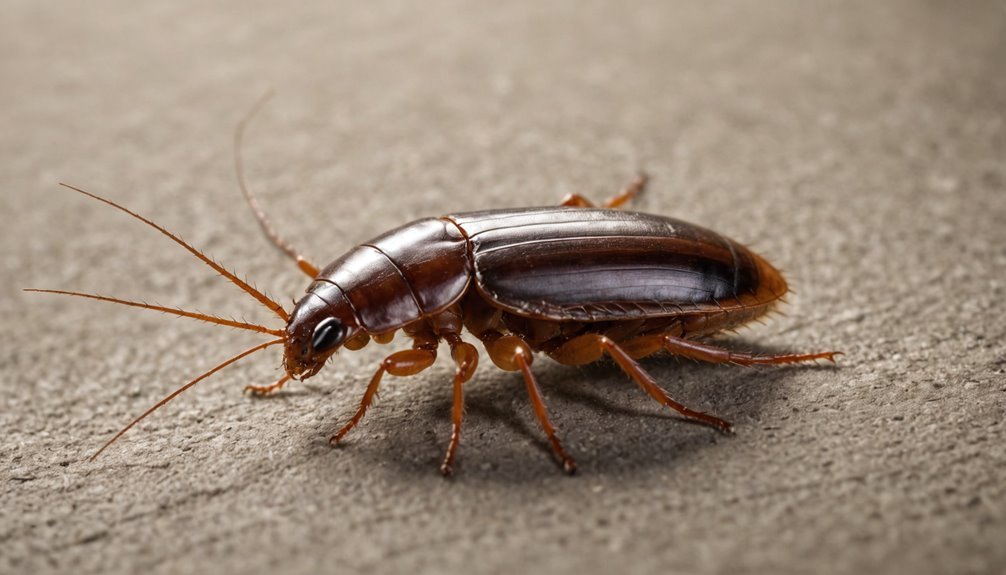
When studying cockroach behavior, you’ll find researchers organize it into three distinct activity states: resting, foraging, and locomotion.
Each state reflects a measurable shift in the insect’s neural activity and physical movement, giving scientists a clearer picture of how cockroaches spend their time.
The resting state, in particular, functions as the closest equivalent to sleep, since it’s when cockroaches go immobile and retreat to dark, sheltered spaces. Cockroaches are most active at night, using the cover of darkness to forage for food and avoid predators.
Three Cockroach Activity States
Like most animals, cockroaches cycle through distinct activity states rather than remaining in constant motion. You can observe three primary states driving their daily behavior: active locomotion, foraging, and harborage.
During locomotion, cockroaches move quickly through their environment, with neural activity spiking in the majority of recorded units during movement.
When foraging, they concentrate feeding activity during dark hours, seeking food, water, and shelter in warm, moist areas.
Between these active periods, they retreat into harborage—tight cracks, wall voids, and dark crevices where they rest undisturbed. German cockroaches are generalist omnivores, meaning they will consume almost any available organic material they encounter during these active foraging periods.
These states aren’t random. Adults typically stay within 10 feet of harborage while foraging, and younger nymphs rarely venture beyond 2 feet, showing how tightly linked these behavioral states really are.
Immobility as Sleep Equivalent
Though cockroaches don’t close their eyes or curl up in a bed, they do cycle through periods of immobility that researchers treat as a functional sleep equivalent. You can identify this state through reduced movement, lowered responsiveness, and sustained stillness — not through obvious sleep markers. Daytime inactivity in dark, humid refuges signals genuine rest, not random stillness. Neural data reinforces this: 87% of recorded units increased firing during locomotion, confirming that immobility is a distinct physiological state. During active movement, cercal displacement blocks action potentials along sensory nerves through mechanical pressure near the joint, representing a nonsynaptic form of sensory regulation tied directly to locomotion state.
| Feature | Active State | Immobility State |
|---|---|---|
| Movement | High | None or minimal |
| Neural firing | Elevated | Reduced |
| Responsiveness | High | Lowered |
| Typical timing | Nighttime | Daytime |
| Location | Open foraging areas | Dark, sheltered crevices |
Why Cockroaches Are Most Active at Night
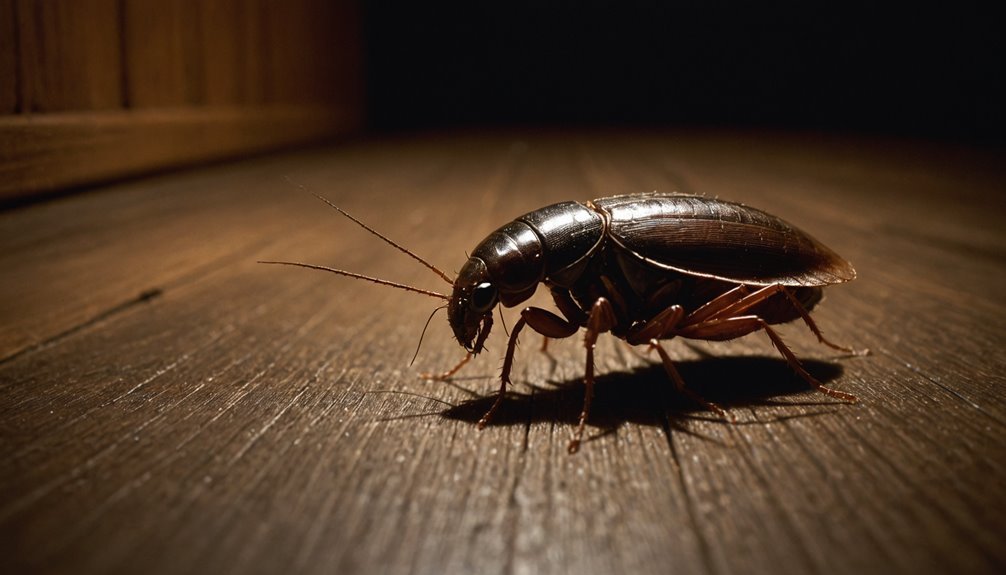
When the lights go out, cockroaches shift into full foraging mode, using their antennae and low-light vision to track down food and water while you’re asleep.
Darkness cuts their exposure to predators and human activity, making nighttime the safest window to move through your kitchen, bathroom, and other resource-rich areas.
You’ll most likely spot them two to four hours after sunset, when their internal clock pushes activity to its peak and the risk of detection is lowest.
Nocturnal Foraging Instincts
Cockroaches are most active at night, and that’s no accident. They leave their daytime hiding spots shortly after dark, driven by hunger and thirst. Using smell to locate food and touch to navigate tight spaces, they move through your home with purpose.
| Foraging Trigger | Sensory Tool Used | Primary Target |
|---|---|---|
| Darkness arrives | Olfactory (smell) | Food scraps |
| Route remembered | Path integration | Water sources |
| New environment | Random exploration | Organic matter |
They forage alone, even while sheltering in groups, returning to moist, dark harborages after each run. Night reduces human interference, giving them easier access to your kitchen, bathroom, and any overlooked crumbs. Their activity isn’t random — it’s calculated survival.
Predator Avoidance Strategies
Hunger and thirst pull cockroaches out at night, but staying alive long enough to eat is its own challenge. Cockroaches rely on a layered defense system that combines timing, movement, and concealment.
Their core survival tactics include:
- Nocturnal timing – Darkness reduces encounters with visually hunting predators like birds and lizards.
- Hidden routes – Wall edges and crevices cut exposure during movement between shelter and food.
- Preferred escape angles – Fixed trajectories around 91.7°, 119.7°, 147.7°, and 175.7° make their fleeing less predictable.
- Startle reflexes – Wind puffs trigger immediate turns and forward acceleration before a predator can complete its strike.
You’re watching a system built by repeated predator pressure, not random behavior.
When Do Cockroaches Sleep During the Day?
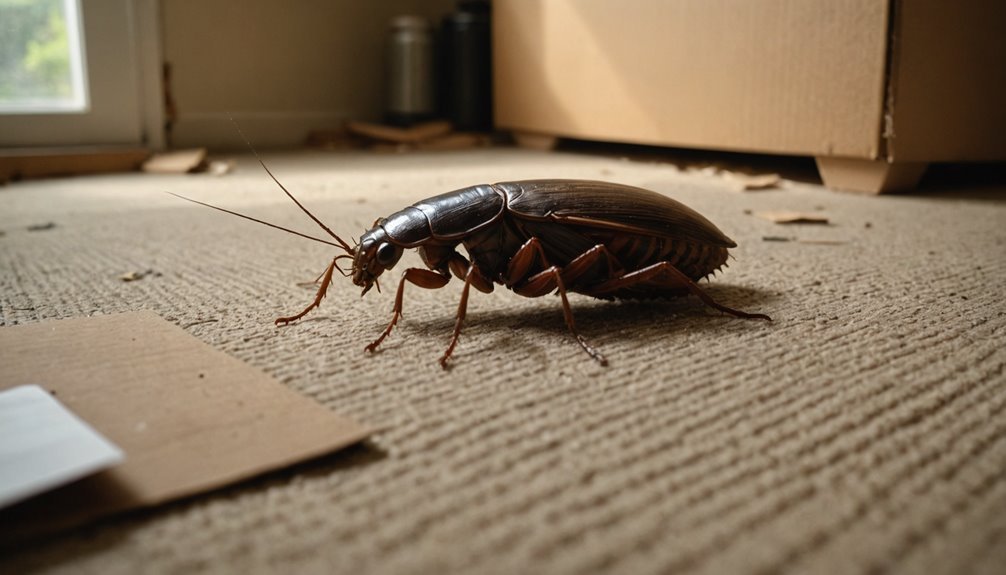
Since cockroaches are nocturnal, their sleep-like inactivity typically falls during daylight hours. They usually shift into immobility around 4–5 a.m., entering a rest phase that lasts through most of the day. This pattern follows a circadian rhythm that alters their activity between night and day.
During this inactive period, you’ll find them tucked into dark, tight spaces where their bodies make contact with surrounding surfaces. Common spots include wall voids, cabinet interiors, areas behind appliances, and spaces near plumbing or water heaters.
Some sources describe a four-hour locomotion window followed by reduced movement and then full immobility, suggesting their rest isn’t simply an on-off switch.
If you’re spotting cockroaches moving around during daylight, that’s not normal resting behavior. It likely signals overcrowding, food scarcity, or a large infestation that’s pushing individuals out of their usual hiding zones before dark.
How Long Do Cockroaches Sleep?
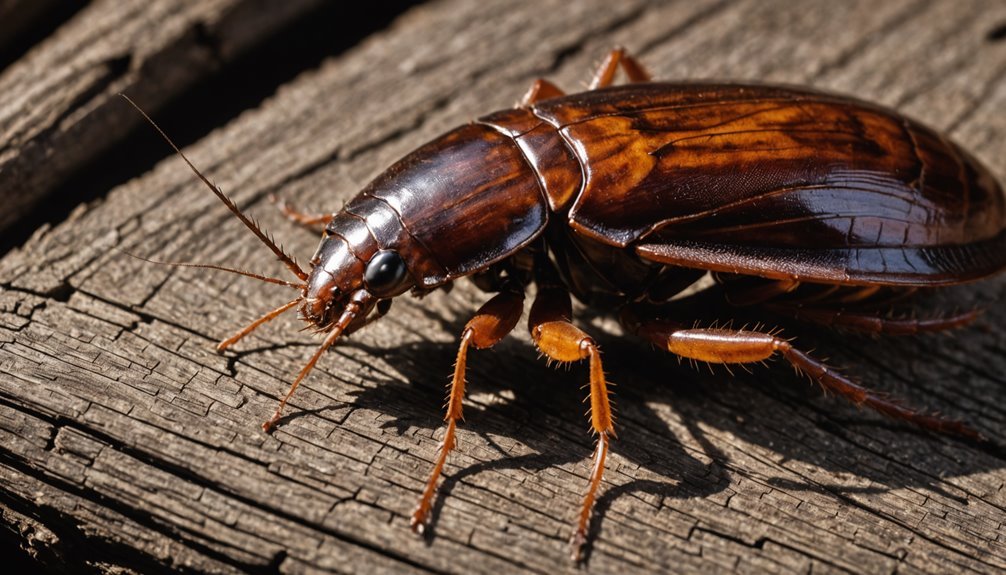
How long do cockroaches actually sleep? The honest answer is that it varies, but research gives you a useful baseline to work with.
One source reports roaches rest for roughly 18 hours per day. Another notes they’re active for only about four hours after dark, which means most of the remaining day is inactive. No single universal sleep duration applies to every species, but the pattern is consistent.
Several factors shape how long a cockroach stays immobile:
- Light exposure — circadian rhythms tie rest directly to daylight hours
- Food availability — scarce food pushes roaches to stay active longer
- Temperature — environments above 50°F support year-round activity cycles
- Infestation size — heavier infestations mean more competition, reducing rest time
You can expect cockroaches to rest throughout most of the day, becoming active again once darkness arrives and their feeding window opens.
What Do Cockroaches Look Like When They Sleep?
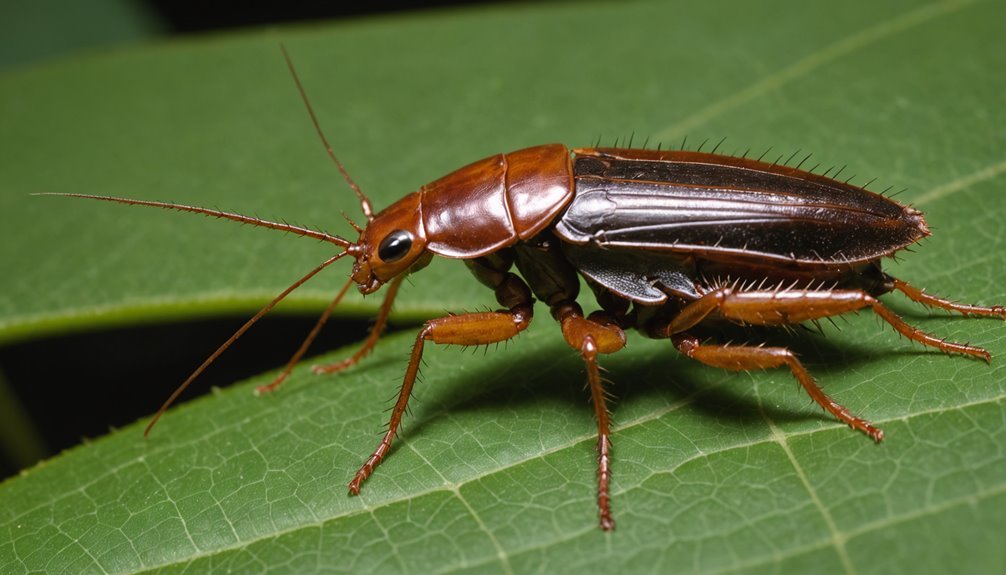
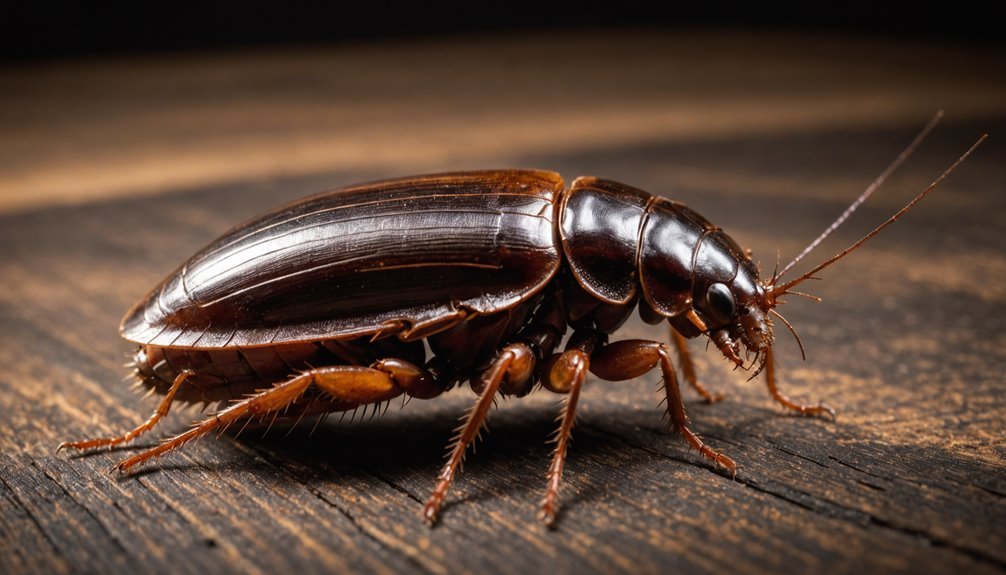
When a cockroach sleeps, the most obvious sign is simply that it stops moving. You won’t see it curled up or tucked in like a sleeping pet. Instead, it becomes completely still, pressing close to a surface in whatever dark, tight space it’s chosen to rest in.
Its body retains the same flat, hard-shelled shape you’d recognize when it’s active. The six spiny legs stay folded, and the long antennae may lie motionless or show only slight movement. That small antenna motion is actually one reason you mightn’t realize it’s resting at all.
During the day, you’re most likely to spot a resting cockroach in cracks, crevices, or other sheltered spots.
It’ll appear as a low-profile oval or oblong shape against a wall or floor. Without locomotion, it can easily look like a dead roach rather than a sleeping one.
Can Cockroaches Be Sleep Deprived?
Here’s what deprivation does to cockroaches:
- Faster sleep onset – Sleep latency dropped from 356 seconds in controls to just 55 seconds in deprived insects, signaling a classic rebound response.
- Higher mortality – Deaths began around day 17, averaging 0.57 per day versus 0.17 in controls.
- Elevated metabolism – Oxygen consumption climbed 82% above baseline by day 35, despite no change in body mass.
- Reproductive disruption – In *Diploptera punctata*, sleep disturbance delayed gestation by up to 25 days and cut milk protein transcripts by roughly 50%.
These findings confirm cockroach rest is a homeostatic necessity, not passive downtime.
Why Seeing Cockroaches During the Day Is a Warning Sign
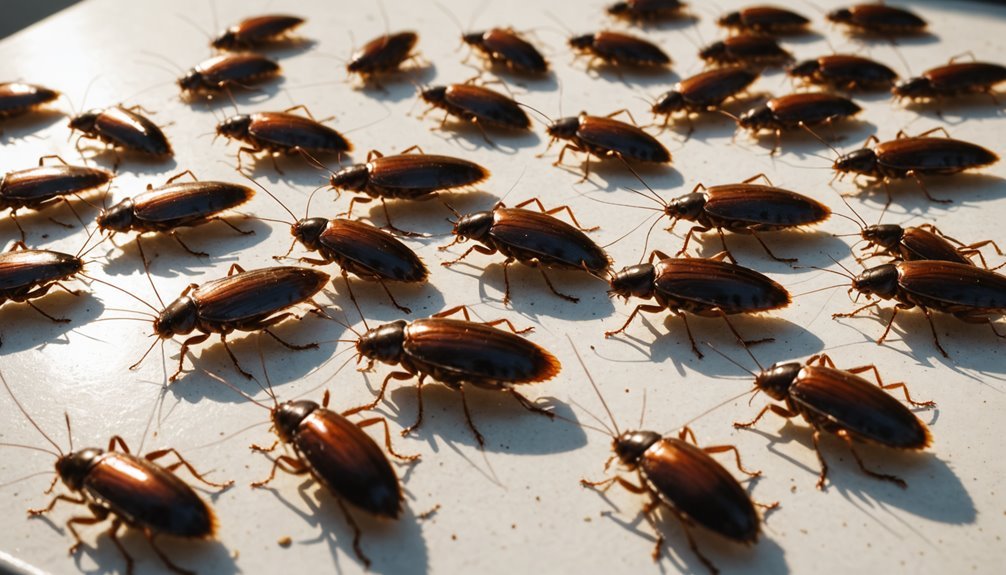
If you spot a cockroach during the day, don’t dismiss it as a fluke—nocturnal insects only emerge in daylight when overcrowding forces them out of hidden nests.
That single roach you see likely represents a much larger population already established behind your walls, under your appliances, or inside your cabinets.
You’ll want to act quickly, because a visible daytime roach is one of the clearest signs that an infestation is already underway and growing.
Daytime Roaches Signal Overcrowding
Spotting a cockroach during the day isn’t something you should brush off as bad luck. It often signals that their hiding spots are overcrowded, forcing them into open areas they’d normally avoid. As populations grow, available shelter shrinks, and roaches get pushed out.
Watch for these overcrowding red flags:
- Roaches appearing near sinks, drains, or appliances during daylight hours
- Multiple sightings across different areas of your home
- Activity in warm, cluttered, or low-traffic spaces
- Daytime movement combined with droppings or musty odors
Each of these signs suggests the hidden population has already expanded. A single daytime roach mightn’t confirm a severe problem, but repeated appearances mean you’re likely dealing with more than a few stragglers.
Hidden Nests Likely Nearby
Cockroaches are wired to stay hidden during the day, so seeing one in daylight isn’t a coincidence—it’s a clue. Their normal behavior keeps them tucked inside cracks, wall voids, and spaces near moisture and food. When they’re visible during daylight hours, a hidden nest is likely nearby.
Check these common harborage zones immediately:
| Location | What to Look For | Why It Matters |
|---|---|---|
| Under sinks | Gaps, moisture, droppings | Moisture supports nesting |
| Wall cracks | Dark openings, egg cases | Concealed colonies grow fast |
| Kitchen edges | Grease buildup, crevices | Food access fuels population |
Repeated sightings in the same spot confirm an established colony, not a random intruder. Inspect those areas closely and act quickly.
Act Before Infestation Grows
Seeing a cockroach during the day isn’t random—it’s a warning. Cockroaches follow a circadian rhythm, staying hidden and inactive during daylight. When they appear in the open, it signals the population has grown large enough to override that natural behavior.
Here’s why you shouldn’t wait:
- Daytime sightings mean competition for food, water, and space has pushed roaches out of hiding.
- Repeated appearances confirm an established infestation, not a single accidental entry.
- The longer you delay, the more they breed during their normal nighttime activity.
- Early intervention is far easier than controlling a population that’s already highly visible.
Contact a professional exterminator, inspect your space, and tighten sanitation immediately. Acting now keeps a manageable problem from becoming a serious one.
How Cockroach Activity Patterns Signal Infestation in Your Home
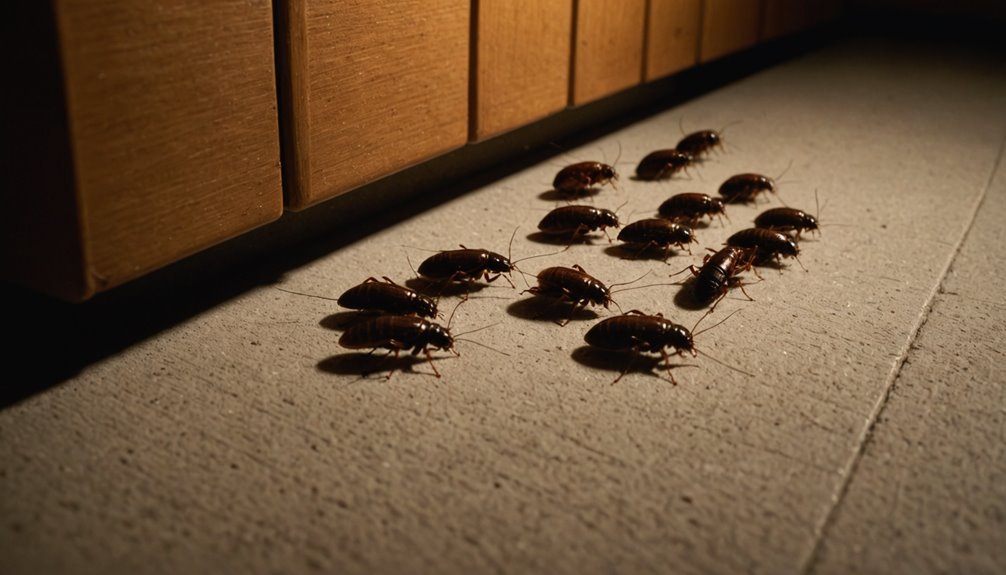
A single cockroach skittering across your kitchen floor at night may seem minor, but their activity patterns tell a much more detailed story about what’s hiding in your home.
Roaches are nocturnal, so spotting one during daylight hours is a serious red flag—it usually means crowding has pushed them out of their harborage.
Pay attention to where activity concentrates. Kitchens, bathrooms, under sinks, and behind large appliances are prime zones because they offer warmth, moisture, and food.
Roaches gravitate toward kitchens, bathrooms, and appliances—anywhere warmth, moisture, and food sources converge.
Dark, undisturbed storage areas often reveal the earliest signs.
Physical evidence confirms what you can’t always see. Droppings resembling black pepper, shed exoskeletons, egg cases, and surface smears all point to an active population.
Add a musty or oily odor to that mix, and you’re likely dealing with a significant infestation.
When multiple signs appear together, don’t wait—your hidden roach population is almost certainly larger than what’s visible.
Frequently Asked Questions
Can Cockroaches Sleep While Standing Upright or on Vertical Surfaces?
Yes, cockroaches can rest while standing upright or clinging to vertical surfaces like walls. They don’t need to lie down; instead, they grip surfaces with their legs and claws while entering a sleep-like torpor.
Do Cockroaches Dream During Their Immobile Rest Periods?
You won’t find any evidence that cockroaches dream during their immobile rest periods. They don’t have REM sleep or the neural activity linked to dreaming, so any claim they dream remains purely speculative.
Does Temperature Affect How Long Cockroaches Remain in Their Inactive State?
Yes, temperature directly affects cockroaches’ inactive periods. When it’s cold, they’ll stay inactive longer since they’re ectotherms. Below 15°C, you’ll notice they slow down considerably, and near freezing, they can’t move at all.
Can Loud Noises or Vibrations Interrupt a Cockroach’s Sleep-Like State?
Yes, loud noises and vibrations can interrupt a cockroach’s sleep-like state. Their cerci detect these disturbances, triggering quick escapes or extended hiding. You’ll notice they’re more sensitive to sudden, strong disturbances than continuous low-level ones.
Do Baby Cockroaches Sleep Differently Than Adult Cockroaches?
You won’t notice baby cockroaches sleeping differently than adults. They share the same general activity and rest cycles, but sources don’t confirm a distinct sleep pattern separating nymphs from their fully developed counterparts.
Conclusion
So now you know that cockroaches do sleep, just not the way you do. They cycle through rest and activity phases, and they’re most active when you’re not around. If you’re spotting them during the day, that’s your warning sign that something’s wrong. Don’t ignore it. Understanding their sleep patterns can help you detect an infestation early and take action before it gets worse.
