
Cockroach Bait Stations How They Work
If you’ve ever spotted a cockroach in your home, you know the sinking feeling that follows. Bait stations are one of the most effective tools available, but most people don’t fully understand why they work. It’s not just about killing one roach. There’s a chain reaction happening inside your walls that you need to know about.
Key Takeaways
- Cockroach bait stations contain a food-based matrix mixed with slow-acting insecticide, attracting roaches to feed inside the protected housing.
- After feeding, roaches return to their nest and spread the toxicant to other colony members through contact and feces.
- Active ingredients like fipronil and hydramethylnon work slowly, ensuring roaches reach harborage before dying and triggering a chain reaction.
- Nymphs and egg-bearing females are indirectly exposed through contaminated nestmates, reaching roaches that sprays typically cannot.
- Visible population reduction usually appears within seven days, while full colony elimination commonly takes around one month.
What’s Actually Inside a Cockroach Bait Station?
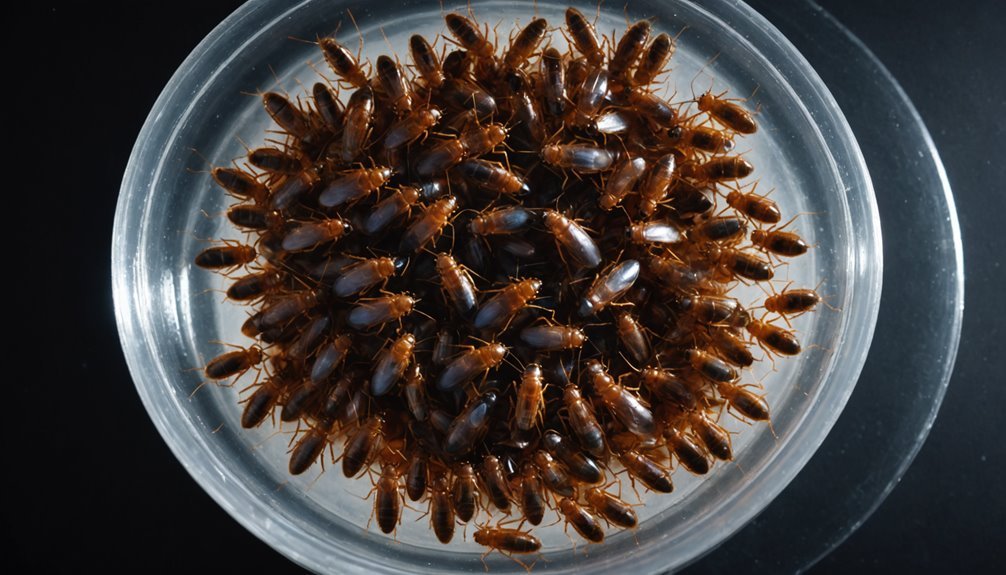
Cockroach bait stations may look like simple plastic discs, but each one packs a specific combination of parts working together to lure and kill roaches. The outer plastic housing keeps the bait protected while limiting access to children and pets. Entry points are sized specifically for cockroaches, so larger animals can’t reach inside.
The real work happens with the bait matrix. It combines food attractants with a slow-acting insecticide in a gel, liquid, or paste texture that’s more appealing than nearby food sources.
Active ingredients like fipronil or hydramethylnon are deliberately slow-acting, so roaches feed freely before dying. Fipronil disrupts the insect’s central nervous system, while hydramethylnon interferes with cellular energy production.
Together, these components turn a small plastic container into an effective roach control tool. Gel baits, in particular, contain higher moisture content that makes them more attractive to cockroaches than traditional bait stations.
How Bait Stations Wipe Out the Whole Nest, Not Just One Roach
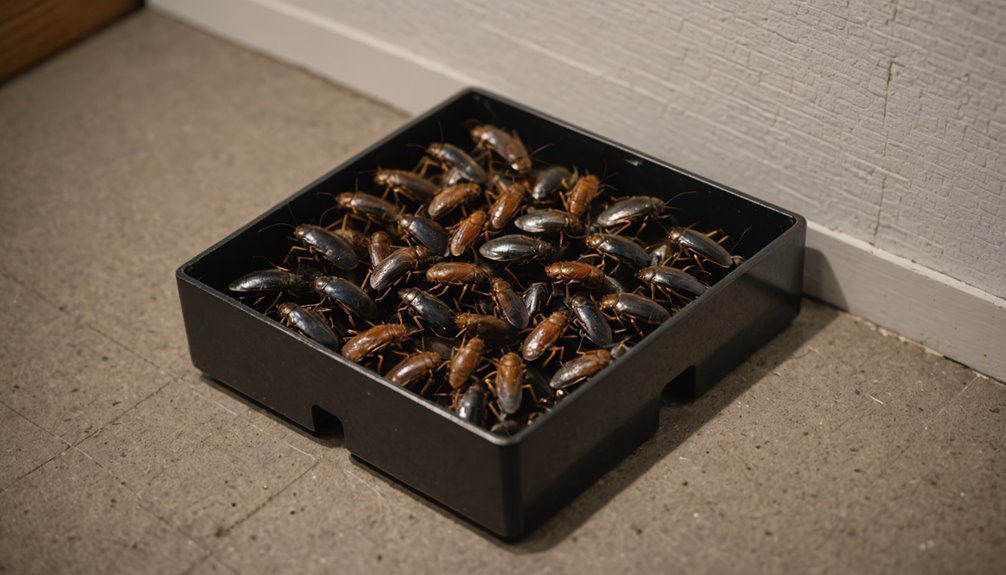
When a roach feeds on bait and returns to the nest, it doesn’t die alone. It becomes a vehicle for spreading the toxicant through the entire colony. The slow-acting insecticide gives it enough time to reach the harborage before dying, triggering a chain reaction.
One roach feeds, returns to the nest, and poisons the entire colony before it ever dies alone.
Other roaches pick up the poison through direct contact, contaminated feces, and by eating dead nestmates. Because cockroaches practice coprophagy and nest in tight clusters, exposure spreads fast.
Nymphs and egg-bearing females hidden deep inside harborages get reached indirectly, the stages that sprays typically miss entirely.
You won’t see immediate results. Visible reduction usually appears around seven days, with full colony collapse taking several weeks. Professional baits use proprietary food matrices that remain attractive to foraging roaches far longer than store-bought alternatives.
The goal isn’t killing one forager. It’s circulating the toxicant until the entire population collapses.
Where to Place Cockroach Bait Stations for Maximum Effect
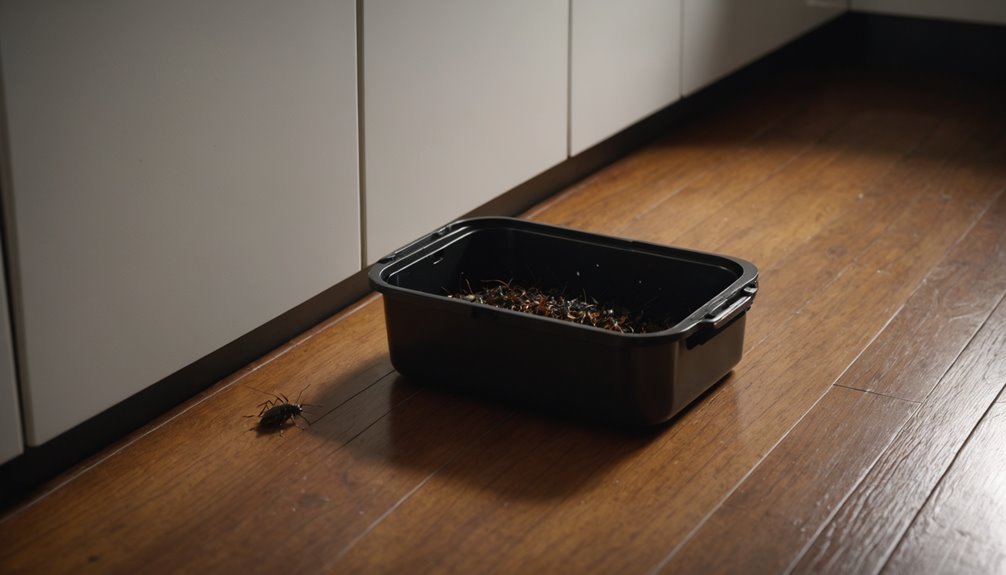
Bait stations fail when placed in the wrong spots. Even a good product won’t work if roaches never cross it. Focus placement where roaches actually live and travel.
Target these three zones first:
- Cracks, crevices, and plumbing penetrations: roaches naturally travel these hidden routes.
- Behind appliances and under sinks: moisture, warmth, and shelter make these prime harborage spots.
- Inside cabinets and along baseboards: active trails concentrate here, especially near food.
Use multiple small placements instead of one large drop. Follow the evidence: droppings, shed skins, and live sightings tell you exactly where to bait.
Avoid sprayed surfaces, hot areas, and anywhere moisture could wash the bait away. Place it where roaches already are, not where you hope they’ll wander. Bait stations are available in several formulations, including gels, stations, and granules, each suited to different infestation levels and cockroach species.
How Long Cockroach Bait Stations Take to Work
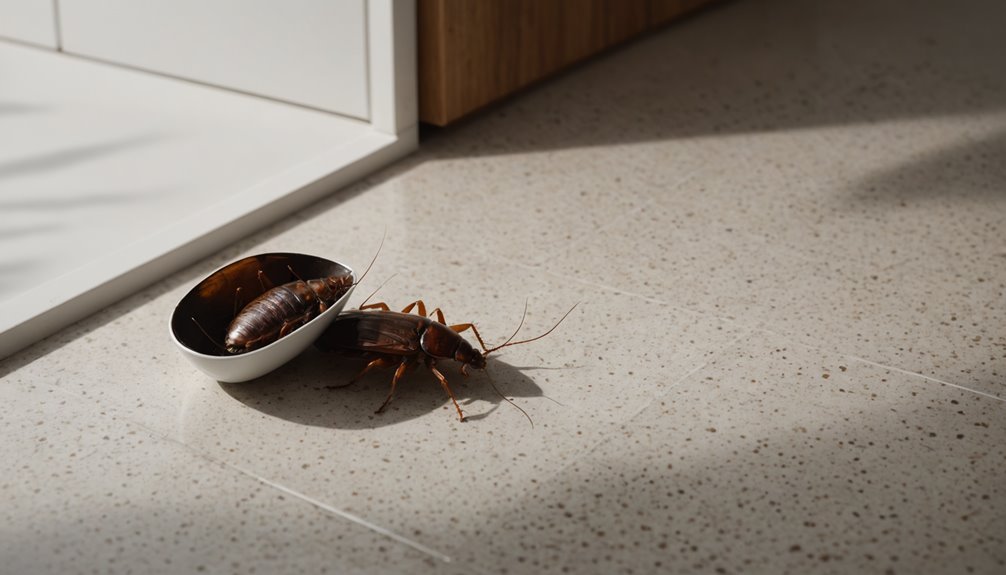
How long does a bait station take to work? You’ll typically see the bait start affecting roaches within several hours to 24 hours after they feed on it.
The delayed action is intentional. It lets poisoned roaches return to the colony and spread the insecticide to others.
Within about a week, you should notice a meaningful reduction in roach activity. Fewer adults visible is usually the earliest sign it’s working.
Full elimination commonly takes around a month, with some gel baits achieving up to 99% control within that timeframe.
Several factors affect speed: roach species, infestation size, active ingredient, and placement quality.
Heavy infestations take longer. If your bait needs replacing every 7 to 14 days, roaches are feeding, and that’s a good sign. Monitoring bait consumption closely helps you determine whether the active ingredient is reaching the broader colony.
Why Cockroach Bait Stations Fail When Food Scraps Are Present
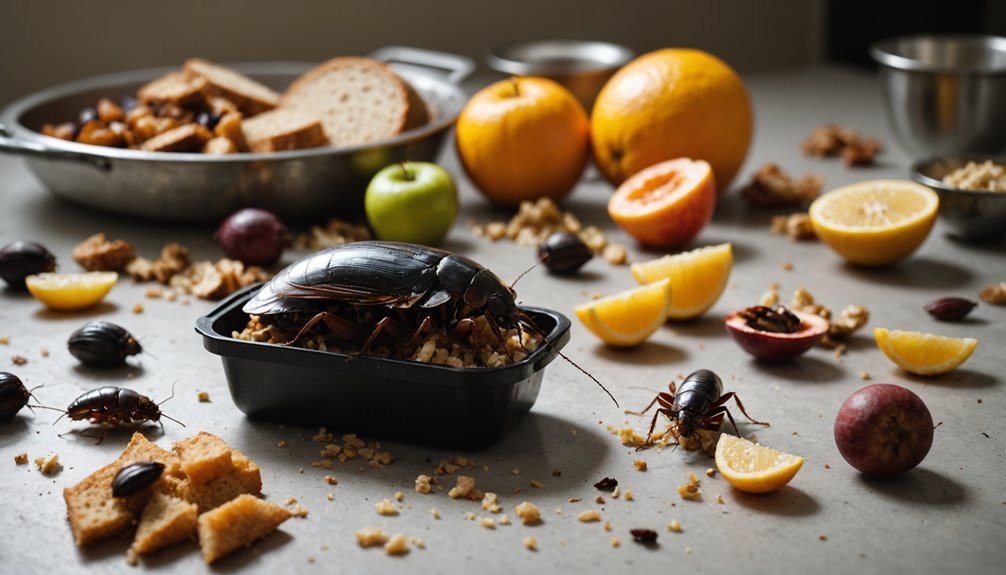
Even with bait stations placed correctly, food competition can quietly undermine the entire treatment. When roaches have easier food sources available, they’ll ignore your bait entirely.
Here’s why food scraps create such a serious problem:
- Competing food wins every time: roaches choose accessible crumbs and spills over bait when alternatives are abundant.
- Bait loses its appeal: spilled food and waste make bait stations less attractive than what’s already on your floor or counters.
- Sanitation becomes non-negotiable: daily counter wiping, regular sweeping, and nightly trash removal are essential for bait to work.
Bait performs best when it’s the only reliable food source available. Without extreme sanitation, you’re not giving the treatment a fair chance. Roaches also prioritize standing water elimination alongside food removal, making it critical to fix leaks and dry out damp areas near bait stations.
Signs Your Bait Stations Are Working: and When to Replace Them
Knowing whether your bait stations are actually working takes more than a quick glance. Watch for fewer live roach sightings over time, bait consumption inside the station, and dead roaches found near treated areas. These are strong indicators the bait is reaching the population.
Compare your current sightings against a baseline from before placement. Check again several days later, then around the two-week mark. If activity is dropping, you’re on track.
Replace bait that’s dried out, untouched after several days, or fully consumed. Move stations showing no feeding to cracks, crevices, or wall edges where roaches already travel.
If sightings aren’t declining after two weeks, reassess both your placement and the bait formulation you’re using.
Frequently Asked Questions
Are Cockroach Bait Stations Safe to Use Around Children and Pets?
Cockroach bait stations are relatively safe, but you’ll want to place them out of reach of children and pets. If they’re damaged or accessible, they can cause nausea, vomiting, or other harmful symptoms.
Can Cockroach Bait Stations Be Used Outdoors as Well as Indoors?
You can use cockroach bait stations outdoors, but you’ll need to check the product label first. Place them near walls, foundations, and sheltered harborages, and replace them every three months or sooner if they’re depleted.
How Many Bait Stations Do I Need for My Home?
For moderate infestations, you’ll need around 6 bait stations; for heavy ones, use 12. Place them where you’ve spotted cockroach activity, like under sinks, behind appliances, and in dark, damp corners.
Can I Use Bait Stations Alongside Other Cockroach Control Methods?
You can use bait stations alongside other cockroach control methods. Just avoid spraying repellent insecticides near bait stations, as they’ll deter cockroaches from feeding. Pair baits with sanitation, exclusion, and crack-and-crevice treatments for best results.
Do Different Cockroach Species Require Different Types of Bait Stations?
Yes, different species do require different bait stations. You’ll need to match the station type to each species’ feeding behavior and harborage location, since no single bait station works equally well for all cockroaches.
Conclusion
Cockroach bait stations aren’t a quick fix, but they’re one of the most effective ways to wipe out an entire colony rather than just the roaches you can see. If you place them correctly, keep competing food sources away, and stay patient, you’ll see results. Check your stations regularly, replace them when needed, and you’ll break the colony’s cycle for good.
