
Cockroaches in Furniture: Signs & How to Treat It
You might not realize it, but cockroaches could be living inside your furniture right now. These resilient pests are experts at hiding in the tightest, darkest spaces — and your couch, bed frame, or wooden cabinets offer the perfect refuge. Knowing what to look for and how to respond can make all the difference between a minor problem and a full-blown infestation.
Key Takeaways
- Cockroaches hide in cracks, seams, joints, and fabric folds of furniture, preferring dark, tight, undisturbed spaces near kitchens and bathrooms.
- Key infestation signs include small black droppings, musty odors, shed skins, egg casings, and daytime cockroach sightings.
- Inspect furniture thoroughly using a flashlight, focusing on seams, drawer tracks, hollow legs, and undersides.
- Treat infestations with gel baits near hiding spots, boric acid in voids, vacuuming, and steam cleaning upholstered furniture.
- Persistent infestations causing health symptoms like allergies or respiratory irritation require professional intervention for complete elimination.
Where Cockroaches Hide in Furniture

Cockroaches are expert hiders, and furniture gives them exactly what they need: darkness, tight spaces, and minimal disturbance.
You’ll find them tucked into cracks, joints, and seams where their flat bodies let them squeeze into nearly any gap. Upholstered furniture is especially problematic — fabric folds, cushion undersides, and stitching lines shelter roaches and even hold egg cases.
Roaches exploit every crack and seam, hiding in fabric folds and cushion undersides where egg cases go undetected.
Wooden furniture adds another layer of concern, since hollow legs, void spaces, and gaps behind drawer fronts create enclosed breeding zones. In dressers and cabinets, check drawer slides, rear corners, and back panels. Treating dressers and cabinets with insecticide can eliminate these potential hiding spots before they become a larger problem.
Don’t overlook the areas under and behind furniture either. Spaces pressed against walls stay dark and undisturbed, making them ideal refuges that you might easily miss during a routine inspection.
Warning Signs You Have Cockroaches in Your Furniture
Knowing what to look for is the first step toward catching a cockroach problem before it gets out of hand. Cockroaches leave behind several warning signs you can identify through careful inspection of your furniture.
- Droppings and egg cases – Small black specks resembling coffee grounds, cylindrical droppings, or brown ridged oothecae in seams and crevices confirm activity.
- Musty or oily odor – A strong smell coming from upholstery or enclosed wooden furniture often signals nearby or internal infestation.
- Shed skins and live insects – Molted exoskeletons near furniture joints or sudden movement when you disturb a piece indicate active cockroach presence.
Use a flashlight to inspect undersides, seams, and crevices. If you spot any combination of these signs, contact a professional immediately. Less frequently used furniture is more susceptible to infestation and should be prioritized during your inspection.
Does Seeing Cockroaches During the Day Mean a Worse Infestation?
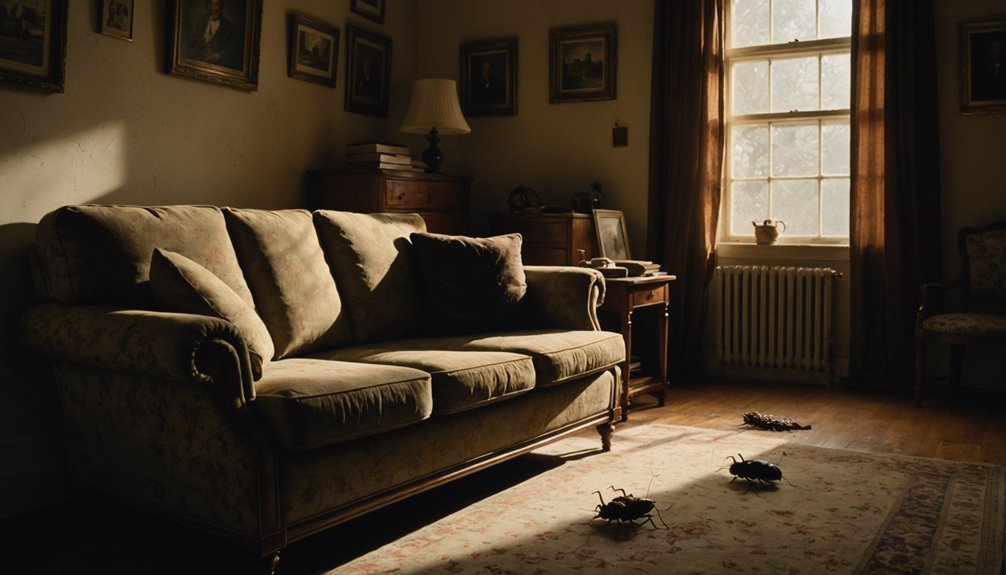
Once you’ve spotted those warning signs in your furniture, you might also start wondering what it means if you’re actually seeing live cockroaches moving around — especially during the day.
Since cockroaches are nocturnal, daytime activity is outside their normal pattern and signals something’s wrong.
When hidden spaces become overcrowded, food or water runs low, or the population grows large enough, roaches get pushed out into the open — even in daylight.
That’s why pest-control sources consistently treat daytime sightings as a stronger warning sign than nighttime ones.
Seeing two to ten roaches during the day should raise concern.
If you’re spotting them repeatedly, in multiple rooms, or alongside droppings and odor, you’re likely dealing with an infestation that’s already well-established and may need professional treatment. When addressing an infestation, baits over sprays are recommended, as sprays can scatter roaches and make control efforts less effective.
How to Inspect Your Furniture for Cockroaches
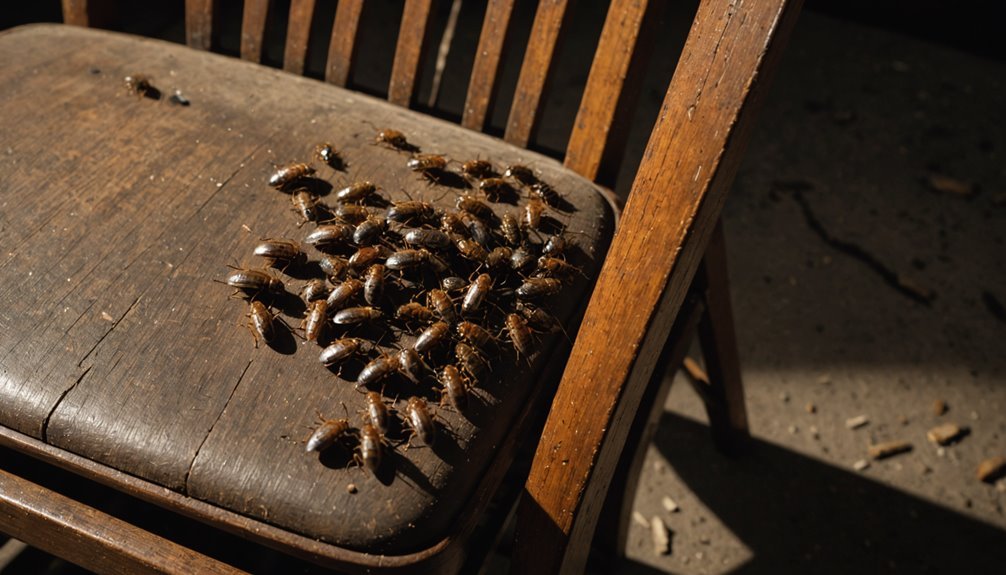
A thorough inspection starts with the right approach: use a flashlight and check every surface methodically, including the top, underside, back, and any enclosed compartments.
Focus on seams, joints, crevices, and drawer tracks where roaches commonly hide. Lightly tap or move furniture to prompt hidden roaches to scatter, and use sticky traps to monitor activity over time.
Look specifically for these three signs of cockroach presence:
- Droppings — small, black pepper–like specks concentrated in concealed areas
- Oothecae — egg cases tucked into joints, cracks, or upholstery seams
- Shed skins — indicating ongoing activity and repeated molting cycles
Prioritize older, worn, or damaged furniture, and pay extra attention to items stored near kitchens, bathrooms, or basements. An unusual musty odor detected around furniture can also signal the presence of cockroach activity.
How to Get Rid of Cockroaches in Furniture
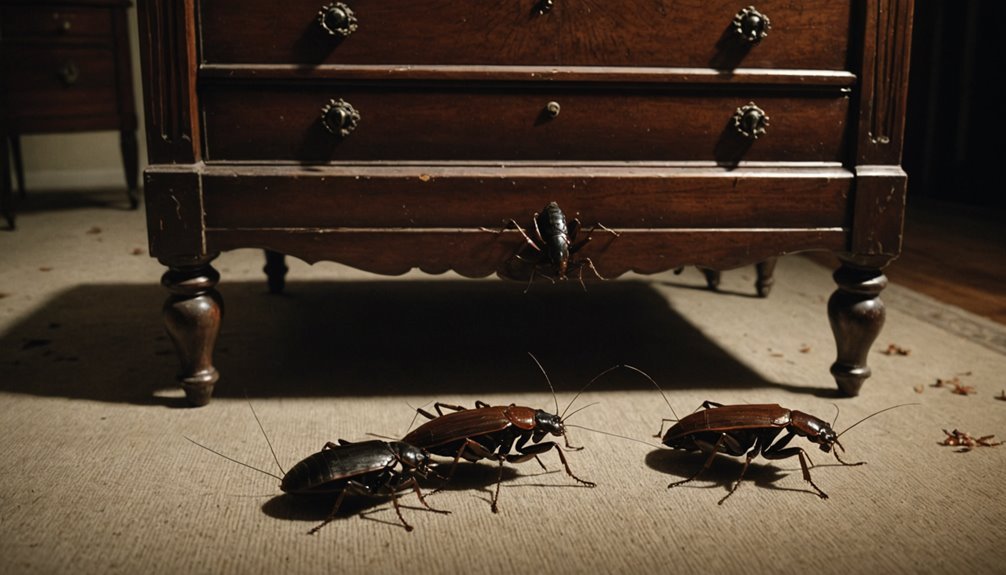
Finding cockroaches in your furniture means it’s time to act quickly and strategically.
Place gel baits near hiding spots rather than open surfaces, and position bait stations flush against corners, edges, and wall-floor junctures where roaches travel. Direct sprays at fecal spotting and aggregations, not randomly across baseboards.
Apply boric acid or diatomaceous earth inside crevices and hidden voids, then seal cracks with caulk to block reinfestation routes.
Vacuum visible roaches and debris, then steam clean infested furniture to kill hidden insects with heat. For small removable items, freezing them for three to five days works effectively.
Remove clutter to reduce harborage areas and improve access for treatment.
Combining physical removal with baiting or dusting produces better results than any single method alone. Cockroaches leave behind dark greasy smear marks on furniture surfaces, which can help you identify the most active infestation zones before treatment.
How to Clean and Disinfect Furniture After Cockroaches
Cleaning and disinfecting furniture after a cockroach infestation requires a systematic approach, starting with thorough debris removal before any wet treatment.
Use a HEPA vacuum on all surfaces, including upholstery, crevices, and underneath furniture, then seal and discard the waste immediately.
Follow these steps for hard surfaces:
- Wipe with hot, soapy water to remove visible residue.
- Apply a disinfectant, following the label’s contact time exactly.
- Allow surfaces to dry completely before use.
For upholstered furniture, lightly mist fabric rather than soaking it, and consider steam cleaning to kill bacteria and remove allergens.
Wash removable fabrics in hot water. Treat cracks, joints, and drawer slides with a disinfectant spray, since cockroach residue concentrates in these hidden areas.
How to Keep Cockroaches Out of Furniture
Once you’ve eliminated a cockroach infestation from your furniture, keeping them out requires consistent preventive habits rather than a single fix.
Inspect seams, joints, cracks, and crevices regularly, and look for droppings, shed skins, or egg sacs. Seal gaps in walls, baseboards, and furniture frames using caulk to eliminate entry points and harborage areas.
Reduce attractions by keeping food away from furniture, storing it in airtight containers, and cleaning up crumbs quickly. Fix leaks and use a dehumidifier in damp spaces to eliminate moisture roaches need to thrive.
Vacuum furniture seams and hidden spots routinely, and apply diatomaceous earth or boric acid in drawers and interior crevices.
Keeping furniture clutter-free and pulled from walls makes ongoing inspections and treatments far more effective.
When to Call a Professional for Cockroaches in Furniture
If your DIY treatments haven’t reduced cockroach activity, it’s time to call a professional.
When sightings spread beyond one room or you notice droppings, egg casings, or musty odors near multiple furniture areas, the infestation has likely grown beyond what over-the-counter products can handle.
Health symptoms like allergy flare-ups or respiratory irritation signal that cockroach populations are large enough to affect your indoor air quality and warrant immediate expert intervention.
DIY Methods Have Failed
When DIY methods aren’t working, the signs are usually hard to ignore. If baits, traps, and sprays haven’t reduced activity, hidden harborages or missed egg cases are likely the reason. Over-the-counter products rarely reach the concealed voids inside furniture where roaches actually shelter.
Watch for these persistent failure indicators:
- Roaches keep reappearing after repeated treatments, suggesting untreated harborages remain active.
- You’re finding fresh droppings, shed skins, or egg casings inside or around furniture despite ongoing efforts.
- Daytime sightings are increasing, which signals overcrowding and a growing population.
Each of these signs points to an infestation that’s beyond DIY reach. A professional can locate hiding areas using dropping patterns and apply targeted treatments where surface sprays can’t.
Infestation Spans Multiple Rooms
Even when DIY efforts fail in one spot, the problem can quietly spread through your home before you realize it. If you’re spotting roaches in the kitchen, bathroom, and storage areas, you’re dealing with more than one stray insect.
Droppings, egg cases, and shed skins appearing in separate rooms confirm active breeding and movement throughout your home.
Daytime sightings across multiple rooms are especially concerning. Roaches typically stay hidden at night, so seeing them during the day means the population has grown large enough to displace individuals from established nesting sites.
Because roaches travel through wall voids, pipe gaps, and door openings, localized treatment rarely reaches the actual source.
At this stage, a professional inspection is the most reliable way to identify and eliminate all harborage areas.
Health Symptoms Are Present
Sneezing, congestion, itchy eyes, or a skin rash that keeps coming back after sitting near your furniture isn’t just an annoyance—it may be a sign that cockroach allergens have built up in your home.
Cockroach proteins found in saliva, droppings, and body fragments collect in upholstered furniture, carpets, and bedding, triggering persistent reactions.
Watch for these warning signs:
- Allergy-like symptoms — recurring sneezing, runny nose, postnasal drip, or itchy skin after contact with furniture
- Respiratory symptoms — coughing, wheezing, chest tightness, or worsening asthma, especially at night
- Eye and throat irritation — itchy, watery eyes or an itchy mouth and throat without another clear cause
If these symptoms persist despite cleaning, call a professional immediately.
Frequently Asked Questions
Can Cockroaches Damage Furniture Materials Like Wood or Fabric Over Time?
Yes, cockroaches can damage your furniture’s wood and fabric over time. They’ll chew, stain, and contaminate surfaces while nesting in soft materials. You’re at greater risk if your furniture’s already damp or holds food residue.
How Long Can Cockroaches Survive Inside Sealed or Unused Furniture?
If you’ve got dry, sealed furniture, cockroaches can survive about one to two weeks. However, if humidity’s trapped inside, they’ll last several weeks, and hidden food residues can extend their survival to months.
Is It Safe to Use Furniture Again After a Cockroach Infestation Ends?
You can reuse furniture once you’ve confirmed no live roaches, egg sacs, or droppings remain. Vacuum all seams, drawers, and undersides thoroughly, and inspect every hidden crack before resuming normal use.
Can Cockroaches Spread From Furniture to Walls or Flooring Nearby?
Yes, cockroaches can spread from your furniture to nearby walls and flooring. They’ll move through cracks, baseboards, and wall-floor junctions, so you’ll need to seal gaps and treat those surrounding areas too.
Should Infested Furniture Be Discarded or Is Treatment Always Worth Attempting?
You don’t always need to discard infested furniture. If the infestation’s localized or early-stage, treatment’s worth trying. Discard it when it’s heavily infested, deeply upholstered, or persists after repeated treatment attempts.
Conclusion
Dealing with cockroaches in your furniture isn’t easy, but you’ve got the tools to tackle the problem. By staying alert to warning signs, inspecting regularly, and using the right treatments, you can protect your home. Don’t wait until the infestation grows—act quickly when you spot trouble. And if things feel overwhelming, don’t hesitate to call a professional. Your furniture, and your peace of mind, are worth protecting.
