

Hearing Cockroaches in the Attic? How to Get Them Out
You might not think much about your attic, but cockroaches certainly do. These resilient pests can find their way into your attic more easily than you’d expect, and once they’re in, they’re tough to remove. Understanding how they get there and what keeps them around is the first step toward reclaiming your space. What you discover might surprise you.
Key Takeaways
- Cockroaches enter attics through roof cracks, gaps around vents, damaged weatherstripping, and unsealed plumbing or utility penetrations.
- Attics attract cockroaches because they offer warmth, darkness, moisture, undisturbed shelter, and food sources within old insulation and debris.
- Signs of infestation include live or dead roaches, droppings, shed exoskeletons, smear marks, and a musty oily odor.
- Remove cockroaches using gel bait, insecticide dust, and glue traps while fixing leaks and eliminating clutter.
- Prevent reinfestation by sealing cracks, screening vents, improving ventilation, replacing cardboard with plastic tubs, and conducting regular inspections.
How Do Cockroaches Get Into Your Attic?
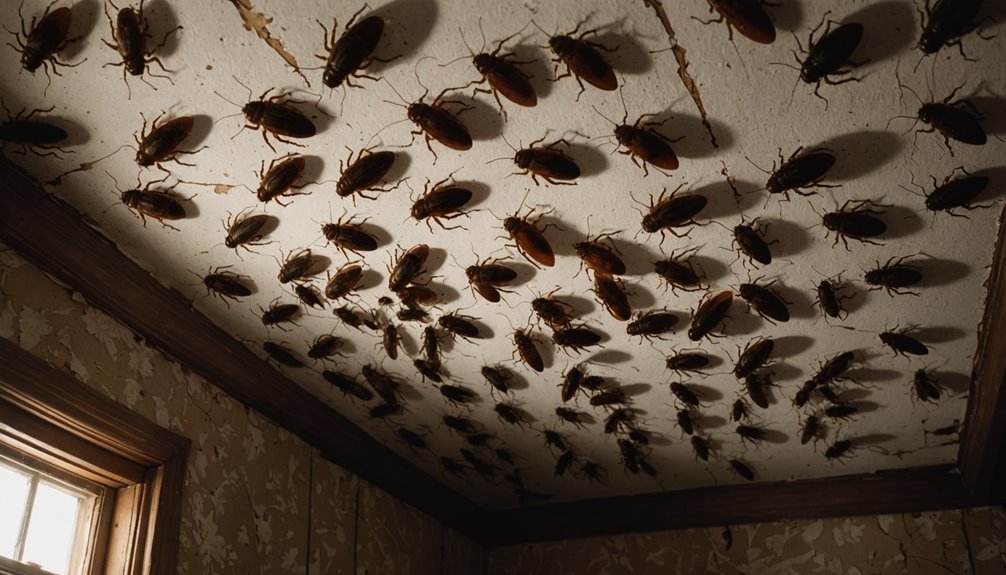
Cockroaches are resourceful invaders, and your attic offers more entry points than you might expect. They squeeze through small cracks in roofing, gaps in caulking along the roofline, and openings around vents or windows.
Poor weatherstripping and damaged door sweeps at lower levels let them in, and they’ll migrate upward through wall voids, ceiling gaps, and connected structural spaces.
Plumbing and utility penetrations are equally vulnerable. Roaches travel through pipes, drains, and openings around plumbing lines, moving freely between floors and into attic-connected areas. Dry drain traps make this even easier.
Roaches exploit every pipe, drain, and utility gap — traveling freely between floors and straight into your attic.
They also hitchhike inside on bags, boxes, second-hand furniture, and cardboard shipping materials. Neighboring infestations can push roaches into your home too, and once they’re inside, reaching your attic is straightforward. Cockroaches are naturally drawn to warm, humid environments, making attics with poor ventilation or insulation particularly appealing destinations once they’ve gained entry.
Why Attics Are a Cockroach’s Ideal Habitat
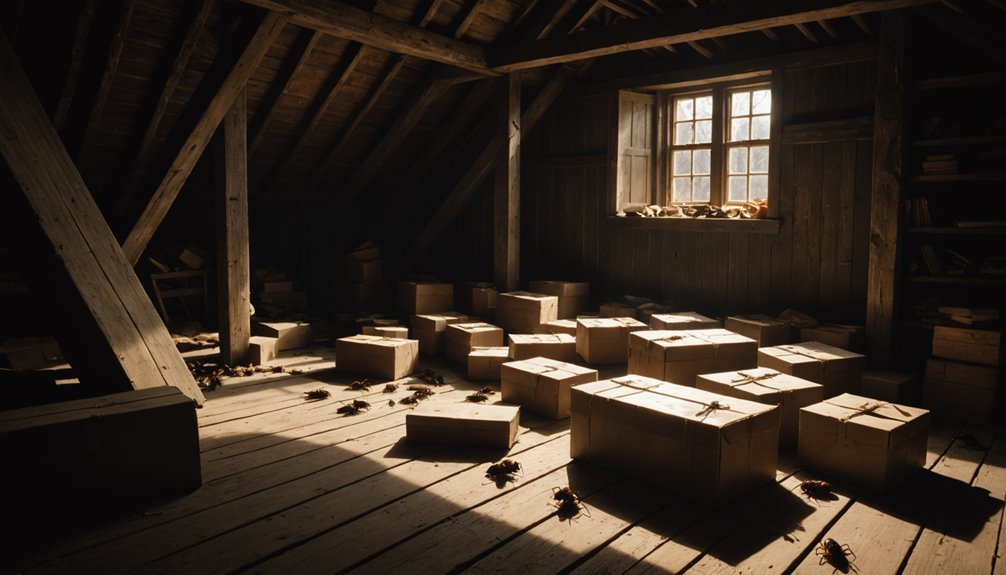
Once cockroaches find their way into your attic, they’re not leaving without a fight—because the space is practically built for them.
Attics offer the exact combination of conditions cockroaches need to survive and breed: warmth, darkness, moisture, and shelter.
Leaky roofs, poorly insulated ductwork, and HVAC condensate lines can create a humid microclimate that supports cockroach activity.
Heat retained by insulation keeps temperatures favorable year-round.
Since attics rarely get disturbed, cockroaches can nest, breed, and expand their population without interruption.
Old insulation, rotting wood, stored boxes, and debris all add harborage value by creating protected crevices.
Rotting wood even serves as a food source.
When an attic checks every box—dark, warm, damp, and cluttered—cockroaches treat it as a permanent residence. American cockroaches are particularly drawn to these conditions, making them the most common attic cockroach species found in homes.
Signs You Have Cockroaches in Your Attic
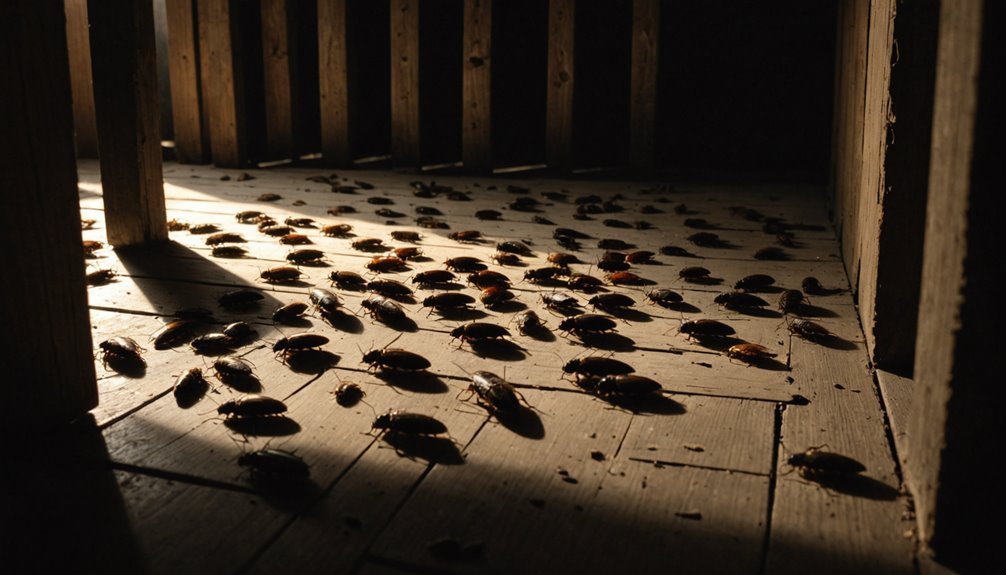
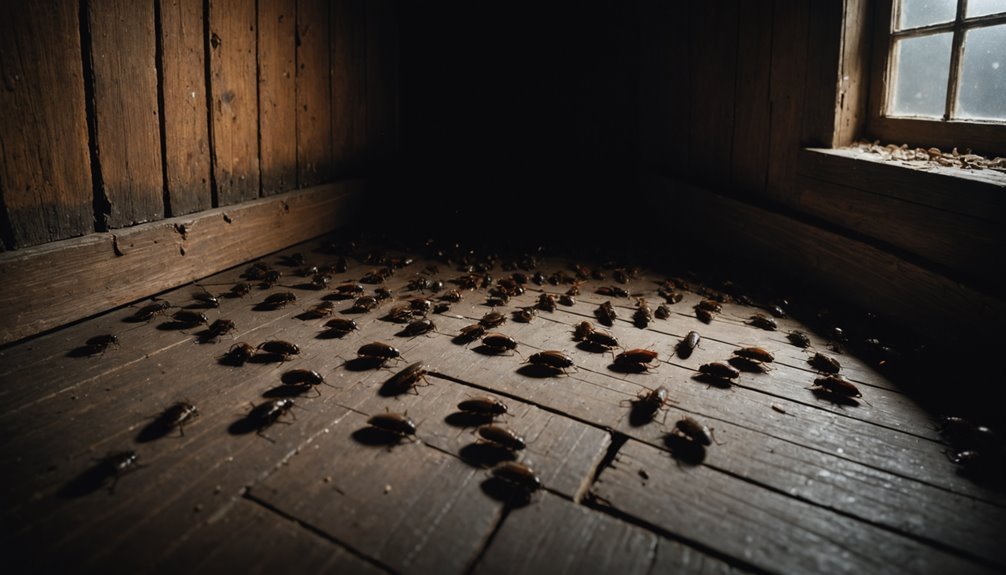
Spotting an attic infestation early comes down to knowing what to look for. Live roaches in dark corners or along rafters are the clearest sign, but you’ll also want to check for dead roaches, shed exoskeletons, nymphs, and egg cases, which all confirm active breeding.
Live roaches in dark corners are the clearest sign, but dead roaches, shed exoskeletons, and egg cases confirm active breeding.
Droppings are another strong indicator. Small ones resemble coffee grounds or pepper specks, while larger species leave cylindrical pellets. Brown smear marks near walls or damp surfaces often accompany heavier activity.
Trust your senses too. A musty, oily odor or nighttime scratching and scurrying sounds point to cockroach presence. Cockroaches are known vectors of diseases like salmonella and E. coli, making early detection in your attic especially important for your household’s health.
You should also look for chewed cardboard, damaged insulation, or grease-like residue near high-traffic areas, since these signal established foraging and nesting rather than a single stray roach.
How to Get Rid of Cockroaches in Your Attic
Getting rid of cockroaches in your attic takes a layered approach—no single method works on its own.
Start by applying roach gel bait in small dabs along edges, voids, and moisture-prone areas. Add insecticide dust in wall cavities and sheltered travel paths where sprays won’t reach. Place glue traps along framing and known movement corridors to monitor activity before and after treatment.
Address the conditions driving the infestation. Fix leaks, eliminate standing water, and remove clutter that creates harborage. Seal cracks, holes, and utility penetrations to block reinfestation routes, and install screens over attic vents.
Treat the exterior perimeter around gutters, vents, and roofline junctions as a barrier. Refresh baits when feeding drops off, and replace traps when debris reduces their effectiveness. American cockroaches, which are among the most common attic invaders, can produce 14 to 16 egg capsules over their lifetime, making early treatment essential before populations establish.
How to Cockroach-Proof Your Attic
Clearing out cockroaches is only half the job—keeping them out requires closing the entry points, conditions, and attractants that made your attic a target in the first place.
Caulk cracks, seal utility penetrations, and install fine-mesh screening over vents. Fit weather stripping around attic doors and hatches to close hidden travel routes.
Control moisture by fixing roof leaks, improving ventilation, and directing gutters away from your foundation. Roaches thrive where dampness accumulates, so keeping your attic cool and dry removes a core attractant.
Roaches need moisture to thrive—eliminate dampness in your attic and you eliminate one of their biggest draws.
Swap cardboard boxes for sealed plastic tubs, remove paper piles and nesting debris, and keep food items out entirely.
Outside, trim vegetation near rooflines, seal siding joints, and keep firewood away from the perimeter. Regular inspections help you catch problems before they escalate. Cockroaches can enter your attic independently or be introduced through infested items brought inside.
Frequently Asked Questions
Can Cockroaches in the Attic Spread Diseases to People Below?
Yes, cockroaches in your attic can spread diseases to you below. They’ll carry bacteria through wall voids and ducts, contaminating your food, surfaces, and utensils with pathogens like salmonella and E. coli.
How Long Can a Cockroach Infestation Last Without Treatment?
Without treatment, your cockroach infestation can last months to years. As long as shelter, moisture, and food remain available, surviving adults’ll keep reproducing, making the problem self-sustaining and increasingly harder to eliminate over time.
Do Cockroaches in the Attic Eventually Move Into Living Spaces?
Yes, cockroaches in your attic can move into living spaces through cracks, gaps around pipes, vents, and wiring. They’ll follow moisture and food sources, making kitchens and bathrooms their most common destinations once they’ve spread.
Are Certain Cockroach Species More Likely to Infest Attics?
Yes, certain species are more likely to infest your attic. American and smoky brown cockroaches are your biggest concerns, as they’re drawn to warm, moist, dark spaces that attics commonly provide.
Can Pets Detect or Be Harmed by a Cockroach Attic Infestation?
Your pets can both detect and be harmed by a cockroach attic infestation. Dogs’ll often sniff out roaches before you notice them, while droppings and contaminated surfaces can pose health risks to your animals.
Conclusion
Dealing with cockroaches in your attic isn’t something you should ignore. You’ve learned how they get in, why they love attics, and how to spot the signs of an infestation. Now it’s time to take action. Seal those entry points, set up bait stations, and keep your attic dry and clean. By staying proactive, you’ll protect your home and prevent these resilient pests from making your attic their permanent home.
