
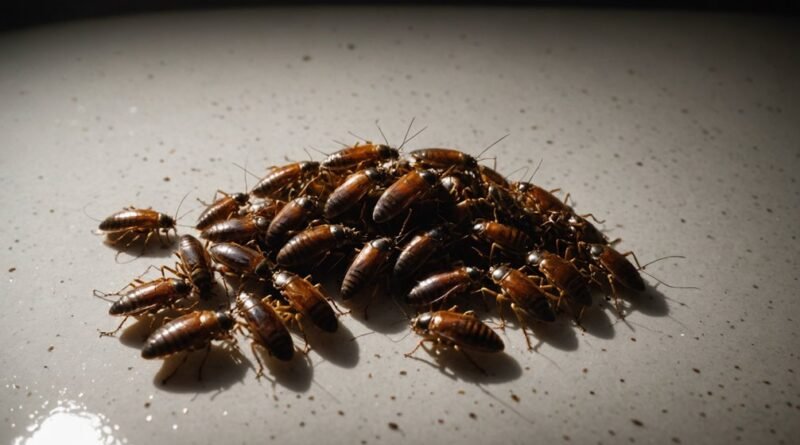
Cockroaches Behind the Refrigerator: How to Stop Them
You’ve probably noticed your refrigerator humming quietly in the corner, but you might not realize what’s lurking behind it. Cockroaches love this spot, and if they’ve found yours, you’ve got a problem worth taking seriously. Understanding why they’re there — and how to get rid of them — could make all the difference in keeping your kitchen clean and pest-free.
Key Takeaways
- Cockroaches hide behind refrigerators because the appliance provides warmth, moisture, food debris, and dark shelter that supports their survival.
- The German cockroach is the most common species found behind refrigerators, identified by its tan color and two dark head stripes.
- Signs of infestation include daytime roach sightings, droppings resembling coffee grounds, egg casings, shed skins, and a musty odor.
- To eliminate roaches, unplug the refrigerator, vacuum thoroughly, scrub surfaces, clean the drip pan, and apply gel bait or boric acid.
- Seek professional pest control if roaches appear more than once weekly, are seen during daylight, or persist after two weeks of treatment.
Why Cockroaches Are Drawn Behind Refrigerators
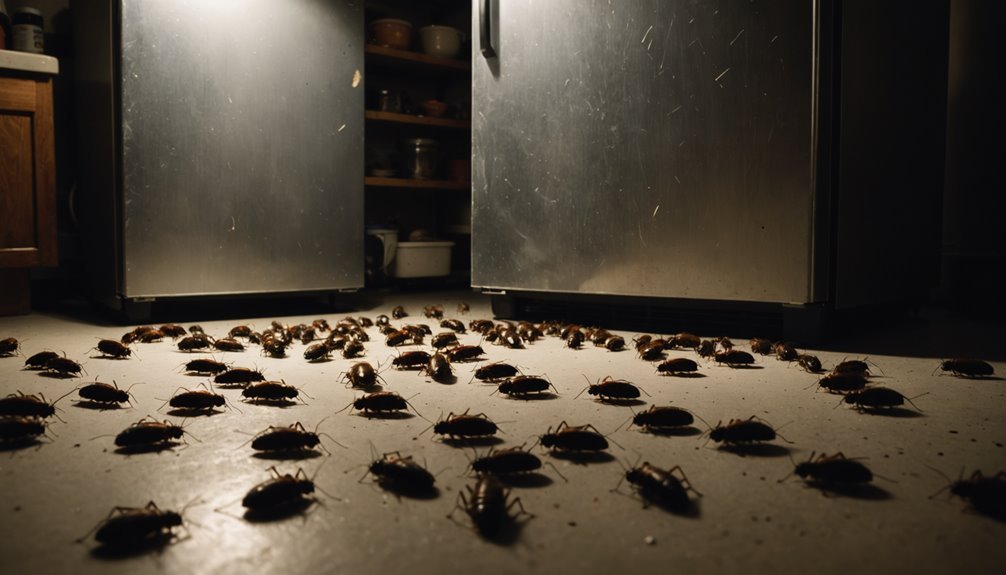
Cockroaches don’t wander behind your refrigerator by accident — that space offers almost everything they need to survive. The compressor and motor emit steady heat, keeping the area warm enough for cockroaches to stay active and reproduce year-round.
Condensation, drip pans, and minor leaks supply the moisture they depend on. Crumbs, grease, and food debris accumulate back there because it’s rarely cleaned, giving them a reliable food source.
The narrow, dark gap also provides shelter from light, predators, and household disruption. Gaps around cords, wall penetrations, and worn seals make the area easy to access and hard to monitor.
When warmth, moisture, food, and shelter overlap in one spot, cockroaches don’t just visit — they establish a harborage and spread outward from there. Infestations grow unnoticed until populations become large enough to spill into other areas of the kitchen.
Which Cockroach Species Most Commonly Hides Behind Fridges?
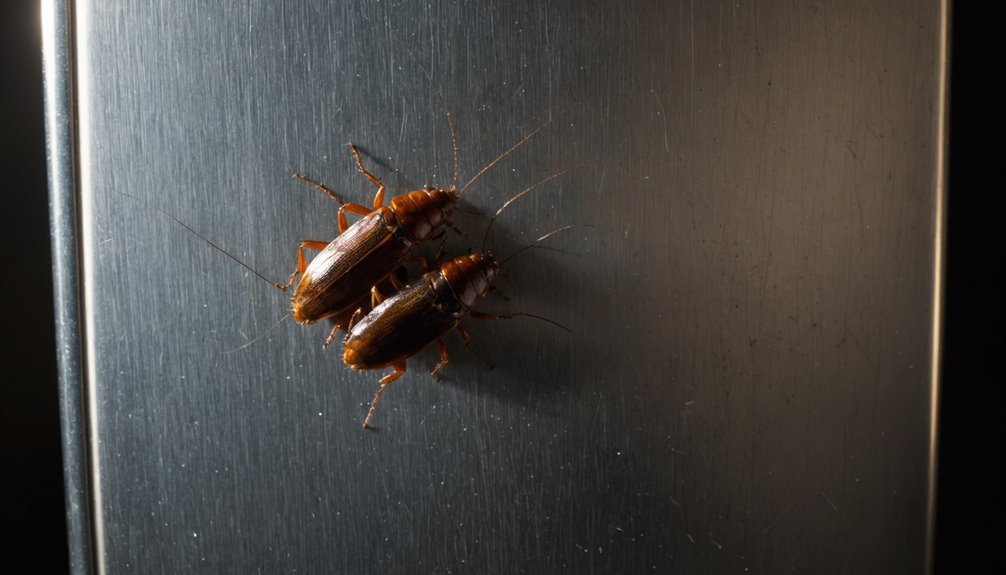
Not every cockroach species is equally likely to be hiding behind your refrigerator. The German cockroach dominates these spaces because it’s built for exactly this environment. It’s small, nocturnal, and drawn to warmth, moisture, and nearby food.
Here’s what makes it the top suspect:
- Light brown to tan coloring with two dark stripes behind the head
- Roughly 1/2 to 5/8 inch long, fitting easily into tight appliance gaps
- Attracted to motor heat and condensation refrigerators consistently produce
- Thrives in kitchens where crumbs and spills create a steady food source
- Far more kitchen-specific than American, Oriental, or brown-banded cockroaches
If you spot roaches behind your fridge, identify the small tan ones first. That’s almost certainly what you’re dealing with. Beyond being a nuisance, German cockroaches are known carriers of pathogens like Salmonella and E. coli, making quick elimination a health priority.
How to Tell If Roaches Are Living Behind Your Refrigerator?
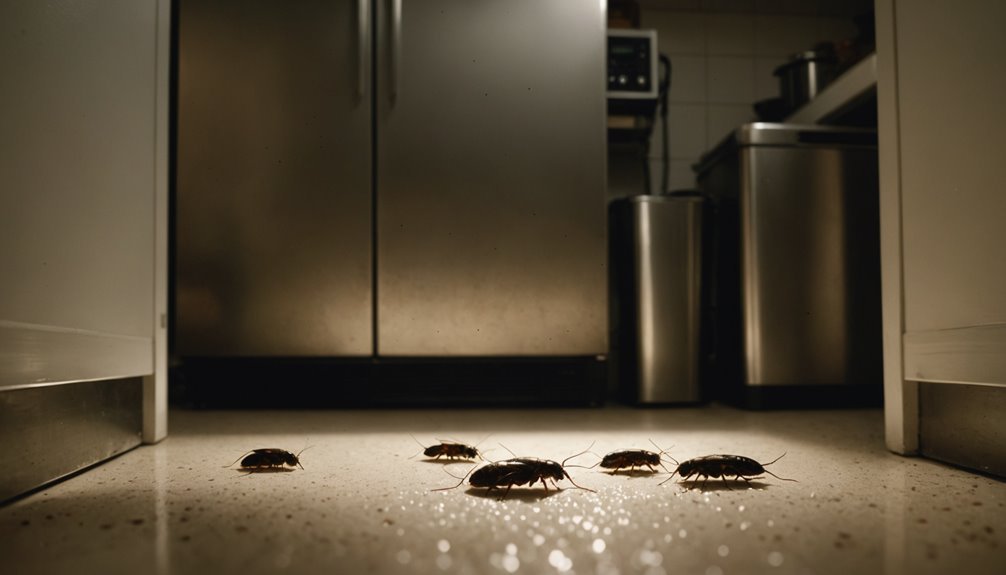
Knowing what to look for makes a real difference when you’re trying to confirm roach activity behind your refrigerator.
Start by checking for droppings that resemble coffee grounds or black pepper near seams, corners, and floor edges. Shed skins signal repeated occupancy, not a one-time visit.
If you spot oval-shaped egg cases tucked in tight spaces, roaches aren’t just passing through — they’re breeding there. A musty, oily odor near the appliance suggests heavy activity hidden in inaccessible areas.
Daytime sightings are especially concerning since cockroaches are nocturnal. Use a flashlight to inspect behind the unit for droppings, skins, and egg cases.
Place glue traps nearby — concentrated catches confirm an active harboring site rather than a random stray. Refrigerators attract roaches because their mechanical parts emit warmth and humidity, two conditions cockroaches need to survive and reproduce.
How to Clean Out Roaches Hiding Behind Your Refrigerator
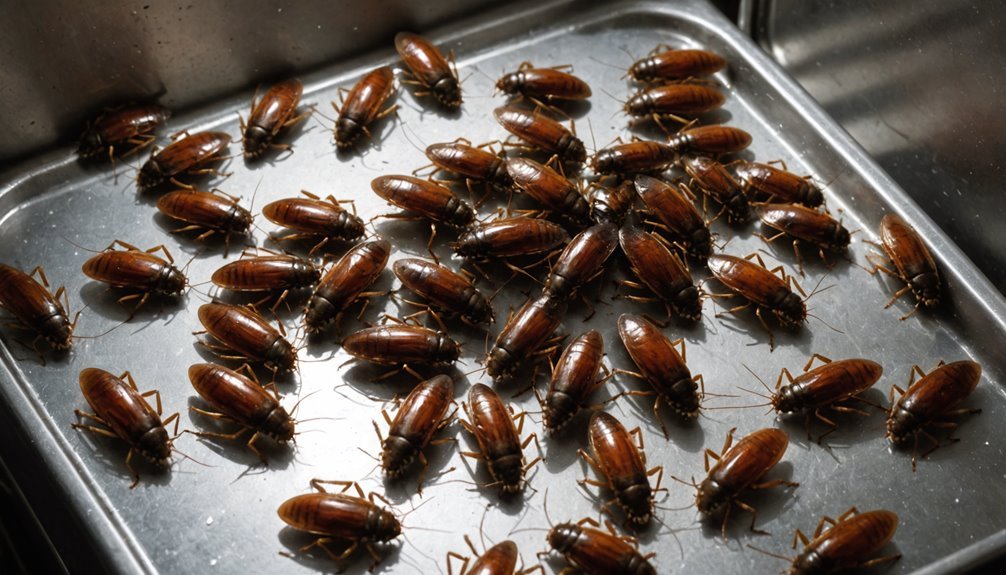
Before you do anything else, unplug the refrigerator to eliminate electrical hazard risk. Then pull it away from the wall to expose hidden debris zones.
Work through these steps in order:
- Vacuum corners, cracks, coils, and crevices using a hose or crevice tool, then dispose of contents immediately.
- Scrub exposed floors, baseboards, and wall surfaces with hot, soapy water to remove grease and food residue.
- Clean the drip pan and removable parts, then dry everything thoroughly.
- Apply gel bait in pea-sized dots along baseboards and near cord entry points.
- Dust boric acid or diatomaceous earth lightly into cracks and wall voids, keeping it away from motors and electrical components.
Dry all surfaces completely after cleaning because lingering moisture attracts roaches back. Refrigerators are particularly vulnerable because heat from motors and compressors creates exactly the warm environment cockroaches seek out for harborage.
What Kills Cockroaches Behind a Refrigerator?
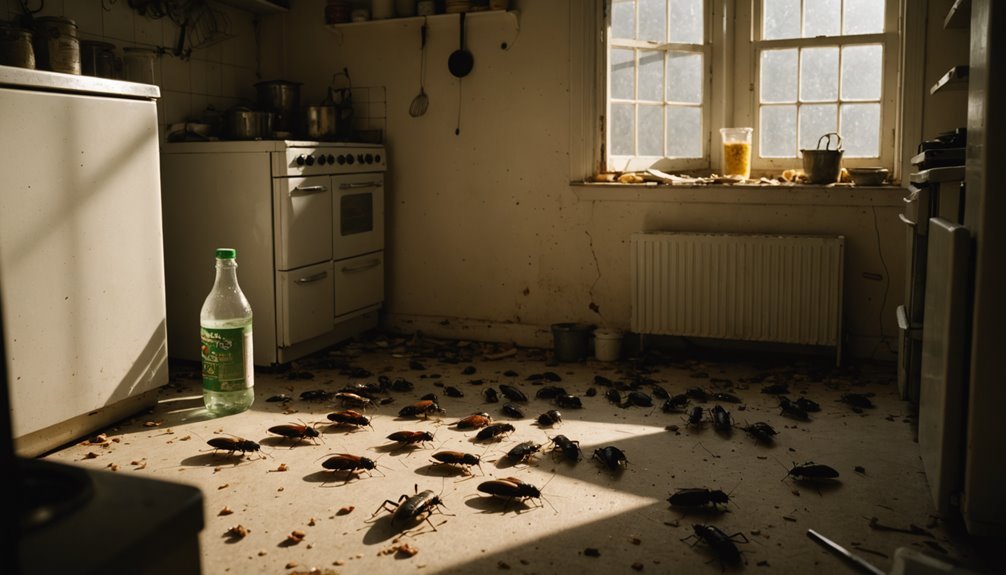
Once you’ve cleaned out the area behind your refrigerator, you’ll want to hit the remaining roaches with methods that actually work.
Crack-and-crevice sprays, boric acid dust, gel baits, and diatomaceous earth are all proven options that kill roaches at their hiding spots and along their travel routes.
Pairing these treatments with traps and preventive measures helps you stop a reinfestation before it starts.
Effective Killing Methods
Eliminating cockroaches behind a refrigerator requires the right tools in the right places. Each method targets roaches differently, so combining them gives you the best results.
Use these proven treatments behind your refrigerator:
- Boric acid – Apply a light dust or sugar-based bait mix in hidden, non-food-contact areas.
- Gel bait – Place pea-sized dots along travel lines, near cord entry points, and along baseboards.
- Diatomaceous earth – Dust a barely visible film in dry areas beneath and behind the fridge.
- Bait stations – Position them along roach pathways away from exposed electrical parts.
- Sticky traps – Use glue traps to monitor activity and confirm which routes roaches are using.
Avoid spraying liquid pesticides near coils or the motor.
Preventing Future Roaches
Killing the roaches behind your refrigerator is only half the job—keeping them out requires cutting off what draws them in.
Fix drips, dry the drip pan, and eliminate standing water since moisture is a major attractant. Clean up food spills immediately, store leftovers in sealed containers, and don’t leave pet food or dirty dishes out overnight.
Vacuum behind and beneath the refrigerator regularly to remove crumbs and debris.
Seal cracks wider than 1/8 inch using caulk, and close gaps around pipes, wires, and baseboards to block entry.
Remove cardboard, papers, and clutter from the surrounding area since roaches use stacked materials for shelter.
Place sticky traps near the rear of the unit to monitor for returning activity. Natural repellents like neem, bay leaves, and peppermint oil can also be placed around the refrigerator to discourage roaches from returning to the area.
How to Stop Roaches From Returning Behind the Refrigerator
Stopping roaches from coming back behind the refrigerator takes a combination of cleaning, sealing, and ongoing maintenance.
Once you’ve addressed an infestation, consistency is what keeps them gone.
Beating a roach infestation is only half the battle — keeping them gone requires consistency above all else.
Build these habits into your routine:
- Slide the fridge out monthly, vacuum behind it, and wipe down the wall and baseboard.
- Wash and dry the drip pan regularly to eliminate moisture buildup.
- Seal cracks around baseboards, pipes, and cabinet edges with caulk.
- Store food in airtight containers and take out trash in covered bins.
- Place sticky traps near the fridge to catch early activity before it escalates.
You don’t need to overhaul your kitchen—you just need to stay consistent.
Small, regular actions eliminate the conditions roaches depend on to survive and return.
When to Call a Professional for Roaches Behind the Refrigerator
DIY methods work for minor roach activity, but some situations call for a professional. Call one quickly if you’re seeing roaches more than once a week, especially during the day.
Daytime sightings signal overcrowding, not just a stray insect wandering in.
Look for egg casings, droppings resembling coffee grounds, shed skins, or a persistent musty odor near the refrigerator. These signs point to an established colony, not a simple intrusion.
Because the refrigerator’s motor generates heat, its condensation pan adds moisture, and the narrow space behind it stays dark and sheltered, it’s an ideal harborage zone that store-bought treatments often miss.
If roaches persist after two weeks of treatment, stop guessing and schedule a professional inspection.
Frequently Asked Questions
Can Cockroaches Behind a Refrigerator Contaminate Food Stored Nearby?
Yes, cockroaches behind your refrigerator can contaminate nearby food. They’ll spread bacteria like E. coli and salmonella through droppings, body contact, and shed material, so you should discard any exposed, unsealed food immediately.
How Fast Can a Cockroach Infestation Grow Behind a Refrigerator?
You’re dealing with fast growth—German cockroaches can multiply rapidly within weeks. They’ll exploit the warmth, moisture, and darkness behind your refrigerator, allowing hidden populations to establish and spread before you even notice them.
Do Cockroaches Behind Refrigerators Pose Any Direct Health Risks to Humans?
Yes, they pose indirect health risks to you. They carry bacteria like Salmonella and E. coli, contaminating your food and surfaces. Their droppings and shed body parts can also trigger your allergies and asthma attacks.
Can Cockroaches Behind a Refrigerator Cause Damage to the Appliance Itself?
Yes, cockroaches can damage your refrigerator by chewing through wires and insulation, creating electrical problems and short circuit risks. They’ll also contaminate coils and vents with debris, reducing your appliance’s performance over time.
Are Cockroaches Behind Refrigerators More Common in Certain Climates or Seasons?
Yes, you’ll find cockroaches behind refrigerators more often in hot, humid climates and during summer. In winter, they’ll concentrate indoors near appliances for warmth, making cold-climate kitchens equally vulnerable year-round.
Conclusion
Dealing with cockroaches behind your refrigerator isn’t something you should ignore or put off. Now that you know what attracts them, how to spot them, and how to eliminate them, you’re equipped to take action. Clean the area regularly, seal gaps, and use the right treatments to keep roaches away for good. If the infestation’s too large to handle yourself, don’t hesitate to call a professional before the problem gets worse.
