
Cockroaches in Dishwasher: Why They Keep Coming Back Even After You Clean It
You open your dishwasher expecting clean dishes, but something catches your eye — a cockroach darting into the shadows. It’s unsettling, and you’re probably wondering how it got there and whether more are hiding inside. Cockroaches don’t end up in dishwashers by accident. They’re drawn in for specific reasons, and understanding those reasons is the first step toward getting rid of them for good.
Key Takeaways
- Cockroaches enter dishwashers through gaps around plumbing, loose seals, and worn door gaskets, attracted by food residue, grease, and moisture.
- Key signs of infestation include live roaches, pepper-like droppings, dark smear marks, and egg cases near gaskets or lower panels.
- Full hot wash cycles can kill roaches in the main chamber, but eggs hidden in seals may survive standard cycles.
- Deep-clean spray arms, filters, gaskets, and drains, then run an empty hot cycle with white vinegar for thorough sanitation.
- Prevent re-infestation by removing food residue daily, avoiding overnight dirty dishes, and sealing entry points with steel wool and silicone caulk.
Why Cockroaches Are Attracted to Your Dishwasher
Cockroaches don’t end up in your dishwasher by accident — they’re drawn there by the same things that attract them anywhere else: food, moisture, and shelter.
Leftover food on dishes, grease buildup, and particles trapped in the filter all give roaches a reliable food source. The appliance also retains moisture after every cycle, and a closed door traps humidity that roaches find ideal.
Wet gaskets, standing water under the unit, and poor drainage make conditions even more favorable.
Beyond food and moisture, your dishwasher offers something roaches value just as much — protection. Hidden areas like spray arms, the bottom well, and the drain line give them concealed spots to stay undisturbed, especially if nearby gaps in walls or pipes provide easy access. Being cold-blooded creatures, roaches are especially drawn to the warmth the appliance generates during and after each cycle.
Signs Cockroaches Are Living in Your Dishwasher
Cockroaches leave behind clear evidence when they’ve taken up residence in your dishwasher, and you’ll want to catch those signs early.
Look for live roaches around the bottom well, spray arms, and door edges, especially at night when they’re most active.
You may also spot dark, pepper-like droppings near the filter or door seal, along with egg cases tucked into the gasket or lower panel that signal active breeding rather than a random visit. Their flat body shape makes it easy for them to squeeze through loose seals and small air openings to get inside.
Visible Roach Activity
One of the clearest signs you have a cockroach problem in your dishwasher is actually seeing them. You might spot live roaches moving through the tub, along door edges, near rack tracks, or around the filter area.
They’re drawn to dishwashers for moisture, food residue, and tight hiding spaces.
Daytime sightings are especially concerning. Since roaches are nocturnal, seeing them during the day usually means the infestation is large. If roaches appear when you open the door, they’re likely nesting inside warm, protected areas of the machine or cabinet base.
Pay attention to movement along seals, gaskets, and the bottom panel. Roaches traveling these edges often indicate harborage in nearby cabinet voids, plumbing openings, or surrounding appliances rather than just the dishwasher itself. Loose seals and design flaws in the dishwasher can make it even easier for roaches to access these hidden areas.
Droppings and Egg Cases
Even before you spot a live roach, droppings are often the first sign something is wrong. Check the filter, spray arms, gaskets, and lower interior seams for tiny dark specks resembling ground pepper or coffee grounds. Those are German cockroach droppings, and finding them means roaches are feeding and hiding inside your appliance.
Look for dark smear marks along door edges, seams, and the area beneath the unit where moisture collects. These streaks appear where roaches travel repeatedly.
Also inspect concealed crevices for oothecae—small, brown egg cases. Finding one means roaches aren’t just passing through; they’re breeding.
Egg cases combined with droppings confirm your dishwasher has become an active harborage, not just an occasional entry point. German cockroach oothecae can contain up to 48 eggs, meaning a single egg case discovered in your dishwasher represents a potentially massive and rapidly growing infestation.
Can Cockroaches Survive a Dishwasher Cycle?
Running a full dishwasher cycle on the highest heat setting will kill cockroaches hiding in the main wash chamber, but eggs and roaches tucked into seals, cracks, or the underside of the appliance can still survive.
You’ll want to run an additional hot water cycle with no dishes inside to target any stragglers or egg cases that the first cycle may have missed.
Even after a successful cycle, lingering moisture inside the machine can draw roaches back if you haven’t addressed the food residue and dampness that attracted them in the first place. Dishwashers can reach temperatures of 150°F or higher, which is well above the threshold that most insects, including cockroaches, can endure.
Heat and Roach Survival
When a dishwasher runs a full hot cycle, cockroaches in the main wash chamber can’t survive the extreme heat. The high temperatures make the wash chamber lethal to any exposed roaches.
That’s why pest-control guidance consistently recommends running maximum-heat settings as part of cleanup—higher heat improves kill potential compared with milder cycles.
However, a shorter or gentler cycle may not reach the same lethal threshold, leaving some roaches alive.
Heat also works best after you’ve physically removed food debris and shelter, since residue gives roaches places to hide.
Cooler zones like filters, gaskets, and seams don’t always receive the same heat exposure as the main chamber, so roaches sheltering there can potentially survive even a hot cycle.
Eggs Resisting Hot Cycles
Cockroach eggs present a tougher challenge than live adults because they’re sealed inside a protective case called an ootheca.
Even a hot cycle can’t guarantee elimination if egg cases are lodged in spots your dishwasher’s water never fully reaches.
Hidden locations that shield oothecae include:
- Door gaskets and seals that trap cases against rubber folds
- Filters and drain lines where debris creates protected pockets
- Cabinet gaps beneath or beside the appliance that water never contacts
A full, maximum-heat cycle gives you the best chance of killing exposed eggs, but short or gentle cycles leave real uncertainty.
If you’re finding oothecae inside your dishwasher, treat it as evidence of a broader infestation requiring more than one cleaning cycle to resolve.
Moisture Attracting Roaches Back
Even if a hot cycle kills every roach and egg it reaches, your dishwasher won’t stay hostile to pests for long. Moisture resets the conditions that attract roaches in the first place.
Once the cycle ends, residual heat and trapped humidity create a warm, damp environment—especially if you keep the door closed. Rubber seals, the filter, and the drain area hold moisture and food debris, giving roaches a reason to return.
Roaches also rarely come from the dishwasher alone. A broader kitchen infestation means nearby populations will keep probing for entry.
Unsealed gaps around pipes, drain hoses, and cabinet voids give them direct access. Killing what’s inside means little if the surrounding conditions stay wet, warm, and connected to an active infestation.
Clean Your Dishwasher Thoroughly to Remove Roaches
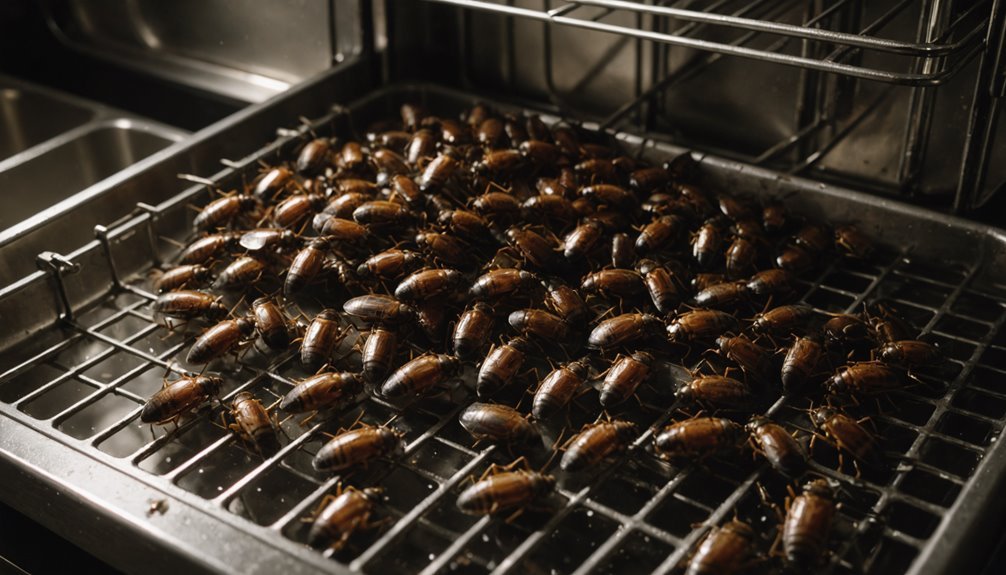
Once you’ve confirmed roaches are living in your dishwasher, deep-cleaning the appliance is your first line of defense. Remove all dishes, racks, and utensils, then wipe every interior surface with a hot, soapy solution.
Pay close attention to:
- Spray arms, filters, and gaskets — food debris collects here most
- Seams, corners, and the bottom well — hidden residue attracts and shelters roaches
- The drain area — leftover particles give cockroaches a consistent food source
After scrubbing manually, run an empty hot-water cycle using the highest safe heat setting.
Place white vinegar on the top rack during this cycle for added sanitation. High heat helps eliminate any remaining roaches or eggs, making this step essential rather than optional.
Where Cockroaches in Your Dishwasher Actually Come From
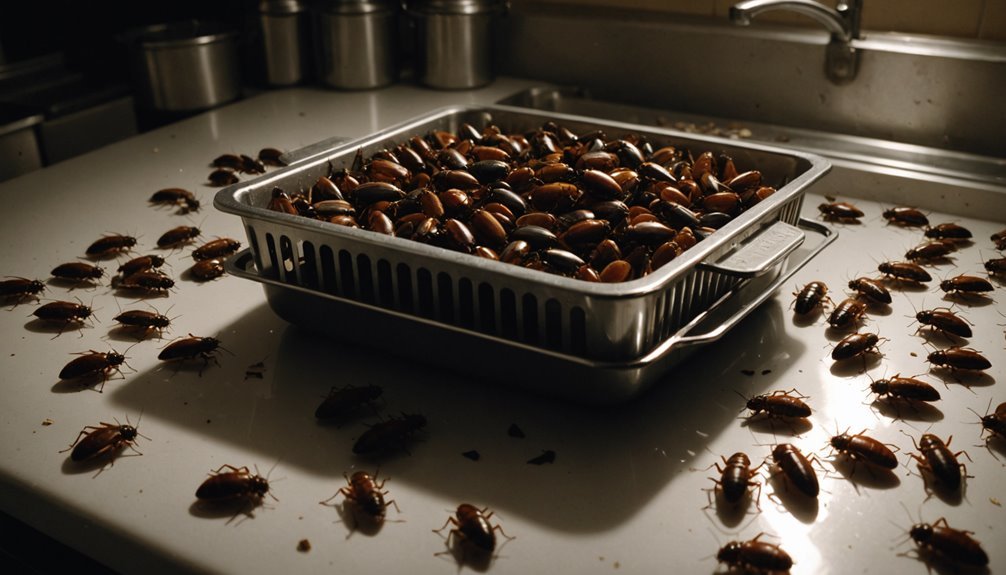
Finding cockroaches in your dishwasher rarely means the problem starts there—it usually signals a broader kitchen infestation already underway.
Roaches reach your dishwasher through drain lines, gaps around plumbing, loose seals, and cracks in nearby walls.
Once they find moisture collecting around the appliance and food debris trapped in the filter or bottom well, they’ve got everything they need to stay.
Kitchen Infestation Origins
Cockroaches don’t simply appear inside your dishwasher out of nowhere — they migrate there from somewhere else in your kitchen. A dishwasher infestation almost always signals a broader roach problem already active in your home.
They move into the appliance because it offers food and moisture, but they’re living and breeding nearby.
Common kitchen infestation origins include:
- Under-sink areas and cabinetry that provide dark, sheltered harborage zones right next to your appliance
- Countertop food debris and unsealed storage that sustain the overall roach population
- Trash areas and dirty dishes left sitting elsewhere in the kitchen
If you’re finding roaches in your dishwasher, treat the entire kitchen — not just the appliance.
Entry Points and Gaps
Your dishwasher doesn’t seal itself off from the rest of your kitchen — it’s connected to it through drain lines, plumbing gaps, cabinet voids, and door seals that roaches exploit easily. Because cockroaches have extremely flat bodies, even tiny crevices around seams and edges are enough for entry.
| Entry Zone | Specific Gap | Risk Level |
|---|---|---|
| Door & Gasket | Worn or cracked seals | High |
| Drain & Plumbing | Pipe gaps, disposal connection | High |
| Under-Unit Void | Missing base panels, floor gaps | Medium |
Check beneath the unit with a flashlight, inspect the rubber gasket, and trace every pipe penetration. Roaches don’t use the main door — they use the gaps you haven’t looked at yet.
Moisture and Food Attractants
Sealing entry points cuts off access, but roaches don’t show up in the first place without a reason to be there.
Your dishwasher creates exactly the conditions they’re drawn to: warmth, darkness, moisture, and food.
After each cycle, heat and steam linger inside. Rubber seals trap condensation. Filters collect food particles that rot over time. That combination gives cockroaches everything they need to survive and stay.
The biggest attractants hiding in your dishwasher:
- Standing moisture along door edges, gaskets, and the appliance base
- Clogged filters holding decomposing food debris
- Residual warmth from wash cycles making the interior a preferred harborage
Crack the door open after cycles, clean the filter weekly, and wipe down seals regularly.
Eliminate the attractants, and roaches lose their reason to stay.
Seal Entry Points and Fix Leaks Around Your Dishwasher
Once you’ve cleaned the dishwasher and addressed food sources, closing off the physical entry points cockroaches use to access the area is your next line of defense.
Inspect the floor line, wall edges, and areas where plumbing and wiring pass through walls or flooring. Use a flashlight to spot gaps you’d otherwise miss.
For small openings, pack steel wool into the hole and seal it with silicone caulk.
Don’t rely on expanding foam alone, since cockroaches and rodents can chew through it. Use hardware cloth or metal sheeting for larger gaps, then apply sealant around the edges.
Fix any water line leaks or loose hose fittings, since moisture attracts pests and supports their activity.
Reinspect sealed areas periodically to confirm the barrier holds.
Stop Making These Mistakes That Invite Cockroaches In
Even after sealing entry points and deep cleaning the appliance, certain habits can undo that progress fast. Small oversights across your kitchen routine quietly create conditions roaches thrive in.
Sealing gaps and scrubbing your dishwasher means nothing if everyday kitchen habits keep inviting roaches back.
Avoid these common mistakes:
- Skipping filter cleaning: Food particles trapped there become a recurring attractant if you don’t remove them weekly.
- Leaving the door closed after cycles: Trapped humidity lingers inside, giving roaches the moist environment they prefer.
- Ignoring the surrounding kitchen: Dirty trash bins, pet food left out overnight, and unsealed pantry items maintain pest pressure even when your dishwasher is spotless.
Dirty dishes piling up, grease behind appliances, and delayed maintenance all compound the problem.
Staying consistent with these habits keeps roaches from finding reasons to come back.
Baits, Traps, and Dusts That Work Near Dishwashers
Fixing your habits removes the welcome mat, but if roaches are already inside, you’ll need targeted products to finish the job.
Place gel bait in pea-sized dots along travel lines—beside hinges, cord entries, and frame gaps. Keep it outside the wash compartment and replace it every 2–4 weeks. Set sticky traps under the dishwasher and inside nearby cabinets, checking them weekly. Apply a barely visible dust film inside wall voids and under kickplates, keeping it dry and undisturbed.
| Product | Where to Place | How Often |
|---|---|---|
| Gel Bait | Hinges, cord entries, perimeter edges | Every 2–4 weeks |
| Sticky Traps | Under dishwasher, cabinet interiors | Check weekly |
| Boric Acid Dust | Wall voids, kickplates, plumbing gaps | Reapply only if wet |
Treat the dishwasher as part of a connected harborage zone—not an isolated appliance.
Daily Habits That Keep Cockroaches Away
Trapping and baiting roaches gets results, but your daily routine determines whether they come back. Wipe spills and crumbs immediately, dry the sink before bed, and fix leaks without delay.
Roaches need food, moisture, and shelter, so removing all three consistently keeps them from returning.
Focus on these habits every day:
- Remove food residue immediately — don’t leave dirty dishes overnight, and sweep kitchen floors daily.
- Eliminate moisture — dry the sink after use, remove standing water, and keep the area under the dishwasher dry.
- Reduce clutter and entry points — store dry food in airtight containers, seal gaps around pipes, and keep trash bins tightly closed.
Consistency matters more than occasional deep cleaning.
When to Call a Professional for Dishwasher Cockroaches
DIY methods handle most minor infestations, but some signs tell you it’s time to call a professional. If you’re seeing cockroaches during the day, a severe infestation is likely, since overcrowding pushes them out of hiding. A strong musty odor signals a large hidden colony.
Finding droppings, eggs, or breeding signs near your dishwasher means the problem runs deeper than surface cleaning can reach.
If roaches keep returning after you’ve cleaned, baited, and sealed gaps, hidden nesting sites are probably untreated. Cockroaches rarely stay isolated to one appliance, so activity spreading to cabinets, under sinks, or bathrooms points to a wider infestation.
Inaccessible wall voids and appliance cavities require specialized tools. A professional inspection identifies structural, moisture, and sanitation issues that DIY treatment simply can’t address.
Frequently Asked Questions
Can Cockroaches Contaminate Dishes That Have Already Been Washed?
Yes, cockroaches can contaminate your already-washed dishes. If a cockroach touches clean dishes, it can leave behind bacteria like E. coli or Salmonella, so you’ll need to rewash them immediately.
Do Certain Dishwasher Brands or Models Attract Cockroaches More Than Others?
No specific brand attracts cockroaches more than others. What matters is your dishwasher’s condition—if you’ve got dirty filters, worn seals, or gaps around the unit, you’re inviting roaches regardless of the brand.
Can Cockroaches Damage Dishwasher Components Like Wiring or Hoses?
Yes, cockroaches can damage your dishwasher’s wiring by chewing insulation and clog your hoses with debris. They’ll also corrode metal components over time through their droppings and saliva, risking appliance malfunction.
Is It Safe to Use the Dishwasher While Treating a Cockroach Infestation?
It’s not safe if pesticide residue is inside the tub. You’ll need to clean the interior, run an empty hot cycle, and confirm no chemicals remain before you use it again.
Can Cockroaches Spread From a Dishwasher to Other Household Appliances Nearby?
Yes, cockroaches can spread from your dishwasher to nearby appliances like your refrigerator, microwave, and coffee machine. They’ll travel through shared gaps, cord openings, and wall voids, seeking heat, moisture, and food residue throughout your kitchen.
Conclusion
Cockroaches in your dishwasher aren’t something you have to live with. Now that you know what’s attracting them, where they’re hiding, and how they’re getting in, you’ve got everything you need to take action. Clean consistently, seal entry points, use the right treatments, and don’t give them the food and moisture they’re after. Stay on top of these habits, and you’ll keep your dishwasher roach-free for good.
