
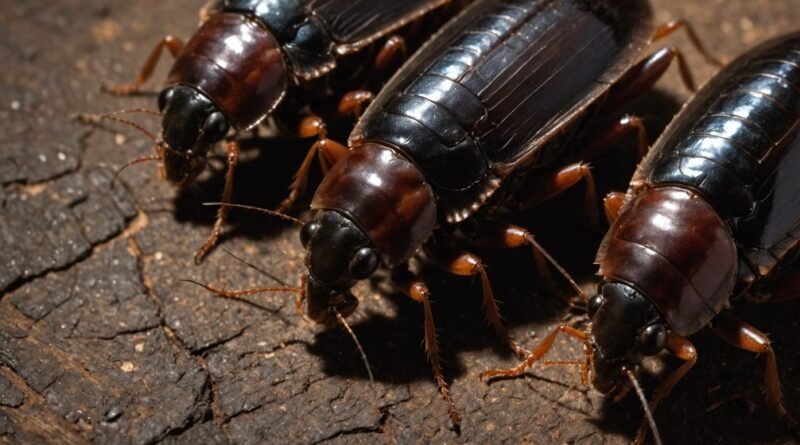
Do Cockroaches Eat Each Other
Yes, cockroaches do eat each other, and it’s a surprisingly common survival behavior. They’ll consume dead roaches, eggs, nymphs, and even shed exoskeletons when food becomes scarce or populations grow too large. Overcrowding and nutritional deficiencies push them toward cannibalism as a last resort. It’s not aggressive hunting — it’s pure survival instinct. If you’re seeing signs of this in your home, there’s a lot more going on beneath the surface.
Key Takeaways
- Cockroaches do eat each other, consuming dead roaches, eggs, nymphs, and shed exoskeletons as part of their omnivorous survival strategy.
- Food scarcity, overcrowding, and nutritional deficiency are the primary triggers that drive cockroaches toward cannibalistic behavior.
- Nymphs, freshly hatched roaches, and recently molted individuals are the most vulnerable targets due to their soft exoskeletons.
- Cannibalism acts as a self-correction mechanism, reducing colony size and redirecting nutrition to stronger surviving members.
- Observed cannibalism signals a severe infestation where the roach population has exceeded available food and shelter resources.
Do Cockroaches Eat Each Other?
Do Cockroaches Eat Each Other?
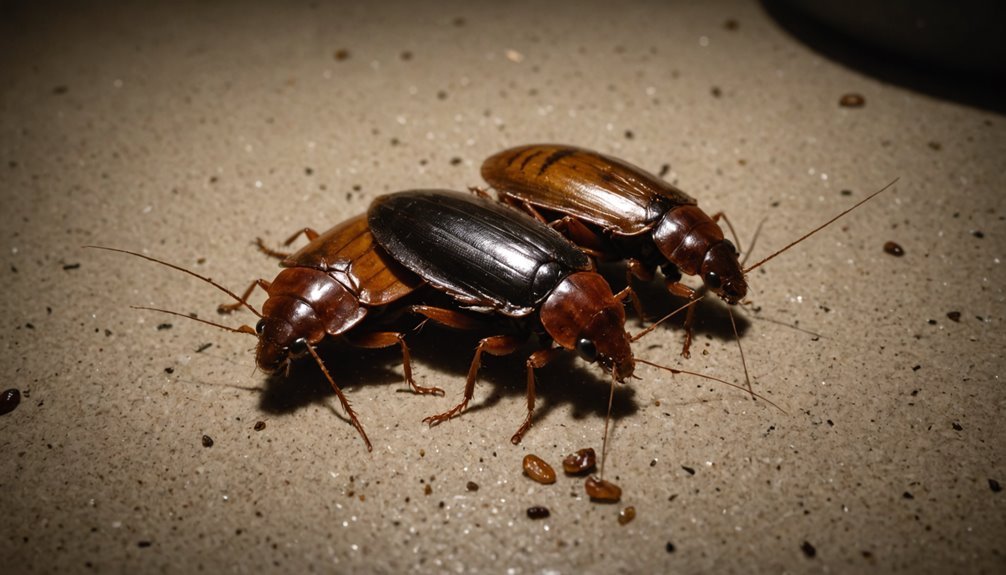
Yes, cockroaches do eat each other. If you’ve got a roach infestation, you might be surprised to learn that cannibalism is a natural part of their behavior. They’ll consume dead roaches, eggs, nymphs, and even smaller or weaker individuals when conditions push them toward it.
You won’t typically see roaches hunting each other aggressively. They prefer easier targets — dead roaches are eaten more readily than live ones. Nymphs are especially vulnerable, and larger roaches or hungry females may consume eggs without hesitation.
Several factors trigger this behavior. Food scarcity is the biggest driver, but overcrowding, nutrient deficiency, and limited food alternatives all play a role. In cramped, resource-restricted environments like an infested home, cannibalism becomes more likely.
Cockroaches are omnivores, so consuming animal material, including their own kind, fits naturally within their diet. It’s ultimately a survival strategy, not their first choice. Some species, like wood roaches, even practice mutual wing cannibalism between mated pairs, a behavior so unique that no previous examples of it had ever been documented in the wild.
When Do Cockroaches Turn to Cannibalism?
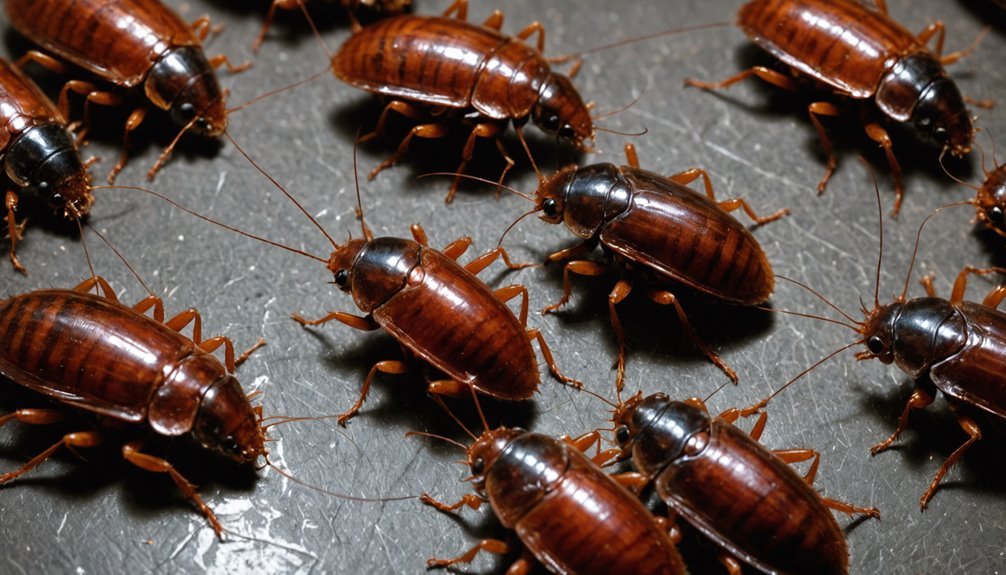
Cockroaches don’t turn to cannibalism randomly — specific conditions push them toward it. The two strongest triggers are food scarcity and overcrowding, and they often appear together.
When food runs short, cockroaches shift into survival mode. They’ll feed on dead, injured, or weakened members of their own colony because it’s easier than searching elsewhere. Adults may also eat eggs or nymphs when nutritional stress is high enough.
Overcrowding intensifies the problem. Dense populations increase competition for food and shelter, raising the chances that vulnerable individuals get eaten. Freshly molted roaches face the highest risk since their exoskeleton hasn’t hardened yet, making them easy targets.
You won’t see cannibalism under normal conditions. It’s a stress response, not a routine feeding habit. Female German cockroaches can lay up to 384 eggs, which can rapidly drive overcrowding and push colonies toward cannibalistic behavior.
If you’re dealing with an infestation, understanding these triggers matters — overcrowded, resource-limited environments are exactly where this behavior becomes more likely.
Which Cockroaches Are Most Likely to Get Eaten?
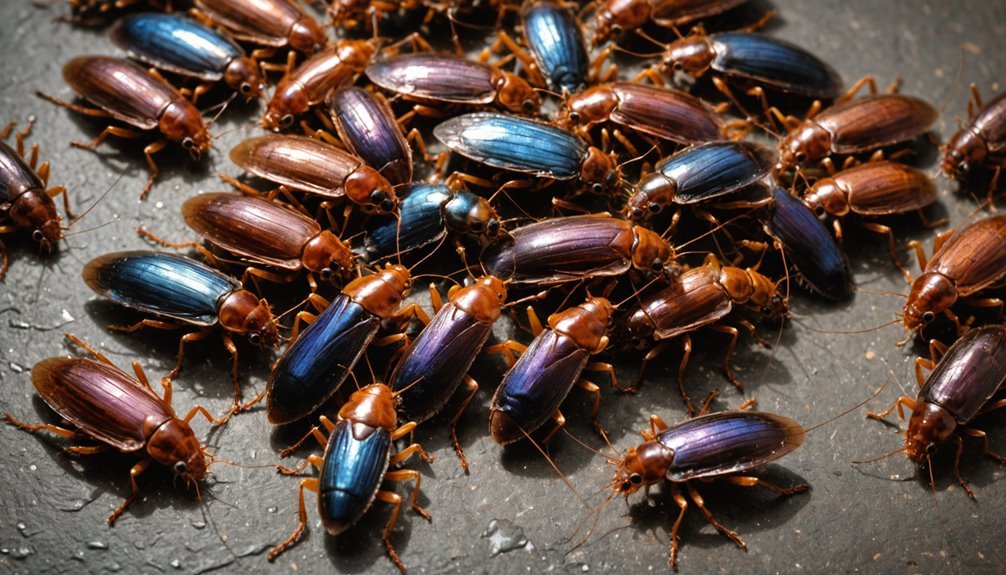
When you look at which cockroaches get eaten most often, nymphs and freshly hatched individuals top the list because their soft bodies and slow movement make them easy targets.
Newly molted roaches are especially vulnerable since their exoskeletons haven’t hardened yet, leaving them defenseless against faster, stronger colony members.
Adults don’t get a free pass either—injured or weakened individuals quickly become targets when competition for food and space intensifies. Species like the German cockroach, known for rapid reproduction, can see increased cannibalistic behavior when large populations compete for limited food and water.
Vulnerable Nymphs and Hatchlings
The most vulnerable cockroaches aren’t the ones you’d typically worry about — they’re the smallest ones. Eggs, hatchlings, and early-instar nymphs face the highest cannibalism risk because they’re simply easier to catch and eat.
Three reasons young cockroaches make easy targets:
- Their soft, unhardened cuticles make them physically easier to consume than adults with toughened exoskeletons.
- Their small size limits their ability to escape or defend themselves against older, larger roaches.
- Their high nutritional value makes them attractive prey, especially when food is scarce.
Crowding, heat stress, and resource competition all push adults toward attacking immature stages.
If conditions get bad enough, even siblings and mothers become threats to newly hatched cockroaches. Some species like Cryptocercus punctulatus exhibit parental care behaviors that actually help protect nymphs from such threats by keeping them close and feeding them directly.
Weak or Injured Adults
While hatchlings and nymphs face the highest overall risk, weak or injured adults aren’t safe either. Cockroaches are opportunistic scavengers, and they’ll target any adult that can’t move fast enough to escape. An injured roach quickly becomes a meal, since immobility removes its best defense.
Dead adults are actually the most common targets. Cockroaches prefer carrion and shed skins over actively hunting live roaches. However, if an adult is dying, sluggish, or too weakened to flee, nearby roaches won’t hesitate to feed on it.
Smaller adults are also at greater risk, especially when larger roaches are nearby and food is scarce. Size differences matter in crowded colonies, where stronger roaches can overpower and consume smaller ones without much resistance. It’s worth noting that only about 1% of cockroach species are considered pests, meaning cannibalistic behavior is limited to a small fraction of the broader cockroach population.
What Do Cockroaches Eat When They Cannibalize?
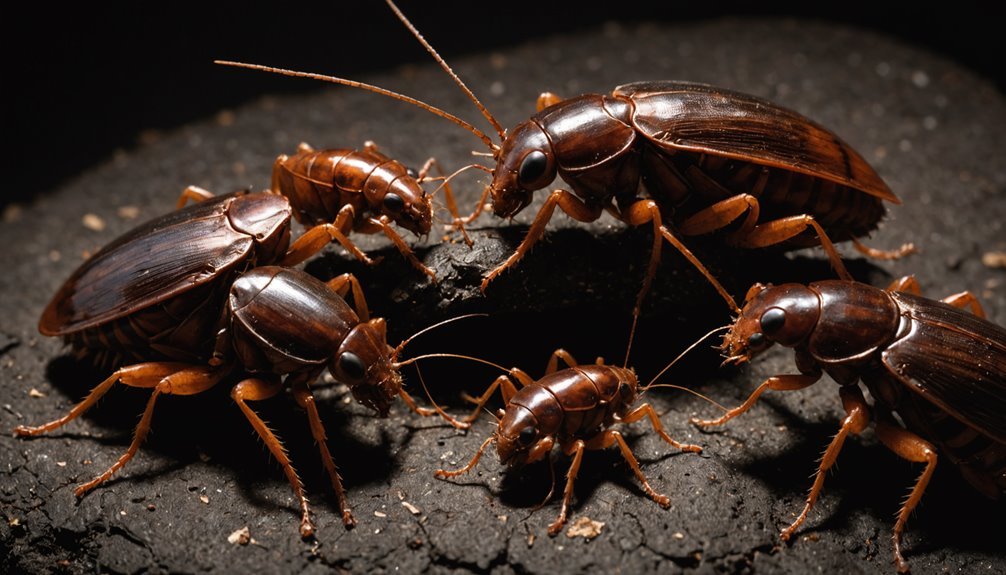
Cockroaches don’t exactly have a menu in mind when they cannibalize, but they do follow predictable patterns based on what’s easiest to eat and most nutritionally accessible.
When food runs scarce, they turn to three primary targets:
- Dead or dying roaches – Carcasses are the most common target since they’re immobile and require no effort to subdue.
- Eggs and nymphs – These offer concentrated nutrition and lack the hardened exoskeleton that makes adults tougher to consume.
- Shed exoskeletons – Molted skins are recycled as a protein source, even by the roach that shed them.
You’ll also notice freshly molted roaches face higher risk because their soft bodies are easier to consume before the shell hardens.
In some species, females have even been observed eating males during mating. It’s all driven by opportunity, not preference.
Which Species Are Most Known for Eating Each Other?
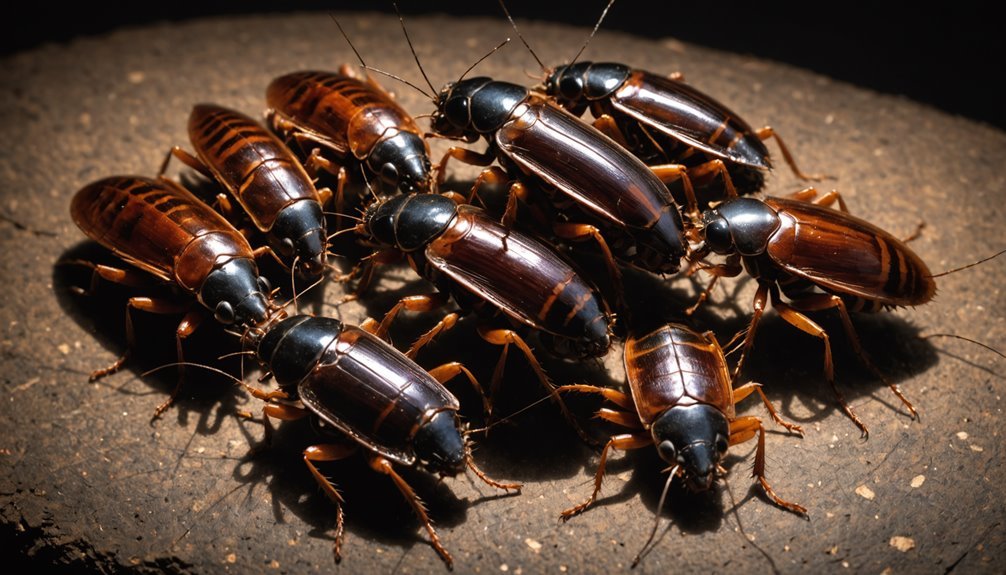
German and American cockroaches do show cannibalistic behavior, but it’s different.
They’ll eat eggs, nymphs, dead individuals, or weakened companions, typically under crowded or food-scarce conditions. That’s survival cannibalism, not a bonding ritual.
The distinction matters when you’re asking which species are *known* for eating each other.
*Salganea taiwanensis* participates in mutual consumption as part of mating, while common pest species cannibalize mainly out of desperation.
That’s a significant behavioral difference.
What Cockroach Cannibalism Reveals About Your Infestation
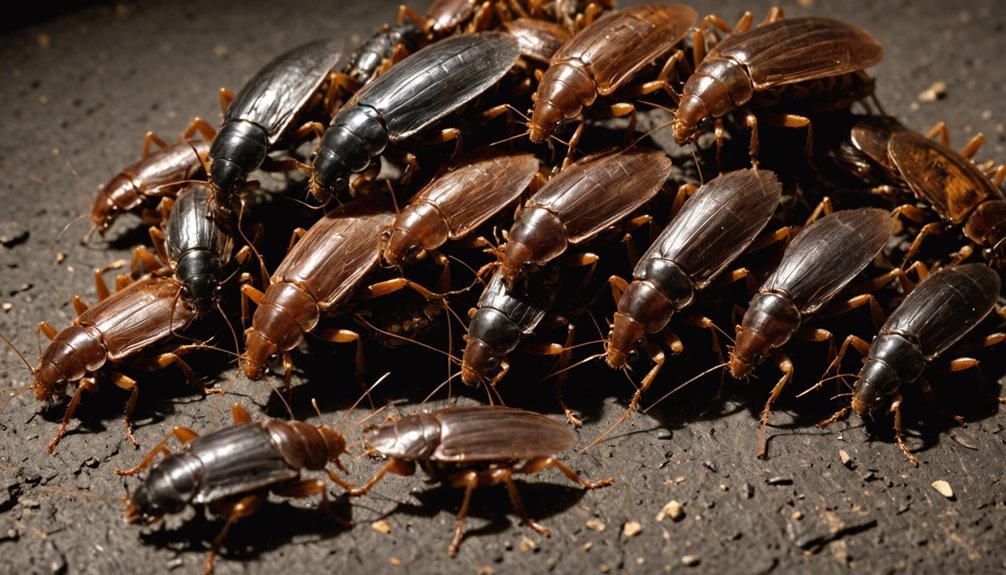
If you’re spotting cockroaches eating each other, you’re likely dealing with a severely overcrowded infestation, not an isolated pest problem.
Cannibalism signals that your roach population has outpaced available food and space, forcing individuals to prey on weaker or dead members of their own colony.
You should treat this behavior as a serious warning that the infestation has reached a stress point requiring immediate, extensive action.
Cannibalism Signals Severe Overcrowding
When cockroaches start cannibalizing each other, it’s not a quirky survival trick—it’s a red flag that your infestation has reached a critical density. Overcrowding forces roaches to compete for shrinking food and shelter, pushing them toward attacking their weakest colony members.
Here’s what that pressure looks like:
- Nymphs and eggs disappear — Females consume offspring first when food per roach drops too low.
- Injured or molting roaches get targeted — Vulnerability becomes a death sentence in a stressed, dense colony.
- The population self-thins — Cannibalism reduces colony size when resources can’t support everyone.
If you’re seeing these signs, your infestation isn’t just large—it’s dense, stressed, and actively consuming itself to survive.
Resource Stress Drives Infestation
Cockroach cannibalism doesn’t just reveal a behavioral quirk—it exposes a resource crisis inside your walls. When cockroaches start feeding on each other, your infestation has reached a point where available food can no longer support the population. That’s a sign the colony is under serious internal pressure.
Larger infestations accelerate this problem. More cockroaches competing for the same limited supply means resources deplete faster, pushing individuals toward extreme survival behaviors.
Female German cockroaches can produce up to 384 eggs in a lifetime, so population growth can outpace food availability quickly.
Cannibalism also functions as a self-correction mechanism—consuming eggs and nymphs reduces competition and redirects nutrition to surviving individuals.
If you’re seeing this behavior, your infestation isn’t just large; it’s actively stressed and self-sustaining under scarcity.
Frequently Asked Questions
Can Cockroach Cannibalism Help Naturally Reduce an Infestation Over Time?
Cockroach cannibalism won’t reliably reduce your infestation. While it removes some individuals, cockroaches survive weeks without food, so you’ll need sanitation, moisture control, exclusion, and baiting to effectively eliminate them.
Do Cockroaches Eat Each Other in the Presence of Humans?
Yes, cockroaches can eat each other even when you’re around. They won’t stop because of your presence—they’ll just hide it, typically feeding on weaker roaches inside concealed nests or harborages where you can’t see them.
Is Cockroach Cannibalism Harmful or Beneficial to the Surviving Roaches?
Cockroach cannibalism’s both harmful and beneficial. It can spread toxins and pathogens among survivors, but it also reduces competition, provides nutrients, and helps roaches survive starvation, making it an adaptive survival mechanism under harsh conditions.
Can Cannibalism Spread Disease Among Cockroaches Within a Colony?
Yes, cannibalism can spread disease within a cockroach colony. When you have high-density populations with limited food, cockroaches consuming infected tissue or excreta actively transfer bacteria, fungi, and other pathogens throughout the colony.
Does Cockroach Cannibalism Happen More at Night Than During the Day?
You can’t confirm that cockroach cannibalism happens more at night, as research doesn’t support a clear day-night pattern. It’s driven by food scarcity and crowding, not time of day.
Conclusion
When you spot signs of cockroach cannibalism in your home, don’t ignore it. It’s a clear warning that you’re dealing with a serious infestation under significant stress. Rather than assuming the roaches will eliminate each other, you should act fast. Call a pest control professional, seal entry points, and eliminate food and water sources. Cockroach cannibalism won’t solve your problem — it’ll just make the survivors stronger and harder to eliminate.
