
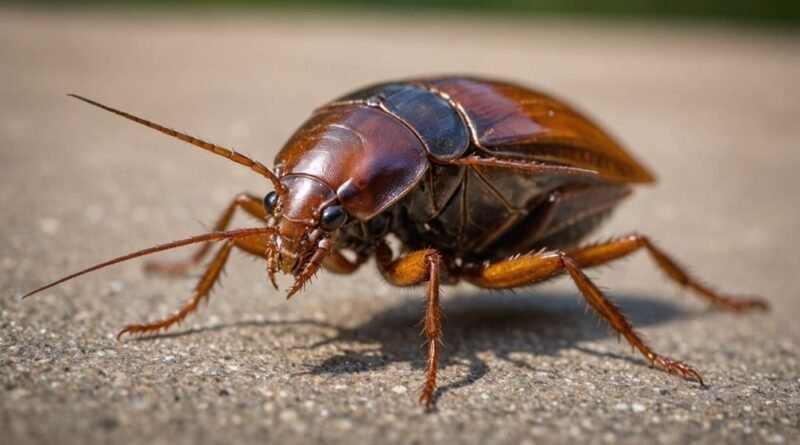
Do Cockroaches Jump? Surprising Facts Explained
Most cockroaches can’t actually jump — they just move so fast it looks like they do. When you spot one darting across the floor, you’re watching a rapid escape response, not a leap. Their quick bursts of speed and erratic scrambling can fool your eyes into thinking they’ve jumped. One species, *Saltoblattella montistabularis*, truly can jump, but it’s not the roach in your home. Keep exploring to find out what’s really going on.
Key Takeaways
- Most cockroaches do not jump; they rely on speed, scurrying, and climbing to move and escape threats.
- *Saltoblattella montistabularis* is the only confirmed jumping cockroach species, using jumping for 71% of its locomotion.
- Cockroaches can appear to jump due to rapid startle responses, body flips, and erratic escape movements.
- Wing engagement during flight or escape can closely resemble jumping, fooling human perception of their movement.
- Common household cockroaches, like German and American species, lack true jumping ability and navigate primarily using legs.
Can Cockroaches Actually Jump?
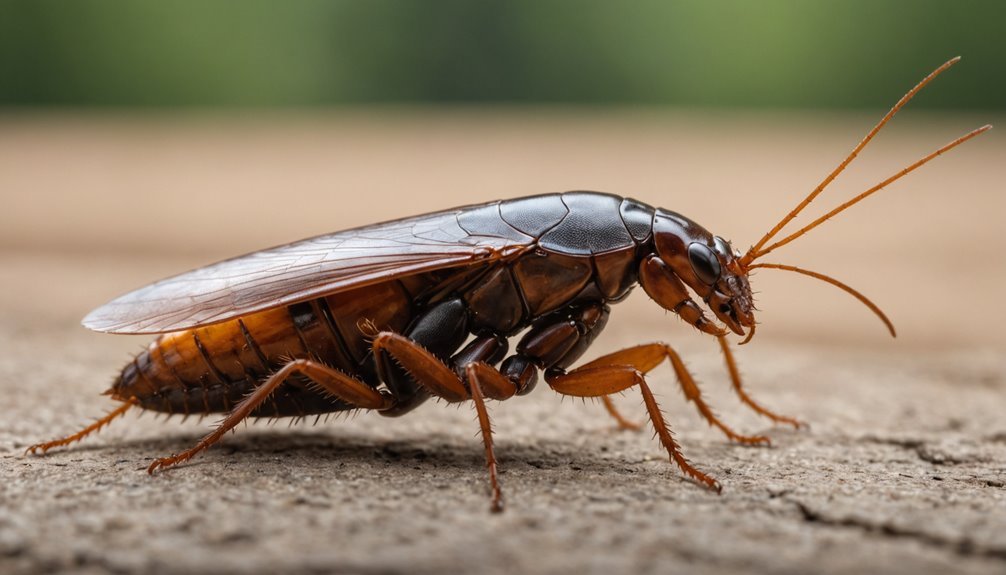
When you spot a cockroach darting across the floor, it might look like it’s jumping — but most cockroaches can’t actually jump. Their legs are built for running, climbing, and escaping quickly, not for launching themselves into the air like grasshoppers or fleas.
What you’re usually seeing is a wing-assisted body flip or a rapid escape response. When disturbed, some species fling themselves into the air using their wings, which can look like a jump but isn’t accurate or controlled movement.
There is one true exception: *Saltoblattella montistabularis*, a South African cockroach with enlarged hind legs designed for powerful, synchronous jumping. It can cover 48 body lengths in a single jump and reach heights of 18.8 cm.
Jumping makes up 71% of its locomotion — something no other known cockroach species does.
For common pest species like American cockroaches, jumping simply isn’t part of how they move. Most roaches rely primarily on running for mobility, making speed along surfaces their main method of escaping threats.
The One Cockroach Species That Can Truly Jump
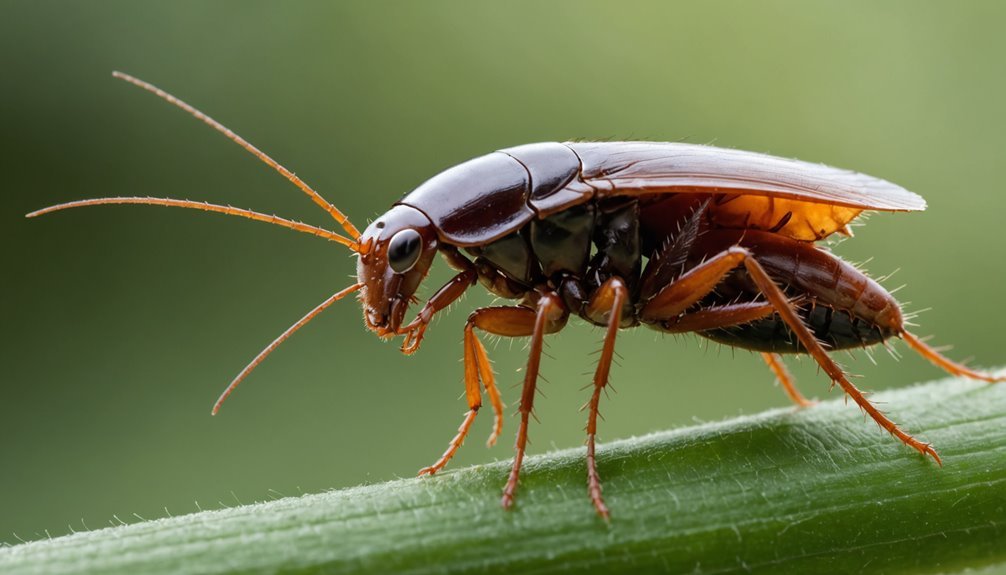
What sets it apart from typical scuttling cockroaches:
- Its hind legs are roughly twice the length of its other legs and make up about 10% of its body weight.
- It resembles a grasshopper in body plan, not a standard cockroach.
- It shares habitat with grasshoppers, jumping between grass and sedge culms.
- Jumping accounts for 71% of its locomotor activity in natural shrubland.
You’re not looking at a cockroach that occasionally hops — you’re looking at one that’s built its entire lifestyle around jumping. It can cover a maximum forward distance of 48 times its body length in a single jump.
Why Cockroaches Look Like They’re Jumping?
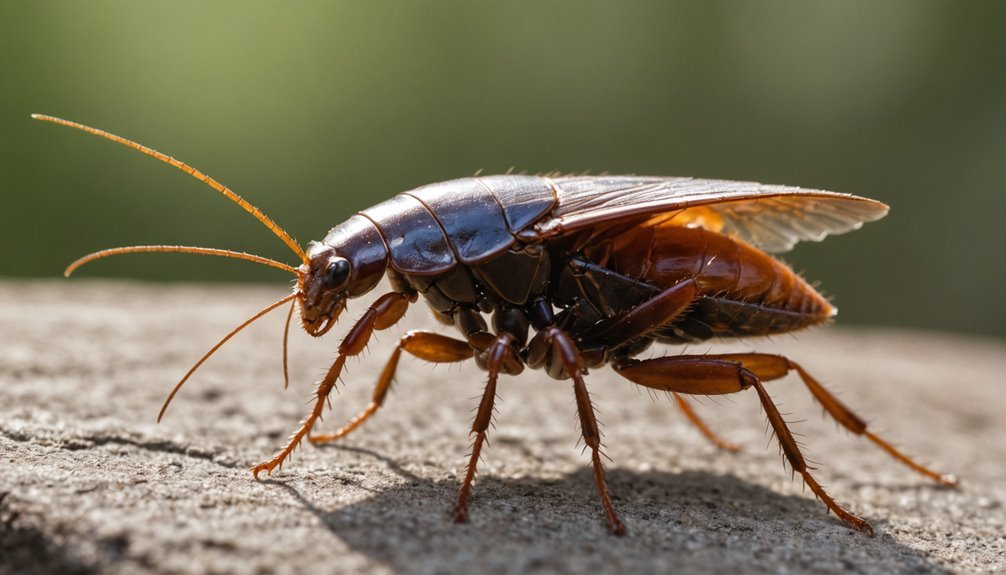
Most cockroaches don’t jump — but they sure look like they do. When a cockroach startles, it combines body lifting, rapid leg movement, and wing flicking into one explosive burst. That combination reads as a jump to your eyes, even though it’s really a scramble response.
Cockroaches don’t actually jump — they startle, scramble, and flick their wings so fast your brain fills in the rest.
Their long hind legs can produce a sudden push-off that mimics a spring, especially when the body tilts forward during fast acceleration. If you catch that motion at normal speed rather than slow motion, it looks far more dramatic than it actually is.
Other situations add to the confusion. A roach darting off a surface edge looks like it’s leaping. One that slips or flips appears to launch itself. A species initiating flight uses a leg-driven push before the wings engage, making takeoff resemble a jump.
None of it’s true jumping — it’s just fast, reactive movement that fools your perception. There are over 4000 roach species, and the vast majority rely on speed and scrambling rather than any form of genuine leaping to escape threats.
Do the Cockroaches in Your House Jump or Fly?
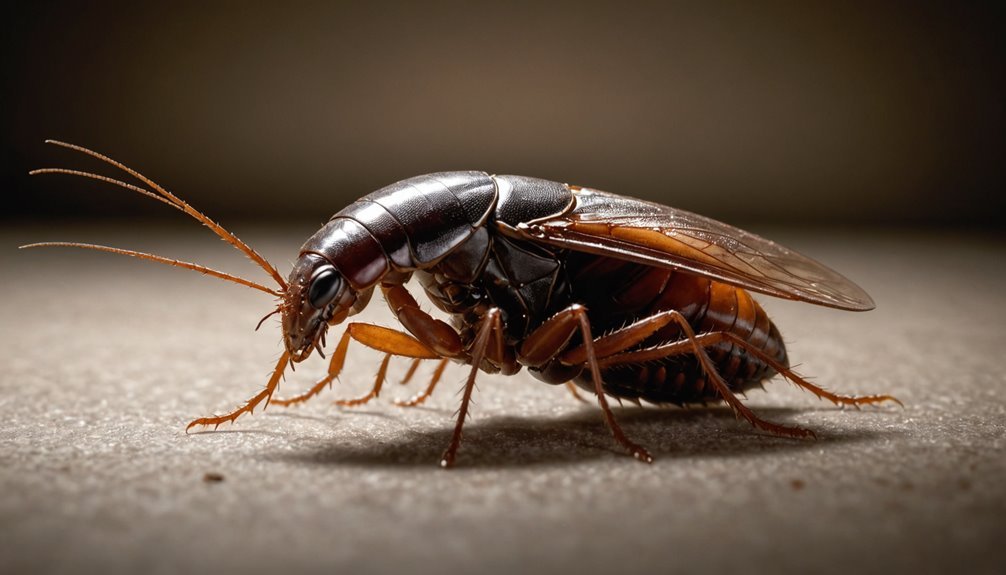
If you’ve ever watched a cockroach dart across your kitchen floor, you may have wondered whether it jumped, flew, or simply moved too fast to track. The answer depends heavily on which species you’re dealing with.
Here’s what’s typical for common household roaches:
- German cockroaches rarely fly despite having wings and prefer scampering through cracks and pipes.
- American cockroaches can fly in warm conditions above 85°F, particularly during spring mating season.
- Jumping in household species typically covers only 2 to 4 inches and is usually defensive.
- True jumping ability belongs to the leaproach (*Saltoblattella montistabularis*), not your average house pest.
What looks like a jump is often a quick scramble, defensive flip, or short burst. Most indoor roaches rely on their legs, not wings or leaps, to navigate walls, baseboards, and harborage areas close to food sources. Cockroaches can survive without food for a full month, demonstrating just how resilient these household pests are beyond their movement abilities.
Why Cockroaches Almost Never Jump Toward People
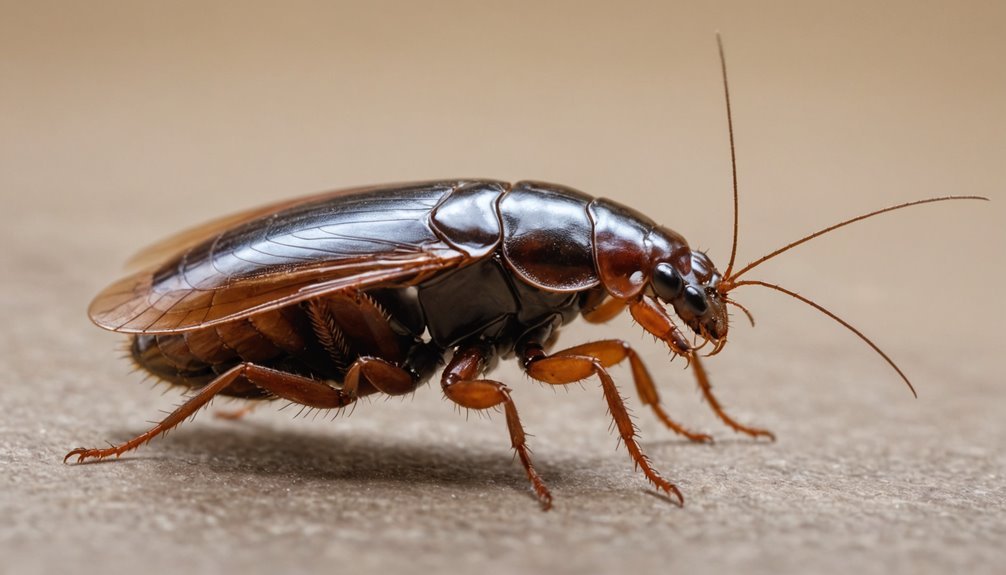
Although it might look like a cockroach is charging at you, it’s almost certainly trying to escape. Cockroaches are wired for survival, and their primary instincts drive them toward food, water, and shelter — not toward you. When you startle one, its threat response kicks in immediately, triggering a fast retreat.
The problem is that retreat doesn’t always look clean. A panicked roach can launch in a random direction, flip sideways, or glide briefly with its wings. At close range, any of these motions can look like an intentional charge. It isn’t.
Most cockroaches lack the leg structure needed for precise, forceful jumps. What you’re seeing is usually a scramble or a short escape burst, not a directed leap. The only species with true jumping ability is the leaproach (*Saltoblattella montistabularis*), which isn’t the roach you’re finding in your kitchen. Certain species, like the Asian and smoky brown cockroach, are strong fliers, which can make their erratic escape movements appear even more alarming than they actually are.
Frequently Asked Questions
How High Can a Cockroach Jump Compared to Other Jumping Insects?
The leaproach can jump up to 18.8 cm high, but you’ll find grasshoppers and locusts jump much higher. Most cockroaches can’t jump at all, making the leaproach a rare exception.
Can Cockroach Nymphs Jump, or Is Jumping Only for Adult Cockroaches?
Cockroach nymphs don’t truly jump — they scurry quickly, which can look like jumping. You’ll notice adults are more likely to fling their bodies, using wings. True jumping’s rare in cockroaches and mainly linked to the leaproach species.
Does a Cockroach’s Ability to Jump Change Across Different Life Stages?
A cockroach’s jumping ability doesn’t change much across life stages—it’s more about species. Brown-banded nymphs and adults may both jump when disturbed, but most cockroaches simply don’t jump at any stage.
Are Jumping Cockroaches More Difficult to Control With Standard Pest Methods?
You don’t need to worry much, as jumping cockroaches aren’t harder to control with standard methods. Seal cracks, remove food sources, use baits, and call a professional if your infestation becomes severe.
Do Cockroaches Jump More Frequently During Certain Seasons or Temperatures?
You’ll notice cockroaches jump and move more frequently during warmer months, especially when temperatures hit 70°F–90°F. Higher humidity and summer heat accelerate their activity, making them more visible and harder to control during these peak seasons.
Conclusion
So now you know that most cockroaches don’t actually jump. The South African flea cockroach is the only species that’s truly built for jumping. When you see a roach appear to leap, it’s likely just running fast or taking flight. You don’t need to worry about cockroaches launching themselves at you—they’re far more interested in escaping than engaging. Their goal is always to get away from you, not toward you.
