
IGR Insect Growth Regulator Cockroaches
If you’re dealing with cockroaches, you’ve probably tried sprays that kill on contact but never seem to solve the problem. IGRs, or insect growth regulators, work differently — and that difference matters. They don’t just kill what’s visible; they interfere with the biology that keeps infestations growing. Understanding how they work could change your entire approach to roach control.
Key Takeaways
- IGRs disrupt cockroach hormones controlling molting and reproduction, collapsing colonies over time by preventing successful new generations from developing.
- Nymphs exposed to IGRs may fail to molt or die during transitions, while adults live longer but produce fewer viable eggs.
- Pyriproxyfen and triflumuron can reduce cockroach egg hatch rates by over 90%, making them highly effective IGR options.
- IGRs are low toxicity to humans and pets, but treated areas should dry completely before allowing pet re-entry.
- For best results, pair IGRs with adulticides and apply along baseboards, cracks, and crevices in dark, humid areas.
What Is an IGR and How Does It Work on Cockroaches?
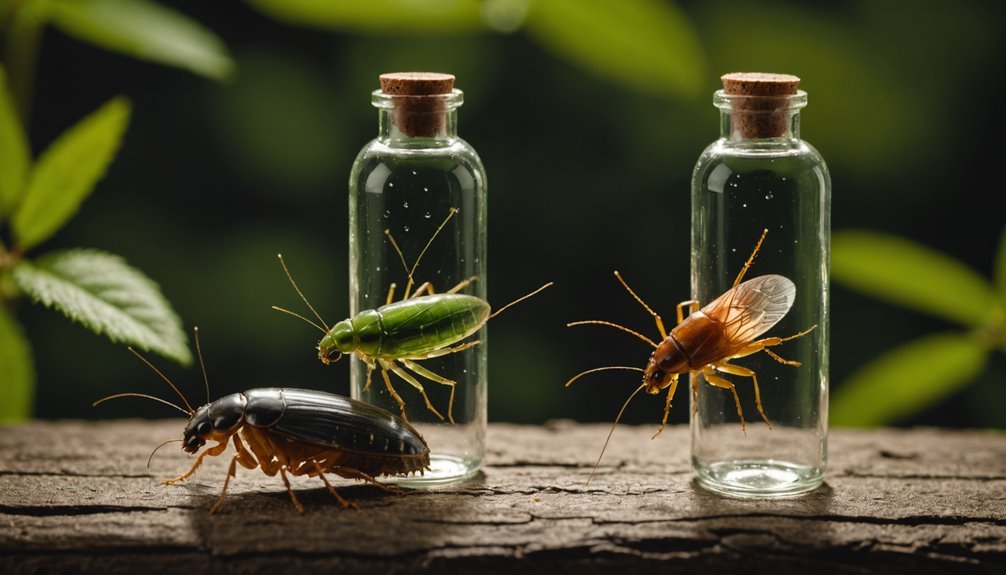
If you’ve ever dealt with a cockroach infestation, you know how quickly the population can spiral out of control. That’s where an IGR, or insect growth regulator, comes in. Instead of killing roaches on contact, an IGR disrupts the hormones that control molting, development, and reproduction.
Think of it as birth control for insects. When nymphs are exposed, they may fail to molt properly, get stuck in an immature state, or emerge as sterile adults with deformed reproductive structures.
Adults exposed to an IGR may also produce eggs that never hatch.
Common cockroach IGRs include juvenile hormone mimics like pyriproxyfen and hydroprene. Others work as chitin synthesis inhibitors, blocking proper exoskeleton formation.
Either way, the goal is the same: collapse the colony over time by cutting off reproduction. IGRs are most effective when used with insecticides that eliminate the bulk of the existing adult and nymph population.
Are Cockroach IGRs Safe to Use Around People and Pets?
When you use cockroach IGRs as directed, you’re working with products that carry low toxicity to humans because they target insect-specific hormones your body doesn’t have.
They’re also considered safe around pets, though you should keep animals out of treated areas until the product dries. IGRs focus on reproductive capabilities rather than broad toxicity, which is why they pose little danger to mammals.
Take the application seriously by following label directions on mixing, placement, and ventilation, since formulation ingredients like solvents can irritate skin and eyes even when the IGR itself poses minimal risk.
Low Toxicity to Humans
One of the most common concerns about using IGRs for cockroaches is whether they’re safe to use around people and pets. IGRs target insect hormonal systems, which mammals don’t share, making them far less hazardous than conventional neurotoxic pesticides.
Here’s how Gentrol IGR’s key toxicity data compares:
| Exposure Type | Test Result | Risk Level |
|---|---|---|
| Acute Oral LD50 | >5,100 mg/kg | Low |
| Acute Dermal LD50 | >2,100 mg/kg | Low |
| Acute Inhalation LC50 | >7.2 mg/L | Low |
| 90-Day NOEL (rat) | 50 mg/kg/day | Low |
| Skin/Eye Contact | Moderate/mild irritant | Moderate |
Low toxicity doesn’t mean zero risk. You should still avoid direct contact during application, let treated surfaces dry completely, and always follow the product label. Gentrol IGR is safe for domestic animals and has been recommended for use in pet-friendly environments, making it a practical choice for households with cats and dogs.
Safety Around Pets
Cockroach IGRs are generally safe to use around pets because they target insect hormonal systems that mammals simply don’t have.
Dogs and cats lack the receptors these products affect, so the biological impact on them is virtually zero when you use IGRs correctly.
That said, safety still depends on the product, formulation, and placement.
Sprays can leave residues your pet contacts before drying, so keep animals out of treated areas until surfaces are completely dry.
Cats may groom contaminated paws, and dogs can lick floor-level residues, so don’t skip the re-entry interval on the label.
Remove pet bedding, toys, food bowls, and water bowls before treating.
Choose point-source or wall-void applications when possible, since out-of-reach placements reduce your pet’s exposure considerably. In contrast, broadcast application methods like foggers and heavy dust treatments coat surfaces in neurotoxins that pets can inhale or ingest through normal grooming behavior.
Precautions During Application
Safety around pets is only part of the picture—you also need to think about precautions that protect the people in your home.
Keep everyone out of the treated area during application and until surfaces have dried completely. Ventilate the space well, especially when using spray formulations, to reduce inhalation exposure. Avoid letting anyone touch wet residue, since exposure risk is highest before drying occurs.
Direct sprays and dusts into cracks, crevices, and wall voids rather than open surfaces. Never apply near food-prep areas, toys, or bedding unless the label specifically permits it.
Follow the label’s re-entry intervals exactly, and don’t apply more product than directed—it won’t improve results and only increases unnecessary exposure.
Wear any PPE the label requires, such as gloves, during handling and application. Treatments are generally considered safe when applied professionally and according to label directions, reducing risk for everyone in the household.
Why IGRs Don’t Kill Roaches Instantly?
Unlike traditional insecticides that attack the nervous system for rapid knockdown, IGRs work by disrupting insect development—so they don’t kill roaches on contact or even within hours of exposure.
Instead, they interfere with molting, reproductive maturation, and egg viability across multiple generations. You’ll see population decline over weeks or months, not days.
Here’s why the delay is built into how IGRs function:
- Nymphs must reach a molt before developmental disruption becomes visible.
- Adults may stay alive but produce fewer viable eggs after exposure.
- Population collapse requires successive generations to be affected.
That’s why you should always pair an IGR with a fast-acting bait or residual insecticide to handle active roaches while the IGR works long-term.
What IGRs Actually Do to Young Roaches and Their Eggs
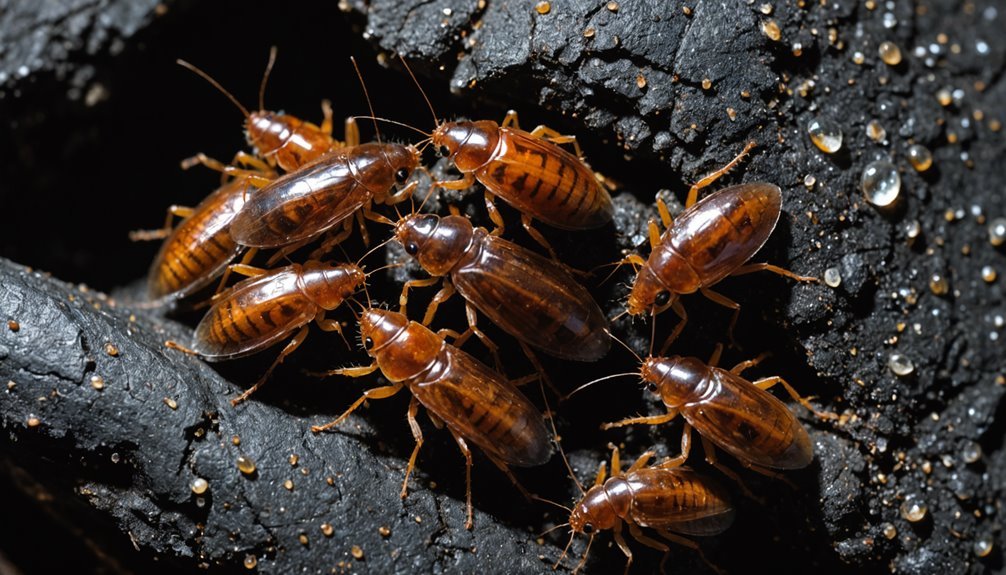
When an IGR reaches young cockroaches, it scrambles the hormone signals that guide them through each molt, leaving nymphs stuck in an immature stage they can’t escape.
Those that do manage to molt often emerge deformed, with twisted wings or malformed bodies that prevent them from reproducing.
On top of that, eggs exposed to IGRs frequently fail to hatch, cutting off the next generation before it even starts.
Disrupting Nymph Development
IGRs don’t kill cockroach nymphs outright—they hijack the hormonal signals that control development. Juvenoid IGRs mimic juvenile hormone, trapping nymphs in immature stages so they can’t progress into reproductive adults. The effects aren’t immediate, but they’re significant.
Exposed nymphs may experience:
- Molting failure – dying during nymph-to-nymph or nymph-to-adult molts
- Abnormal development – molting into deformed adults with twisted wings or extra immature stages
- Supernumerary instars – cycling through additional nymph stages instead of reaching adulthood
Because IGR action is slow, you won’t see immediate knockdown.
What you’ll see is a generation of nymphs that can’t complete development normally. They survive temporarily but contribute nothing to the next population cycle, which is exactly what makes IGRs effective long-term.
Deformed Adults Cannot Reproduce
Cockroach nymphs that survive IGR exposure don’t simply grow up normally—they often molt into adults that are sterile, deformed, or both.
You’ll notice these adults by their short, twisted wings and darker body color, which signal disrupted development. Under some surface conditions, hydroprene caused wing deformities in 76% to 94% of exposed roaches.
Beyond the visible damage, the internal effects are just as significant. IGRs interfere with juvenile hormone pathways that control reproductive system development, leaving adult females unable to produce viable eggs.
Some adults never develop functional reproductive capacity at all. The population can’t replace itself even though you’re still seeing live roaches.
That’s the core mechanism—not immediate death, but a generation that can’t sustain itself.
Reduced Egg Hatch Rates
Egg hatch reduction is one of the most important—and least visible—ways IGRs work against a cockroach population. Certain IGRs can penetrate the oothecal casing and disrupt embryonic development before eggs ever hatch. Not every active ingredient behaves the same way, though—product choice matters greatly.
Here’s what you should know:
- Pyriproxyfen and triflumuron can penetrate the ootheca and reduce hatch rates by 90%+ in controlled settings.
- Methoprene and diflubenzuron show minimal effect on existing eggs.
- Eggs exposed to IGRs may lack sufficient yolk or chitin needed for successful development, causing nonviability without visible ootheca damage.
Because some eggs still hatch after treatment, follow-up applications help suppress later cohorts and maintain long-term population control.
Pyriproxyfen or Hydroprene: Which IGR Works Better on Roaches?
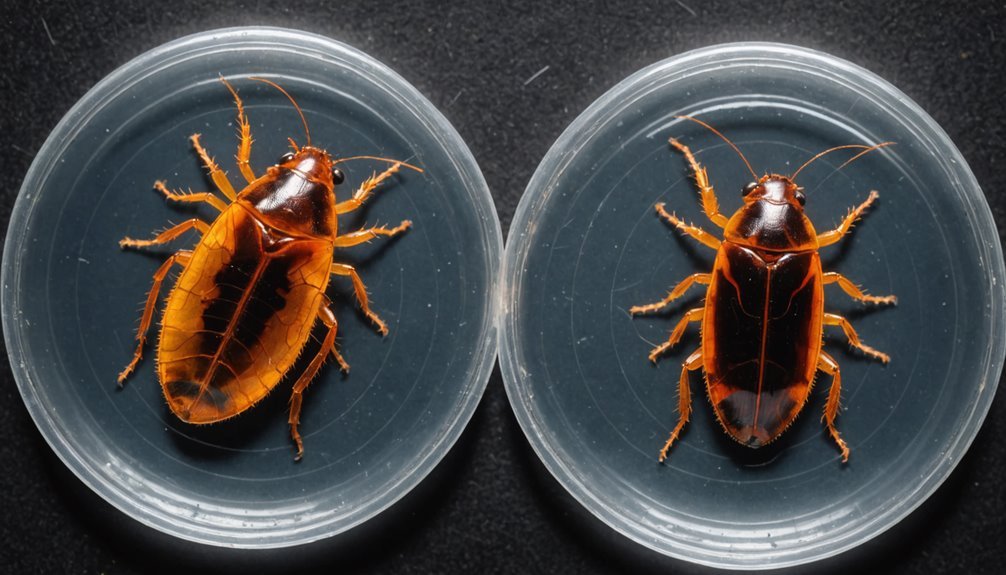
When choosing between pyriproxyfen and hydroprene for cockroach control, the short answer is that pyriproxyfen generally wins on residual persistence. Studies comparing both IGRs on wood, concrete, and metal consistently show pyriproxyfen lasting longer, making it the stronger choice when durable surface activity matters most.
Pyriproxyfen outlasts hydroprene on wood, concrete, and metal — making it the stronger IGR when residual persistence matters most.
That said, hydroprene isn’t a weak option. It’s a proven cockroach IGR available in products like Gentrol, and its ability to translocate into cracks, crevices, and wall voids makes it especially useful for targeting hidden harborage areas.
Neither IGR will eliminate an active infestation quickly. Both are slow-acting growth disruptors, not knockdown agents.
You’ll get the best results by pairing whichever IGR you choose with baiting, sanitation, and consistent monitoring.
Best IGR Products for Roaches: Gentrol, NyGuard, and More
Most of the IGR products you’ll find marketed for roach control fall into two categories: hydroprene-based and pyriproxyfen-based. Gentrol and NyGuard are the two most recognized options in each category.
Here’s how they compare at a glance:
- Gentrol uses (S)-hydroprene and targets German, American, and oriental cockroaches, making it a strong indoor roach-focused choice.
- NyGuard uses pyriproxyfen, covers 50+ pests, and is labeled for both indoor and outdoor use, including food-handling areas.
- NyGuard claims up to 7 months of residual control and better UV resistance, giving it an edge in outdoor applications.
Neither product delivers quick knockdown.
You’ll want to pair whichever IGR you choose with a contact insecticide for a complete roach program.
How to Use IGR Sprays and Devices for Indoor Roach Control
Once you’ve chosen your IGR product, you’ll need to decide between a spray formulation and a point-source device based on where cockroaches are active in your home.
Direct spray applications, like Gentrol mixed at 1 oz per gallon of water, work best along baseboards, cabinet interiors, and crack-and-crevice zones where roaches travel, while devices suit enclosed spaces needing localized, ongoing coverage.
Because IGRs don’t kill adult roaches, you’ll get the best results by pairing them with a bait or adulticide, keeping the two separate so each can work without interference.
Choosing the Right Formulation
Choosing the right IGR formulation comes down to one key question: do you need fast results, or are you focused on long-term population control?
Sprays work best when you pair them with an adulticide, giving you both immediate knockdown and developmental disruption. Devices suit situations where spraying isn’t practical and you want a simpler, localized release.
Consider these factors before deciding:
- Speed: Sprays combined with an adulticide kill adults faster; IGRs alone won’t deliver quick mortality.
- Active ingredient: Match hydroprene, pyriproxyfen, methoprene, or novaluron to your label-approved use case.
- Application setting: Devices fit low-volume needs; sprays cover broader treatment areas.
Always read the label first—coverage area, release rate, and approved surfaces vary across products.
Targeting Cockroach Harborage Areas
Before applying any IGR product, locate all harborage sites in your space. Prioritize areas with high humidity, free water, darkness, and limited air movement. Common zones include under sinks, behind refrigerators, and under dishwashers.
Direct crack-and-crevice treatments into cabinet joints, voids, and protected edges rather than open floor areas. This maximizes contact with nymphs and gravid females during normal movement.
| Location | Application Type | Expected Control |
|---|---|---|
| Cabinet interiors | Crack-and-crevice spray | Up to 6 months |
| Appliance edges | Spot treatment | Ongoing residual |
| Enclosed voids | Point-source disc | Up to 90 days |
Place point-source devices near active harborages when repeated spraying isn’t practical. Keep applications close to where roaches concentrate to reduce wasted product and increase IGR contact.
Combining IGRs With Other Treatments
IGRs work best when they’re part of a broader control plan rather than used on their own.
Pairing them with other products lets you attack both current roaches and future generations at the same time.
Here’s how to build an effective combined approach:
- Baits: Use non-repellent gel baits in pea-sized amounts inside cabinets, cracks, and crevices where roaches feed and travel.
- Residual sprays and flushing agents: Apply flushing pyrethrum to drive roaches out, then follow with residual sprays every one to three months depending on infestation severity.
- Dusts: Treat wall voids, behind outlets, and under appliances with a light dust coating to reach roaches in protected harborage zones.
Reapply IGRs every four to six weeks to maintain consistent population suppression.
Where to Apply IGRs for Maximum Cockroach Control
Placement matters as much as product selection when it comes to IGR effectiveness against cockroaches. Focus your applications on crack-and-crevice harborages—tight voids, seams, and protected travel routes where roaches rest and reproduce.
These concealed sites keep roaches in prolonged contact with the active ingredient across multiple life stages.
Inside kitchen and bathroom cabinets, treat corners and interior seams where roaches cross between surfaces. Empty cabinets before applying to reach hidden edges.
Near plumbing, target moisture-prone voids where recurring activity is common.
Along baseboards and wall edges, treat the travel routes roaches use when moving between shelter and food sources.
Don’t overlook hidden voids, since untreated retreats allow reproduction to restart. Retreating these focus areas guarantees long-term suppression rather than temporary knockdown.
Pairing IGRs With Baits, Dusts, and Sprays for Faster Roach Control
Cockroach control moves faster when you pair an IGR with products that do what IGRs can’t—kill adults on contact. IGRs don’t eliminate existing adults; they disrupt development in younger stages and break the breeding cycle.
Combining them with other products closes that gap.
Here’s how each pairing works:
- Baits handle adult kill while the IGR suppresses reproduction; IGR exposure can also cause females to drop egg cases and resume feeding, boosting bait uptake.
- Residual sprays can be tank-mixed with IGRs to deliver immediate knockdown alongside long-term growth disruption.
- Dusts like boric acid reach voids and harborage zones where roaches hide, adding contact exposure the IGR alone won’t provide.
Together, these tools target every life stage across the entire infestation.
How Long Does IGR Cockroach Control Actually Last?
When you apply an IGR for cockroach control, don’t expect overnight results—residual activity typically spans weeks to months, not days.
Indoor applications last longer because heat, sunlight, and moisture aren’t breaking down the product. Gentrol Point Source advertises up to 90 days of control, while Martin’s IG Regulator claims up to 7 months.
Your active ingredient, application site, product form, and label directions all influence how long protection holds.
Because IGRs disrupt reproduction rather than kill adults, you’ll still see roaches after treatment while older generations die off naturally. Population decline can take months.
Use monitoring traps to decide when to retreat. If fewer than 80% of trapped roaches show IGR deformities, it’s time to reapply.
Frequently Asked Questions
Can Cockroaches Develop Resistance to IGRS Over Time?
Yes, cockroaches can develop resistance to IGRs over time. You’ll see reduced developmental disruption as repeated exposure selects resistant individuals, passing traits to offspring. That’s why you shouldn’t rely on a single mode of action.
Do IGRS Affect Beneficial Insects Like Bees or Butterflies?
Yes, IGRs can affect bees and butterflies, especially their larval stages. You’ll find they disrupt molting and development, causing sublethal effects like behavioral changes, though indoor cockroach bait applications pose minimal risk to beneficial insects.
Can IGRS Be Used Alongside Professional Exterminator Treatments Safely?
You can safely use IGRs alongside professional exterminator treatments. Exterminators typically combine IGRs with fast-acting insecticides for better results—the insecticide kills adults while the IGR suppresses future generations through targeted crack-and-crevice placement.
Are IGRS Effective Against Cockroach Species Other Than German Roaches?
Yes, IGRs can work against American and oriental cockroaches, not just German roaches. They’ll disrupt molting and reproduction across species, but you’ll get the best results when pairing them with baits and adulticides.
Do IGRS Remain Effective After Surfaces Are Cleaned or Wiped?
No, they don’t stay effective once you’ve cleaned treated surfaces. Wiping or washing removes the residual film IGRs depend on, so you’ll need to reapply after cleaning to restore their activity.
Conclusion
If you’re serious about getting rid of cockroaches for good, IGRs are a game-changer you can’t overlook. They won’t wipe out your infestation overnight, but they’ll systematically collapse the population by targeting reproduction and development. Pair them with baits and sprays, apply them in the right spots, and you’ll see lasting results. Don’t rely on quick-kill products alone—add an IGR to your strategy and take control of your roach problem for real.
