
Roach Foggers Bombs Do They Work
You’ve got roaches, and you want them gone fast. A fogger seems like the perfect fix — just set it off and walk away. But does it actually work, or are you just making a lot of smoke? The answer might surprise you, and it could save you both time and money.
Key Takeaways
- Roach foggers kill cockroaches on direct contact but research shows zero population reduction two weeks and one month after use.
- Fog cannot penetrate cracks, crevices, and wall voids where cockroaches actually hide, leaving most of the population completely unaffected.
- Foggers do not target egg cases, allowing surviving roaches to quickly repopulate and rebound the infestation.
- Many cockroach species have developed resistance to common fogger pesticides, further reducing their already limited effectiveness.
- Gel baits significantly outperform foggers by targeting roaches in harborage areas and spreading insecticide throughout the colony.
Do Roach Foggers Actually Work?

Roach foggers, also called bug bombs or total release foggers, can kill cockroaches they directly contact — but that’s where their effectiveness largely ends.
The pesticide mist settles on open surfaces, so it doesn’t reach the cracks, wall voids, and appliance spaces where roaches actually live and breed. That’s a critical flaw.
Research from North Carolina State University confirmed this. In their study, foggers produced no meaningful reduction in cockroach populations inside homes.
Bait traps, by comparison, cut populations by up to 90%. Foggers also don’t target egg cases, meaning surviving eggs hatch and populations rebound quickly.
Industry experts describe foggers as a short-term knockdown tool at best.
Many cockroach species have also developed resistance to pyrethroids, the class of pesticides commonly used in foggers, making them even less reliable against established infestations.
If you’re dealing with a real infestation, foggers alone won’t solve your problem.
Why Roach Bombs Miss Most of the Infestation
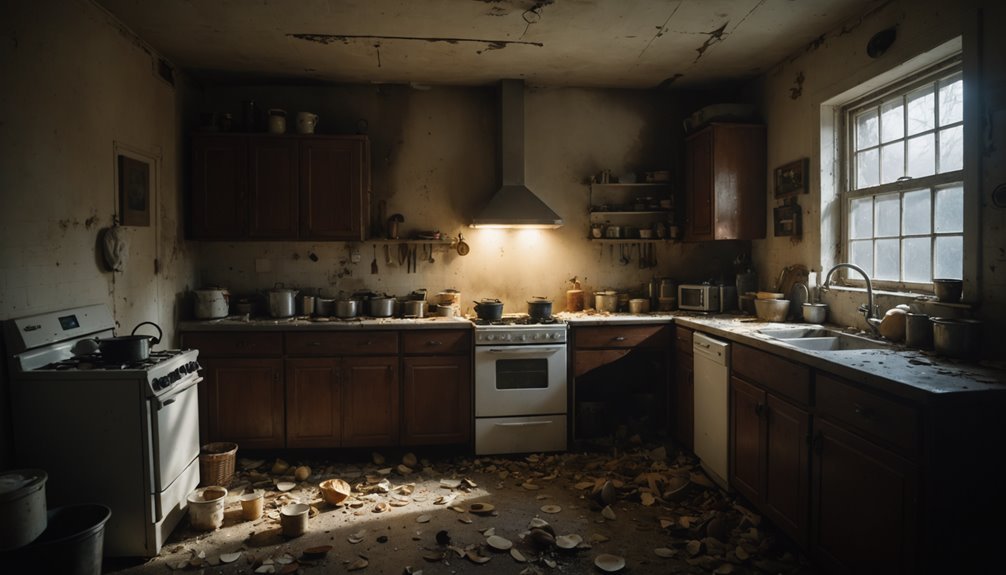
When you set off a roach bomb, the fog fills open air but never reaches the cracks, crevices, and cabinet undersides where roaches actually hide.
Because the chemistry only kills on direct contact, the bulk of the population stays protected in wall voids and tight harborage sites the cloud can’t penetrate.
Those survivors don’t disappear — they repopulate the space within weeks, making the infestation look exactly as bad as it did before treatment. Research from North Carolina State University confirmed that cockroach populations showed no decline after bug bomb use.
Roaches Hide Effectively
Cockroaches spend most of their lives hidden in tight, enclosed spaces where their bodies press against multiple surfaces — cracks, crevices, wall joints, cabinet gaps, and the seams where floors meet baseboards.
Their preferred harborages include:
- Behind and beneath refrigerators, stoves, and dishwashers
- Under-sink plumbing and bathroom fixture voids
- Wall penetrations around pipes, wires, and utility lines
- Cardboard boxes, cluttered storage, and rarely moved furniture
- Hidden voids inside cabinet interiors and appliance motors
These spots are warm, moist, and rarely disturbed — exactly what roaches need. Cockroaches thrive in these locations because humidity above 70% prevents the desiccation that would otherwise threaten their survival.
You won’t spot them during the day because they’re tucked deep inside surfaces, not crawling across your countertops.
That’s why foggers fail: the pesticide never reaches where roaches actually live.
Foggers Cannot Penetrate
Even if a roach fogger fills every cubic foot of a room with insecticide mist, it still can’t reach the places where roaches actually live. The mist settles on open surfaces while completely missing cracks, wall voids, and appliance interiors where colonies shelter.
| Location | Fogger Reaches? | Roaches Present? |
|---|---|---|
| Open floor/counters | Yes | Rarely |
| Wall voids/cracks | No | Frequently |
| Appliance interiors | No | Frequently |
NC State researchers found foggers killed at most 38% of cockroaches in treated rooms. The University of Kentucky calls them one of the least effective pest-control methods. You’re left with a partial surface kill while the core infestation continues reproducing, feeding, and rebuilding untouched inside the very spots the fog never touched. When aerosol chemicals disperse throughout a room, they can actually cause roaches to scatter and spread deeper into hidden areas, making the infestation harder to treat.
Surviving Roaches Repopulate Fast
That partial kill doesn’t buy you as much relief as you’d expect. Survivors hidden in wall voids and tight harborages keep breeding immediately after treatment, and population rebound can appear within days.
Here’s why repopulation happens so fast:
- A female stores sperm after one mating and keeps producing egg cases for weeks or months.
- Eggs hatch in about 28 days, delivering a fresh wave of nymphs.
- Nymphs reach breeding adulthood in just 3–4 months.
- Indoor heating allows year-round reproduction with no seasonal slowdown.
- Even a small surviving group restarts full infestation growth.
Without follow-up treatments at 14 days and again at 30–45 days, those survivors and newly hatched nymphs quietly rebuild the colony you thought you’d eliminated. A single female cockroach is capable of producing hundreds of offspring throughout her lifetime, making even one missed roach a serious threat to re-infestation.
What Research Actually Says About Roach Fogger Effectiveness

If you’re wondering whether roach foggers actually work, the research gives you a clear answer: they don’t.
A North Carolina State University study found zero cockroach population decline two weeks and one month after fogger use, while similarly priced gel baits produced significant reductions.
On top of that, foggers left pesticide residues averaging 603 times the baseline level on kitchen surfaces, meaning you’re getting far more chemical exposure than cockroach control.
Zero Reduction Findings
When researchers at North Carolina State University tested total release foggers (TRFs) in real homes, they found no decline in cockroach populations two weeks or one month after use. The data confirmed foggers simply don’t work against real infestations.
Here’s what the findings revealed:
- Monitoring showed zero population reduction at both follow-up intervals.
- Lab-susceptible roaches died under ideal conditions, but fewer than 38% of apartment-collected roaches died.
- Field-collected roaches demonstrated clear tolerance or resistance to active ingredients.
- Hidden eggs, nymphs, and adults survived untouched in cracks and crevices.
The study concluded TRFs failed to reduce German cockroach infestations.
You’re fundamentally releasing chemicals into your home while the infestation continues undisturbed in the spaces that matter most.
Gel Baits Outperform Foggers
The NC State findings didn’t just expose foggers as ineffective—they handed researchers a direct comparison. While foggers failed across 20 treated homes, gel baits produced significant cockroach declines in 10 comparable homes. The price point was similar, making the performance gap impossible to ignore.
Gel baits work because they meet roaches where they actually live. Instead of coating open surfaces with airborne mist, baits place insecticide directly inside cracks, cabinets, and foraging routes where German cockroaches travel. The roach finds the bait, feeds on it, and carries the active ingredient back through the colony.
Researchers tested fipronil-based gel baits and found minimal environmental spread—far less than foggers—while still delivering measurable control. That combination of safety and effectiveness is exactly what foggers couldn’t match.
Pesticide Residue Risks
Even when foggers do penetrate a room, the residue they leave behind creates a separate problem.
Studies show that discharged foggers deposit insecticide heavily on surfaces you and your pets touch constantly, not where roaches hide.
Here’s what the research found:
- Kitchen surface residue reached 603 times baseline levels after fogger use
- The median increase across tested surfaces was 85 times baseline
- Residue appeared on countertops, tabletops, and floors within hours
- 34% of flooring and surfaces still carried insecticide residue a month later
- High-touch areas received the heaviest contamination, while cockroach harborage zones remained largely untreated
This means you’re absorbing more pesticide exposure than the roaches are.
The chemical ends up where you live, not where they hide.
Gel Baits vs. Roach Foggers: Which Is Safer and More Effective?

If you’re weighing gel baits against roach foggers, the evidence strongly favors baits on both safety and effectiveness.
Foggers disperse pesticide mist through open air, but roaches hide in cracks, crevices, and cabinets where aerosol doesn’t penetrate. Studies confirm foggers produce no meaningful decline in German cockroach populations at two weeks or one month post-treatment.
Gel baits work differently. Roaches consume a slow-acting toxicant and spread it through droppings, regurgitation, and contact, reaching hidden colony members foggers never touch.
Both consumer and professional baits produced significant population declines in field studies.
Safety-wise, foggers leave pesticide residues up to 603 times above baseline on kitchen surfaces.
Gel baits, applied in targeted placements, create far less exposure risk for you, your family, and your pets.
Are Roach Foggers Worth the Risk?

Weighing the risks against the rewards, roach foggers rarely deliver enough to justify their use. You’re dealing with a product that leaves significant chemical residue, creates fire hazards, and still fails to eliminate hidden roach populations.
Roach foggers leave chemical residue, create fire hazards, and still fail to eliminate hidden roach populations.
Here’s what that tradeoff actually looks like:
- Limited effectiveness: At most 38% of exposed roaches die
- Hidden populations survive: Cracks, voids, and harborage areas stay untouched
- Health risks are real: Expect respiratory irritation, nausea, dizziness, and headaches
- Contamination spreads: Residue coats countertops, floors, and food-prep surfaces
- Infestations rebound: Without treating the core population, roaches return quickly
You’re accepting genuine chemical exposure and fire risk for short-term, surface-level results. Better targeted methods exist, and the evidence strongly suggests foggers aren’t worth the gamble.
How to Get Rid of Roaches Without a Fogger
Getting rid of roaches without a fogger comes down to 4 core strategies: sanitation, moisture control, exclusion, and targeted treatment.
Clean up spills, store food in sealed containers, and eliminate garbage buildup. Remove stacked paper, cardboard, and newspapers since roaches hide there.
Fix leaks, caulk gaps around doors, windows, and pipes, and improve ventilation to make your home less hospitable.
For treatment, skip broad surface spraying. Focus instead on harborage areas showing fecal spotting or live activity. Use neem oil, soap solutions, or borax-sugar bait mixtures directly where roaches concentrate.
Place sticky traps near hiding spots to monitor activity levels.
Combine all four strategies rather than relying on one method alone, and repeat treatments regularly until activity stops completely.
Frequently Asked Questions
Can Roach Foggers Make a Cockroach Infestation Worse Over Time?
Yes, roach foggers can make your infestation worse. They scatter roaches deeper into walls and new areas, and since they don’t reach hiding spots, survivors repopulate quickly, spreading the problem throughout your home.
How Long Do Pesticide Residues From Roach Foggers Remain on Surfaces?
Pesticide residues from roach foggers can linger on your surfaces for weeks. Studies show residues stay above baseline on over 34% of kitchen surfaces even after a month, so you’ll want to clean thoroughly.
Are Roach Foggers Legal to Use in All Rental Properties and Apartments?
No, roach foggers aren’t legal in all rentals. You’ll need to check your state’s laws, your lease terms, and get your landlord’s approval before using one in your apartment.
Do Roach Foggers Work Differently on Species Other Than German Cockroaches?
Foggers don’t work notably better on other cockroach species. You’ll find they still miss hidden harborage sites, can’t penetrate egg cases, and may repel roaches deeper into cracks, making your infestation harder to control.
Can Roach Foggers Damage Electronics or Food Items Left Inside?
Yes, foggers can damage electronics and contaminate food you leave inside. You’ll want to unplug devices, cover them with plastic, and remove all uncovered food before activating a fogger to avoid pesticide residue.
Conclusion
If you’re battling a roach infestation, don’t waste your time and money on foggers. They can’t reach where roaches actually hide, they won’t destroy egg cases, and they may even make things worse by scattering survivors. You’ll get far better results using gel baits, sealing entry points, and keeping your space clean. Skip the fogger and go straight to methods that actually work.
