
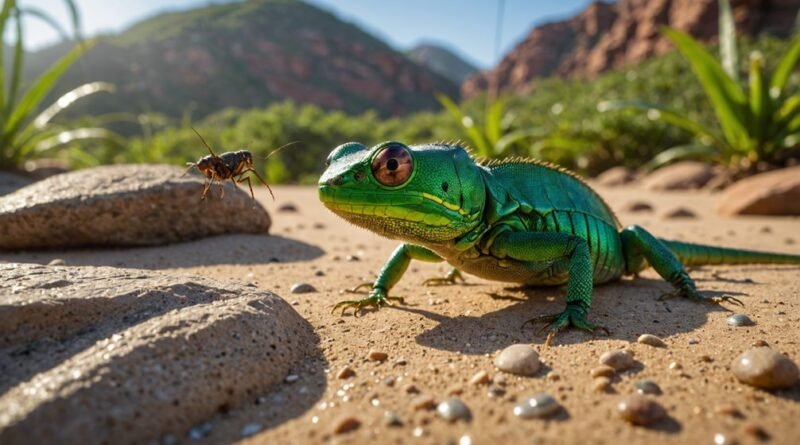
What Eats Cockroaches? Natural Predators That Keep Them in Check
Cockroaches have more natural enemies than you might think. Birds like chickens and robins will snatch them up outdoors, while geckos, toads, and frogs hunt them at night. Indoors, spiders and house centipedes actively pursue them. Parasitic wasps even target cockroach egg cases, disrupting reproduction at the source. Each predator plays a unique role in keeping populations in check, and there’s a lot more to know about how each one works.
Key Takeaways
- Birds like chickens, crows, and sparrows opportunistically eat cockroaches, with chicken foraging significantly reducing local roach populations.
- Reptiles like geckos and monitor lizards are effective nocturnal hunters, using sticky toe pads to catch cockroaches on various surfaces.
- Spiders, centipedes, and ground beetles hunt cockroaches indoors and outdoors, while ants target egg sacs to reduce populations.
- Parasitic wasps lay eggs inside cockroach egg cases, with larvae consuming the eggs, compounding population control effects over time.
- Natural predators work best outdoors; indoor infestations require sanitation, exclusion, and targeted treatments alongside any biological control methods.
Birds and Mammals That Eat Cockroaches
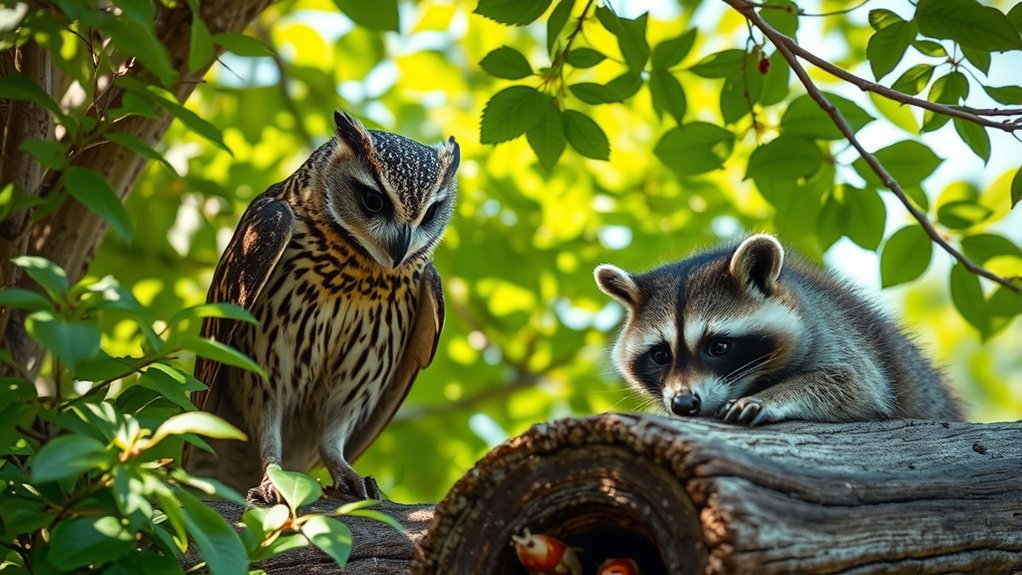
Several bird and mammal species eat cockroaches, though most do so opportunistically rather than as a primary food source.
If you keep chickens, you’ll find they’re among the most effective natural roach controllers available. Ducks and peafowl also consume roaches during outdoor foraging.
Chickens are among the best natural roach controllers, with ducks and peafowl also helping during outdoor foraging.
Wild birds like robins, crows, sparrows, starlings, and jays will eat cockroaches when they encounter them, particularly in open areas where roaches can’t hide.
On the mammal side, hedgehogs, opossums, and raccoons eat cockroaches when foraging.
Rats and mice will consume them if other food sources are scarce. Your house cat might chase and kill roaches, though it won’t necessarily eat them. Dogs may playfully hunt cockroaches but are generally unlikely to eat them.
Keep in mind that none of these animals actively pursue cockroaches into cracks, pipes, or sewers.
Their impact depends entirely on roach exposure, so predation works best alongside other control methods.
Reptiles and Amphibians That Eat Cockroaches
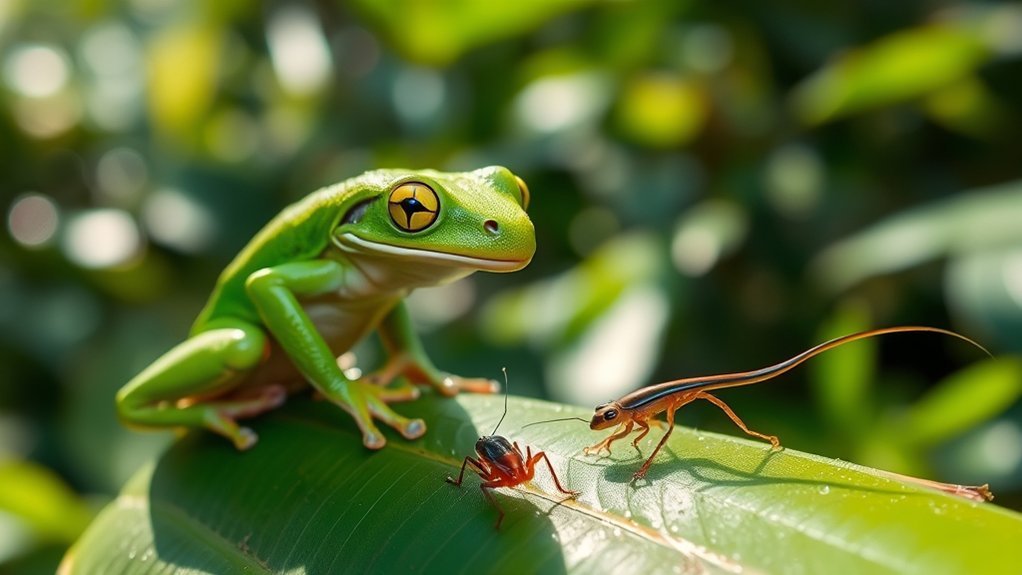
If you live in a warm climate, you’ve likely spotted a gecko or lizard hunting insects around your home at night, and cockroaches are very much on their menu.
Geckos, bearded dragons, and monitor lizards all eat roaches opportunistically, with larger species consuming more due to their greater size and gape width.
Frogs and toads are equally effective predators, especially in damp environments where they actively hunt roaches moving along the ground. Salamanders will also consume roaches once they are large enough to do so.
Lizards and Geckos
Among the reptiles that prey on cockroaches, geckos stand out as some of the most effective natural hunters. House geckos, leopard geckos, and Tokay geckos are all known roach eaters.
Since geckos are nocturnal, they’re active when cockroaches are, giving them a natural advantage. Their sticky toe pads and fast strikes let them catch roaches on walls, ceilings, and flat surfaces.
Beyond geckos, many lizards also consume cockroaches. Bearded dragons, monitor lizards, and skinks can all include roaches in their diet.
In captivity, roaches are commonly used as feeder insects because they’re nutritious and widely available.
That said, you shouldn’t rely on lizards or geckos alone for cockroach control. They reduce numbers through individual prey capture, not population elimination. Geckos use their backward-curving teeth to bite through tough cockroach exoskeletons, allowing them to consume every part of the roach, including its wings and legs.
Frogs and Toads
Reptiles aren’t the only vertebrates keeping cockroach populations in check — amphibians like frogs and toads do their part too. Because both species share the same damp, shaded environments cockroaches favor, encounters happen naturally and often.
Here’s what makes frogs and toads effective:
- Habitat overlap — Leaf litter, wet soil, and pond edges put them right where roaches roam.
- Ambush hunting — Their sticky tongues strike fast, grabbing roaches before they escape.
- Species variety — Tree frogs, common toads, and horned frogs all consume cockroaches regularly.
Their pest-control value is real but localized. You won’t eliminate an infestation by attracting frogs, but they’re a useful part of the broader natural system keeping outdoor roach numbers manageable. American frogs, in particular, are known to feed on backyard cockroaches as a regular part of their diet.
Spiders and Centipedes That Hunt Cockroaches Indoors
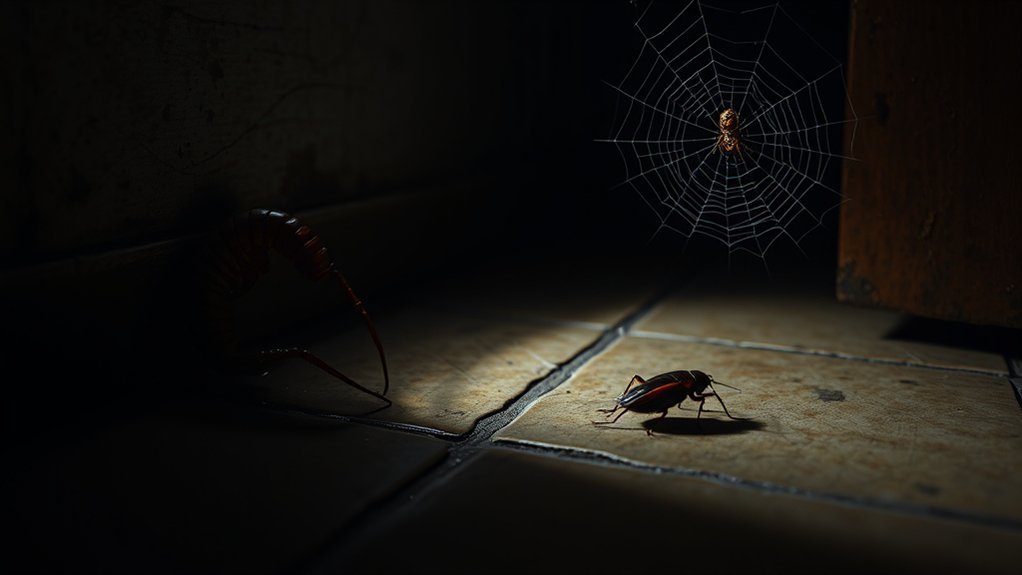
Spiders and house centipedes are two predators you’re likely to encounter indoors, and both actively hunt cockroaches. Spiders either trap roaches in webs or pursue them directly, while house centipedes use speed and surprise to take down roaches, nymphs, silverfish, and flies.
Spotting either predator usually means roaches are already established nearby. Spiders are indicative of other pest activity, meaning their presence in your home often signals a broader infestation beyond just cockroaches.
| Predator | Hunting Method | Common Indoor Habitat |
|---|---|---|
| Web-building spiders | Trap smaller roaches in silk | Corners, ceiling edges |
| Hunting spiders | Active pursuit on walls | Cluttered, low-traffic areas |
| House centipedes | Speed and ambush | Basements, bathrooms, crawl spaces |
Both predators thrive where moisture, clutter, and prey overlap, so their presence points to a bigger pest problem. They can reduce cockroach numbers, but they won’t eliminate an infestation. Sanitation, moisture control, and sealing entry points remain your most effective long-term defenses.
Ground Beetles, Ants, and Praying Mantises That Eat Cockroaches
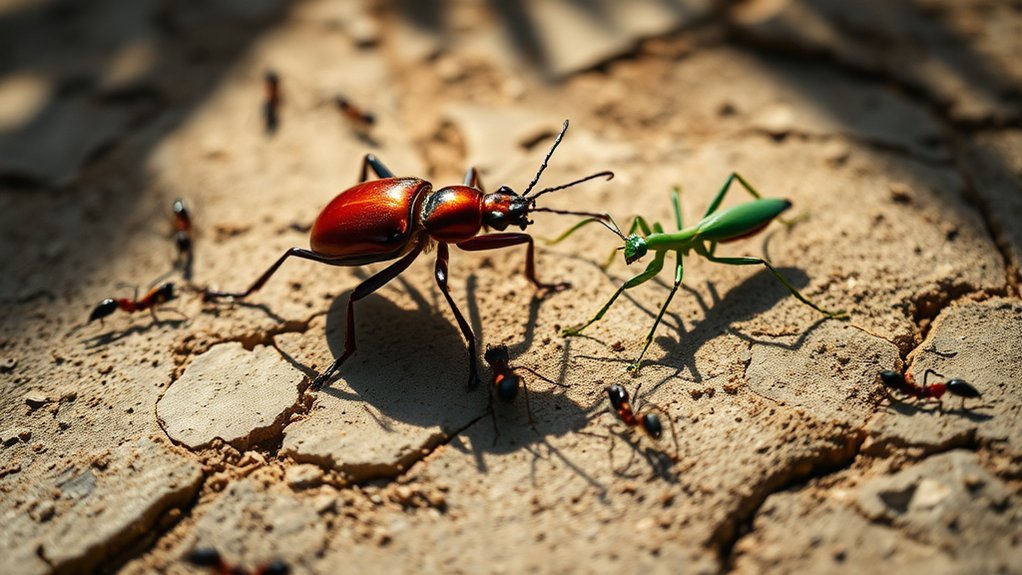
If you spend time in your garden or yard, you’ve likely encountered some of cockroaches’ most effective natural enemies.
Ground beetles actively hunt roaches on open surfaces, while ants target vulnerable eggs and nymphs through coordinated group attacks.
Praying mantises round out this trio by using ambush tactics to snatch adult cockroaches that wander into their line of sight.
Ground Beetles Hunt Roaches
Ground beetles are nocturnal hunters that actively pursue cockroaches through soil, mulch, and leaf litter rather than waiting in ambush. Their timing works in your favor because they’re most active when roaches are too.
They’re especially effective against vulnerable life stages:
- Egg cases – Strong mandibles let beetles break into egg cases before nymphs hatch.
- Nymphs – Smaller, softer bodies make young roaches easier to capture and consume.
- Adults – Larger roaches are harder to overpower, but beetles still attack them.
Ground beetles won’t eliminate an infestation on their own, but they reduce cockroach pressure by targeting reproduction. Supporting their habitat in gardens and mulch beds gives them a better chance to work naturally against roach populations.
Ants Target Cockroach Eggs
While ground beetles go after cockroaches directly, ants take a different approach by targeting the source—eggs. When cockroach egg sacs go unguarded or get damaged, foraging ants quickly seize the opportunity.
Because arthropod eggs are easy prey, generalist-feeding ants routinely retrieve them as part of normal colony foraging. Fire ants are especially effective—they can overwhelm cockroaches, consume the egg sac, and attack newly hatched young before they disperse.
Army ants use coordinated group hunting to overpower roaches entirely, while Pharaoh and Argentine ants aggressively raid egg masses when they encounter them.
You’ll notice that egg predation matters most because it stops the next generation before it starts. Concentrated egg clusters give ant colonies an efficient feeding opportunity, greatly reducing local cockroach recruitment.
Mantises Ambush Adult Roaches
Three insect predators stand out for targeting adult cockroaches: praying mantises, ground beetles, and ants. Each uses a different hunting approach, but all contribute to keeping roach populations in check outdoors.
Here’s how each predator works:
- Praying mantises use a sit-and-wait ambush, seizing roaches with raptorial forelegs before they can escape.
- Ground beetles run fast through soil and leaf litter at night, picking off exposed roaches near the ground.
- Ants overwhelm larger roaches through coordinated group attacks, especially when roaches are isolated or slowed.
Predator success depends on habitat openness and how often roaches cross exposed ground.
Dense cover reduces capture rates considerably.
Parasitic Wasps That Parasitize Cockroaches and Their Eggs
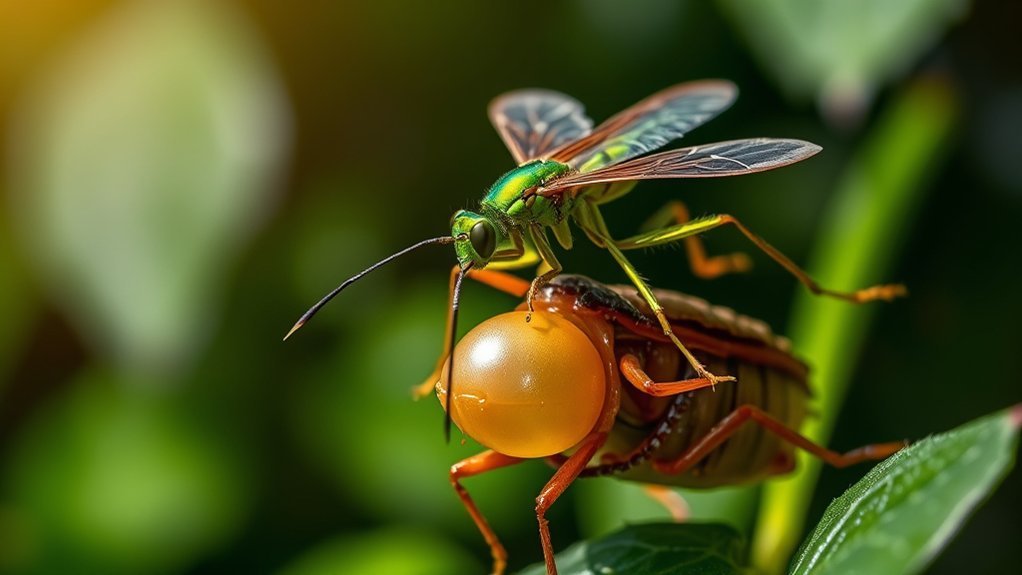
Parasitic wasps offer a natural check on cockroach populations by targeting their egg cases, called oothecae, before nymphs ever emerge. Ensign wasps, in the family Evaniidae, are the primary example. A female locates an ootheca in sheltered spots like wood piles, palm bracts, or tree holes, then inserts a single egg inside.
The larva hatches, consumes the cockroach eggs, pupates within the case, and eventually cuts a small exit hole to leave as an adult.
Different species target specific cockroaches. Evania appendigaster parasitizes American, oriental, and Australian cockroaches. Comperia merceti and Anastatus tenuipes both target brown-banded cockroaches. Because these wasps attack reproduction rather than adults, their impact compounds over time.
You won’t find ensign wasps threatening you directly—they don’t sting or bite in typical encounters. They’re small, black, and odd-shaped, but entirely focused on disrupting cockroach egg development.
Can Natural Predators Actually Control a Cockroach Infestation?
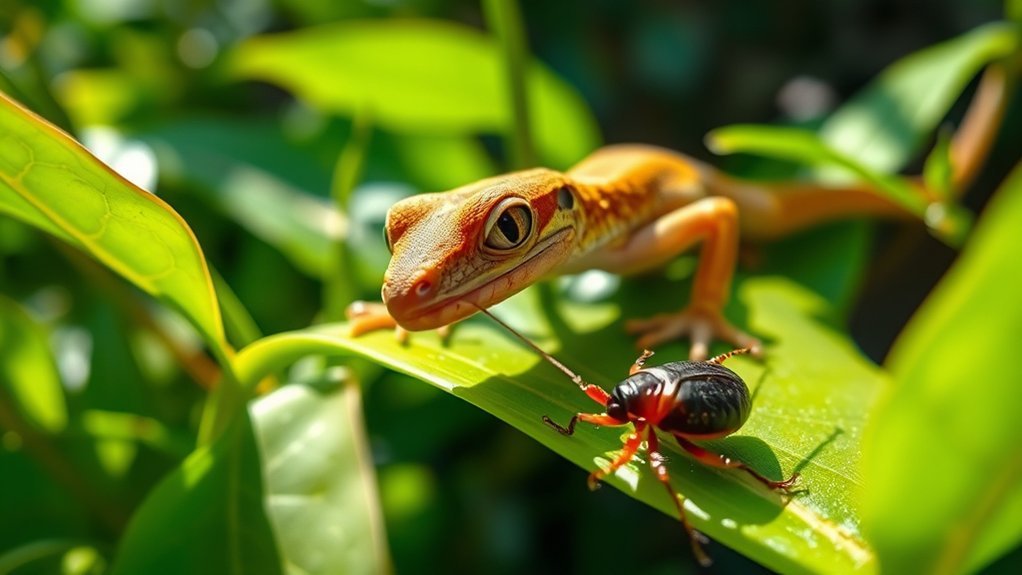
Predators eat cockroaches—that part is real.
But eating a few roaches isn’t the same as controlling an infestation. Here’s why natural predators almost always fall short indoors:
Eating a few roaches isn’t the same as controlling an infestation—natural predators almost always fall short indoors.
- Cockroaches hide where predators can’t follow. Wall voids, appliance gaps, and cluttered spaces protect them from spiders, lizards, and centipedes alike.
- Egg cases survive predator pressure. Killing visible adults doesn’t stop breeding cycles already underway in protected cracks.
- Roaches reproduce faster than predators can respond. Indoor food and water sources fuel rapid population growth that no natural enemy population can match.
Predators do make a difference outdoors, especially in gardens and along humid perimeters where roach exposure is higher.
Reducing clutter and moisture lets predators work more effectively there.
But if you’ve got an active indoor infestation, you’ll need sanitation, exclusion, and targeted treatment—not a gecko on the wall.
Frequently Asked Questions
Do Cockroaches Have Any Natural Predators That Live Underground?
Yes, cockroaches do have underground predators you should know about. Entomopathogenic nematodes, ants, centipedes, and predatory beetles all hunt cockroaches in soil, burrows, and leaf litter, targeting vulnerable eggs and nymphs effectively.
Can Cockroaches Develop Defenses or Immunity Against Their Natural Predators?
You’ll find that cockroaches can develop defenses, but not true immunity. They’ve evolved escape behaviors, hard exoskeletons, and chemical deterrents. However, predators like spiders, wasps, and nematodes can still successfully capture and kill them.
Are There Any Fish Species Known to Eat Cockroaches?
Yes, some fish do eat cockroaches. You’ll find arowanas, oscar fish, bettas, and certain catfish or larger cichlids most likely to consume them, especially in aquarium settings where roaches are easier to catch.
Do Natural Predators Prefer Certain Cockroach Species Over Others?
Yes, natural predators do prefer certain cockroach species over others. Parasitoid wasps are the most selective, while generalist predators like spiders and lizards’ll target whichever species they encounter most in their environment.
Can Microbial Pathogens Like Fungi Be Used as a Cockroach Control Method?
You can use fungi like Beauveria bassiana and Metarhizium anisopliae to target cockroaches, as they infect and kill through spore contact. They’re promising but work best within an integrated pest management program.
Conclusion
Now you know what eats cockroaches, but don’t count on nature’s predators to solve a serious infestation. While birds, lizards, spiders, and parasitic wasps all help keep populations in check outdoors, they won’t eliminate cockroaches once they’ve taken over your home. You’ll need to combine good sanitation, exclusion methods, and targeted treatments to truly win the battle. Think of natural predators as helpful allies, not your primary defense.
