
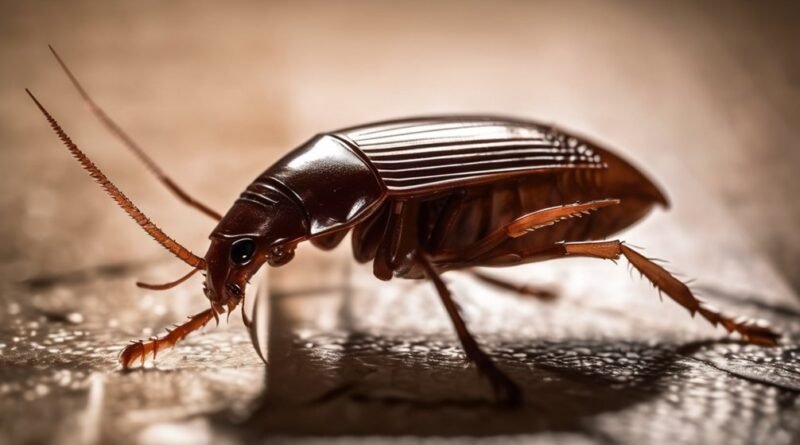
What Are Cockroaches?
You’ve probably encountered cockroaches scurrying across your floor or hiding in dark corners, but these resilient creatures are far more fascinating than their reputation suggests. As one of Earth’s oldest surviving insects, they’ve outlasted the dinosaurs and adapted to nearly every environment on the planet. While most people view them as unwanted pests, understanding these remarkable survivors can reveal surprising insights about nature’s most successful species.
Key Takeaways
- Cockroaches are ancient insects that have existed for 320 million years, surviving through multiple geological periods and mass extinctions.
- They are resilient pests with hard exoskeletons, six spiny legs, and two pairs of wings, adapted for survival in diverse environments.
- Cockroaches undergo three life stages (egg, nymph, adult) and can produce up to 400 offspring under ideal conditions.
- These insects thrive in warm, dark, and moist environments, commonly found in both natural settings and human dwellings.
- Cockroaches are remarkably hardy creatures that can survive without heads, hold their breath for 40 minutes, and resist radiation.
The Evolution and Origins of Cockroaches
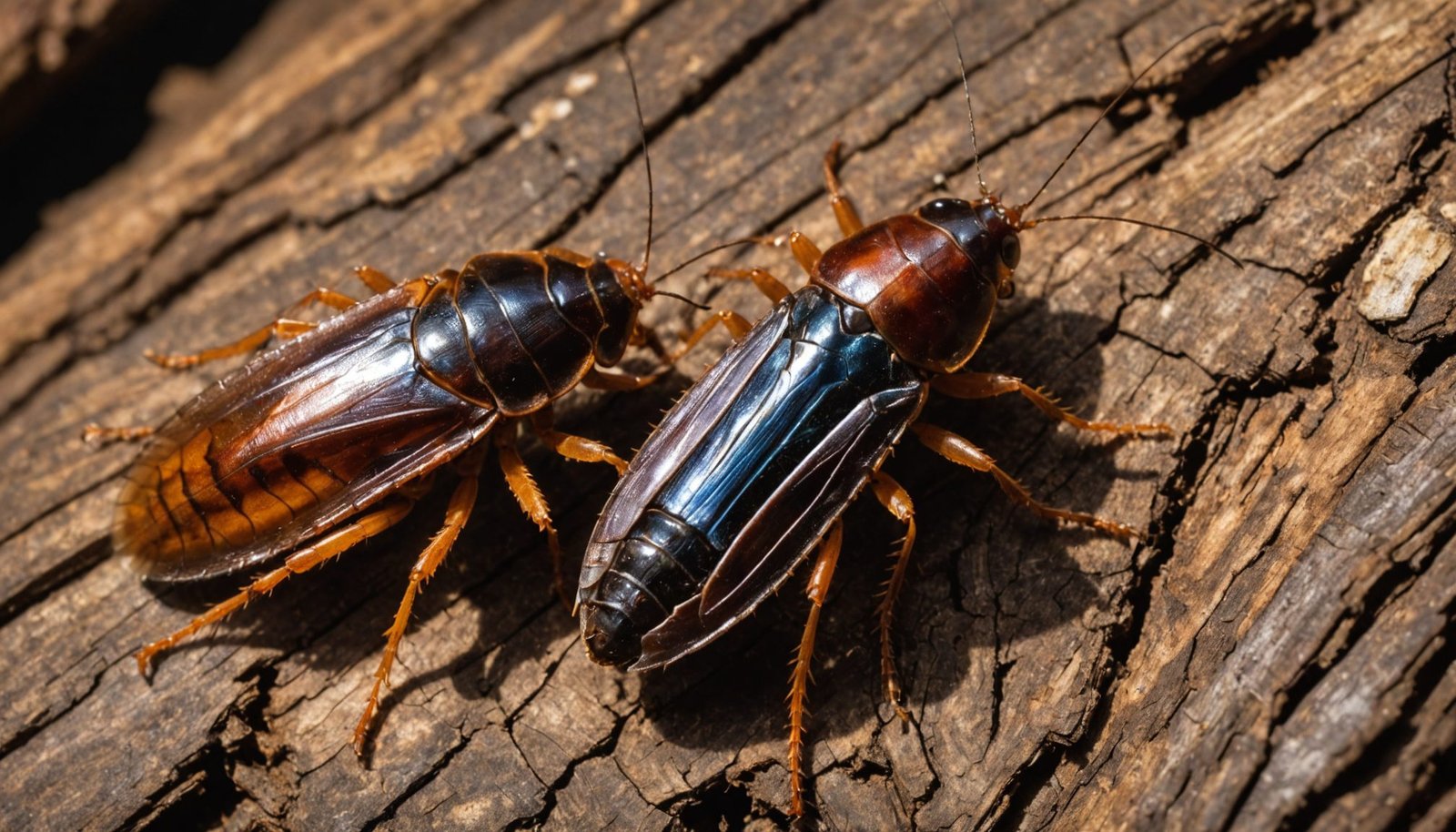
When you trace back the lineage of cockroaches, you’ll find they’re among Earth’s most enduring survivors, dating back roughly 320 million years. The modern group of cockroaches emerged during the middle Jurassic period, about 160-170 million years ago, and their basic body structure has remained remarkably stable since then.
Cockroaches have endured for over 300 million years, maintaining nearly the same design since dinosaurs walked the Earth.
While cockroaches originated in tropical regions, they’ve adapted to live almost everywhere except polar zones.
The German cockroach, which evolved from Asian cockroaches about 2,100 years ago, has become particularly successful at living alongside humans. These insects first adapted to human settlements in South Asia, developing behaviors like avoiding light and thriving in heated indoor environments.
Their worldwide spread accelerated dramatically in the 18th century through human travel and trade. They expanded across continents through colonial commerce as Europeans established trade routes around the globe.
Physical Features and Anatomy
Three distinct body segments define a cockroach’s anatomy: the head, thorax, and abdomen.
You’ll find a small head protected by a shield-like pronotum, equipped with powerful chewing mouthparts and long antennae for sensing food and danger.
The thorax houses six spiny legs, each featuring adhesive pads that let these insects climb vertical surfaces with ease.
A hard, waxy exoskeleton covers the entire body, protecting the cockroach while preventing water loss.
Most species have two pairs of wings: leathery forewings and membranous hindwings, though wing size varies by species and sex.
The flexible abdomen contains ten segments and houses reproductive organs.
Their flattened, oval body shape lets them squeeze through tight spaces, while compound eyes help them detect motion quickly.
Their sophisticated respiratory system uses spiracles and tracheae to efficiently exchange gases throughout their body.
Where Cockroaches Live and Thrive
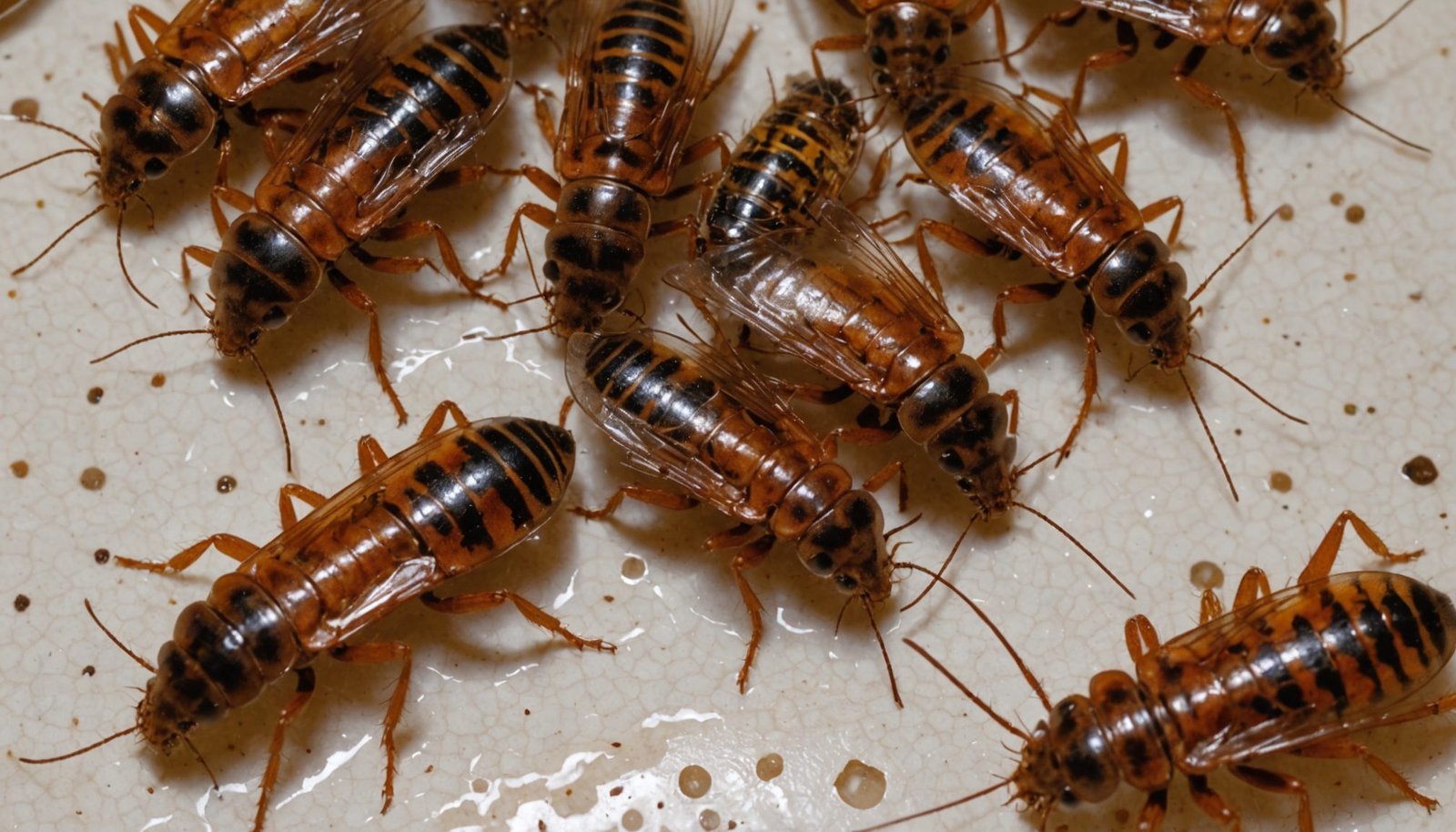
Beyond their impressive physical adaptations, cockroaches have mastered the art of survival in diverse environments worldwide. You’ll find them thriving in both natural and urban settings, from forest floors to city sewers.
These resilient insects prefer warm temperatures around 84°F and gravitate toward dark, moist areas near water sources. In homes and buildings, they’re commonly spotted in basements, kitchens, and bathrooms. American cockroaches first appeared in the United States when they were introduced from Africa in 1625.
German and Turkestan cockroaches frequently inhabit bedrooms and hospitals, while American cockroaches dominate sewer systems, sometimes reaching populations of 5,000 in a single manhole. They enter structures through drains, transported goods, or mass migrations during adverse weather conditions.
Outside, they shelter in hollow trees, wood piles, and organic debris, emerging at night to feed and explore their territory.
From Egg to Adult: The Cockroach Life Cycle
The remarkable journey of a cockroach’s life cycle unfolds through three distinct stages: egg, nymph, and adult.
It begins when females produce protective egg cases called oothecae, containing 10 to 60 eggs each. They’ll either carry these cases or hide them in crevices until the eggs hatch in 5 to 50 days.
The emerging nymphs look like miniature adults without wings. They’ll molt multiple times – anywhere from 6 to 18 times depending on the species – shedding their exoskeleton to grow larger. German cockroach nymphs can be identified by their darker brown bodies with lighter stripes running lengthwise.
Each time they molt, they’ll appear white until their new skin hardens and darkens.
After their final molt, they become fully-winged, reproductive adults. The entire process can take anywhere from three months to two years, with adults living up to several years under ideal conditions.
Survival Skills and Social Behavior
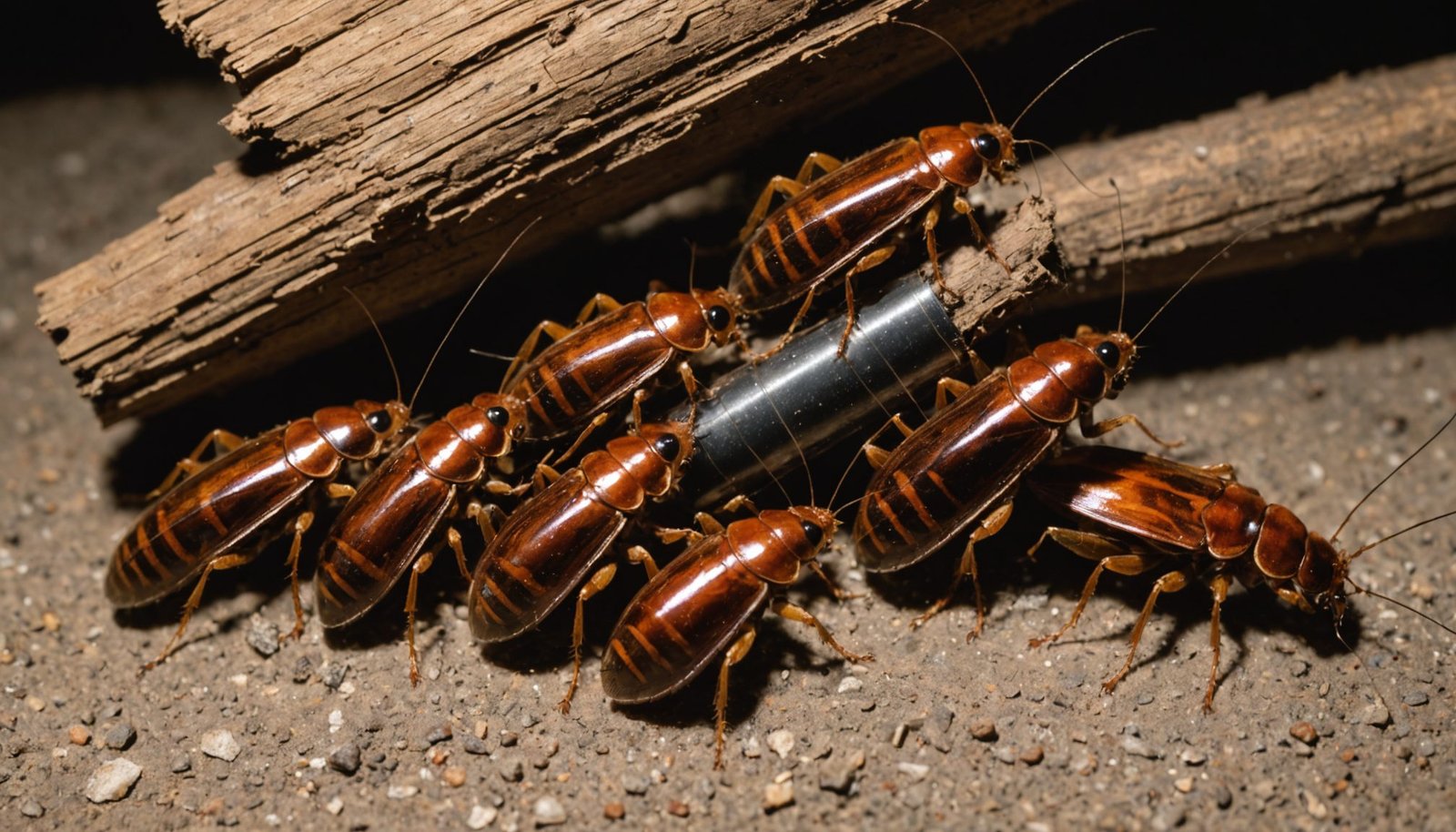
When it comes to survival, cockroaches are nature’s ultimate champions, equipped with an arsenal of remarkable adaptations.
You’ll find these resilient creatures can survive without their heads for up to a week, hold their breath for 40 minutes, and withstand radiation levels that would kill most organisms.
Their social behavior enhances their survival through group living, using pheromones to communicate and regulate their communities.
Cockroaches thrive in communities, using chemical signals to coordinate their actions and maintain social order within their groups.
They’ll quickly adapt to temperature extremes by hardening themselves and can modify their bodies to handle varying humidity levels.
You’ll notice they’re masters of evasion too – they can run at speeds up to 3 miles per hour and skillfully navigate water surfaces.
When threatened, they’ll seek shelter in tiny spaces and adjust their activities to avoid predators.
Female cockroaches demonstrate incredible reproductive capacity, with each capable of producing up to 400 offspring in optimal conditions.
Conclusion
You’ve now learned about one of Earth’s most adaptable creatures. From their ancient origins to their complex anatomy, cockroaches have proven they’re masters of survival. Whether you spot them in your kitchen or hear about their remarkable resilience, you’ll understand why these insects have thrived for millions of years. Their impressive reproductive abilities and survival skills guarantee they’ll continue to adapt and persist.
