
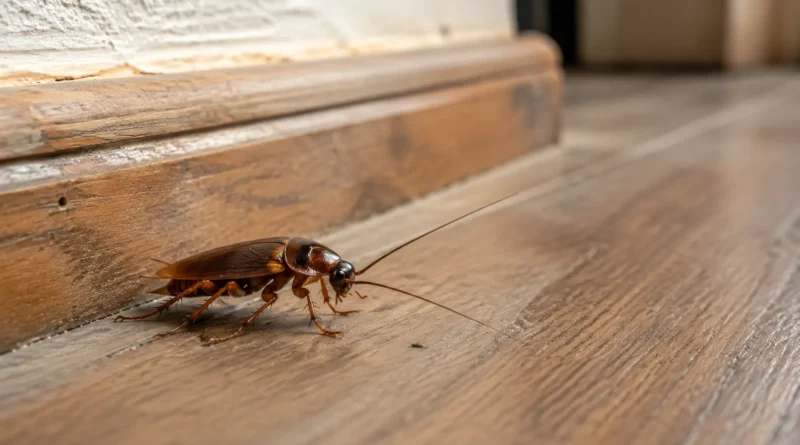
Wood Cockroach in House: Why It Happens and How to Get Rid of It
Finding a wood cockroach in your house is alarming, but it usually does not mean you have an infestation. Wood cockroaches are outdoor insects that wander indoors accidentally, most often during warm months. They rarely survive long inside your home, do not breed indoors, and are far less threatening than other species. Understanding why they show up, how to identify them, and what steps to take will help you handle the situation quickly and confidently.
What a Wood Cockroach Actually Looks Like
Before taking any action, you need to confirm what you are actually dealing with. Misidentification is common, and not every brown, flat insect in your home is the same species.
Wood cockroaches are medium-sized insects, typically between 3/4 inch and 1.25 inches long. They are chestnut brown with a pale or creamy border running along the edges of their wings and thorax. Males have fully developed wings that extend past their abdomen, and they can fly short distances, which is something many homeowners do not expect. Females have shorter wings and rarely fly. Their most distinguishing feature compared to German or American roaches is their preference for outdoor, wooded environments rather than kitchens or drains. Knowing how to tell cockroach species apart is a useful first step before deciding how to respond.
Why Wood Cockroaches Come Inside
Wood cockroaches do not invade homes the way German or American cockroaches do. They have a very different reason for showing up near your living space.
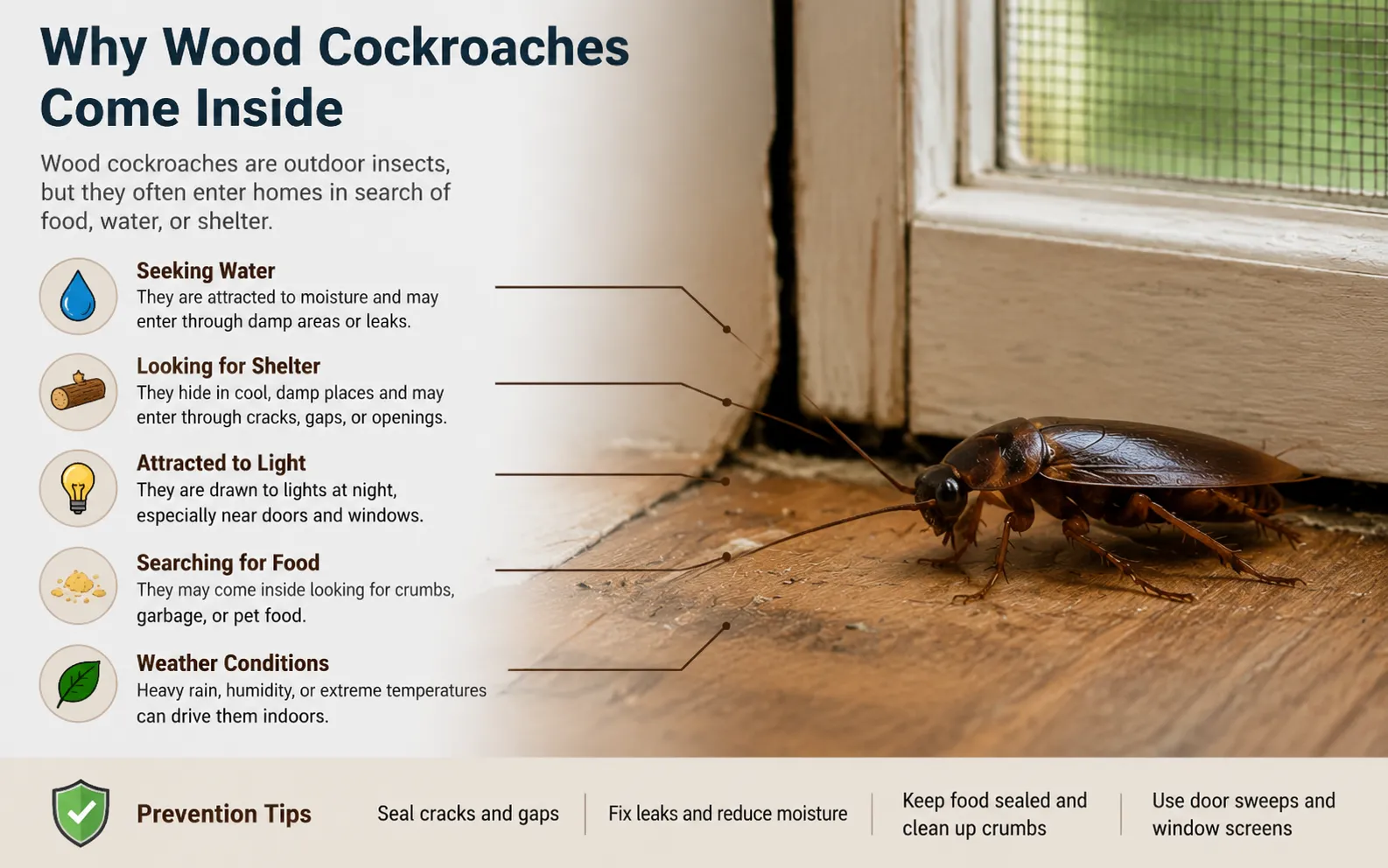
Here are the most common reasons a wood cockroach ends up inside your house:
- Firewood brought indoors. This is the most frequent cause. Wood roaches live inside stacked, moist logs and get carried in accidentally when you bring firewood inside.
- Outdoor lighting at night. Male wood cockroaches are strongly attracted to light. Porch lights, open windows, and bright interior lighting visible from outside draw them toward entry points.
- Gaps, cracks, and open doors. They wander in through any small opening, especially during mating season in spring and early summer.
- Mulch, leaf piles, and wood debris near the foundation. These create ideal outdoor habitats directly adjacent to your home.
- Damp wood or decaying material near the structure. Rotting siding, wood piles, or old stumps close to the house serve as a starting point.
Knowing common conditions that draw roaches indoors can help you identify which environmental factors around your property are creating entry opportunities.
Wood Cockroach vs Other Species Found Indoors
One of the most important things to determine is whether you are seeing a wood cockroach or a species that actually nests and breeds indoors. The difference matters enormously for how you respond.
Wood cockroaches are not shy the way German roaches are. They move slowly, tend to wander aimlessly, and are often found during the day in open areas rather than scurrying away when the lights turn on. They also do not have the same flat, swift body movement of German cockroaches and lack the reddish-brown color of the American cockroach.
Knowing how wood roaches differ from indoor pest species can clarify whether what you found is a genuine indoor pest or a temporary outdoor visitor. If what you saw matches the profile of an indoor-breeding species, that changes the urgency of your response considerably.
Are Wood Cockroaches Dangerous Inside Your Home
This is the question most people have first, and the answer is reassuring. Wood cockroaches are not considered a significant health threat in the same way other cockroach species are.
They do not infest food storage areas, do not contaminate surfaces the way German roaches do, and do not reproduce indoors. That said, like any cockroach, they can carry bacteria on their bodies and legs from outdoor environments, so you should still handle them carefully and wash any surfaces they may have contacted.
The real concern with cockroaches and health comes from species that live, breed, and die inside your home over extended periods. Allergy symptoms triggered by cockroach exposure are primarily linked to persistent indoor infestations rather than occasional wandering visitors. Even so, taking basic precautions is always sensible.
How to Tell If It Is a One-Time Sighting or an Infestation
A single wood cockroach in your home during spring or summer is almost always just a stray. However, it is worth doing a quick check to confirm you are not dealing with a different species that has taken up permanent residence.
Look for these signs of a real infestation:
- Small dark droppings near walls, cabinets, or under appliances
- A musty or oily odor that was not there before
- Egg cases in dark, sheltered areas such as under sinks or behind furniture
- Multiple sightings at different times of day, especially at night
If you find any of these signs, the situation may be different from a simple wood roach encounter. Knowing what a roach infestation looks like in its earliest stages helps you rule out or confirm a more serious problem before it escalates.
Where Wood Cockroaches Hide When They Get Inside
When a wood cockroach enters your home, it tends to gravitate toward areas that mimic its natural outdoor environment. It is not drawn to kitchens or food the way German roaches are.
Common indoor locations where wood cockroaches are found include:
- Near firewood stored indoors
- Around houseplants with damp soil
- Basement or crawl space areas with high humidity
- Along exterior walls in rooms close to wooded areas
- Near windows or doors that face wooded or mulched landscaping
Familiarizing yourself with typical roach hiding spots inside a home helps you narrow down where to look, even if wood roaches behave differently from indoor-breeding species.
How to Get Rid of a Wood Cockroach in the House
The good news is that wood cockroaches in your home are largely self-resolving if you remove the conditions that brought them in. They cannot survive indefinitely indoors without the decaying wood and moisture they need.
Here is a practical approach to handling them:
- Remove firewood from inside the home immediately and store it at least 20 feet from the structure.
- Switch to yellow or sodium vapor outdoor bulbs that are less attractive to flying insects, including male wood roaches.
- Seal entry points including gaps around windows, door sweeps, utility pipes, and vents.
- Reduce moisture and wood debris near the foundation, including mulch, leaf piles, and rotting stumps.
- Use a sticky trap near entry points to catch any that are already inside.
For targeted elimination without overkill, proven home treatments for occasional roach invaders offers product options suited to low-level encounters like this one.
Preventing Wood Cockroaches from Coming Back
Prevention is far more effective than treatment when it comes to wood cockroaches. Because they are outdoor insects, the most reliable control strategy focuses on the perimeter of your home rather than the interior.
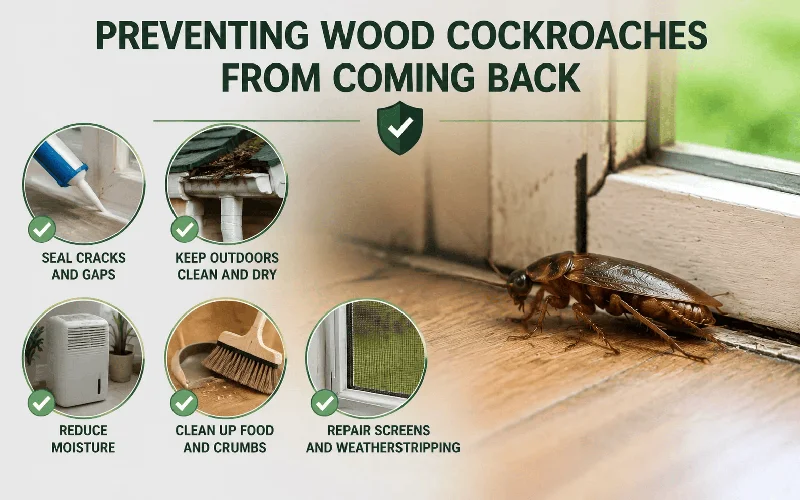
Keep these habits consistent throughout spring and summer when wood cockroach activity peaks:
- Inspect firewood before bringing it inside. Shake logs outside and look for insects before carrying them through the door.
- Keep outdoor lighting minimal or redirect it away from doors and windows.
- Maintain a dry zone around the foundation. Avoid excessive mulch depth and keep gutters clean to prevent moisture buildup near the house.
- Check window screens and door seals regularly, especially after storms or winter damage.
- Trim vegetation away from the home’s exterior so roaches have fewer pathways to exterior walls.
For year-round indoor protection, room-by-room roach prevention strategies covers interior measures that complement your outdoor efforts effectively.
When to Call a Professional
Most wood cockroach encounters do not require professional pest control. However, there are situations where it makes sense to bring in expert help.
You should consider professional treatment if:
- You are finding wood cockroaches regularly over multiple weeks
- You discover them throughout the house rather than in one area
- You are not certain whether you are dealing with wood roaches or an indoor-breeding species
- Your inspection reveals conditions like severe wood rot, moisture damage, or structural gaps that cannot be easily sealed on your own
A professional can correctly identify the species, assess entry points, and apply treatments suited to the specific situation. If cost is a concern, what professional roach extermination typically costs gives you a realistic breakdown before making a call.
Frequently Asked Questions
Why did I find a wood cockroach in my house if I do not have firewood?
Wood cockroaches can enter through any gap or crack in a home’s exterior, drawn in by light, warmth, or moisture. You do not need to have firewood inside for them to wander in. Mulch near the foundation, a wooded yard, or even a neighboring property with wood debris can produce them. They are explorers by nature during mating season and will enter any accessible opening.
Do wood cockroaches infest homes the way German cockroaches do?
No. Wood cockroaches do not establish indoor infestations. They cannot breed inside a home because they need decaying wood and outdoor humidity to complete their life cycle. If you are seeing one occasionally, it is almost certainly a stray. If you are seeing dozens regularly, have your home inspected to confirm the species involved.
Can wood cockroaches cause damage to my home?
Wood cockroaches do not eat the structural materials of your home. They feed on decaying organic matter outdoors. They are not wood-destroying insects in the way termites or carpenter ants are. Their presence inside is more of a nuisance than a structural or health emergency.
Are wood cockroaches the same as wood roaches?
Yes, wood cockroaches and wood roaches refer to the same group of insects, primarily from the Parcoblatta genus. They are distinct from household pest species and are considered incidental invaders rather than true domestic pests.
Should I be worried if I see one during the day?
Wood cockroaches are not strongly nocturnal the way German or American cockroaches are. Seeing one during the day is common and does not necessarily indicate a large population nearby. It is more likely a male that wandered in following light or warmth. Monitor for additional sightings and check entry points, but a single daytime encounter is not cause for alarm.
How long will a wood cockroach survive inside my house?
Without access to the moist, decaying wood it needs, a wood cockroach typically survives only a few days to a week inside a home. They do not find adequate food or breeding conditions indoors and will eventually die off. The priority is to prevent more from entering while the current one runs its course.
{
“@context”: “https://schema.org”,
“@type”: “FAQPage”,
“mainEntity”: [
{
“@type”: “Question”,
“name”: “Why did I find a wood cockroach in my house if I do not have firewood?”,
“acceptedAnswer”: {
“@type”: “Answer”,
“text”: “Wood cockroaches can enter through any gap or crack in a home’s exterior, drawn in by light, warmth, or moisture. You do not need to have firewood inside for them to wander in. Mulch near the foundation, a wooded yard, or even a neighboring property with wood debris can produce them. They are explorers by nature during mating season and will enter any accessible opening.”
}
},
{
“@type”: “Question”,
“name”: “Do wood cockroaches infest homes the way German cockroaches do?”,
“acceptedAnswer”: {
“@type”: “Answer”,
“text”: “No. Wood cockroaches do not establish indoor infestations. They cannot breed inside a home because they need decaying wood and outdoor humidity to complete their life cycle. If you are seeing one occasionally, it is almost certainly a stray. If you are seeing dozens regularly, have your home inspected to confirm the species involved.”
}
},
{
“@type”: “Question”,
“name”: “Can wood cockroaches cause damage to my home?”,
“acceptedAnswer”: {
“@type”: “Answer”,
“text”: “Wood cockroaches do not eat the structural materials of your home. They feed on decaying organic matter outdoors. They are not wood-destroying insects in the way termites or carpenter ants are. Their presence inside is more of a nuisance than a structural or health emergency.”
}
},
{
“@type”: “Question”,
“name”: “Are wood cockroaches the same as wood roaches?”,
“acceptedAnswer”: {
“@type”: “Answer”,
“text”: “Yes, wood cockroaches and wood roaches refer to the same group of insects, primarily from the Parcoblatta genus. They are distinct from household pest species and are considered incidental invaders rather than true domestic pests.”
}
},
{
“@type”: “Question”,
“name”: “Should I be worried if I see one during the day?”,
“acceptedAnswer”: {
“@type”: “Answer”,
“text”: “Wood cockroaches are not strongly nocturnal the way German or American cockroaches are. Seeing one during the day is common and does not necessarily indicate a large population nearby. It is more likely a male that wandered in following light or warmth. Monitor for additional sightings and check entry points, but a single daytime encounter is not cause for alarm.”
}
},
{
“@type”: “Question”,
“name”: “How long will a wood cockroach survive inside my house?”,
“acceptedAnswer”: {
“@type”: “Answer”,
“text”: “Without access to the moist, decaying wood it needs, a wood cockroach typically survives only a few days to a week inside a home. They do not find adequate food or breeding conditions indoors and will eventually die off. The priority is to prevent more from entering while the current one runs its course.”
}
}
]
}
