
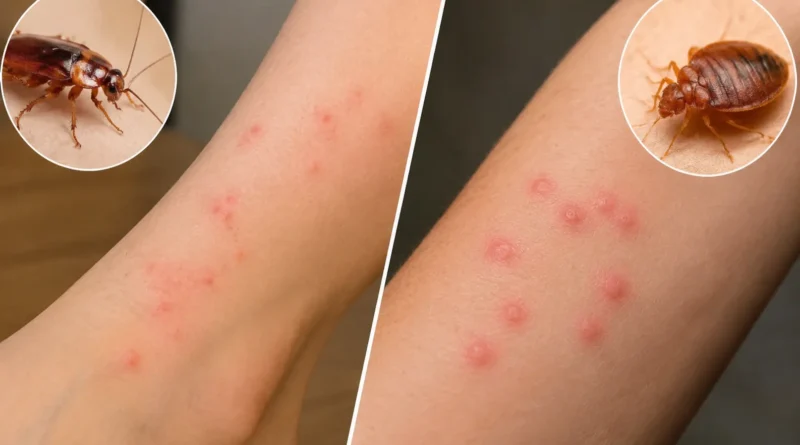
Cockroach Bites vs Bed Bug Bites: How to Tell the Difference
Cockroach bites and bed bug bites are not the same — and approximately 49.3% of individuals confuse the two due to similar surface appearance, leading to wasted treatment costs and missed pest control. Cockroach bites account for less than 7.4% of indoor insect bite cases and appear as single isolated red welts, typically on hands, face, and areas with food residue, occurring only when infestations are severe and food sources depleted. Bed bug bites are responsible for over 62.9% of reported household insect bite incidents, appear in clusters or lines of 3 to 5 bites on exposed skin in 85% of cases, and occur every night regardless of food presence because blood is their sole food source. Identifying which pest bit you correctly determines the entire treatment approach — they require completely different extermination methods, different inspection areas, and different prevention strategies.
Why Identifying the Right Bite Matters
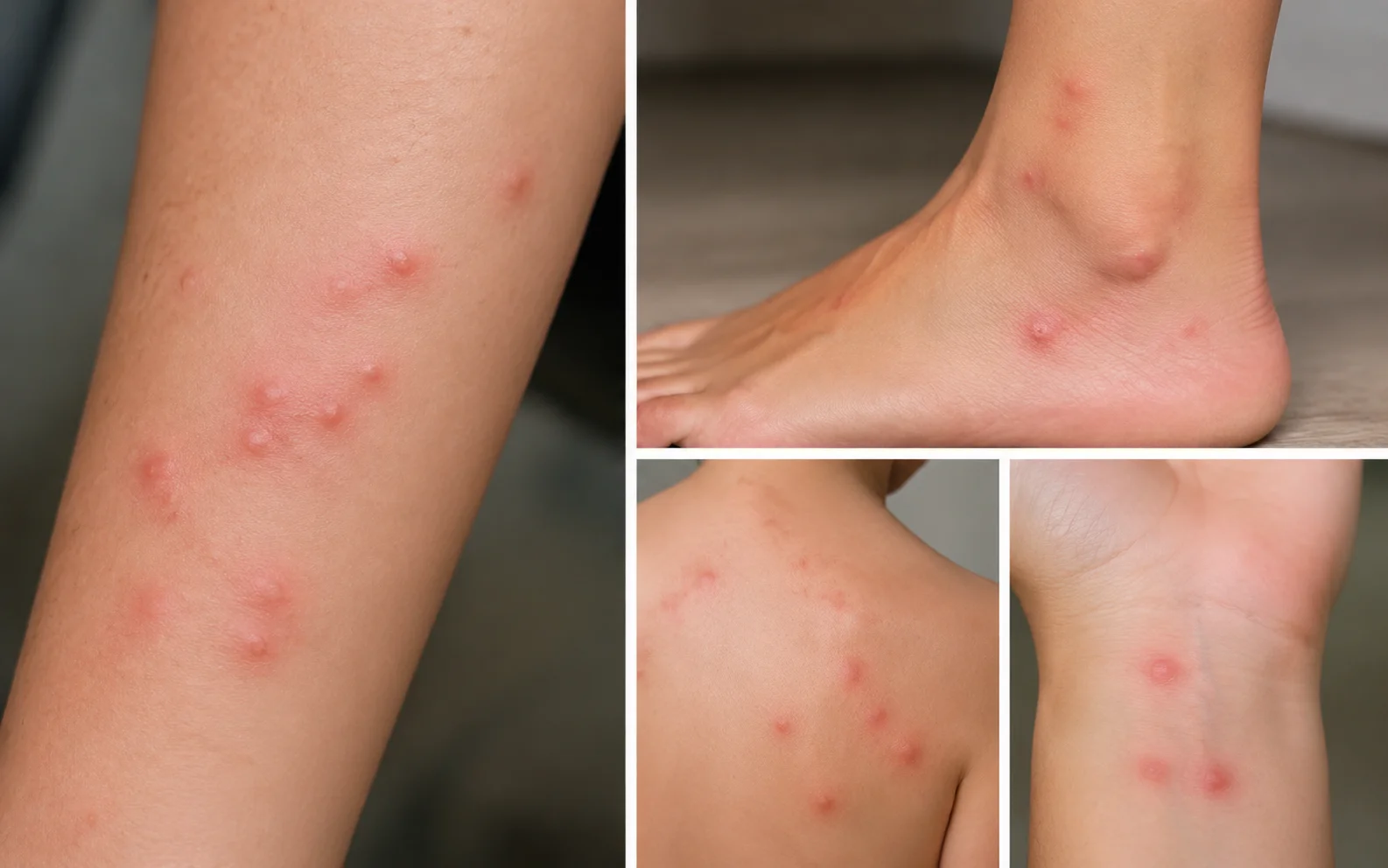
Most people assume any bite discovered in their bedroom comes from bed bugs, but approximately 49.3% of individuals confuse cockroach bites with bed bug bites due to similar appearance. This misidentification leads to expensive bed bug treatments in homes that actually have cockroach infestations, or worse, cockroach populations growing unchecked while attention focuses on the wrong pest. The extermination approach, the inspection locations, the chemical treatments, and the prevention strategies are completely different for each pest. Getting the identification right before spending on treatment is the most cost-effective first step.
Bites alone are rarely sufficient evidence to confirm which pest is responsible — you need to cross-reference bite appearance with bite pattern, body location, timing, and other physical evidence found in the home. This guide covers all five factors systematically so you can make a confident identification before contacting pest control.
What Cockroach Bites Look Like
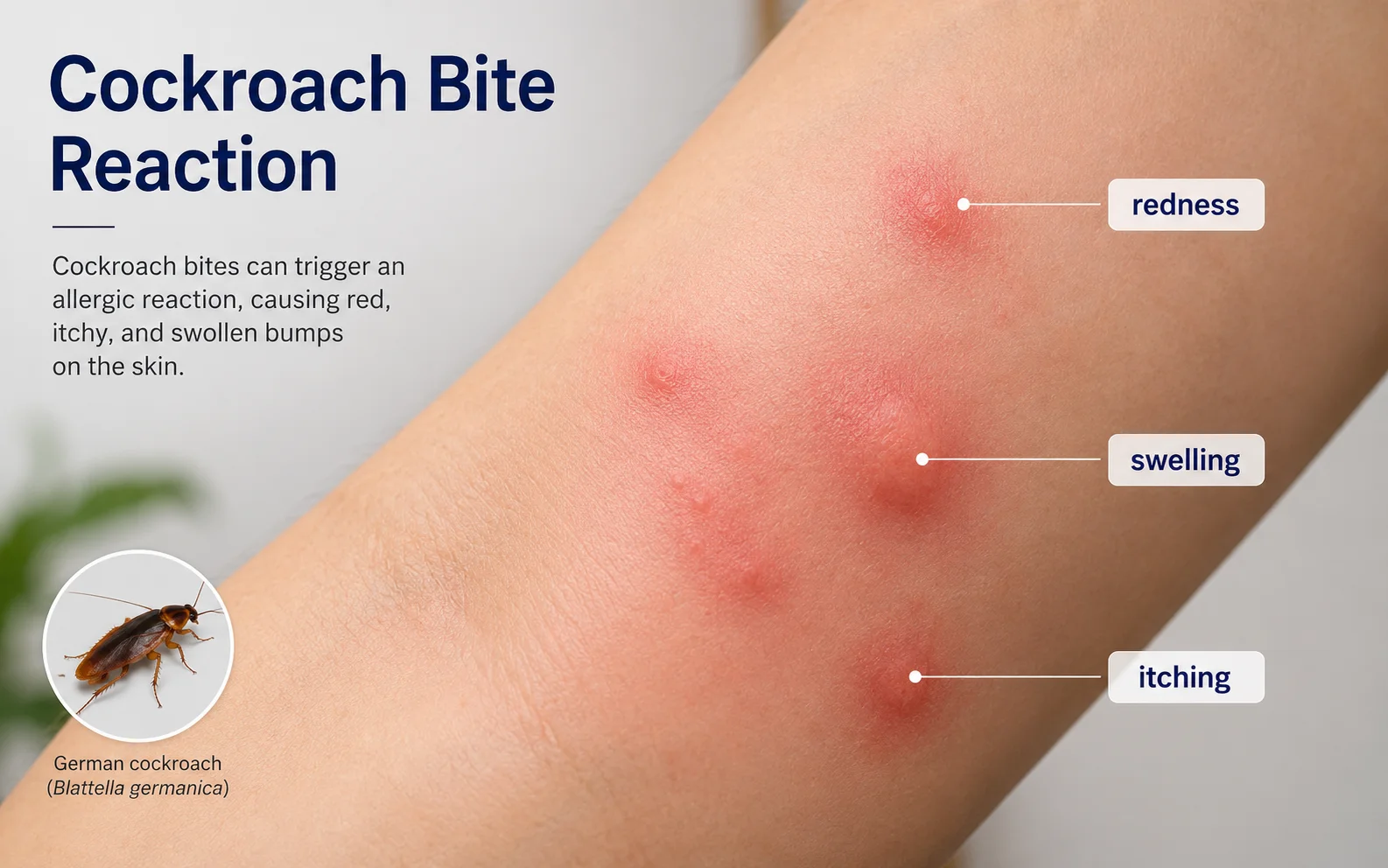
Cockroach bites account for less than 7.4% of indoor insect bite cases — they are uncommon in typical residential settings and occur almost exclusively in homes with severe infestations where normal food sources are depleted. Cockroaches bite at night, targeting areas where food odors linger: hands and fingers, face, lips, and eyelids are the most frequently bitten locations.
What cockroach bites typically look like:
- Single, isolated red bump rather than a pattern or cluster — this is the most reliable distinguishing feature
- Slightly larger than a mosquito bite, often 1 to 4mm wide
- Raised and firm, with mild to moderate swelling around the bite site
- Bright red coloration that develops almost immediately after the bite
- May cause itching but typically less intense than bed bug bites
- Can become infected if scratched, especially in humid environments
Around 28.5% of people bitten by cockroaches show allergic skin reactions — expanded redness, hives, or localized swelling beyond the immediate bite site driven by cockroach saliva proteins. The same allergens that cause bite reactions are documented triggers for asthma and respiratory symptoms, meaning individuals with existing cockroach allergen sensitivity may experience more significant reactions than those without prior exposure. See our full cockroach bite symptoms and treatment guide for detailed reaction progression and home care protocols.
What Bed Bug Bites Look Like
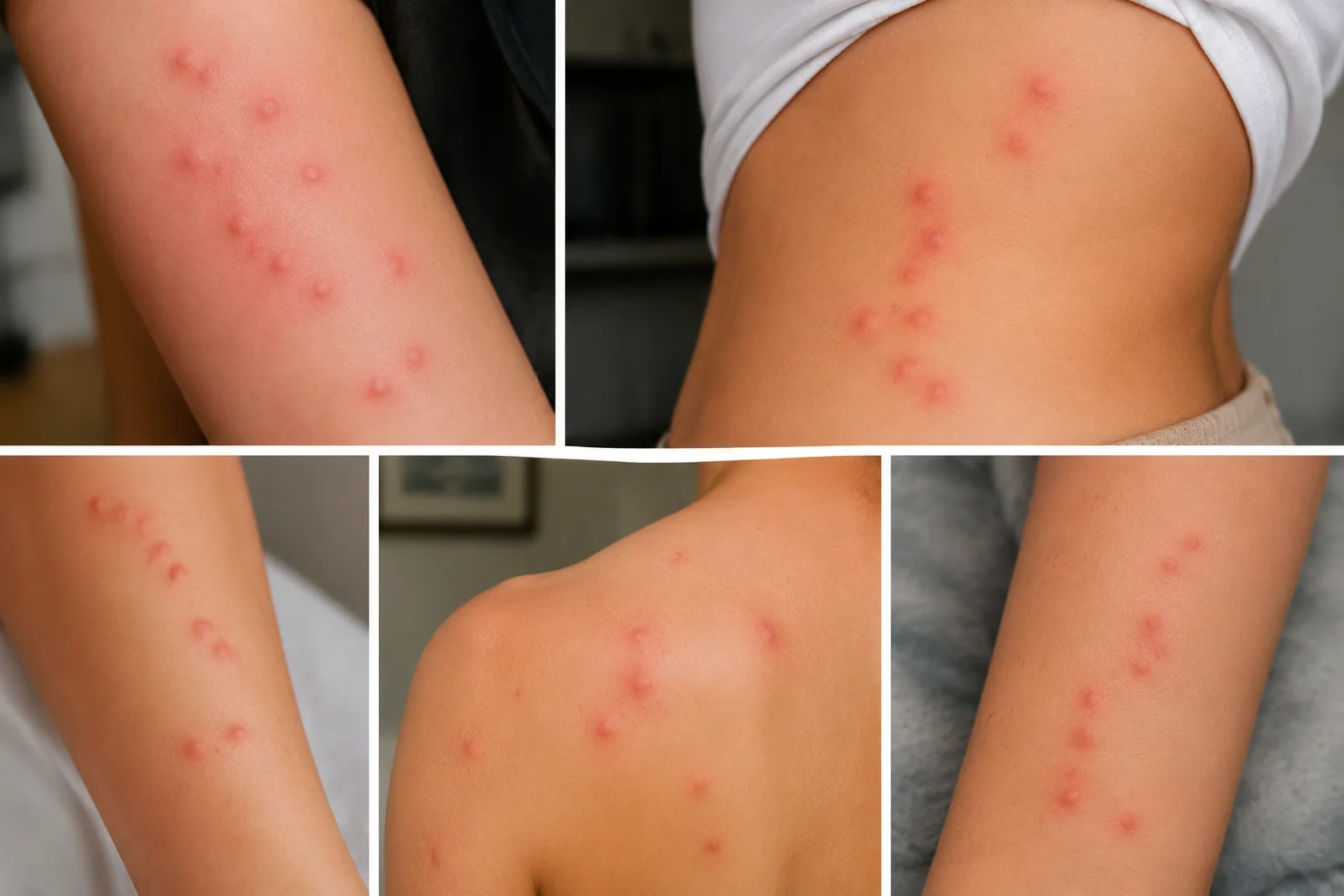
Bed bug bites are responsible for over 62.9% of reported household insect bite incidents and follow a completely different pattern from cockroach bites. Bed bugs feed exclusively on blood and do so while you sleep — bites appear on skin that was exposed during the night, not on areas with food residue. Bed bug bites typically appear in clusters of 3 to 5 on exposed skin in 85% of cases, often in the characteristic “breakfast, lunch, dinner” linear or zigzag arrangement that reflects the bug’s feeding path along the skin surface.
What bed bug bites typically look like:
- Bites appear in lines, clusters, or zigzag patterns — a group of 3 to 5 bites is the classic presentation
- Located on exposed skin during sleep: arms, neck, legs, shoulders, and face
- Intense itching that typically feels significantly worse than mosquito bites
- Small red welts with a darker red center, sometimes surrounded by a pale halo
- Bites typically appear in the morning after a night of sleep — you rarely feel them occurring
- Some people have no visible reaction at all, while others develop large inflamed welts requiring antihistamine treatment
- Size resembles a small apple seed mark in mild reactions
Unlike cockroaches, bed bugs do not bite because they are starving or because food residue is present on skin — blood is their only food source. They feed for 3 to 10 minutes while you sleep, then retreat to hiding spots in mattresses, box springs, clothing, luggage, and furniture joints before you wake up.
Appearance and Symptoms Comparison
| Feature | Cockroach Bite | Bed Bug Bite |
|---|---|---|
| Pattern | Single, isolated bump | Clusters or lines of 3 to 5 bites |
| Size | 1 to 4mm wide, raised firm welt | Small red welt with darker center |
| Color | Bright red, immediate onset | Red with pale halo, develops overnight |
| Itching intensity | Mild to moderate | Intense, often severe |
| Onset timing | Immediate pain and swelling | Morning discovery after nighttime feeding |
| Allergic reactions | 28.5% show allergic skin reactions | Increasing severity with repeat exposure |
| Frequency | Rare, 7.4% of indoor bite cases | Every night if bugs present (62.9% of cases) |
Where on the Body Each Bite Appears
Location on the body is one of the most useful identification clues because placement directly reflects feeding behavior, and feeding behavior reveals the pest. Cockroach bites appear on body parts where food odors concentrate — hands and fingers (especially if you touched food before sleeping), face and lips, feet and ankles if you walk barefoot in infested areas. The presence of food residue is the trigger for cockroach biting, so bites that appear on hands, fingertips, or around the mouth strongly suggest cockroaches rather than bed bugs.
Bed bug bites appear on any exposed skin during sleep: arms (particularly forearm and upper arm), neck and collarbone area, legs and thighs, shoulders and upper back. Bed bug bites are not location-specific in terms of food odor — any skin accessible while you sleep is a target. If bites are consistently appearing on arms and neck in a linear or cluster pattern each morning, bed bugs are the more likely culprit. If you find a single bite on a hand or near the mouth, and cockroach activity has been noted in the home, the probability shifts significantly toward cockroaches.
Typical Bite Patterns
The pattern of bites over time provides as much diagnostic information as the appearance of individual bites. Bed bug bites occur every night when an active infestation is present — you will discover new bites each morning as a consistent pattern. They appear in clusters of 3 to 5 bites in 85% of cases, arranged linearly or in a zigzag reflecting the bug’s path along exposed skin. This regularity and clustering is the defining characteristic — it is not accidental or random. Bed bugs feed for 3 to 10 minutes while you sleep, then retreat to hiding spots in mattresses, box springs, clothing, luggage, and furniture joints. You will rarely see them but will consistently discover new bites each morning.
Cockroach bites are erratic and rare. They do not follow a schedule or consistent location pattern. A cockroach bite is typically a one-time event triggered by proximity and food scent, not a regular feeding pattern. If you experience bites that appear on random single locations without clustering, without a consistent morning-discovery pattern, and in a home with known cockroach activity, cockroaches are the more likely cause than bed bugs. See our baby cockroach vs bed bug comparison for additional help distinguishing between these two pests based on visual evidence found in the home.
Allergic Reactions and Severity
Around 28.5% of people bitten by cockroaches show allergic skin reactions — a significant proportion that reflects the genuine allergenicity of cockroach saliva proteins. Cockroach allergic bite reactions range from localized hives and expanded redness to a spreading rash and, in rare cases, systemic symptoms including anaphylaxis. Individuals already sensitized to cockroach allergens from living in an infested environment face higher risk of significant reactions because their immune system has pre-formed IgE antibodies to cockroach proteins. Signs that a cockroach bite reaction is escalating beyond normal: expanding redness with hives beyond the immediate bite site, difficulty breathing, throat tightening, or significant facial swelling all warrant emergency medical attention.
Bed bug bite allergic reactions follow a different pattern — they tend to become more severe with each subsequent incident rather than with initial exposure. First-time bed bug bite victims sometimes show no visible reaction. Repeat exposure builds sensitization, meaning the fifth or tenth infestation night may produce significantly more inflamed welts than the first night. Antihistamine use (cetirizine or loratadine) reduces both cockroach and bed bug bite reactions effectively, though bed bug bite itching typically requires more sustained antihistamine management than cockroach bites due to the ongoing nightly exposure.
Timeframe of Bite Reactions and Healing
Cockroach bites generally heal within one to two weeks with basic home care — washing with soap and water, applying antiseptic, using hydrocortisone cream, and avoiding scratching. The bite site may become infected if scratched repeatedly, particularly in warm or humid environments, since cockroaches carry pathogens on their bodies that can enter through broken skin. See our cockroach bite marks treatment guide for step-by-step home care and infection warning signs.
Bed bug bites can persist for one to three weeks and may become more inflamed over time, especially in people with sensitive skin or existing skin conditions including eczema or dermatitis. Unlike cockroach bites, which are typically one-time events that can heal while you remain in the home, bed bug bites will continue appearing nightly until the infestation is treated — making the healing timeline irrelevant until the source is eliminated. Repeated nightly bed bug feeding without treatment creates a compounding inflammation response where new bites appear before previous ones have healed, producing the appearance of a persistent severe skin condition.
Other Signs That Confirm the Pest
Bites alone are rarely enough to confirm which pest is responsible — physical evidence in the home provides the most reliable confirmation. The presence of supporting evidence alongside bites is what moves a suspected identification into a confirmed one.
Signs confirming cockroach infestation:
- Dark pepper-like droppings along baseboards, inside cabinets, or behind appliances
- A musty, oily odor in rooms where cockroaches hide — distinct from the sweet musty smell of bed bugs
- Oothecae (egg cases) approximately 8 to 12mm long tucked into dark crevices, cabinet bases, or behind appliances
- Live or dead cockroaches spotted at night in kitchens or bathrooms
- Shed skins left behind as nymphs progress through molting stages
- Smear marks along baseboards and wall-floor junctions from repeated cockroach movement
Signs confirming bed bug infestation:
- Small rust-colored stains on sheets or pillowcases from crushed bugs or digested blood in their droppings
- Tiny pale yellow shed skins found in mattress seams, box spring corners, or behind headboards
- Live bugs found in mattress folds, behind headboards, inside furniture joints, or in clothing seams near the sleeping area
- Bed bugs are approximately the size of an apple seed — flat, oval, and reddish-brown when unfed
- A sweet, musty odor in heavily infested rooms from aggregation pheromones
- Multiple household members or hotel guests developing bites simultaneously
- Bites appearing after hotel stays, purchasing used furniture, or having overnight guests (primary introduction routes via luggage and clothing)
Treatment Options for Cockroach Bites
Cockroach bite home treatment is straightforward and effective in the vast majority of cases — less than 0.5% of cockroach bite cases require medical treatment beyond basic first aid. Clean the bite area thoroughly with soap and warm water, apply an antiseptic such as hydrogen peroxide or povidone-iodine, then apply hydrocortisone cream to reduce redness and swelling. For persistent itching, use an oral antihistamine such as cetirizine or loratadine. A cold compress applied for 10 to 15 minutes every few hours reduces swelling effectively. Avoid scratching under any circumstances — it introduces secondary bacterial infection risk from pathogens on skin and fingernails.
Seek medical attention for cockroach bites if: redness spreads beyond the immediate bite site with red streaks radiating outward (lymphangitis), swelling worsens after 48 hours, pus develops at the site, fever or chills accompany the bite reaction, or any breathing difficulty or facial swelling appears (anaphylaxis). Around 28.5% of cockroach bite cases involve allergic skin reactions that benefit from prescription-strength antihistamine or corticosteroid treatment — if over-the-counter products are not managing the reaction within 48 hours, doctor consultation is appropriate. After treating the bite, address the cockroach infestation directly — eliminating the population is the only way to eliminate future bite risk.
Treatment Options for Bed Bug Bites
Bed bug bite treatment differs from cockroach bite treatment in one critical way: individual bite treatment is largely futile without simultaneously treating the infestation, because new bites will appear each night. For individual bites, wash with soap and water, apply hydrocortisone cream for swelling, and use oral antihistamine for itching — the same initial care as cockroach bites. Calamine lotion provides soothing relief for the intense itching bed bug bites characteristically produce. For severe allergic reactions with large inflamed welts, a doctor may prescribe corticosteroid cream or oral corticosteroids.
The infestation itself requires professional treatment in most established cases. Bed bugs cannot survive temperatures above 118°F (48°C) — professional heat treatment is the most effective method because it penetrates mattresses, furniture, and wall voids where chemical treatments do not reliably reach. Chemical treatments (pyrethroids, neonicotinoids) are available but typically require multiple applications and do not eliminate all life stages in one treatment. Wash all bedding in hot water and dry on the highest heat setting immediately. Vacuum all mattress seams, box spring corners, and surrounding floors thoroughly. For suspected bed bug infestation, inspect mattress seams, box springs, bed frames, and furniture joints before treatment — confirming the infestation source before spending on extermination is essential since bed bugs spread via luggage, clothing, and used furniture.
Preventive Measures to Avoid Both Types of Bites
Preventing cockroach bites requires eliminating the infestation conditions that produce biting behavior — cockroaches bite humans only when populations are severe and food sources depleted. Daily kitchen sanitation (wiping surfaces, washing dishes promptly, vacuuming floors, storing food in sealed containers), fixing plumbing leaks, sealing structural entry points, and maintaining gel bait programs with rotating active ingredients prevents the severe population levels that produce biting behavior. Washing hands and face before sleep eliminates food residue from skin that attracts cockroaches to sleeping individuals during nighttime foraging. The most effective cockroach bite prevention is a maintained cockroach control program rather than any bite-specific measure.
Preventing bed bug bites requires preventing bed bug introduction and eliminating established populations — since bed bugs feed on blood regardless of food residue, personal hygiene does not prevent their biting. Inspect luggage and clothing after hotel stays before bringing items into your home. Use luggage racks rather than placing bags on hotel beds or floors. Inspect any secondhand furniture — especially mattresses, box springs, and upholstered items — before bringing them inside. Encase mattresses and box springs in bed bug-proof zippered encasements that prevent bugs from establishing in mattress seams. Install interceptor traps (plastic cups with talcum powder) under bed legs to catch bed bugs traveling between the floor and sleeping area. Early detection through regular mattress inspection prevents severe infestations from establishing before they are identified.
Health Risks Connected to Each Pest
Beyond individual bite treatment, understanding the broader health implications of each pest helps prioritize response. Cockroaches are active disease vectors — they carry E. coli, Salmonella, and other pathogens on their bodies and feet, contaminating food, surfaces, and kitchen areas throughout the home. Cockroach allergens from droppings, shed skins, and body fragments trigger asthma attacks and allergic reactions in approximately 40% of exposed people — a documented public health concern particularly severe for children in urban households. The presence of cockroaches creates ongoing allergen exposure risk even when bites do not occur, making elimination a health priority regardless of biting behavior.
Bed bugs, by contrast, are not known to transmit disease — their public health significance is primarily through the psychological and sleep disruption impacts of living with an active infestation. Disrupted sleep, chronic anxiety, obsessive inspection behaviors, and social stigma associated with bed bug infestations are documented psychological consequences that should not be dismissed as merely aesthetic concerns. The combination of physical symptoms (nightly itching, inflamed skin) and psychological stress makes bed bug infestations a genuine health emergency for affected households that requires urgent professional response.
What to Do If You Suspect Cockroaches
If the signs in your home point toward cockroaches rather than bed bugs, early action is critical because cockroaches reproduce rapidly — a small problem can escalate significantly within 60 to 90 days without intervention. Confirm the identification by looking for droppings, egg cases, musty odor, and live sightings in kitchens and bathrooms before committing to treatment. Gel bait applications with rotating active ingredients (fipronil, indoxacarb, abamectin) in confirmed harborage zones are the highest-efficacy DIY treatment for German cockroach infestations. Never apply residual spray near gel bait — spray residues repel cockroaches from bait stations. For severe or multi-room infestations, professional IPM programs combining inspection, targeted bait, insect growth regulators, and structural exclusion are more effective than DIY approaches alone. Preventing cockroaches from returning after treatment requires sealing entry points, eliminating moisture sources, and maintaining daily sanitation that removes the food and water conditions sustaining the population.
What to Do If You Suspect Bed Bugs
Bed bug infestations require a completely different approach from cockroach treatment. Start by thoroughly inspecting your mattress seams, box spring, bed frame joints, headboard, and any nearby furniture for live bugs, shed skins, or rust-colored blood staining on fabric. Wash all bedding in hot water and dry on the highest heat setting immediately. Vacuum all mattress seams and surrounding floor areas, sealing and discarding the vacuum bag outside. If the infestation is confirmed, professional heat treatment is the most effective method — bed bugs cannot survive temperatures above 118°F and heat treatment penetrates all hiding locations in a single application. Chemical treatments are available but require multiple applications and professional application for effectiveness. Unlike cockroach treatment, which focuses on kitchen and bathroom harborage zones, bed bug treatment focuses entirely on the sleeping area and bedroom furniture. Encase mattresses and box springs in bed bug-proof encasements after treatment to prevent reinfestation of treated mattresses.
Quick Comparison Summary
| Factor | Cockroach Bite | Bed Bug Bite |
|---|---|---|
| Bite appearance | Single isolated raised bump, 1 to 4mm | Clusters or lines of 3 to 5 bites |
| Body location | Hands, face, food-residue areas | Any exposed skin during sleep |
| Frequency | Rare — 7.4% of indoor bite cases | Nightly — 62.9% of household cases |
| Allergic reactions | 28.5% show skin reactions | Worsening severity with repeat exposure |
| Bite trigger | Food scarcity in heavy infestations | Blood is their only food source |
| Disease transmission | Indirect — surface contamination | No known disease transmission |
| Healing time | 1 to 2 weeks with home care | 1 to 3 weeks; new bites appear nightly |
| Treatment focus | Kitchen and bathroom harborage zones | Sleeping area, mattress, bedroom furniture |
| Confusion rate | 49.3% of people confuse the two | |
Frequently Asked Questions
Can Cockroaches Bite You While You Sleep?
Yes, cockroaches can bite while you sleep, though it is rare — cockroach bites account for less than 7.4% of indoor insect bite cases. Biting during sleep is most likely in homes with heavy infestations where normal food sources are depleted. Cockroaches are attracted to food residue on skin, particularly around the mouth, hands, and fingers. Washing hands and face before sleep and eliminating food from sleeping areas reduces this risk substantially. If you experience consistent morning bites in a home with confirmed cockroach activity, the combination of biting and infestation level suggests a severe population requiring immediate professional treatment.
Do Cockroach Bites Look Like Bed Bug Bites?
They share surface similarities — redness and swelling — but the pattern and location reliably distinguish them. Approximately 49.3% of individuals confuse the two, which is why pattern and location are more diagnostic than appearance alone. Cockroach bites are single and isolated, appearing on food-residue areas. Bed bug bites appear in clusters of 3 to 5 on exposed sleep skin in 85% of cases. Bed bugs are responsible for over 62.9% of household insect bite incidents — so statistically, a cluster of morning bites is far more likely bed bugs than cockroaches.
How Do I Know If Bites Are From Cockroaches or Something Else?
Cross-reference bite appearance with home evidence — bites alone are rarely sufficient. If you find cockroach droppings (pepper-like specks), egg cases, shed skins, or musty odor in kitchens and bathrooms alongside isolated bites on food-residue areas, cockroaches are the likely cause. If you find rust stains on bedding, shed skins in mattress seams, or live bugs near the sleeping area alongside cluster bites on exposed skin each morning, bed bugs are the cause. If neither set of home evidence is present, mosquitoes, fleas, mites, or other insects are more likely responsible than either cockroaches or bed bugs.
Are Cockroach Bites Dangerous?
For most healthy adults, individual cockroach bites are not dangerous — less than 0.5% require medical treatment beyond basic first aid. However, around 28.5% of people bitten by cockroaches show allergic skin reactions, and those with existing cockroach allergen sensitivity may experience more significant responses. The broader health risk from cockroach presence — allergen exposure, food contamination, pathogen transmission — is substantially more significant than the direct bite risk. Bed bugs pose no disease transmission risk through bites but cause documented psychological health impacts including chronic sleep disruption and anxiety.
What Should I Apply on a Cockroach Bite?
Clean the bite with soap and water, apply antiseptic (hydrogen peroxide or povidone-iodine), then hydrocortisone cream for redness and swelling. For itching, use an oral antihistamine such as cetirizine or loratadine. A cold compress reduces swelling effectively. Avoid scratching — it introduces secondary infection risk. Seek medical attention if redness spreads beyond the bite site, pus develops, fever appears, or breathing difficulty occurs.
Can Bed Bugs and Cockroaches Infest the Same Home?
Yes — both pests can be present simultaneously, though they occupy different areas. Cockroaches concentrate in kitchens, bathrooms, and wall voids near food and moisture. Bed bugs stay close to sleeping areas in mattresses, box springs, and bedroom furniture. If you are experiencing bites and cannot identify the source, inspect both the kitchen area (for cockroach evidence) and the sleeping area (for bed bug evidence) before committing to a treatment approach — misidentification leads to wasted expense and continued infestation.
{
“@context”: “https://schema.org”,
“@type”: “FAQPage”,
“mainEntity”: [
{
“@type”: “Question”,
“name”: “Can Cockroaches Bite You While You Sleep?”,
“acceptedAnswer”: {
“@type”: “Answer”,
“text”: “Yes, cockroaches can bite while you sleep, though it is rare — cockroach bites account for less than 7.4% of indoor insect bite cases. Biting during sleep occurs most in homes with heavy infestations where food sources are depleted. Washing hands and face before sleep eliminates the food residue that attracts cockroaches to sleeping individuals. Consistent morning bites in a home with confirmed cockroach activity suggests a severe infestation requiring professional treatment.”
}
},
{
“@type”: “Question”,
“name”: “Do Cockroach Bites Look Like Bed Bug Bites?”,
“acceptedAnswer”: {
“@type”: “Answer”,
“text”: “Approximately 49.3% of individuals confuse the two. Both cause redness and swelling, but the pattern distinguishes them reliably. Cockroach bites are single and isolated on food-residue areas. Bed bug bites appear in clusters of 3 to 5 on exposed sleep skin in 85% of cases. Bed bugs cause over 62.9% of household insect bite incidents — statistically, a cluster of morning bites is far more likely bed bugs than cockroaches.”
}
},
{
“@type”: “Question”,
“name”: “How Do I Know If Bites Are From Cockroaches or Something Else?”,
“acceptedAnswer”: {
“@type”: “Answer”,
“text”: “Cross-reference bite appearance with home evidence. Cockroach confirmation: droppings, egg cases, shed skins, or musty odor in kitchens alongside isolated bites on food-residue areas. Bed bug confirmation: rust stains on bedding, shed skins in mattress seams, or live bugs near the sleeping area alongside cluster bites on exposed skin each morning. If neither evidence set is present, mosquitoes, fleas, or mites are more likely.”
}
},
{
“@type”: “Question”,
“name”: “Are Cockroach Bites Dangerous?”,
“acceptedAnswer”: {
“@type”: “Answer”,
“text”: “For most healthy adults, individual cockroach bites are not dangerous — less than 0.5% require medical treatment beyond basic first aid. Around 28.5% show allergic skin reactions. The broader health risk from cockroach presence — allergen exposure causing asthma and allergic reactions in 40% of exposed people, plus food contamination — is substantially greater than the direct bite risk.”
}
},
{
“@type”: “Question”,
“name”: “What Should I Apply on a Cockroach Bite?”,
“acceptedAnswer”: {
“@type”: “Answer”,
“text”: “Clean with soap and water, apply antiseptic, then hydrocortisone cream for redness and swelling. Use oral antihistamine for itching. Apply a cold compress for swelling. Avoid scratching to prevent secondary infection. Seek medical attention if redness spreads, pus develops, fever appears, or breathing difficulty occurs.”
}
},
{
“@type”: “Question”,
“name”: “Can Bed Bugs and Cockroaches Infest the Same Home?”,
“acceptedAnswer”: {
“@type”: “Answer”,
“text”: “Yes — both can be present simultaneously. Cockroaches concentrate in kitchens, bathrooms, and wall voids. Bed bugs stay close to sleeping areas in mattresses and bedroom furniture. Inspect both the kitchen area for cockroach evidence and the sleeping area for bed bug evidence before committing to a treatment approach — misidentification leads to wasted expense and continued infestation.”
}
}
]
}
