
How to Kill a Cockroach: Step-By-Step Solutions That Work
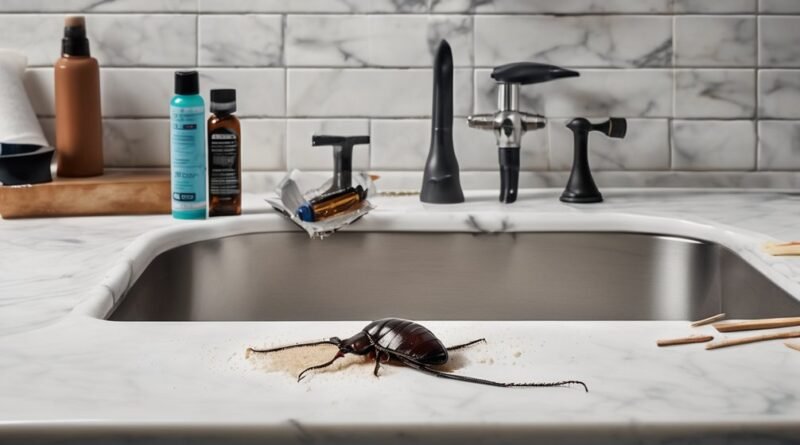
The fastest way to kill a cockroach you can see is direct contact with an insecticide spray, a solution of dish soap and water, or physical crushing. For the infestation behind it, you need gel baits, boric acid dust, and consistent sanitation targeting harborage areas, not just the one roach on your countertop.
Killing the roach in front of you is the easy part. The harder problem is the colony you cannot see. Cockroaches reproduce rapidly, hide inside walls and furniture, and avoid open areas until populations grow large enough to crowd them out. This guide covers every method that works, from immediate kill approaches to long-term treatment strategies, organized by situation so you can match the right tool to the cockroach problem in front of you.
Key Takeaways
Before going further, here is a quick summary of what this guide covers:
- Identify the species first, because German cockroaches, American cockroaches, and brown-banded roaches each respond to different treatment placements and methods.
- Gel baits and boric acid reach hidden populations inside walls and harborage areas that contact sprays and foggers cannot.
- Never apply contact spray near gel bait stations, because the repellent compounds in sprays cause roaches to avoid bait, making both treatments ineffective.
- Sanitation is not optional. Food residue, moisture, and clutter outcompete any treatment and sustain infestations regardless of how many products you use.
- Monitor with sticky traps weekly and call a professional if roach activity does not decline within two weeks of consistent treatment.
Why Getting This Right Matters
Cockroaches carry more than 30 types of bacteria, including E. coli and Salmonella, and contaminate food, dishes, countertops, and prep surfaces as they forage. Their droppings, shed skins, and saliva release allergen proteins that trigger asthma attacks and allergic reactions, particularly in children. Cockroach allergens are present in roughly 63% of urban homes, which means an infestation is not just a hygiene issue. It is a persistent health risk for everyone in the house.
Seeing one roach during daylight is a sign the population has grown large enough to push individuals out of harborage into open areas. A single German cockroach female can produce hundreds of offspring per year under warm, humid conditions. Acting at the first sign is the difference between a targeted treatment and a months-long extermination process.
Identify the Species Before Treating
The single most common reason roach treatments fail is misidentification. Different species have different harborage preferences, different responses to bait products, and different entry routes. Treating an American cockroach problem the same way you would treat a German roach infestation produces poor results from both approaches.
Size, color, and the location where you are seeing activity narrow down the species quickly. Here is how the four most common household species break down:
- German cockroaches are 0.5 to 0.6 inches long, light brown with two dark parallel stripes behind the head, and are almost exclusively indoor insects. They concentrate in kitchens and bathrooms near moisture and food. This species responds best to gel baits and crack-and-crevice dust applications. The reason German cockroaches are so hard to kill is their rapid breeding cycle and tendency to nest deep inside wall voids and appliances.
- American cockroaches are reddish-brown, up to 3 inches long, with yellowish markings behind the head and fully developed wings. They are more commonly found outdoors and in basements, sewers, and large commercial buildings. Treatment focuses on perimeter barriers, sealing openings, and eliminating moisture sources rather than indoor bait placement.
- Brown-banded cockroaches are approximately 0.5 inches with distinctive yellow bands across their wings and abdomen. Unlike other species, they favor dry, elevated locations such as inside furniture, on wall shelving, behind picture frames, and near electronics, rather than moisture-heavy areas. Vacuuming, residual sprays, and light bait placements in cabinets and electronics work best for this species.
- Smoky-brown cockroaches are mahogany-colored, about 1 to 1.5 inches, and primarily outdoor feeders. They enter homes through gaps around doors and windows when populations grow large. Trimming vegetation from exterior walls and treating the perimeter addresses the source. Heavy indoor infestations in this species usually indicate a structural problem that warrants professional treatment.
Immediate Methods to Kill a Cockroach
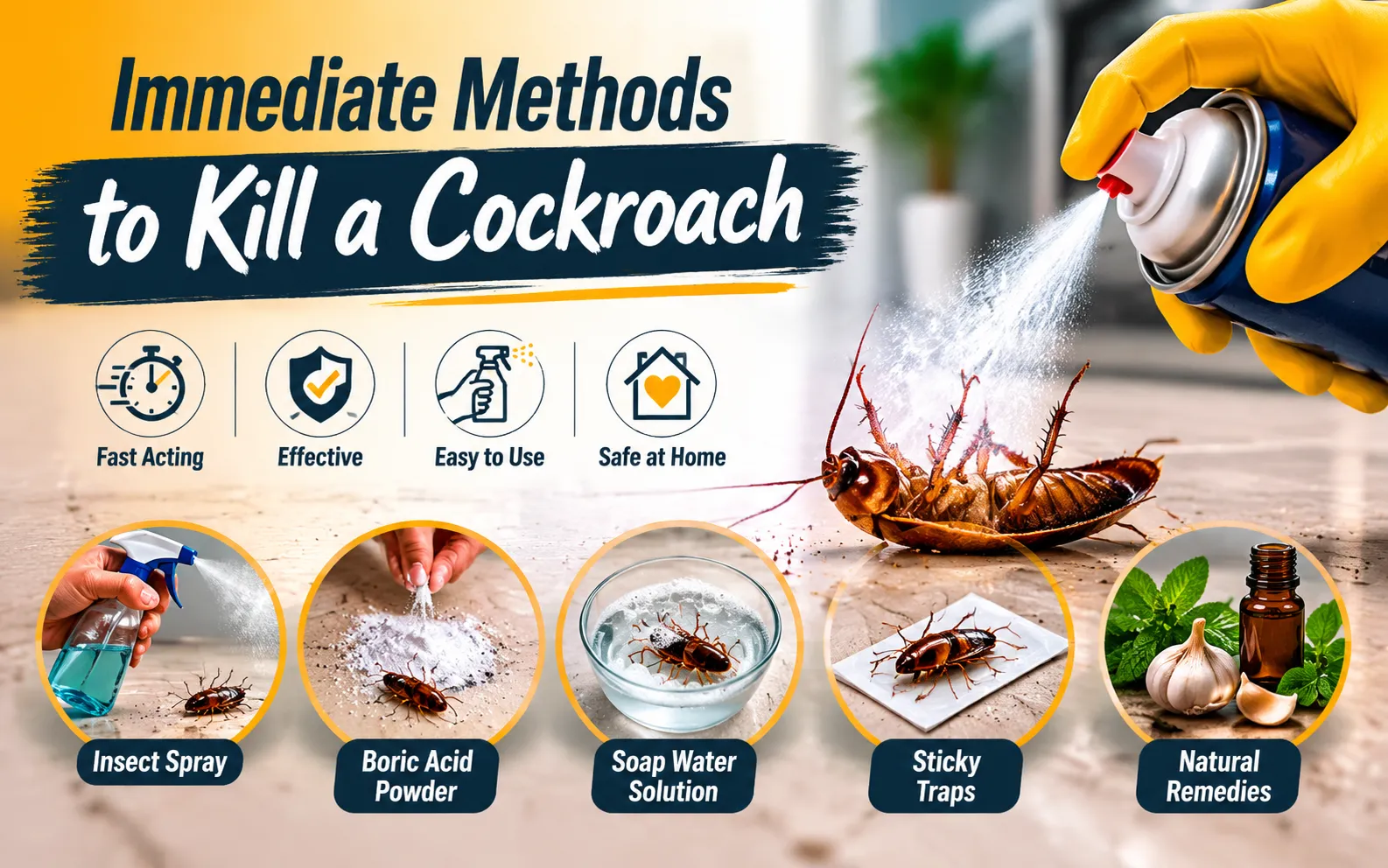
When a roach is visible and you need a fast kill, several approaches work reliably without chemical products. These are not substitutes for treating the colony, but they handle the immediate problem while you prepare a broader treatment plan.
Soap and Water
A spray bottle filled with dish soap and water is one of the most effective immediate-kill methods available in any room of the house. The soapy solution coats the cockroach’s body and blocks the small pores it uses to breathe, causing suffocation within minutes. This works on any species, leaves no chemical residue on countertops or food preparation surfaces, and is completely safe around pets and children. The limitation is that it requires direct contact and does nothing for the colony in the walls and furniture you cannot reach.
Contact Insecticide Sprays
Contact sprays containing cypermethrin or imiprothrin kill roaches within seconds of direct application. They are most useful for quick knockdown of visible insects during an active infestation and for treating crack-and-crevice areas where roaches travel. Apply at the recommended distance stated on the label, avoid saturating surfaces, and never spray near gel bait stations. Overusing contact sprays is one of the most common mistakes homeowners make, as it pushes roaches deeper into harborage areas, triggers avoidance behavior, and can contribute to resistance over time. Contact sprays kill the insects they reach, but they do not penetrate the wall voids, hollow furniture bodies, or deep crevices where colonies actually live.
What Not to Use
Foggers, sometimes called bug bombs, are widely sold for cockroach control but produce poor results in most real-world infestation scenarios. Fogger chemicals settle on open surfaces but do not penetrate wall voids, the interior of appliances, or the tight crevices where cockroaches spend most of their time. Studies consistently find that foggers cause roaches to scatter and redistribute rather than eliminating the colony. Bleach applied to surfaces kills bacteria but has no lasting residual effect on cockroaches and is corrosive to many surfaces. Neither foggers nor bleach should be a primary treatment method for a cockroach problem of any scale.
How to Kill Hidden Cockroach Colonies
The roaches you can see represent a fraction of the population. The majority of any infestation lives inside walls, inside furniture, beneath appliances, and in other harborage areas that surface-level treatments never reach. Getting the colony requires products that cockroaches carry back to their nesting sites or that remain effective in the locations where roaches travel and rest.
Gel Baits
Gel baits are the most effective treatment available for German cockroach infestations and work well against most indoor species. Products like Advion, Maxforce, and Combat use a slow-acting toxicant that allows a roach to return to the harborage area before dying, where other roaches consume the body and transfer the poison through the colony. Place pea-sized dots along baseboards, under sinks, behind appliances, inside cabinet hinges, and near any area where droppings indicate activity. Do not place bait in open floors or high-traffic areas where it will be disturbed. Refresh bait every one to two weeks or immediately after cleaning. For a full comparison of the best gel bait products and placement strategies, the natural and chemical cockroach extermination methods guide covers both options side by side.
Boric Acid
Boric acid applied in thin layers inside wall voids, behind furniture, beneath appliances, and along the interior of baseboards provides residual control that continues working for weeks after application. It works by damaging the cockroach’s exoskeleton and digestive system on contact. Thin layers are essential, as thick dustings are visible to roaches and cause avoidance. Use a hand duster for precise, low-volume application in crevices and wall openings. Keep boric acid dry; moisture deactivates it. Keep it away from food preparation surfaces, pets, and children. Boric acid is particularly effective in areas like under refrigerators and inside wall voids where gel bait placement is impractical.
Diatomaceous Earth
Diatomaceous earth works mechanically rather than chemically, cutting the cockroach’s exoskeleton and causing dehydration. It is non-toxic to humans and pets when food-grade product is used as directed, making it the preferred dust treatment for bedrooms, living areas, and anywhere chemical dust is not appropriate. Apply in thin layers along baseboards, beneath appliances, and under the edges of furniture. Like boric acid, moisture deactivates it and thick applications deter roaches rather than killing them. Diatomaceous earth works more slowly than chemical dusts but provides long-lasting residual control in dry conditions.
Quick Reference: Match the Method to the Situation
Use this breakdown to choose the right treatment for the infestation in front of you:
- Single visible roach, no other signs: Soap and water spray or direct contact insecticide. Monitor with a sticky trap for one week to confirm no further activity.
- Droppings found near appliances or under sinks: Gel bait placed at the dropping concentration points. This is the core harborage, so place gel bait here first before treating other areas.
- Droppings in multiple rooms, musty odor: Gel bait at all hotspots combined with boric acid dust in wall voids. Sanitation overhaul required. Consider professional inspection.
- Roaches in furniture, shelving, or electronics: Likely brown-banded species. Vacuuming plus residual spray and bait inside furniture and cabinet bodies.
- Large reddish-brown roaches from drains or basement: American cockroach. Perimeter treatment, drain covers, and sealing openings at foundation level.
- Daytime sightings in open areas: The colony is severely overcrowded. Call a professional pest control service because this level of infestation is beyond what most DIY approaches can eliminate quickly enough.
Sanitation: What Makes or Breaks Every Treatment
No treatment sustains results in a home that still offers cockroaches reliable food, water, and shelter. Sanitation is the foundation that every other method depends on. A gel bait placed in a kitchen full of crumbs and open food sources will be ignored because roaches have easier options. Boric acid dust in a cluttered basement does nothing if the roaches have a dozen other harborage options nearby.
The most important sanitation habits for cockroach control are:
- Wipe countertops, stovetops, and appliance surfaces nightly to remove grease and food residue.
- Store all food, including pet food, in sealed airtight containers. Roaches chew through cardboard and thin plastic bags with ease.
- Empty garbage daily and use bins with tight-fitting lids. Organic waste left overnight in kitchen bins is one of the primary food sources sustaining indoor cockroach colonies.
- Wash or soak dishes in soapy water rather than leaving them dry and accessible overnight.
- Fix all plumbing leaks under sinks and behind appliances. Cockroaches can survive weeks without food but only days without water.
- Declutter areas where roaches hide. Cardboard boxes, stacked paper, excess fabric, and cluttered storage in basements, garages, and closets all serve as harborage and nesting material.
- Vacuum along baseboards and behind appliances weekly to remove droppings, shed skins, and egg cases before they contribute to the allergen load or attract more roaches through pheromone signals.
Sealing Entry Points and Preventing Reinfestation
Killing the current infestation means nothing if new roaches enter freely from outside or from neighboring apartment units. Physical exclusion is the most durable long-term prevention measure because it removes the access route entirely rather than relying on ongoing chemical maintenance.
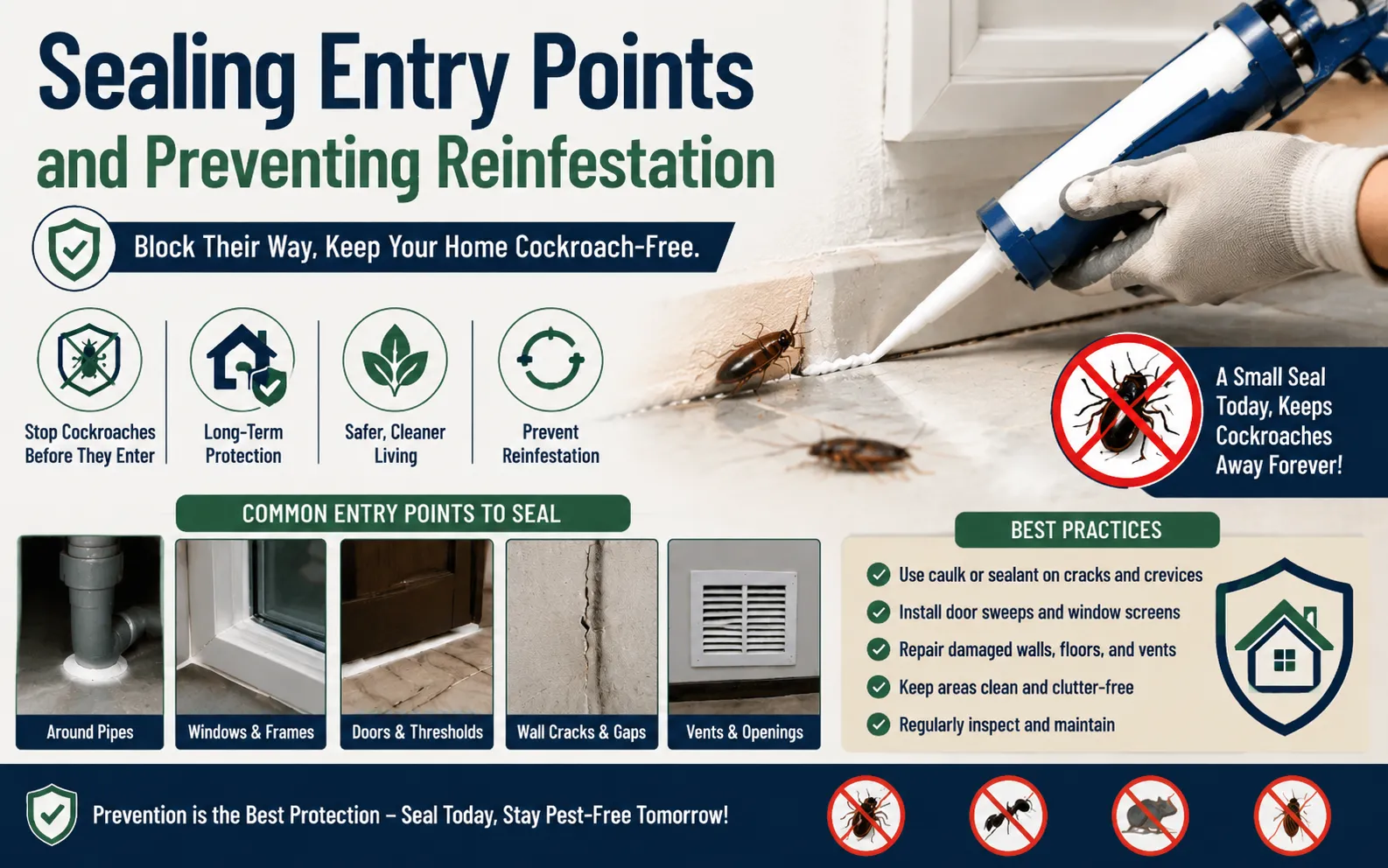
Work through the home systematically with caulk, steel wool, and copper mesh:
- Seal all cracks along baseboards, around door and window frames, and where walls meet floors.
- Pack steel wool or copper mesh around pipe and conduit penetrations before caulking over them. Cockroaches, unlike rodents, do not gnaw through mesh, but they will squeeze through gaps around unsealed pipes with ease.
- Add door sweeps to exterior doors and any interior doors connecting to basements or utility areas.
- Check and replace torn window and vent screens, paying attention to ground-floor vents and gaps around air conditioning units.
- Seal gaps around electrical outlets on exterior walls, which often connect directly to wall voids used as travel routes by roaches moving through the building structure.
For apartment-dwelling homeowners, structural exclusion alone is rarely sufficient because roaches enter through shared plumbing chases and wall voids that individual units cannot seal. Coordinating treatment with neighbors and building management produces far better results than treating one unit in isolation. The apartment-specific cockroach elimination guide covers the particular challenges and approaches that apply in multi-unit housing situations.
Monitoring Progress and When to Call a Professional
Monitoring tells you whether treatment is working and where to adjust placement before the infestation has a chance to rebound. Sticky traps placed at the locations where you found the heaviest dropping concentrations serve as a weekly indicator of roach activity without requiring you to see live insects.
Check traps every seven days and note whether capture numbers are declining, holding steady, or increasing. Declining numbers with no new droppings or egg cases in the treated areas indicate effective treatment. Steady or increasing captures after two weeks of consistent gel bait and sanitation indicate either that the harborage area has not been reached, that bait placement is wrong, or that the infestation is too large for DIY methods to handle alone.
When to Call a Pest Control Professional
Contact a licensed exterminator if any of the following apply:
- Roaches appear in open areas during daylight hours, which signals severe overcrowding in the colony.
- Droppings and egg cases are found in multiple rooms simultaneously, indicating the infestation has spread beyond a contained harborage zone.
- Activity does not visibly decline after two full weeks of consistent gel bait, boric acid, and sanitation treatment.
- You are finding egg cases in furniture, wall voids, and multiple locations throughout the property, confirming active breeding is outpacing treatment.
- Roaches are returning persistently in an apartment building despite individual unit treatment.
Professional treatments include insect growth regulators that disrupt the cockroach life cycle at the nymph stage, targeted application inside wall voids that DIY products rarely reach effectively, and follow-up inspections that confirm whether the colony has been eliminated or simply displaced. For situations where chemical-free approaches are preferred, the best natural cockroach extermination methods covers non-chemical options that can be combined with professional treatment or used independently for mild infestations.
Frequently Asked Questions
What kills a cockroach instantly?
Direct contact with an insecticide spray containing cypermethrin or imiprothrin kills cockroaches within seconds of application. A dish soap and water solution applied directly to the roach suffocates it within a few minutes by blocking its breathing pores. Physical crushing is also immediately effective. None of these instant-kill methods eliminate the colony, however, which requires gel baits, boric acid dust, or professional treatment to address the population living inside walls and harborage areas.
Does bleach kill cockroaches?
Bleach will kill a cockroach if it comes into direct contact with the insect in concentrated enough form. However, bleach has no residual effect, damages surfaces, and produces harmful fumes in enclosed spaces. It is not an effective cockroach treatment because it cannot reach the hidden areas where colonies live and does not remain active once dried. Bleach is useful for disinfecting surfaces contaminated by cockroach droppings after the infestation is treated, but it should not be used as a primary cockroach control method.
Will dish soap and water kill cockroaches?
Yes. A soap-and-water spray solution kills cockroaches on contact by coating their bodies and blocking the small openings they use to breathe. It is safe to use on countertops, near food preparation areas, and around children and pets. The limitation is that it requires direct contact with each individual roach and has no residual effect, making it useful for visible insects only rather than for treating the hidden colony.
Why do cockroaches keep coming back after treatment?
The most common reasons are incomplete treatment of harborage areas, ongoing food and moisture sources competing with bait, and continuous entry through unsealed cracks, gaps, and plumbing openings. In apartment buildings, roaches often reenter from neighboring units through shared wall voids and pipe chases even after a single unit is treated successfully. Effective long-term control requires treating the colony rather than individual insects, sealing all entry points, and removing the food, water, and shelter conditions that made the home attractive in the first place.
Is boric acid or diatomaceous earth better for cockroaches?
Both work well in different situations. Boric acid acts faster and penetrates the digestive system as well as the exoskeleton, making it more effective in areas with confirmed heavy activity. Diatomaceous earth is the safer option for bedrooms, homes with pets, and areas where chemical products are not appropriate, working mechanically without chemical toxicity. In practice, using boric acid in utility areas, wall voids, and behind appliances while using diatomaceous earth in living spaces and bedrooms gives you the benefits of both products without the trade-offs of either.
How long does it take to get rid of cockroaches?
For a small, early-stage infestation, consistent gel bait and sanitation typically produce visible results within one to two weeks. Full elimination of a well-established infestation, particularly German cockroaches in a kitchen, typically takes four to six weeks to account for egg cases that hatch after initial treatment. Continuing treatment beyond the point where roaches are no longer visible is important because newly hatched nymphs become active two to four weeks after the adults are eliminated, and a second treatment cycle is usually required to prevent the infestation from rebuilding from surviving egg cases.
{
“@context”: “https://schema.org”,
“@type”: “Article”,
“headline”: “What Kills a Cockroach Instantly: Fast Methods and Long-Term Solutions”,
“description”: “Learn what kills cockroaches instantly, whether bleach or dish soap works, why roaches keep coming back after treatment, and how long it takes to fully eliminate an infestation.”,
“url”: “https://cockroachcare.com/how-to-kill-a-cockroach/”,
“image”: {
“@type”: “ImageObject”,
“url”: “https://cockroachcare.com/wp-content/uploads/how-to-kill-a-cockroach.jpg”,
“width”: 1200,
“height”: 630
},
“author”: {
“@type”: “Organization”,
“name”: “CockroachCare”,
“url”: “https://cockroachcare.com/”
},
“publisher”: {
“@type”: “Organization”,
“name”: “CockroachCare”,
“url”: “https://cockroachcare.com/”,
“logo”: {
“@type”: “ImageObject”,
“url”: “https://cockroachcare.com/wp-content/uploads/cockroachcare-logo.png”,
“width”: 300,
“height”: 60
}
},
“mainEntityOfPage”: {
“@type”: “WebPage”,
“@id”: “https://cockroachcare.com/how-to-kill-a-cockroach/”
},
“about”: [
{
“@type”: “Thing”,
“name”: “Cockroach Extermination”
},
{
“@type”: “Thing”,
“name”: “Pest Control”
},
{
“@type”: “Thing”,
“name”: “DIY Insect Control”
}
],
“keywords”: [
“what kills cockroaches instantly”,
“how to kill a cockroach”,
“does bleach kill cockroaches”,
“dish soap cockroach spray”,
“boric acid vs diatomaceous earth cockroaches”,
“how long to get rid of cockroaches”,
“cockroach treatment”
],
“articleSection”: “Treatment & Control”,
“inLanguage”: “en-US”
}
{
“@context”: “https://schema.org”,
“@type”: “HowTo”,
“name”: “How to Kill Cockroaches: Instant Methods and Full Elimination”,
“description”: “A step-by-step guide to killing cockroaches immediately, treating the hidden colony, and preventing them from coming back.”,
“url”: “https://cockroachcare.com/how-to-kill-a-cockroach/”,
“image”: {
“@type”: “ImageObject”,
“url”: “https://cockroachcare.com/wp-content/uploads/how-to-kill-a-cockroach.jpg”,
“width”: 1200,
“height”: 630
},
“totalTime”: “P4W”,
“estimatedCost”: {
“@type”: “MonetaryAmount”,
“currency”: “USD”,
“value”: “15-50”
},
“supply”: [
{
“@type”: “HowToSupply”,
“name”: “Insecticide spray (cypermethrin or imiprothrin-based)”
},
{
“@type”: “HowToSupply”,
“name”: “Dish soap and water solution”
},
{
“@type”: “HowToSupply”,
“name”: “Gel bait (e.g., Advion or Vendetta)”
},
{
“@type”: “HowToSupply”,
“name”: “Boric acid dust”
},
{
“@type”: “HowToSupply”,
“name”: “Diatomaceous earth (food-grade)”
},
{
“@type”: “HowToSupply”,
“name”: “Caulk or expanding foam for sealing gaps”
}
],
“tool”: [
{
“@type”: “HowToTool”,
“name”: “Spray bottle”
},
{
“@type”: “HowToTool”,
“name”: “Duster or puffer bottle for powder application”
},
{
“@type”: “HowToTool”,
“name”: “Flashlight for inspecting harborage areas”
},
{
“@type”: “HowToTool”,
“name”: “Caulking gun”
}
],
“step”: [
{
“@type”: “HowToStep”,
“position”: 1,
“name”: “Kill visible cockroaches on contact”,
“text”: “Apply an insecticide spray containing cypermethrin or imiprothrin directly onto any visible cockroach. This kills the insect within seconds. As an alternative, spray a dish soap and water solution directly onto the roach to suffocate it within a few minutes by blocking its breathing pores. Physical crushing is also immediately effective.”,
“url”: “https://cockroachcare.com/how-to-kill-a-cockroach/#step-1”
},
{
“@type”: “HowToStep”,
“position”: 2,
“name”: “Locate and inspect all harborage areas”,
“text”: “Use a flashlight to inspect behind appliances, under sinks, inside cabinet hinges, along wall-floor junctions, and around plumbing entry points. These are the areas where cockroach colonies live and breed. Note any droppings, egg cases, or shed skins as evidence of activity.”,
“url”: “https://cockroachcare.com/how-to-kill-a-cockroach/#step-2”
},
{
“@type”: “HowToStep”,
“position”: 3,
“name”: “Apply gel bait in harborage zones”,
“text”: “Place small pea-sized dots of gel bait in areas with confirmed cockroach activity: inside cabinet hinges, under appliances, along the back wall of cabinets, and near plumbing. Gel bait spreads through the colony as roaches consume it and return to their harborage. Do not spray insecticide near bait placements as it will repel roaches away from the bait.”,
“url”: “https://cockroachcare.com/how-to-kill-a-cockroach/#step-3”
},
{
“@type”: “HowToStep”,
“position”: 4,
“name”: “Apply boric acid or diatomaceous earth in wall voids and utility areas”,
“text”: “Lightly dust boric acid behind appliances, inside wall voids, under the refrigerator motor, and in utility areas with confirmed activity. Use diatomaceous earth in bedrooms, living spaces, and any area where chemical products are not appropriate. Apply thin layers only — over-application causes roaches to avoid the treated area.”,
“url”: “https://cockroachcare.com/how-to-kill-a-cockroach/#step-4”
},
{
“@type”: “HowToStep”,
“position”: 5,
“name”: “Seal all entry points”,
“text”: “Use caulk or expanding foam to seal gaps around plumbing pipes, cracks along baseboards, holes in cabinet backs, and gaps around electrical outlets. In apartments, pay particular attention to pipe chases and shared wall voids that connect to neighboring units, as these are the primary routes cockroaches use to reinfest a treated unit.”,
“url”: “https://cockroachcare.com/how-to-kill-a-cockroach/#step-5”
},
{
“@type”: “HowToStep”,
“position”: 6,
“name”: “Remove food, water, and shelter conditions”,
“text”: “Store food in sealed containers, fix any dripping faucets or leaking pipes, empty pet food bowls overnight, and declutter areas like cardboard boxes that provide shelter. Cockroaches return to environments that offer food, moisture, and hiding places even after treatment. Removing these conditions is what makes treatment permanent rather than temporary.”,
“url”: “https://cockroachcare.com/how-to-kill-a-cockroach/#step-6”
},
{
“@type”: “HowToStep”,
“position”: 7,
“name”: “Monitor and perform a second treatment cycle”,
“text”: “Check bait placements every 3 to 5 days and replenish as needed. Expect visible results within one to two weeks for small infestations. For heavy infestations — especially German cockroaches in a kitchen — allow four to six weeks for full elimination. Perform a second round of treatment two to four weeks after initial results to address newly hatched nymphs from egg cases that survived the first treatment.”,
“url”: “https://cockroachcare.com/how-to-kill-a-cockroach/#step-7”
}
]
}
{
“@context”: “https://schema.org”,
“@type”: “FAQPage”,
“mainEntity”: [
{
“@type”: “Question”,
“name”: “What kills a cockroach instantly?”,
“acceptedAnswer”: {
“@type”: “Answer”,
“text”: “Direct contact with an insecticide spray containing cypermethrin or imiprothrin kills cockroaches within seconds of application. A dish soap and water solution applied directly to the roach suffocates it within a few minutes by blocking its breathing pores. Physical crushing is also immediately effective. None of these instant-kill methods eliminate the colony, however, which requires gel baits, boric acid dust, or professional treatment to address the population living inside walls and harborage areas.”
}
},
{
“@type”: “Question”,
“name”: “Does bleach kill cockroaches?”,
“acceptedAnswer”: {
“@type”: “Answer”,
“text”: “Bleach will kill a cockroach if it comes into direct contact with the insect in concentrated enough form. However, bleach has no residual effect, damages surfaces, and produces harmful fumes in enclosed spaces. It is not an effective cockroach treatment because it cannot reach the hidden areas where colonies live and does not remain active once dried. Bleach is useful for disinfecting surfaces contaminated by cockroach droppings after the infestation is treated, but it should not be used as a primary cockroach control method.”
}
},
{
“@type”: “Question”,
“name”: “Will dish soap and water kill cockroaches?”,
“acceptedAnswer”: {
“@type”: “Answer”,
“text”: “Yes. A soap-and-water spray solution kills cockroaches on contact by coating their bodies and blocking the small openings they use to breathe. It is safe to use on countertops, near food preparation areas, and around children and pets. The limitation is that it requires direct contact with each individual roach and has no residual effect, making it useful for visible insects only rather than for treating the hidden colony.”
}
},
{
“@type”: “Question”,
“name”: “Why do cockroaches keep coming back after treatment?”,
“acceptedAnswer”: {
“@type”: “Answer”,
“text”: “The most common reasons are incomplete treatment of harborage areas, ongoing food and moisture sources competing with bait, and continuous entry through unsealed cracks, gaps, and plumbing openings. In apartment buildings, roaches often reenter from neighboring units through shared wall voids and pipe chases even after a single unit is treated successfully. Effective long-term control requires treating the colony rather than individual insects, sealing all entry points, and removing the food, water, and shelter conditions that made the home attractive in the first place.”
}
},
{
“@type”: “Question”,
“name”: “Is boric acid or diatomaceous earth better for cockroaches?”,
“acceptedAnswer”: {
“@type”: “Answer”,
“text”: “Both work well in different situations. Boric acid acts faster and penetrates the digestive system as well as the exoskeleton, making it more effective in areas with confirmed heavy activity. Diatomaceous earth is the safer option for bedrooms, homes with pets, and areas where chemical products are not appropriate, working mechanically without chemical toxicity. In practice, using boric acid in utility areas, wall voids, and behind appliances while using diatomaceous earth in living spaces and bedrooms gives you the benefits of both products without the trade-offs of either.”
}
},
{
“@type”: “Question”,
“name”: “How long does it take to get rid of cockroaches?”,
“acceptedAnswer”: {
“@type”: “Answer”,
“text”: “For a small, early-stage infestation, consistent gel bait and sanitation typically produce visible results within one to two weeks. Full elimination of a well-established infestation, particularly German cockroaches in a kitchen, typically takes four to six weeks to account for egg cases that hatch after initial treatment. Continuing treatment beyond the point where roaches are no longer visible is important because newly hatched nymphs become active two to four weeks after the adults are eliminated, and a second treatment cycle is usually required to prevent the infestation from rebuilding from surviving egg cases.”
}
}
]
}
