
Signs of a Cockroach Infestation in Apartments
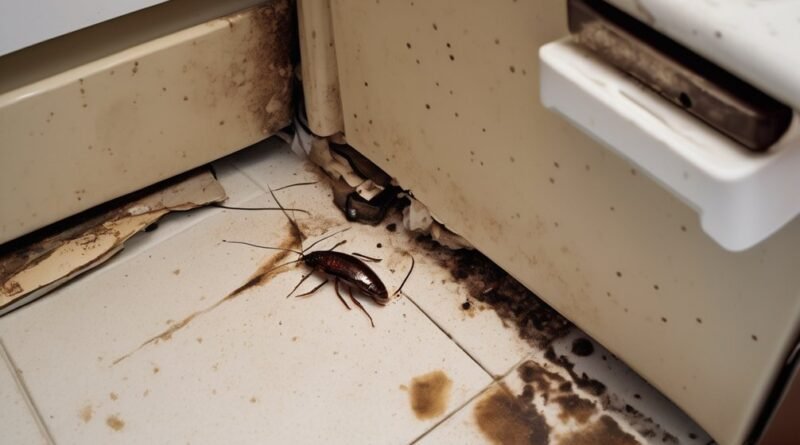
You’ll know you have a cockroach problem when you spot live roaches at night, find dark droppings that look like coffee grounds, and notice a distinct musty odor in your apartment. Check behind appliances and under sinks for brown egg cases and damaged food packages with chew marks. If you’re seeing roaches during daylight hours, you might be dealing with a serious infestation that needs immediate attention.
Spotting Live Roaches: What Their Activity Patterns Tell You
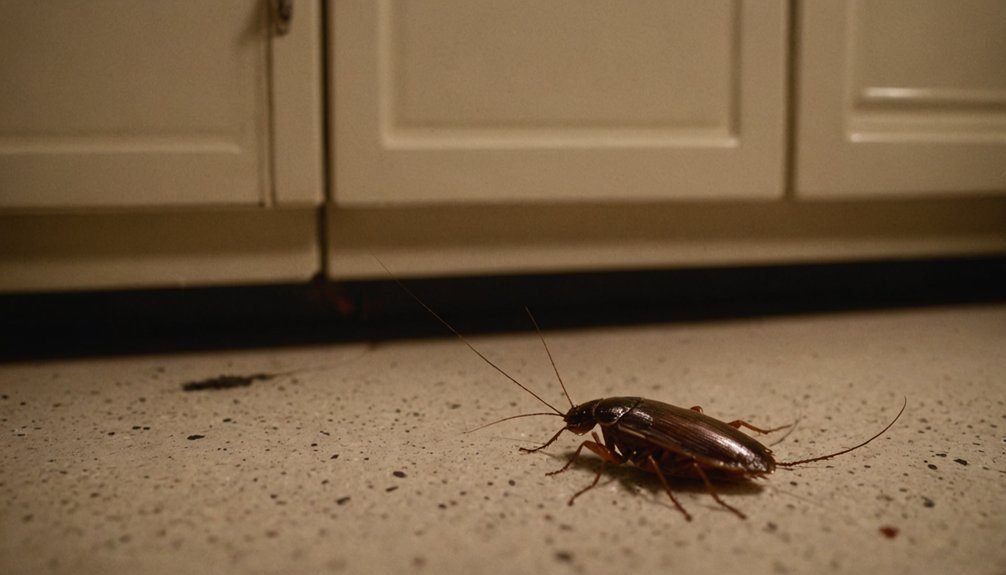
Three key behaviors define cockroach activity patterns: their nocturnal nature, light sensitivity, and seasonal fluctuations.
If you’re seeing roaches during daylight hours, it’s likely you’ve got a serious infestation where overcrowding forces them out of hiding.
You’ll notice most roach activity after dark when they emerge to search for food and water, especially in kitchens and behind appliances. Regular monitoring with sticky trap placement can help track their movement patterns.
Their movements become more frequent during warmer months, though indoor infestations remain active year-round due to stable temperatures.
Different species show varying patterns – German cockroaches might appear during daytime when heavily infested, while American cockroaches stick to nighttime activity.
If you hear rustling or clicking sounds at night, or notice quick movement when you flip on lights, you’re likely dealing with an active roach presence.
Identifying Droppings and Smear Marks Around Your Living Space
A telltale sign of cockroach activity lies in their distinctive droppings and smear marks throughout your living space.
You’ll find small, dark cylindrical pellets about 1-2mm long, resembling coffee grounds or black pepper. These droppings often cluster in areas where roaches frequently travel, such as cabinet corners, under sinks, and behind appliances. Regularly inspect utility areas and plumbing since roaches are attracted to water sources.
Fresh droppings appear brown and will smudge when touched, while older ones turn black.
If you spot irregular, dark stains along baseboards or in corners, you’re likely seeing roach smear marks. Unlike mouse droppings, which are larger and don’t smudge, cockroach waste has a unique texture and often shows ridges, particularly from larger specimens.
Check your pantry shelves and kitchen drawers carefully, as these are prime locations for roach evidence.
Detecting Characteristic Odors in Your Apartment
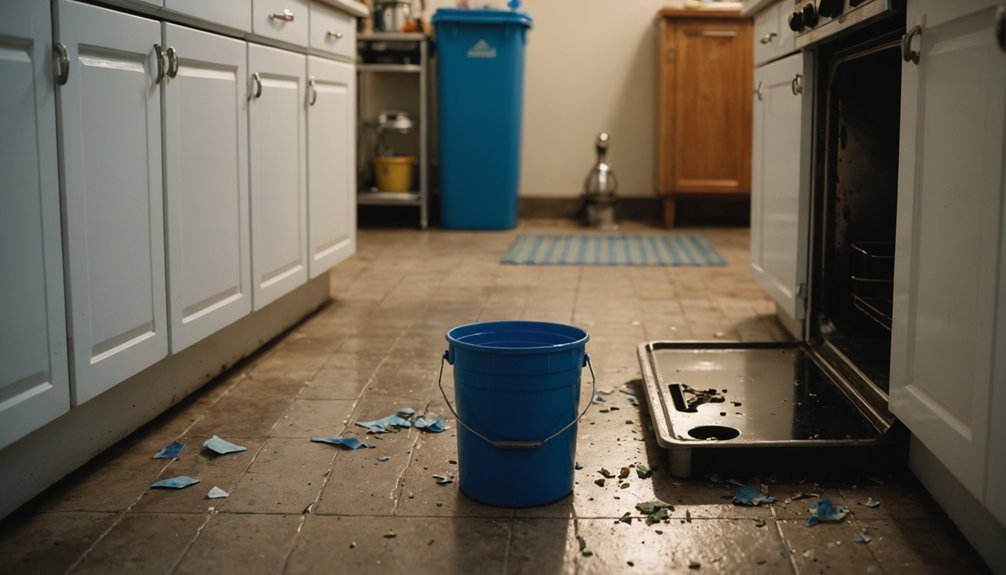
Ever noticed a musty, oily smell that won’t go away no matter how much you clean? That distinctive odor, similar to stale coffee grounds or wet cardboard, might be a telltale sign of cockroaches in your apartment. These pests release pheromones through their droppings and secretions, creating persistent smells that can spread throughout your living space. When roaches die, they produce oleic acid, which adds another layer to the unpleasant odor.
| Odor Characteristics | What It Means |
|---|---|
| Strong, penetrating smell | Large infestation likely |
| Oily, musty scent | Active roach presence |
| Stale coffee-like odor | Recent roach activity |
| Widespread smell | Infestation spreading |
The intensity of these odors often correlates with the size of the infestation, and you’ll typically notice them before seeing actual roaches. German cockroaches are particularly known for their strong pheromone scents, which can permeate furniture, walls, and even affect food taste.
Locating Evidence of Reproduction and Growth
While searching for signs of cockroach reproduction, you’ll need to focus on locating their distinctive egg cases, called oothecae, which serve as the most definitive evidence of an active infestation.
Look for brown, oval-shaped capsules measuring 8-10mm in length, typically hidden in dark, protected areas.
Cockroach egg cases appear as small brown, oval capsules, roughly the size of a fingernail, lurking in sheltered, dimly lit spaces.
Check warm, humid spots behind kitchen appliances and under sinks for German cockroach eggs, while examining basements and utility rooms for American and Oriental species.
You’ll find brown-banded cockroach eggs in drier, elevated locations near electronics or behind wall decorations.
Watch for increased nighttime roach activity, shed skins, and pepper-like droppings concentrated in specific areas.
Each egg case can contain up to 50 eggs depending on the cockroach species.
Use a flashlight to inspect cracks, crevices, and cabinet corners thoroughly, as these locations often harbor multiple egg cases and emerging nymphs.
Recognizing Property and Food Storage Damage

Once cockroaches invade your home, they’ll leave behind telltale signs of property and food storage damage that you can’t ignore.
You’ll notice a distinctive musty, oily odor that becomes stronger as the infestation grows, especially in warm, humid conditions where these pests thrive. These pests commonly build nests behind appliances where they congregate in large numbers.
- Look for dark brown or black smear marks on walls, baseboards, and surfaces near food storage areas – these are traces of cockroach secretions and feces.
- Check your food packages for chew marks, holes, or ragged edges where roaches have gnawed through to contaminate contents.
- Examine stored grains, cereals, and dried goods for unusual stains or textures caused by cockroach contact.
- Watch for damage beyond food items, including deteriorated wallpaper, damaged fabric, and compromised book bindings.
Understanding Where Roaches Hide and How They Enter
To effectively combat a cockroach infestation, you’ll need to understand where these resilient pests hide and how they enter your living space.
Your kitchen and bathroom are prime locations, where roaches seek moisture and food near appliances, under sinks, and inside cabinets. They’ll squeeze through tiny cracks around pipes, baseboards, and utility lines to access your apartment.
You’ll find these pests hiding in furniture, particularly under couches and inside cushions. They also exploit shared ventilation systems to move between units.
Watch for their presence in cluttered areas, especially piles of paper, cardboard, or clothing. Since roaches are nocturnal, they prefer dark, secluded spots during daylight hours, often laying their egg cases in protected locations behind furniture and appliances.
Frequently Asked Questions
How Long Can Cockroaches Survive Without Food and Water?
You’ll find that cockroaches can survive about one month without food, though larger species like American cockroaches can last up to three months.
Without water, they’re much more vulnerable – most species will die within a week, though American cockroaches might survive up to a month.
They’re incredibly resilient because they can lower their metabolic rates and scavenge almost anything, including non-food materials, to stay alive.
Can Cockroaches Climb up Smooth Surfaces Like Glass or Tiles?
Yes, most cockroaches can climb smooth surfaces like glass and tiles thanks to their specialized feet.
They’ve got tiny claws and suction cup-like structures called arolia, plus microscopic hairs that create friction pads. These adaptations help them grip and scale vertical surfaces with ease.
However, some species, like the Oriental cockroach, aren’t as good at climbing smooth surfaces due to their lack of friction pads.
What Natural Remedies Effectively Repel Cockroaches From Apartments?
You can effectively repel cockroaches using several natural remedies.
Mix peppermint or eucalyptus oil with water and spray around entry points.
Place bay leaves, cayenne pepper, or diatomaceous earth in problem areas.
Create a borax-sugar mixture as bait.
Use cotton balls soaked in lavender or neem oil near appliances and corners.
Apply soap and water solutions with essential oils to eliminate roach trails.
Do Ultrasonic Pest Repellers Work Against Cockroach Infestations?
Ultrasonic pest repellers aren’t reliably effective against cockroach infestations.
While lab studies show some impact at specific frequencies (40-75 kHz), commercial devices typically fall short.
You’ll face several limitations: roaches quickly adapt to the sound, signals can’t penetrate walls where roaches hide, and furniture blocks wave propagation.
You’re better off using proven methods like baits, professional treatments, and removing food sources for lasting cockroach control.
How Quickly Can Professional Pest Control Eliminate a Cockroach Infestation?
You’ll typically see complete cockroach elimination within 2 to 8 weeks after professional treatment.
The first 24-48 hours might show increased roach activity as they react to pesticides.
By week two, you’ll notice fewer adult roaches, though nymphs may remain.
Your timeline depends on infestation severity, treatment type, and proper follow-up care.
Severe cases often need the full 8 weeks for total elimination.
To learn all the signs and prevention strategies in detail, visit our guide on Cockroach Infestation Signs & Prevention Tips
Conclusion
You’ll need to act quickly if you spot any of these telltale signs of cockroach infestation in your apartment. Don’t wait for the problem to worsen – contact your property manager and a pest control professional immediately. Remember to document everything you find and maintain cleanliness while waiting for treatment. With proper intervention and prevention methods, you can reclaim your roach-free living space.
