
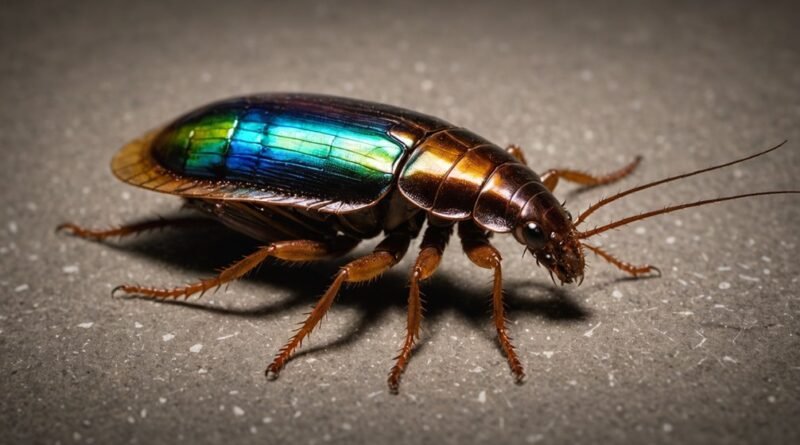
Can a Cockroach Live Without Its Head?
Yes, a cockroach can live without its head — and it’ll likely survive for about one to two weeks. Its decentralized nervous system lets its body keep functioning independently, while its open circulatory system seals the wound quickly. It can even breathe through spiracles in its thorax. Dehydration, not decapitation, is what ultimately kills it. There’s actually a lot more fascinating biology behind how this works.
Key Takeaways
- Yes, cockroaches can survive without their heads for several days to about a week, with some living up to a month in controlled conditions.
- Their decentralized nervous system allows segmental ganglia to independently control breathing and movement without brain signals.
- The open circulatory system quickly seals the neck wound, preventing fatal blood loss after decapitation.
- Dehydration is the primary cause of death, as headless cockroaches cannot drink water without a mouth.
- Cool, humid environments extend survival the longest, while heat and dry air accelerate dehydration and death.
Can a Cockroach Really Live Without Its Head?
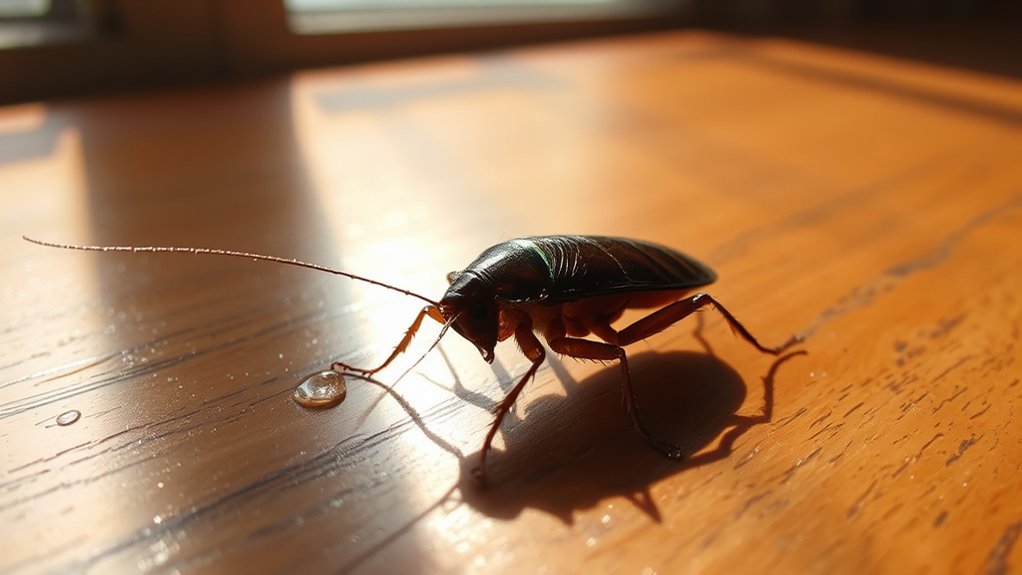
It sounds like something out of a horror movie, but cockroaches really can survive without their heads. This isn’t folklore or exaggeration — multiple pest and science sources confirm it, and observed headless cockroaches continue moving and showing basic activity after decapitation.
The survival window typically ranges from several days to about a week. Under cool, protected, or otherwise favorable conditions, some cockroaches have reportedly lasted up to a month. So when you hear that a cockroach can live without its head, the claim is biologically real, just not unlimited.
What you should understand is that “living without its head” means short-term survival, not normal functioning. The cockroach doesn’t collapse immediately after losing its head, but it can’t eat, drink, or sustain itself indefinitely.
Dehydration, starvation, or infection eventually ends things. The head loss itself isn’t what kills it — the body simply can’t hold on forever without it. This is partly possible because cockroaches breathe through spiracles in their body, small openings that deliver air directly to tissues without any involvement from the head.
Why a Cockroach’s Body Keeps Functioning After Decapitation
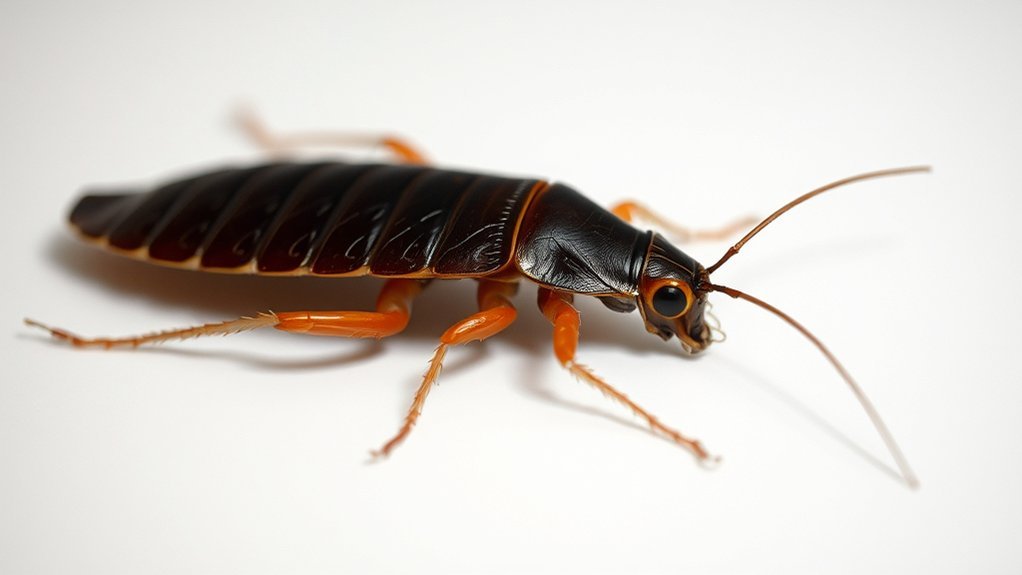
What makes this possible comes down to how a cockroach’s body is actually built.
Unlike mammals, cockroaches don’t rely on a single brain to run everything. Their nervous system distributes control across multiple ganglia throughout the body. Each segment handles its own basic functions, so removing the head doesn’t shut everything down at once.
| System | Why It Still Works |
|---|---|
| Nervous system | Segmental ganglia control movement independently |
| Circulation | Open system clots quickly, preventing fluid loss |
| Respiration | Spiracles along the thorax deliver oxygen directly |
| Motor function | Thoracic ganglia keep legs responding to stimuli |
You’re fundamentally looking at a creature built for distributed survival. Its spiracles breathe without the head, its hemolymph circulates at low pressure, and its ganglia keep legs moving. The body doesn’t fail immediately — it fails gradually, once dehydration and starvation make recovery impossible. In fact, cockroaches can tolerate weeks without food, making dehydration the true cause of death rather than the decapitation itself.
How Long Can a Headless Cockroach Actually Survive?
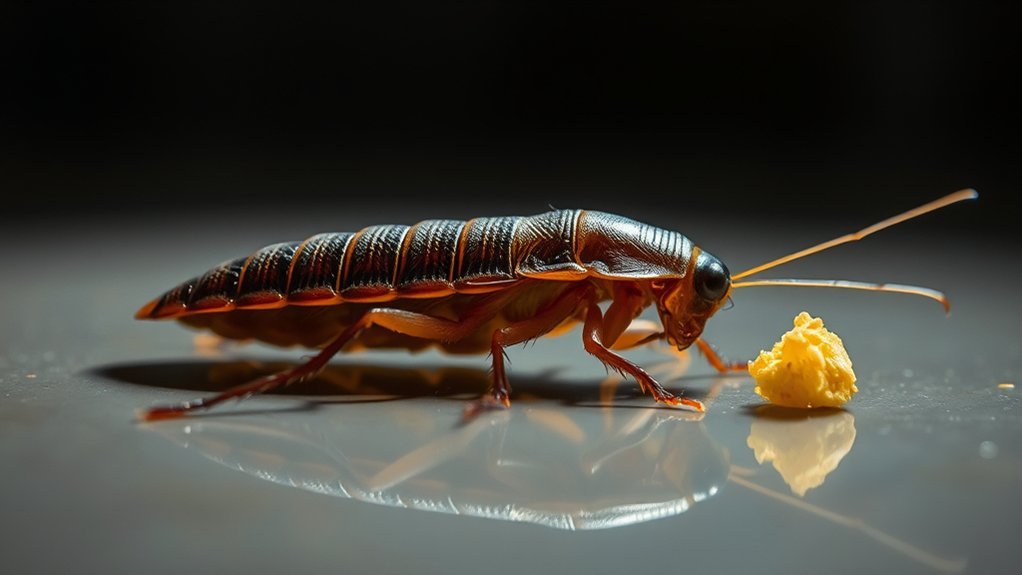
How long does a headless cockroach actually survive? Most sources agree on roughly one week, though documented cases stretch further depending on conditions.
Here’s what the research actually shows:
- Days to one week — the most common estimate, representing typical survival under standard conditions.
- One to two weeks — extended survival when wound sealing limits fluid loss and infection stays low.
- Several weeks to nearly a month — rare, older accounts involving highly controlled environments where dehydration was minimized.
You might assume the wound kills it instantly. It doesn’t. The real culprit is dehydration. Without a head, the cockroach can’t drink, and its tissues gradually dry out until normal function stops.
The real killer isn’t the wound — it’s dehydration. Without a head, a cockroach simply can’t drink.
Starvation plays a role too, but adult cockroaches tolerate food deprivation far longer than fluid loss.
Cockroaches breathe through spiracles along their body, meaning oxygen intake continues uninterrupted even after the head is removed.
For practical purposes, “about a week, sometimes longer” accurately captures what science and field observation consistently support.
Does Temperature or Humidity Affect a Cockroach’s Survival Time?
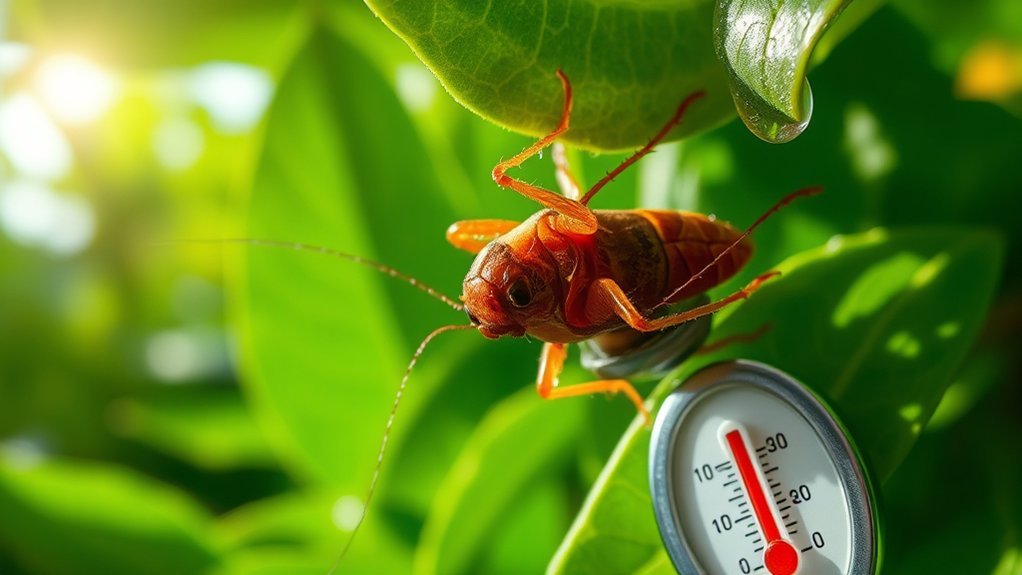
If you place a headless cockroach in a warm environment, its sped-up metabolism burns through energy reserves faster, cutting survival time short.
Humidity works differently—moist air slows water loss through the exoskeleton, giving the cockroach more time before dehydration finishes the job.
You’ll find that cool, humid conditions offer the longest window of survival, while hot, dry air is the fastest route to its death. Cockroaches can die within a week without water access, making moisture the critical factor in how long a headless specimen endures.
Temperature Affects Survival Rate
Whether a headless cockroach survives for hours or days doesn’t depend solely on the absence of its head—temperature and humidity play a surprisingly significant role in how long it can hold on.
Temperature directly shapes how quickly a cockroach’s remaining biological processes either slow down or collapse:
- Below 45°F, most species die within roughly 10 hours—cold doesn’t preserve them, it kills them.
- Above 115°F to 120°F, heat becomes lethal fast, especially when dryness accelerates dehydration.
- Between 70°F and 90°F, survival stretches longest because metabolism stays balanced.
You might assume cold would simply freeze a headless roach in time, but extreme temperatures—hot or cold—accelerate death rather than pause it.
The temperature range you live in genuinely determines how long that nightmare scenario lasts. Humidity is equally critical, as low humidity conditions can lead to dehydration and significantly reduce a headless cockroach’s already limited survival time.
Humidity Slows Dehydration
Temperature isn’t the only environmental factor shaping how long a headless cockroach survives—humidity matters just as much, and here’s why.
Cockroaches lose water through their cuticle and tracheal system, and dry air accelerates that loss dramatically. Without a head, the roach can’t drink, so whatever moisture remains in its body is all it has.
In dry conditions, most cockroaches die within about seven days without water. Raise the humidity, and that window stretches to roughly 10–14 days. High moisture in the air simply slows evaporative loss, buying the roach more time.
German cockroaches are especially vulnerable, often dying in under a week when conditions stay dry.
Ideal Conditions Extend Life
Both temperature and humidity shape how long a headless cockroach can survive, but cool conditions offer the biggest advantage. A cooler environment slows metabolism, reducing how quickly the body burns through its remaining resources. Warm, dry conditions accelerate tissue breakdown and moisture loss, cutting survival short.
Here’s what extreme conditions actually do:
- Freezing temperatures kill cockroaches within hours, sometimes under an hour at 14°F (-10°C).
- Cool, humid environments can push survival from a few days to nearly a month.
- Warm, dry rooms typically limit survival to about one week.
You’d think losing its head would instantly end a cockroach’s life, but the right conditions let it persist far longer than you’d expect.
Temperature and humidity are truly the deciding factors.
What Finally Kills a Headless Cockroach?
Although losing its head sounds like an instant death sentence, what actually kills a headless cockroach is dehydration. Without a mouth, it can’t drink, so its internal moisture reserves gradually run out. Most headless cockroaches die within one to two weeks, largely because they can no longer replace lost water.
A headless cockroach doesn’t die instantly — it slowly loses moisture until dehydration finishes the job within two weeks.
Starvation also plays a role. Since it can’t eat, its stored energy eventually runs out, though this typically takes longer than dehydration.
Infection adds another threat, as bacteria and fungi can enter through the open neck wound, especially in dirty or pathogen-rich environments.
Environmental conditions shape how quickly these factors take hold. Heat and low humidity speed up water loss, cutting survival time considerably. Cooler, more humid surroundings slow the process down.
Ultimately, what finishes a headless cockroach isn’t one single cause but a combination of water loss, depleted energy, and wound-related infection working together.
The Biology That Explains How a Cockroach Survives Without Its Head
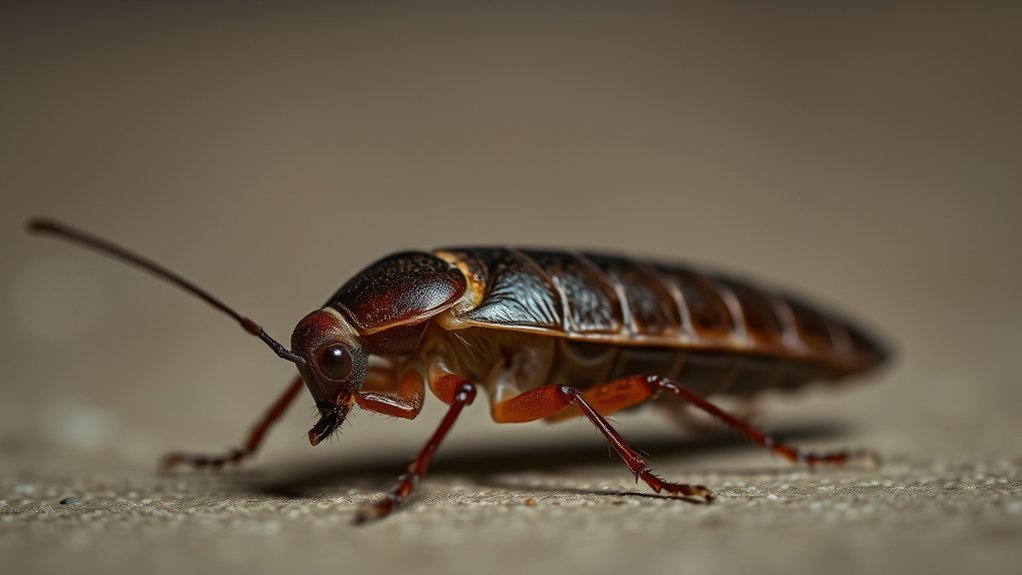
What keeps a headless cockroach alive isn’t luck or mystery—it’s anatomy. A cockroach’s body is built so differently from yours that losing its head doesn’t trigger the immediate collapse you’d expect.
Three biological systems work together to make this possible:
- Decentralized nervous system – Ganglia scattered throughout the body handle basic reflexes and leg movement without any signal from the brain.
- Open circulatory system – Low-pressure hemolymph slows blood loss, and the neck wound seals quickly, preventing rapid fatal bleeding.
- Tracheal respiration – Spiracles along the body deliver oxygen directly to tissues, so breathing never depended on the head at all.
You’re not watching something defy death—you’re watching an organism whose survival systems were never centralized in one place.
The cockroach doesn’t need its head to keep its body running, at least not right away.
Frequently Asked Questions
Can a Cockroach’s Severed Head Survive on Its Own After Removal?
Yes, a cockroach’s severed head can survive on its own, but you’re looking at only a few hours. You can extend it slightly by keeping it cool and moist, yet it’ll eventually die.
Which Cockroach Species Survives the Longest Without Its Head?
You’ll find that the American cockroach (Periplaneta americana) survives the longest without its head, lasting about a week typically, and potentially several weeks under controlled conditions that minimize infection and fluid loss.
Is a Headless Cockroach Still Considered a Danger to Humans?
Yes, a headless cockroach can still danger you. It’ll carry bacteria on its body for days, contaminating your food and surfaces, posing indirect health risks through allergens and harmful microorganisms rather than direct physical attacks.
Can a Headless Cockroach Still Reproduce or Lay Eggs?
You won’t see a headless cockroach reproduce normally, but if it already carried a fertilized egg case before decapitation, those eggs can still hatch. It can’t produce new fertilized eggs without its head.
Does the Headless Cockroach Feel Pain After Decapitation?
The headless cockroach likely doesn’t feel pain the way you’d experience it. Its body still reacts to stimuli through nociception, but that’s just a reflex—not conscious suffering, as its decentralized nervous system handles basic responses autonomously.
Conclusion
So now you’ve got a pretty wild picture of just how resilient cockroaches really are. They don’t need their heads to keep their bodies running for days or even weeks. Their decentralized nervous system, closed circulatory system, and ability to breathe through spiracles make them survival machines. It’s a strange biological reality, but it’s proof that nature’s built some creatures in ways that’ll genuinely surprise you.
