
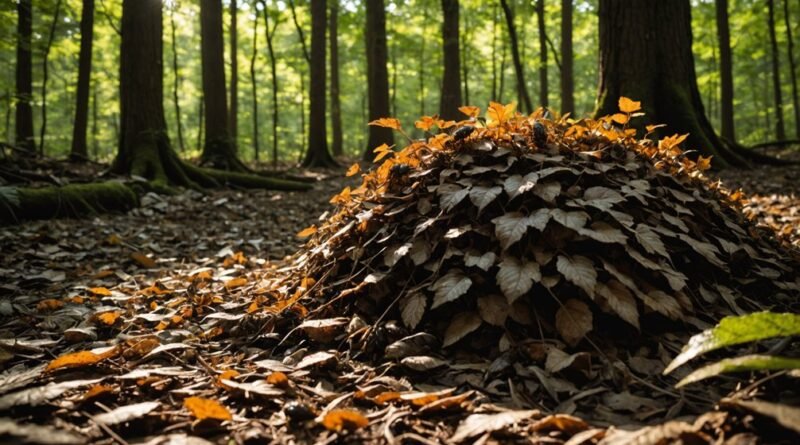
Why Do Cockroaches Exist? Their Role in Nature
Cockroaches exist because nature needs them. They break down dead leaves, wood, and decaying matter, recycling nutrients back into the soil. Their droppings act as natural fertilizer, and their burrowing improves soil drainage. They also feed dozens of predators — frogs, lizards, spiders, and birds — keeping food webs stable. You might be surprised to learn just how much these ancient insects quietly hold ecosystems together.
Key Takeaways
- Cockroaches are vital decomposers, breaking down dead organic matter into smaller particles that bacteria and fungi can further process, enriching soil health.
- Their droppings release nitrogen, phosphorus, and potassium into soil, acting as natural fertilizers that support plant growth and nutrient cycling.
- Cockroaches serve as high-protein prey for frogs, lizards, spiders, birds, and small mammals, stabilizing food webs across diverse ecosystems.
- Their rapid reproduction and protective egg cases ensure prey populations remain stable despite high predation rates, preventing food web collapse.
- Cockroaches contribute to plant pollination during flower visits, with documented roles in pollinating specific species like Mitrastemon yamamotoi in Japan.
Why Do Cockroaches Exist in Nature?
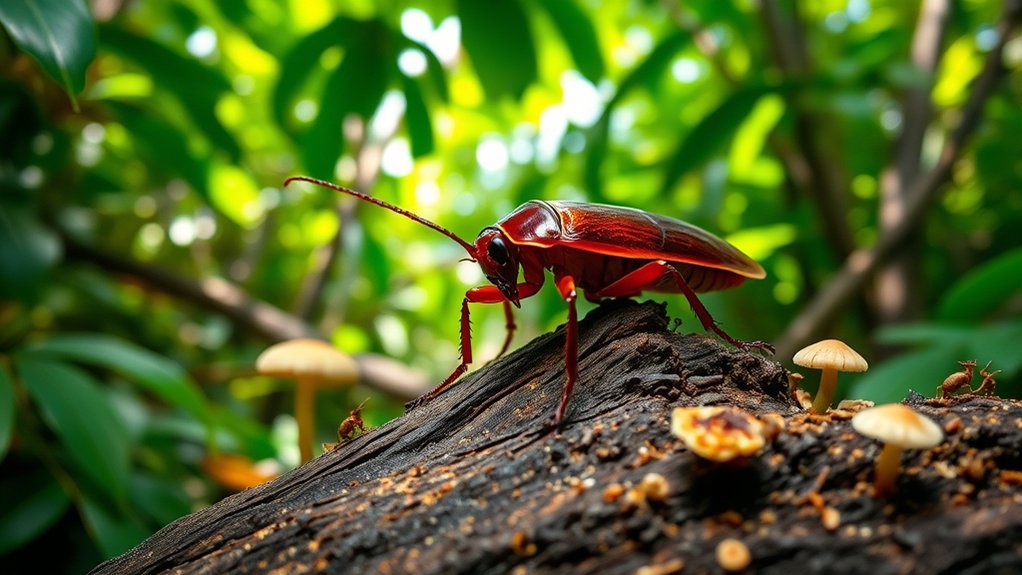
Cockroaches have roamed the Earth for roughly 300 million years, and their survival isn’t accidental. They’ve persisted because they’re remarkably adaptable, thriving in forests, caves, grasslands, soil, and human-modified environments alike.
Their broad diet is central to that success. They’ll consume leaf litter, rotting wood, fallen fruit, and decaying organic matter, which means they’re rarely left without a food source. When conditions shift, they adjust.
Reproduction reinforces their resilience. Populations rebound quickly after disturbances, whether from predation, habitat disruption, or environmental change. That rapid recovery keeps them stable across ecosystems.
You might assume cockroaches are simply pests, but the vast majority of species are wild and play active roles in nature. Their long evolutionary history reflects genuine ecological success, not just luck.
They’ve survived by filling stable niches that most other organisms overlook or can’t occupy as effectively. With roughly 4,600 described species, cockroaches inhabit an extraordinary range of environments, from tropical rainforests to areas above the Arctic Circle.
Why Are Cockroaches Called Nature’s Decomposers?
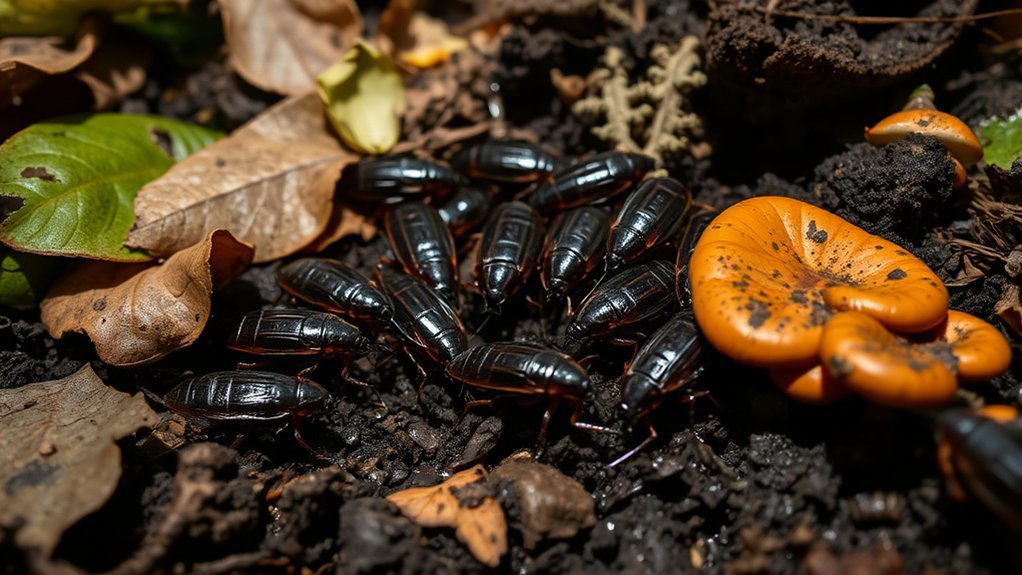
When you look at cockroaches in their natural habitats, you’ll find them constantly breaking down dead leaves, rotting wood, carrion, and other organic debris.
Their chewing converts large organic material into smaller particles, making it far easier for bacteria and fungi to finish the job.
What you mightn’t expect is that cockroaches don’t do this work alone — gut microbes help them digest tough plant matter like cellulose, while their droppings carry microbes that keep decomposition going even after feeding. This decomposition process enriches the soil, contributing to the nutrient cycle vital for plant growth.
Breaking Down Organic Matter
Few creatures match the cockroach’s talent for turning waste into something useful. When you observe forest floors, you’ll find cockroaches shredding leaves, rotting wood, and decaying plant material into smaller fragments.
This mechanical breakdown increases surface area, making it far easier for bacteria and fungi to finish the job. That physical processing matters more than it might seem. Without it, tough plant tissues would resist microbial breakdown much longer, slowing the entire decomposition chain.
Cockroaches fundamentally prepare raw detritus for the next stage of decay. As they feed and excrete, they also release nitrogen, phosphorus, and potassium back into the soil.
You can think of them as early-stage processors in a nutrient recycling system that keeps forest ecosystems productive and prevents litter from accumulating unchecked. This role is especially critical in tropical rainforests, where the pace of biological activity on the forest floor demands constant and efficient organic matter processing.
Gut Microbes Aid Decomposition
What makes cockroaches such effective decomposers isn’t just their appetite — it’s what’s happening inside them. Their hindgut hosts a microbial community that breaks down tough organic material most organisms can’t touch. These microbes convert recalcitrant plant matter into volatile fatty acids, feeding both the cockroach and enriching soil after digestion.
Here’s what those gut microbes actually do for the ecosystem:
- Break down dead wood and leaf litter others leave behind
- Hydrolyze lignocellulose using specialized enzyme families like GH2 and GH43
- Ferment complex polysaccharides into usable nutrients
- Return recycled compounds to the soil through excretion
- Maintain stable digestion even when diets shift dramatically
You’re not just looking at a pest — you’re looking at a living decomposition system nature built quietly and precisely. Research now suggests these gut microbial communities may also play a role in plastic polymer degradation, with notable shifts in microbial composition observed after cockroaches ingest plastic materials.
How Do Cockroaches Improve Soil Health?
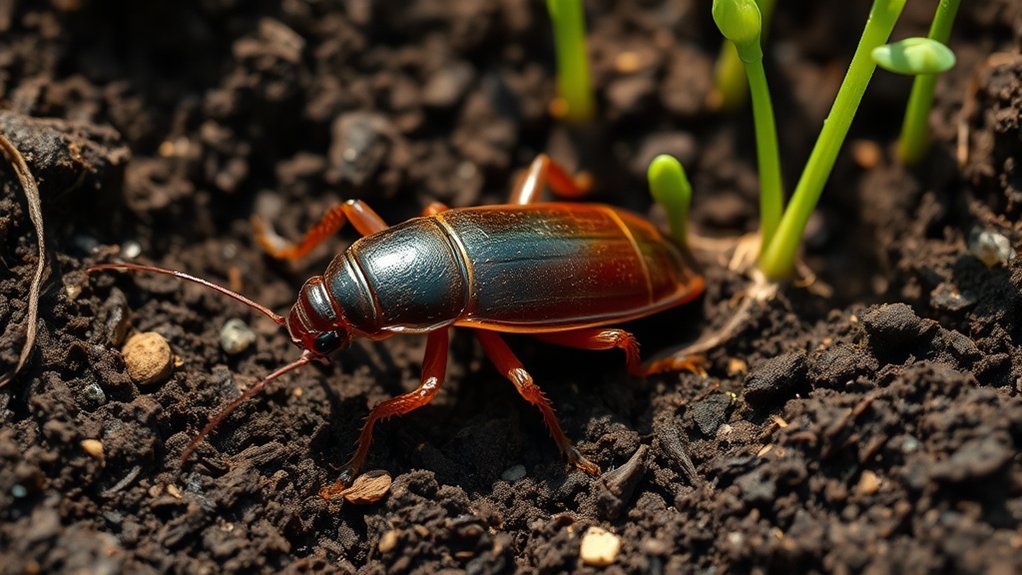
Though they’re often dismissed as pests, cockroaches play a surprisingly valuable role in maintaining soil health. When they feed on dead leaves and animal remains, they break down large organic debris into smaller particles that microbes can process faster. Burrowing species tunnel through soil, improving oxygen movement and reducing compaction.
| Cockroach Activity | Soil Benefit | Ecosystem Impact |
|---|---|---|
| Detritivore feeding | Accelerates decomposition | Reduces surface litter buildup |
| Nutrient excretion | Releases nitrogen, phosphorus, potassium | Supports plant growth |
| Burrowing and tunneling | Improves aeration and drainage | Boosts microbial activity |
Their frass acts as a natural fertilizer, enriching topsoil over time. You can think of cockroaches as silent soil engineers — their movement mixes organic and mineral components, distributing nutrients more evenly through upper soil layers. In forest ecosystems especially, this activity helps sustain long-term soil fertility.
Part of what makes cockroaches so effective at this role is their relationship with Blattabacterium, a symbiotic bacterium that enables them to recycle nitrogen and return it to the soil in a form that supports plant growth.
Why Do Predators Depend on Cockroaches as a Food Source?
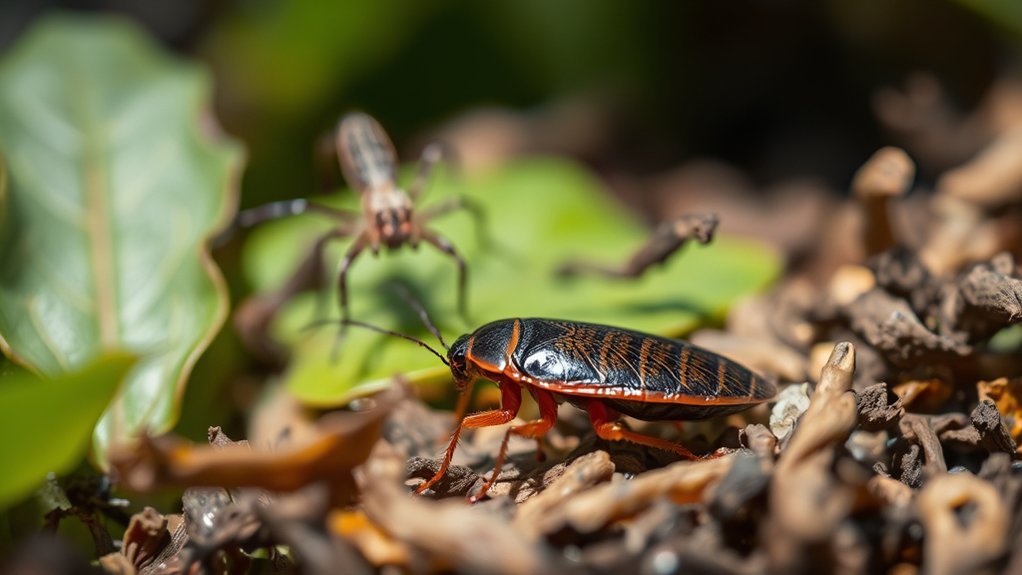
When you look at what sustains predators across ecosystems, cockroaches stand out as a reliable, high-protein food source that supports everything from frogs and lizards to birds and spiders.
You’ll find that their ground-dwelling habits, nocturnal movement, and sheer abundance make them easy targets for a wide range of hunters, reducing the energy predators spend securing a meal.
Cockroaches as Prey
Cockroaches sit near the base of many food chains, making them one of the most broadly consumed prey items across ecosystems. You’d be surprised how many creatures depend on them daily:
- Frogs, toads, and lizards hunt them across forests and urban environments
- Spiders and praying mantises target cockroaches at every life stage
- Parasitic wasps paralyze them to feed developing larvae
- Small mammals and birds rely on them when other prey disappears
- Even fungi kill them by attaching lethal spores directly to their bodies
Their rapid reproduction keeps prey populations stable despite heavy predation pressure.
Cockroaches transfer energy from decomposing matter into animal biomass, directly feeding insectivores that couldn’t survive without a dependable, year-round food source anchoring the food web beneath them.
High Protein Food Source
Predators don’t target cockroaches by accident — they keep coming back because roaches deliver serious nutritional value. On a dry-weight basis, cockroaches can hit between 40% and 75% crude protein, with some Dubia cockroach adults reaching an extraordinary 96.6%. That’s a nutrient-dense meal worth hunting.
| Cockroach Type | Protein Range | Notable Predators |
|---|---|---|
| Dubia Cockroach | Up to 96.6% | Lizards, geckos |
| General Species | 40%–75% | Frogs, spiders, birds |
| American Cockroach | ~8.72% | Centipedes, rats |
This protein supports muscle maintenance, growth, and reproduction in insectivores. You’ll find predators returning to roaches repeatedly because they’re not just available — they’re efficient. High nutritional payoff combined with reliable abundance makes cockroaches one of nature’s most dependable prey items.
Stabilizing Food Webs
That nutritional value doesn’t exist in isolation — it feeds directly into how entire food webs hold together. Cockroaches occupy a low trophic level, moving energy from decaying matter up to birds, reptiles, amphibians, and mammals. When other insects decline seasonally, predators fall back on roaches to survive. Without that reliability, entire predator populations could collapse.
Here’s what’s quietly at stake:
- Frogs and lizards lose a steady food source during dry seasons
- Spiders and beetles depend on roaches when smaller prey disappears
- Parasitic wasps use living roaches to reproduce and survive
- Ground-foraging birds rely on roaches near leaf litter and debris
- Shrews and rodents need fallback prey during habitat disruptions
Cockroaches aren’t just food — they’re a stabilizing force holding predator communities together.
Why Most Cockroach Species Are Vital, Not Pests
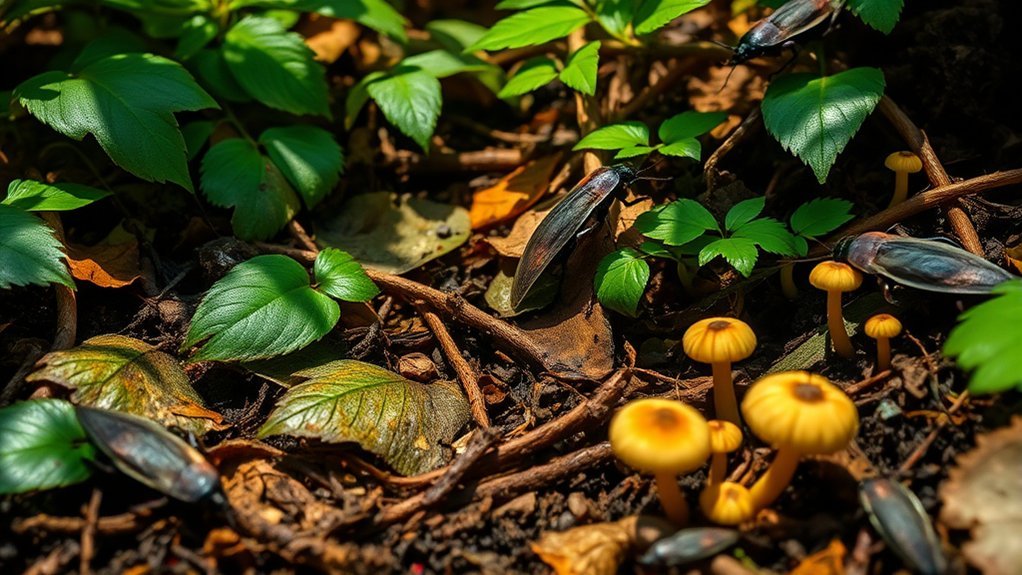
When most people hear the word “cockroach,” they picture a kitchen pest, but that image applies to only a handful of the roughly 4,600 recognized species. The vast majority live outdoors in forests, leaf litter, rotting logs, and grasslands, never entering a home.
These wild species play crucial roles. They break down dead plant matter, enrich soil with their droppings, and support predators that depend on them for food. Their decomposition work keeps nutrient cycles running and forest floors from accumulating unprocessed organic material.
Pest status comes from human environments, not from what cockroaches actually do ecologically. You’re fundamentally labeling an entire group by the behavior of a few species that adapted to indoor living. That’s like judging all birds by pigeons.
In nature, cockroaches function as decomposers, soil enrichers, and prey animals. They’re not invaders—they’re recyclers doing exactly what ecosystems need them to do.
Do Cockroaches Pollinate Plants?
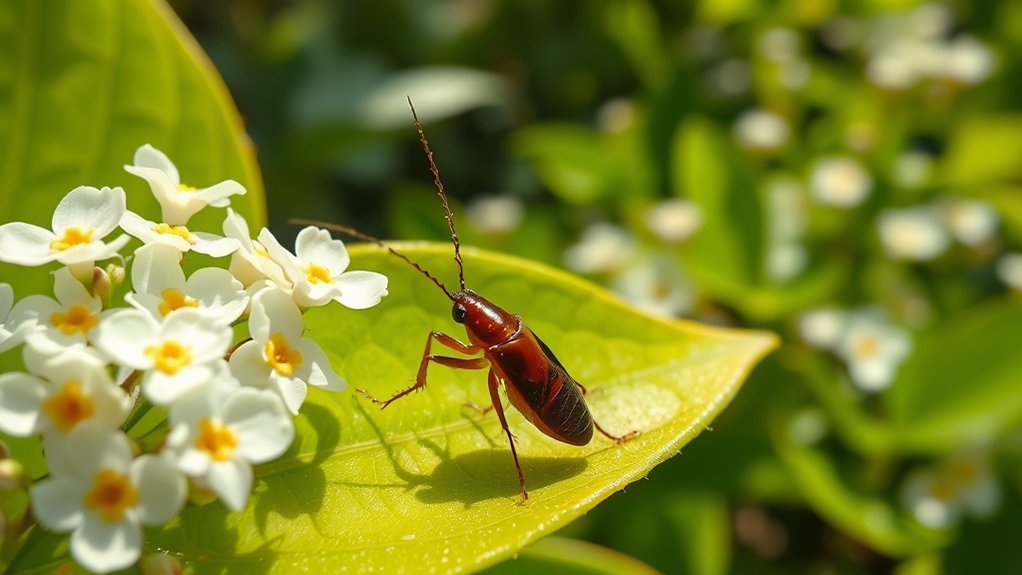
Most people would be surprised to learn that cockroaches do pollinate plants, though not in the way bees or butterflies do.
While accidental, their flower visits produce real results — pollen sticks to their rough bodies and transfers to reproductive structures during feeding or resting.
Confirmed cockroach pollination spans multiple continents and plant families:
- In Japan, cockroaches pollinate Mitrastemon yamamotoi, a parasitic plant with no other confirmed pollinator.
- In French Guiana, one cockroach species serves as the principal pollinator of Clusia aff. sellowiana.
- A 2025 study proved cockroaches directly caused successful pollination in Balanophora tobiracola.
- One rare plant species had cockroaches as its only confirmed pollen-carrier between individual plants.
- Both adult cockroaches and nymphs actively transfer pollen during nighttime flower visits.
You’re witnessing an insect most people want eliminated quietly keeping certain plant species alive.
Why Have Cockroaches Survived for Millions of Years?
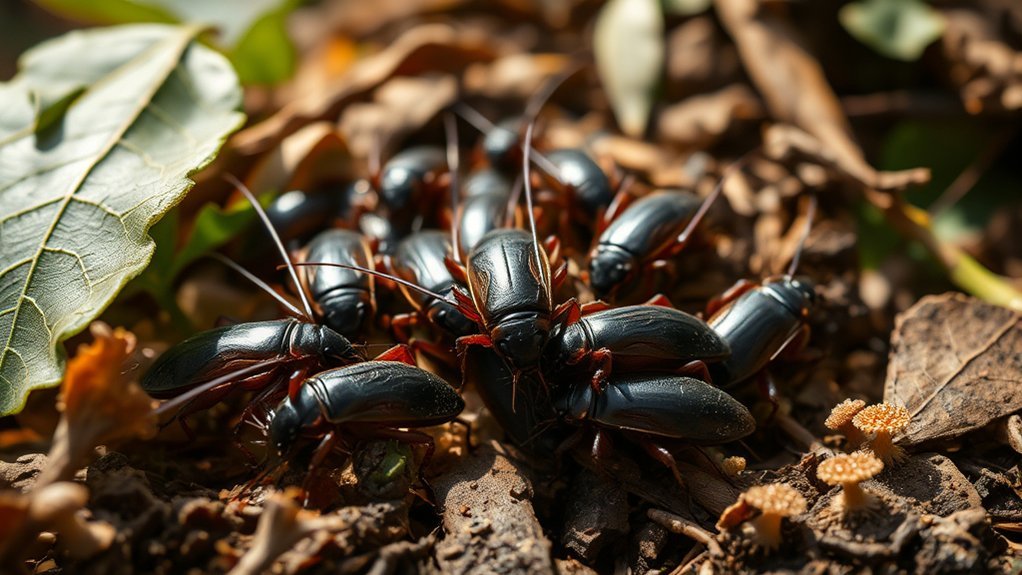
Few insects have matched the staying power of cockroaches. They’ve been around for 300–320 million years, surviving mass extinctions and dramatic climate shifts that wiped out far more specialized creatures. Their secret isn’t one trait — it’s a combination of many working together.
Their flattened bodies squeeze into tight spaces, keeping them hidden from predators. Their tough exoskeletons reduce water loss and physical damage. They eat almost anything — decaying matter, plant material, animal debris — and can survive weeks without food when necessary.
Specialized gut bacteria help them extract nutrition from low-quality sources. They also regulate moisture loss through controlled breathing, making them surprisingly drought-tolerant.
When populations take a hit, they recover fast. Their eggs develop inside protective cases that resist drought and flooding, and short life cycles allow multiple generations to accumulate quickly.
Every trait reinforces the others, making cockroaches genuinely difficult to eliminate at any scale.
Frequently Asked Questions
How Many Cockroach Species Currently Exist in the World?
You’ll find around 4,500–4,600 described cockroach species worldwide, though estimates vary. Taxonomy constantly evolves as scientists discover new species, so you can’t pin down one fixed number with complete certainty.
Can Cockroaches Survive Without Their Gut Microbes?
You’d be surprised — some cockroaches can survive without gut microbes! Studies on Blattella germanica show they can reach adulthood and reproduce germ-free, though they’ll experience poorer nutrition and reduced fitness overall.
Which Specific Predators Rely Most Heavily on Cockroaches for Food?
You’ll find that emerald cockroach wasps, huntsman spiders, frogs, toads, and house geckos rely most heavily on cockroaches. Chickens also consume them readily and in large quantities whenever they’re accessible.
Do Cockroaches Play Different Roles Depending on Their Habitat?
Yes, cockroaches do play different roles depending on their habitat. In forests, they’re decomposers breaking down leaf litter. Underground, they’re aerating soil. In caves, they’re recycling organic debris found in sheltered spaces.
How Quickly Can Cockroaches Reproduce in a Natural Environment?
You’d be surprised how fast cockroaches can reproduce in nature. In warm, humid conditions, German cockroaches complete a generation in just 2–3 months, laying a new egg case every 20–25 days.
Conclusion
Now that you’ve learned about cockroaches’ role in nature, you can see they’re far more valuable than you might’ve thought. They’re breaking down decaying matter, enriching soil, feeding predators, and even pollinating plants. You’re looking at one of nature’s most resilient and essential creatures. So while you don’t want them in your home, you can appreciate that they’re keeping ecosystems balanced and thriving in ways that truly matter.
