
Can Cockroaches Spread Salmonella in the Kitchen?
Cockroaches can spread Salmonella in your kitchen by picking up the bacteria from garbage and sewage, then transferring it to surfaces and food. These pests thrive in warm, moist environments and are attracted to food residue, crumbs, and grease. They can contaminate your food and utensils, increasing the risk of foodborne illnesses like gastroenteritis and typhoid fever. Keeping a clean, dry kitchen helps prevent infestations. Stick around to discover effective prevention and control strategies.
Key Takeaways
- Cockroaches transfer Salmonella by crawling over kitchen surfaces and food containers.
- They spread bacteria through feces that contaminate food and utensils.
- Cockroaches can carry Salmonella from waste areas to food spaces.
- Moist kitchen environments and food residues attract cockroach infestations.
- Proper sanitation and sealing entry points help prevent cockroach contamination.
How Do Cockroaches Spread Salmonella in Kitchens?
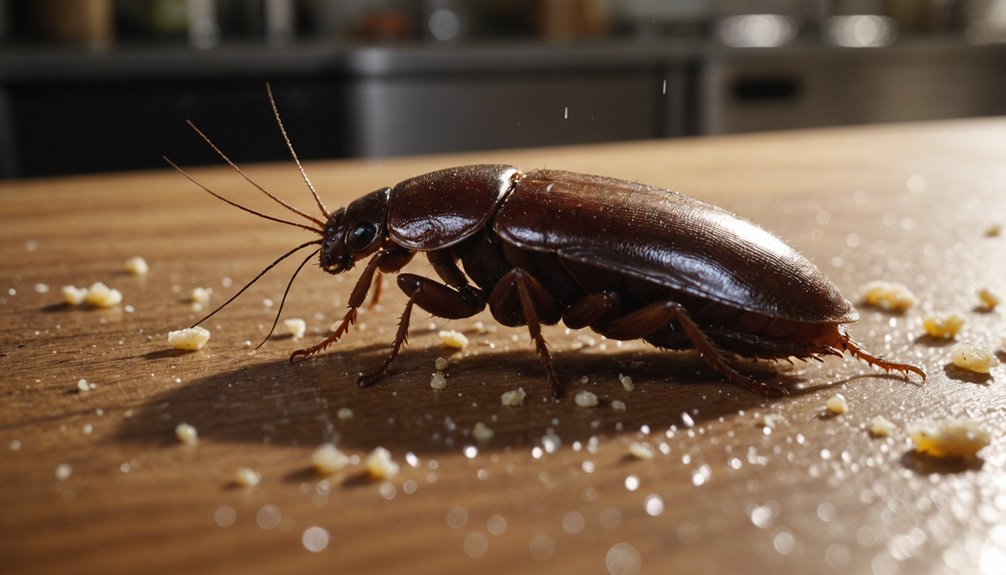
When cockroaches scuttle through garbage, sewage, and fecal matter, they collect Salmonella on their bodies, creating a direct path for these bacteria to invade your kitchen. As they crawl across countertops, utensils, and dishes, they transfer these harmful bacteria without needing to bite. Simply walking over surfaces and touching food containers spreads contamination. Their movement between waste areas and food spaces heightens the risk.
Additionally, cockroach feces play a major role in spreading Salmonella. These pests can replicate the bacteria in their guts, later shedding them onto food and utensils. Cockroaches can carry harmful pathogens, increasing the risk of foodborne illness.
They frequently hide in cracks and gaps, contaminating areas near food prep zones. The presence of food residue, moisture, and clutter further encourages their activity and increases contamination risk.
Studies Confirming Salmonella Spread by Cockroaches
Cockroaches don’t just lurk in the shadows; they actively contribute to the spread of Salmonella in kitchens. Studies reveal their role as vectors of foodborne pathogens:
- Lab Experiments: Cockroaches acquired Salmonella typhimurium from infected food, contaminating other cockroaches, food, and water. Contamination was remarkably high within 24 hours.
- Egg Contamination: Infected cockroaches transferred S. typhimurium to table eggs, highlighting direct food product contamination.
- Field Studies: Cockroaches from feed mills and hatcheries tested positive for salmonellae, matching strains found in local humans and animals.
- Global Findings: A meta-analysis showed a 15.2% prevalence of Salmonella in cockroach populations, with higher rates in tropical climates.
These findings underscore cockroaches’ significant role in spreading Salmonella.
American and Oriental cockroaches were found to contaminate twice as often as German cockroaches, indicating species-specific differences in susceptibility.
Why Are Kitchens at Risk?
In kitchens, the warmth and moisture create an ideal habitat for cockroaches. Heat, humidity, and shelter support their survival, with sinks, drains, and plumbing fixtures providing persistent moisture. Leaks and standing water from dish drains or pet bowls keep them thriving overnight. Crumbs, spills, and grease make kitchens constant attractants. Even small food residues can draw cockroaches to food prep areas, while open dry goods like cereal and flour increase exposure risks.
Hidden spots in cabinets, drawers, and behind appliances offer perfect hiding places. Cracks and gaps around plumbing, doors, and windows provide easy entry points. Improper storage and waste handling, like open trash cans and unsealed food, further intensify the kitchen’s risk. Regular sanitation practices are crucial to prevent infestations in food storage areas.
What Illnesses Are Linked to Cockroach Infestation?
Amidst the hidden dangers of cockroach infestations, a variety of illnesses lurk, posing significant health risks. Cockroaches can indirectly transmit germs, leading to several health issues:
- Salmonellosis: Often resembling food poisoning, this illness arises when cockroaches deposit Salmonella on food, surfaces, or utensils, causing gastrointestinal symptoms.
- Food Poisoning and Gastroenteritis: Cockroaches contaminate food and water with pathogens from filthy environments, leading to nausea, vomiting, and diarrhea.
- Typhoid Fever: Linked to Salmonella typhi, cockroaches contribute to typhoid outbreaks in unsanitary conditions through contaminated food and water.
- Cholera, Dysentery, and Other Intestinal Illnesses: Poor sanitation increases the risk of these diseases, as cockroaches spread pathogens like Entamoeba histolytica.
These health risks emphasize the importance of maintaining a clean environment.
Prevention and Control Tips for a Clean Kitchen
To keep your kitchen free from cockroaches and the health risks they pose, it’s essential to adopt effective prevention and control strategies. Start by maintaining sanitation and hygiene—wipe down surfaces daily and mop floors weekly. Store dry foods in airtight containers and dispose of trash frequently. Control moisture by repairing leaks and using dehumidifiers. Seal entry points with caulk and repair structural damage to block access.
Here’s a quick guide:
| Task | Frequency | Purpose |
|---|---|---|
| Wipe surfaces | Daily | Remove bacteria |
| Mop floors | Weekly | Eliminate crumbs and debris |
| Inspect plumbing | Monthly | Prevent hidden leaks |
| Seal cracks and gaps | As needed | Block cockroach entry |
Regular inspections and professional help guarantee long-term effectiveness.
How to Maintain a Cockroach-Free Kitchen?
To keep your kitchen cockroach-free, focus on effective cleaning strategies and a preventive measures checklist.
Tackle moisture by fixing leaks and drying surfaces, and eliminate food sources by storing items in airtight containers and cleaning spills promptly.
Seal entry points and manage waste properly to reduce attraction and access, maintaining a clean and secure kitchen environment.
Effective Cleaning Strategies
Even though maintaining a cockroach-free kitchen can seem challenging, effective cleaning strategies make it achievable. Focus on daily routines and moisture control to keep these pests at bay. Here’s how:
1. Daily Cleaning Routines: Wipe down countertops and appliance surfaces, sweep or vacuum floors, and wash dishes promptly.Clean surfaces each evening to disrupt cockroach activity.
2. Moisture Control: Repair any leaks, dry sinks at night, and eliminate standing water.Use a dehumidifier if necessary to control humidity.
3. Food Source Reduction: Store dry goods in airtight containers, dispose of garbage daily, and keep counters free of crumbs.
4. Deep-Cleaning: Move and clean under appliances, vacuum hidden areas, and maintain sealed sanitation zones to reduce hiding spots.
Preventive Measures Checklist
A cockroach-free kitchen starts with a proactive approach.
First, seal entry points by closing gaps around doors, windows, and pipes. Repair holes in walls and maintain door sweeps and window screens.
Next, remove food access by storing food in sealed containers and taking out the trash regularly. Clean crumbs and spills immediately.
Third, reduce moisture by fixing leaks and keeping sinks and drains dry. Improve ventilation to prevent dampness.
Eliminate hiding places by clearing clutter and inspecting under appliances.
Finally, support ongoing control with regular inspections and immediate action at the first sign of infestation. Use traps or baits where necessary and consult a pest professional if needed.
Prevention is key to keeping Salmonella-carrying cockroaches at bay.
Frequently Asked Questions
Can Cockroaches Survive in Cold Kitchen Environments?
Yes, cockroaches can survive in cold kitchens by hiding in warmer spots like crevices and behind appliances. They seek food, water, and shelter, thriving even in low temperatures if they find enough warmth and sustenance.
What Attracts Cockroaches to a Clean Kitchen?
Roaches are drawn to your kitchen by food crumbs, moisture, and shelter. Even in a clean kitchen, leaky pipes, hidden crumbs, and entry points like cracks or grocery bags can invite them in.
How Long Can Cockroaches Live Without Food?
Cockroaches can survive about 20–30 days without food, depending on the species and conditions. American cockroaches might live longer, around 42 days or more. They thrive with moisture, so reducing water access is essential.
Do Cockroaches Prefer Certain Types of Food?
Yes, cockroaches prefer sugary, starchy, and greasy foods. You should clean spills and store food in sealed containers to prevent attraction. They’re opportunistic feeders, so removing easy food access helps keep them away.
Are Some Cockroach Species More Likely to Spread Salmonella?
Yes, some cockroach species are more likely to spread Salmonella. American and Oriental cockroaches are more prone to contamination than German cockroaches. Their larger size and mobility increase the chance of spreading bacteria in your kitchen.
Conclusion
You can keep your kitchen safe from salmonella by managing cockroach infestations effectively. Regularly clean and declutter your kitchen to remove food sources and hiding spots. Seal cracks and use traps or professional pest control if needed. Remember, maintaining good hygiene and proper food storage are key to preventing these pests. By taking proactive steps, you’ll protect your health and enjoy a cleaner, safer cooking environment. Stay vigilant, and you’ll keep those cockroaches at bay.
