
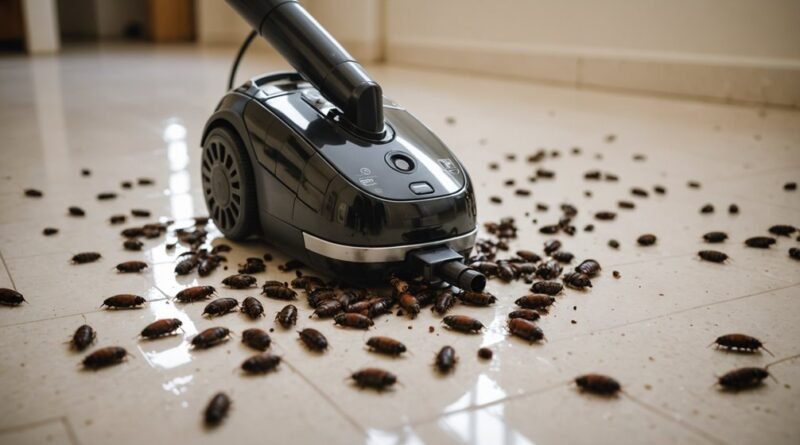
Is It Safe to Vacuum Cockroach Droppings?
Vacuuming cockroach droppings is safe if you use a HEPA vacuum and take precautions. Wear gloves, a mask, and protective clothing to minimize exposure. HEPA filters effectively trap allergens and prevent them from re-entering the air, while non-HEPA vacuums might not. After vacuuming, responsibly dispose of the waste. It’s essential to avoid dry sweeping, as it can stir allergens into the air. There’s a lot more to explore about keeping your environment safe.
Key Takeaways
- Vacuuming cockroach droppings can stir allergens into the air, posing respiratory risks.
- Use a HEPA vacuum to effectively trap and prevent allergens from re-entering the air.
- Wear gloves, a mask, and protective clothing to minimize allergen exposure.
- Avoid using non-HEPA vacuums, as they may release fine dust particles.
- Immediate disposal of vacuum waste prevents allergen spread and contamination.
Is Vacuuming Cockroach Droppings Safe?
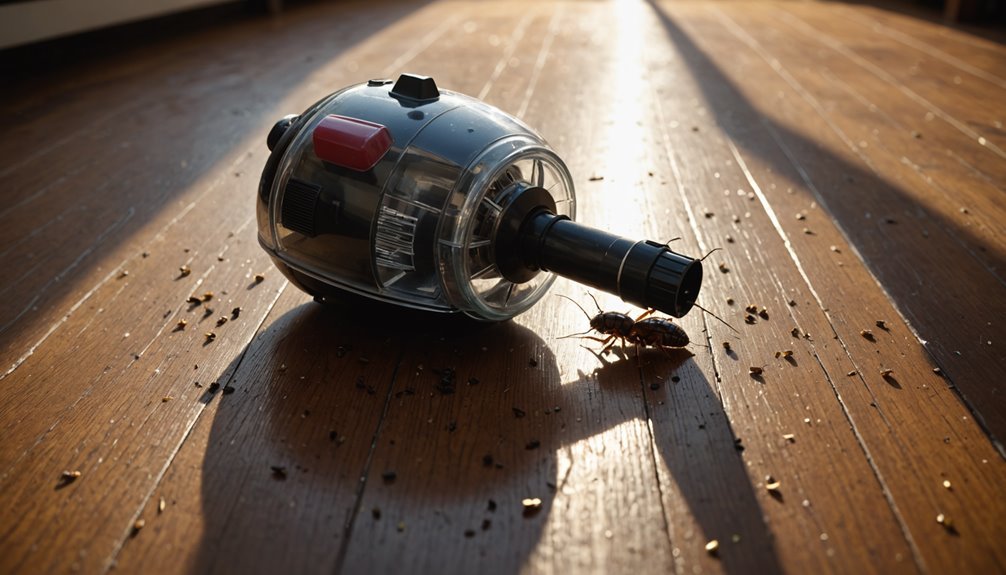
How safe is vacuuming cockroach droppings? Vacuuming can help reduce direct contact with these droppings, but it might stir allergen proteins into the air. Cockroach droppings pose respiratory and allergy concerns, especially indoors. Remember, vacuuming isn’t disinfecting; residual contamination may linger.
Take precautions: wear gloves, a mask, and protective clothing to reduce exposure. Maintain proper ventilation during cleanup and wash your hands afterward. Using a vacuum with a hose attachment helps reach corners and crevices. However, advice is mixed; some sources warn vacuuming might spread contamination or allow roaches to escape. Proper disposal methods vary based on pest behavior and species, affecting overall hygiene.
Always empty the vacuum immediately, seal waste in a bag, and disinfect surfaces afterward. Vacuuming is more suitable for dry, visible droppings on hard surfaces.
Why Use a HEPA Vacuum for Cockroach Droppings?
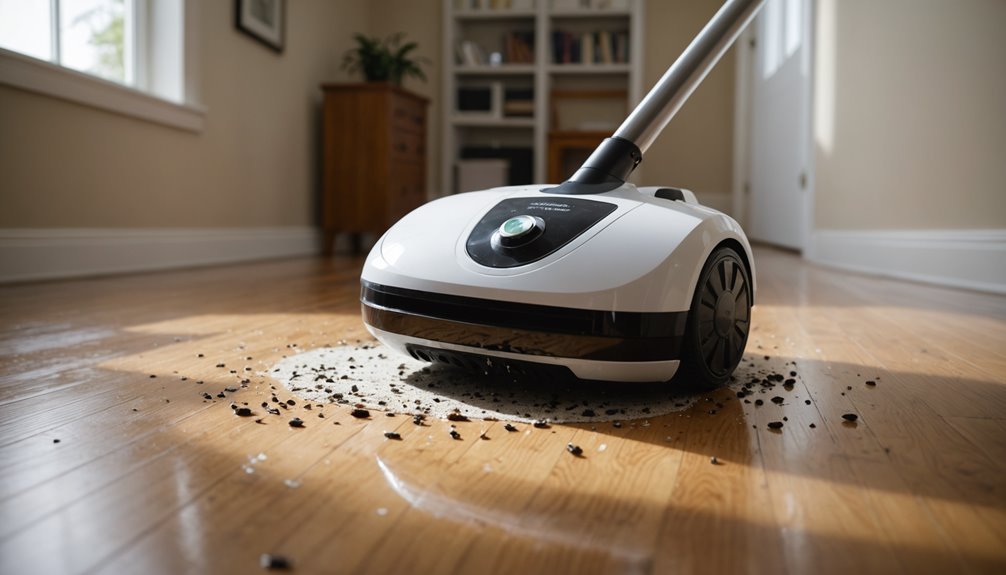
Ever wonder why a HEPA vacuum is essential for cleaning cockroach droppings? Unlike standard vacuums, HEPA filters capture 99.97% of particles as small as 0.3 microns, effectively trapping cockroach allergens that average 0.5 to 1.0 microns. This prevents allergens from re-entering the air and triggering asthma or respiratory issues. Non-HEPA vacuums might let up to 30% of fine dust escape, increasing contamination risks.
HEPA vacuums seal allergens inside with airtight designs, ensuring microscopic debris and particles are contained. This reduces cross-contamination and improves indoor air quality over time. Regular cleaning reduces allergen levels and controls cockroach populations, making HEPA vacuums a critical part of a comprehensive allergen management strategy. Adhering to health standards, HEPA vacuums are recommended by agencies like OSHA and the EPA for maintaining safe environments, especially in homes with allergy sufferers.
Steps for Safe Vacuuming and Cleanup
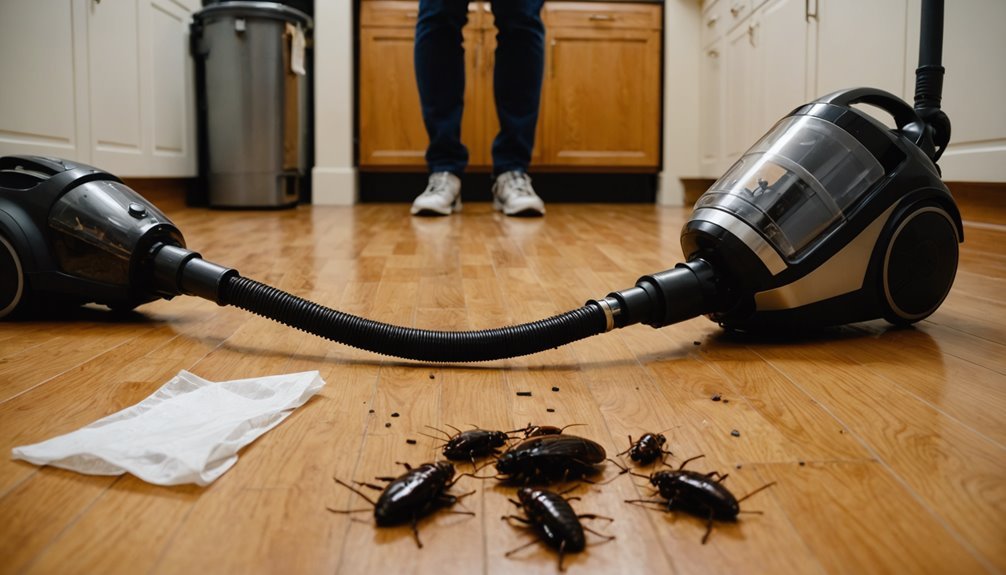
Before diving into the cleanup process, it’s essential to prepare properly to guarantee your safety and effectiveness. Wear gloves and a mask to minimize contact with allergens. Gather necessary supplies like a HEPA-filter vacuum, disposable towels, and disinfectant. Spot droppings under sinks, behind appliances, and in corners. Avoid dry sweeping to prevent airborne particles. Cockroach droppings contain allergens that can trigger asthma and allergies, so careful cleanup is crucial.
| Task | Action |
|---|---|
| Safety Gear | Wear gloves and mask |
| Supply Collection | Gather vacuum, towels, disinfectant |
| Identify Droppings | Check under sinks, corners |
| Vacuuming | Use HEPA vacuum, start high |
| Disposal | Seal and discard vacuum waste |
Empty vacuum contents immediately, sealing them in a bag. Disinfect areas with soap and water, focusing on food surfaces. Dry thoroughly to deter cockroaches.
Alternative Cleaning Methods for Cockroach Droppings
While vacuuming with a HEPA filter is effective, exploring alternative methods for cleaning cockroach droppings can offer added safety and efficiency.
Start by using a damp cloth to lift droppings, as dry sweeping can spread particles. Lightly mist the area with soapy water or disinfectant to minimize dust.
After removal, spray a 1:1 vinegar-to-water solution on surfaces like counters and tile floors. Let it sit for 10 minutes, then wipe and rinse.
For nonporous surfaces, warm soapy water works well; use a scrub brush for tough stains. After cleaning, disinfect with a bleach solution to kill bacteria.
Baking soda can help with odors, either sprinkled or as a paste. These methods guarantee thorough and safe cleanup.
How to Keep Cockroaches Away for Good
To effectively keep cockroaches away for good, start by sealing entry points that invite them inside. Use caulk to seal cracks, install door sweeps, and apply weather stripping. Block utility gaps around pipes and cover vents with fine mesh.
Next, eliminate food sources. Store food in sealed containers and clean crumbs immediately. Don’t leave dirty dishes or pet food out overnight.
Reducing moisture is essential; fix leaky faucets and use a dehumidifier if needed. Finally, cut hiding places by minimizing clutter and organizing storage.
Here’s a quick checklist:
- Seal: Cracks, doors, pipes.
- Store: Food in airtight containers.
- Repair: Leaks, improve ventilation.
- Organize: Remove clutter, clear storage.
Follow these steps to keep roaches at bay.
Frequently Asked Questions
Can Cockroach Droppings Cause Allergies in Pets?
Yes, cockroach droppings can cause allergies in your pets. These droppings contain allergen proteins that trigger symptoms like itching, sneezing, and coughing. Keeping your home clean and addressing infestations can help reduce your pet’s exposure.
What Are the Signs of a Cockroach Infestation?
You’ll notice small droppings resembling coffee grounds, dark cylindrical droppings, egg cases, and shed skins. A musty odor, smear marks, damaged food, and live sightings, especially in kitchens or bathrooms, are key infestation signs.
How Do Cockroach Droppings Affect Indoor Air Quality?
Cockroach droppings release allergens into the air, affecting indoor air quality. You’ll notice increased asthma attacks and allergy symptoms, especially in sensitive individuals. Inhaling these particles can cause chronic respiratory issues and exacerbate existing conditions.
Are There Natural Methods to Repel Cockroaches?
You can use natural methods like peppermint oil, neem, bay leaves, and lemongrass to repel cockroaches. Focus on sealing entry points and maintaining cleanliness for best results, as these methods aren’t guaranteed for complete eradication.
What Health Symptoms Indicate Cockroach Allergen Exposure?
You might notice sneezing, a runny or stuffy nose, coughing, or wheezing. Red, itchy eyes and skin rashes can also occur. If symptoms worsen during cleaning, consider avoiding the area to reduce exposure.
Conclusion
Vacuuming cockroach droppings can be safe if you use a HEPA vacuum to trap allergens effectively. Always wear a mask and gloves to protect yourself during cleanup. After vacuuming, sanitize the area thoroughly to remove any remaining residue. Consider alternative cleaning methods like damp cloths for smaller areas. To prevent future infestations, seal entry points and maintain a clean environment. With these steps, you’ll minimize health risks and keep cockroaches at bay.
