
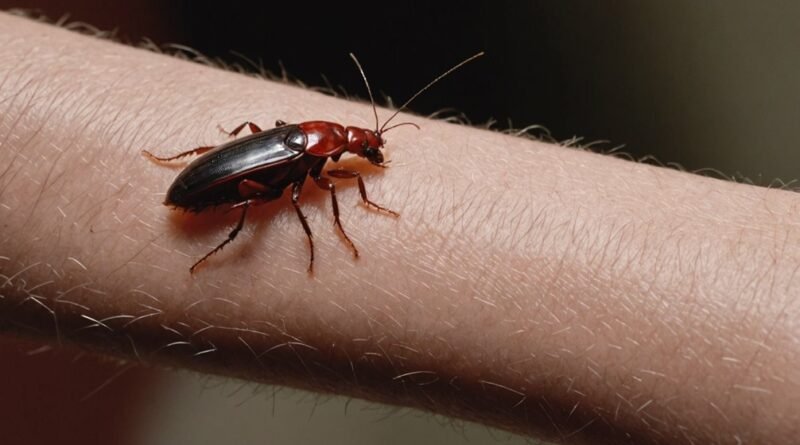
How Long Do Cockroach Bites Take to Heal?
Cockroach bites usually heal in about a week. Redness and swelling generally improve within 24 to 48 hours. Factors like skin sensitivity, immune response, and whether you scratch the bite can affect recovery. Keep the area clean, use anti-itch creams, and try not to scratch to help speed things up. If symptoms persist or worsen, consider consulting a doctor. Discover more to understand how to quickly and effectively handle these bites.
Key Takeaways
- Cockroach bites typically heal within 3 to 7 days.
- Redness and swelling usually improve within 24 to 48 hours.
- Healing time varies based on skin sensitivity and immune response.
- Scratching can prolong healing and increase infection risk.
- Persistent symptoms beyond a week may require medical attention.
What to Know About Cockroach Bites
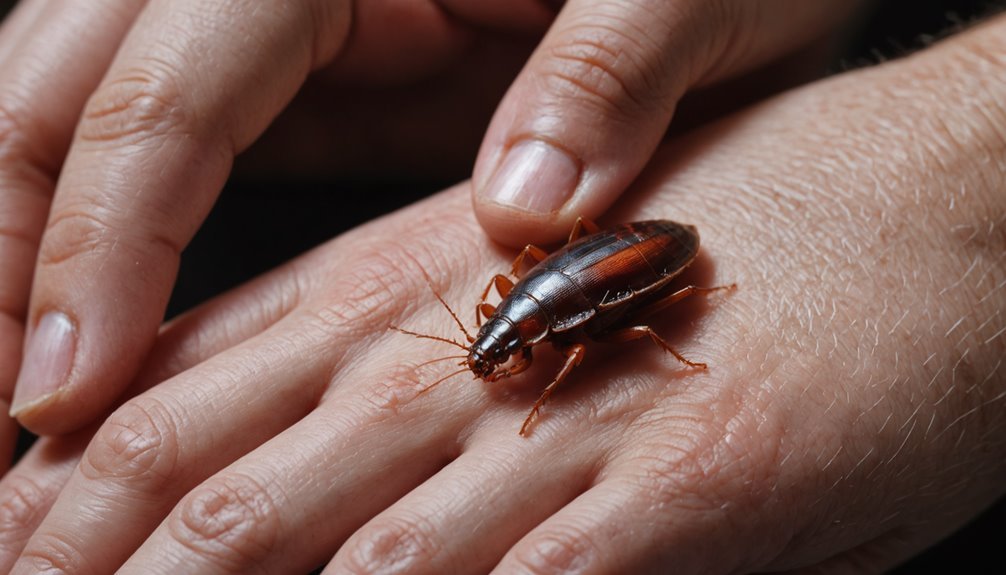
Cockroach bites are rare, usually happening only in unusual situations like severe infestations or when food is scarce. These insects aren’t aggressive toward humans and typically don’t target people. Their mouthparts struggle to pierce human skin, making bites uncommon.
When bites do occur, they often affect areas like fingernails, eyelashes, hands, feet, and calloused skin, sometimes while you’re sleeping. Cockroach bites are typically larger than mosquito or flea bites, making identification easier.
You’ll notice a bite as a bright red, raised bump that may itch, swell, or hurt. Although severe symptoms are rare, some people might experience allergy-related swelling or rash.
Since cockroaches can carry germs, clean any bite with soap and water to prevent infection. Using antiseptic cream, cold compresses, and avoiding scratching helps manage irritation and reduces infection risk.
How Long Do Cockroach Bites Take to Heal?
When you’re dealing with a cockroach bite, you can expect it to heal within a few days to a week, though this varies based on several factors. Your skin’s sensitivity, the severity of the bite, and any potential infection play vital roles in how fast recovery happens. Keep an eye on changes, and remember that proper care like cleaning and avoiding scratching can speed up the healing process. It’s important to note that cockroaches can bite with a force 50 times their body weight, which can influence the initial severity of the bite.
Typical Healing Timeline
Experiencing a cockroach bite can be unsettling, but the healing process is typically straightforward. Most bites begin to fade within a few days. Usually, redness and swelling improve in 24 to 48 hours, while itching might linger for several more days. If you keep the bite clean and uncomplicated, expect a common recovery period of about one week. Minor bites often heal on their own without needing medical treatment.
In mild cases, you might notice visible marks disappearing within days to a week. Healing is generally complete when swelling, redness, and itching vanish, leaving no discomfort. Though most bites recover swiftly, if symptoms persist beyond a week, it may indicate a deviation from the usual timeline. Bites often appear in clusters rather than isolated marks, which can sometimes lead to increased irritation and a longer healing period.
Factors Affecting Recovery
While cockroach bites often heal quickly, several factors can influence the recovery timeline. Your skin sensitivity and immune response play a big role. If your skin is reactive or prone to allergies, you might notice prolonged irritation and itching.
Secondary infections are another concern—scratching can break the skin barrier, inviting bacteria and extending recovery. Good wound hygiene reduces this risk.
Your overall health also matters; weaker immune systems or certain medications can slow healing. The bite’s severity and where it’s located affect recovery too, as thinner skin stays irritated longer.
Finally, early treatment, like cleansing and using anti-itch creams, helps speed up healing. By managing these factors, you can support a quicker recovery.
What Affects Cockroach Bite Recovery?
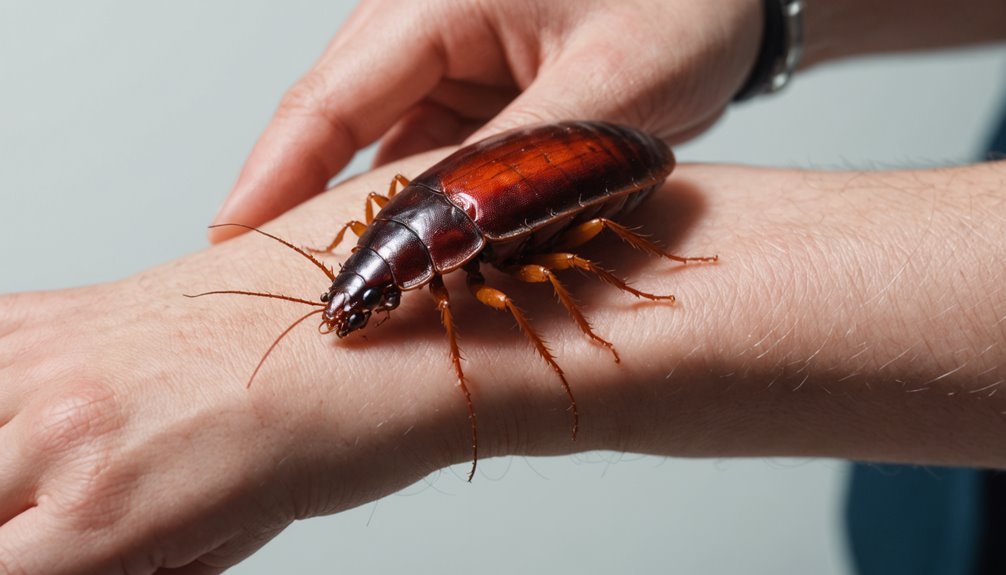
Although cockroach bites are generally not severe, several factors can affect how quickly they heal. Your skin’s sensitivity and any allergic tendencies play an essential role. If you’re prone to allergies, you might notice prolonged redness and swelling. Scratching the bite can break the skin barrier, increasing infection risk and delaying healing. Maintaining good wound hygiene by cleaning with soap and water reduces this risk. The speed of treatment also matters; using cold compresses and antihistamines early can minimize symptoms. Here’s a quick guide:
| Factor | Effect on Recovery |
|---|---|
| Skin Sensitivity | Longer redness/swelling |
| Scratching/Irritation | Infection risk increases |
| Wound Hygiene | Reduces infection chance |
| Treatment Speed | Shortens recovery time |
Common Symptoms and Their Timeline
When you experience a cockroach bite, expect initial redness and swelling that usually starts to ease within 24–48 hours.
Itching might linger longer, occasionally persisting beyond a week if irritation intensifies.
Generally, with basic care, mild irritation fades in a few days, often resolving within about a week.
Redness and Swelling Duration
Cockroach bites often lead to two common symptoms: redness and swelling. Redness is typically one of the first signs, usually fading within 24 to 48 hours, though it can persist up to a week. Swelling often becomes more noticeable during the first day or two and generally settles within a few days. Most bites heal in about a week, but factors like scratching or infection can prolong this period.
Here’s a quick overview:
| Symptom | Duration |
|---|---|
| Redness | Starts to fade in 24-48 hours |
| Improves within a few days | |
| Swelling | Noticeable in first 24-48 hours |
| Settles within a few days | |
| Healing | Typically 3-7 days |
If symptoms persist beyond a week, consider seeking medical advice.
Itching Persistence Timeline
Itching from a cockroach bite usually lasts a few days to about a week, with most people experiencing peak itchiness early on. You’ll likely notice that the discomfort decreases as your skin begins to heal.
Here’s a quick timeline to guide you:
- First 24–48 hours: Expect noticeable itching as your body reacts.
- Days 2–4: Itch intensity should start to lessen, though it might still be present.
- Days 5–7: Most bites show significant improvement, with itching fading.
- One week mark: Many bites are almost healed, with minimal residual itch.
If itching persists beyond this, it’s uncommon and might hint at other issues like sensitivity or irritation.
Avoid scratching to help your skin recover faster.
Mild Irritation Fading
Although cockroach bites are uncommon, mild irritation typically follows a predictable healing path. Redness usually starts to fade within 24 to 48 hours if you clean the bite promptly. Mild swelling often subsides within a few days to a week.
General irritation and discomfort generally improve over several days, with minor bite marks disappearing in about a week.
You’ll notice local inflammation as redness, slight puffiness, and tenderness, but these symptoms should ease quickly with basic cleaning and cooling. Most bites heal within a few days when uncomplicated, though some might take up to a couple of weeks.
If redness decreases, swelling shrinks, and itchiness eases without pus or worsening pain, you’re likely on track for normal healing.
Home Remedies for Faster Healing
When dealing with cockroach bites, home remedies can speed up healing and provide relief. Start by washing the bite with mild soap and water to reduce infection risk. Pat the area dry gently.
Wash cockroach bites with mild soap and water to reduce infection risk and gently pat dry.
Here are some remedies to try:
- Cold Compress: Apply an ice pack wrapped in cloth for 10–15 minutes to reduce swelling and numb pain.
- Aloe Vera: Use aloe vera gel to soothe irritation and support healing.
- Baking Soda Paste: Mix baking soda with water, apply the paste for 15–20 minutes to calm itchy skin.
- Oatmeal Bath: A lukewarm oatmeal bath can soothe multiple bites and reduce dryness.
Apply remedies 2–3 times daily and keep the area clean and dry for best results.
When to Seek Medical Help for a Cockroach Bite
Wondering when you should seek medical help for a cockroach bite? If you notice difficulty breathing, swelling of the lips or face, or widespread hives, these are signs of anaphylaxis and require immediate attention—call 911 in the U.S. or 000 in Australia.
Use an adrenaline auto-injector if available.
Watch for infection signs like increasing redness, warmth, or pus at the bite site, as well as fever.
Persistent or worsening symptoms, including severe itching or marked swelling, also need evaluation.
Especially in children, older adults, or those with weakened immune systems, unusual reactions should be assessed early.
If over-the-counter treatments fail or complications arise, contact a healthcare professional without delay.
Frequently Asked Questions
Can Cockroach Bites Transmit Diseases?
Cockroach bites don’t transmit diseases directly. Instead, the risk comes from secondary infections if bacteria enter a skin break. Focus on preventing contamination by maintaining cleanliness, sealing food, and managing moisture to reduce infestation risks.
What Do Cockroach Bites Look Like?
Cockroach bites look like small, red, raised bumps. You’ll notice they’re bright red or reddish-pink, with a darker center sometimes. They resemble mosquito bites but are often larger, appearing individually rather than in clusters.
Are Cockroach Bites Common?
Cockroach bites aren’t common. You’ll rarely encounter them unless there’s a severe infestation and food scarcity. Most people won’t experience a cockroach bite, especially in typical households. So, don’t worry about frequent bites from these pests.
How Can I Prevent Cockroach Bites?
Seal cracks and gaps, install weather stripping, and use mesh screens to block entry points. Store food in sealed containers, clean regularly, and fix leaks. Keep spaces clutter-free and dry to prevent cockroach bites effectively.
Do Cockroaches Bite While You Sleep?
Yes, cockroaches can bite while you sleep, but it’s rare. They’re nocturnal and might be drawn to food residue on your skin. Keep your space clean to reduce the risk of bites.
Conclusion
In dealing with cockroach bites, it’s essential to stay informed. Healing typically takes a few days, but it can vary based on your skin’s sensitivity and care routine. Watch for symptoms like redness or itching, and use home remedies to speed up recovery. If symptoms worsen or don’t improve, it’s best to seek medical advice. Remember, staying proactive and attentive makes a difference in your healing journey. Your health always comes first!
