
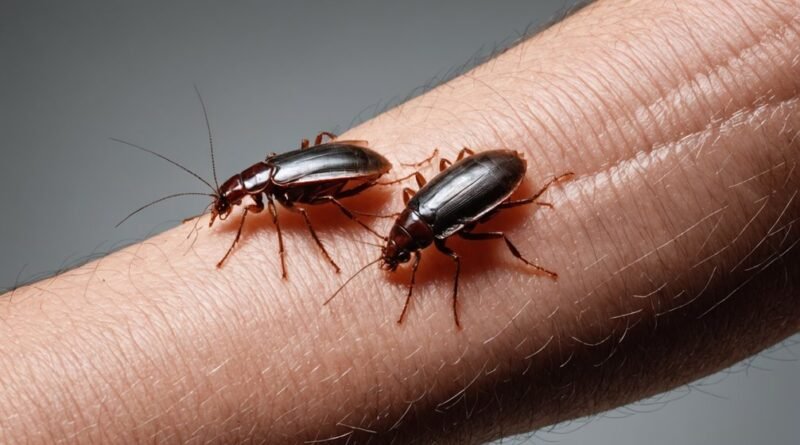
Cockroach Bites vs Mosquito Bites: Symptoms and Appearance
You might confuse mosquito and cockroach bites, but there are key differences. Mosquito bites appear quickly as small, itchy, red or pink bumps on exposed skin. In contrast, cockroach bites are less common, small, red, and often have darker centers, appearing on soft skin or near fingernails. Mosquito bites are intensely itchy due to saliva reactions, while cockroach bites may cause irritation without a wheal. Discover more about managing these bites and easing discomfort.
Key Takeaways
- Mosquito bites are small, raised, red or pink bumps that become itchy and tender over time.
- Cockroach bites are rare and appear as small, red bumps with darker centers, possibly causing swelling and burning.
- Mosquito bites commonly occur on exposed skin like ankles and necks, especially at dawn and dusk.
- Cockroach bites are often found on facial skin or near fingernails, particularly in sleeping areas.
- Mosquito bites cause significant itching due to saliva, while cockroach bites may not have the classic itchy wheal.
Spotting Mosquito Bites
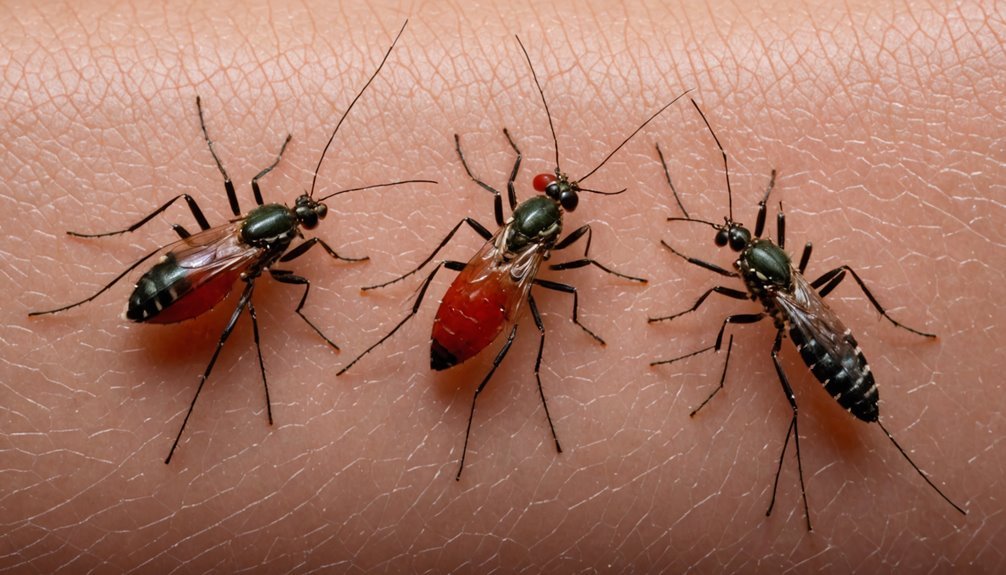
When spotting mosquito bites, you’ll often notice small, raised, puffy bumps appearing on your skin shortly after a mosquito feeds. These bumps can be red, reddish-brown, or lighter than the surrounding skin and might have a small dark center.
Initially, they’re usually painless but become itchy and tender later. You might experience swelling, which can range from mild to very swollen, especially if you have a stronger reaction.
Bites often show up on exposed skin like ankles, hairline, neck, or the backs of your knees. While most heal in 3 to 4 days, scratching can prolong irritation. It’s important to monitor for flu-like symptoms, as mosquito bites carry a risk of diseases like West Nile and Zika.
If you see large, swollen welts or experience symptoms like fever or vomiting, seek medical attention promptly.
Identifying Cockroach Bites
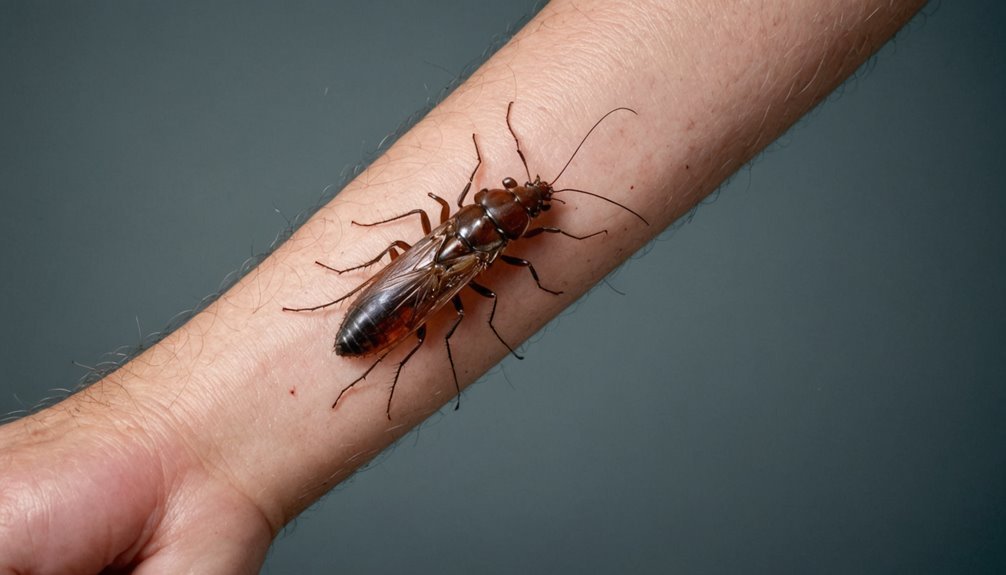
Although cockroach bites are rare, it’s important to know how to identify them. Cockroach bites generally appear as small, red, raised bumps or welts, typically about 1–4 mm wide. You might notice a darker red center along with redness and inflammation around the site. Itching is common, and some people experience swelling, pain, or a burning sensation.
These bites can appear as single lesions or in clusters and may present as larger, firmer bumps compared to other insect bites. Look for patterns, but remember they aren’t fully reliable. If you notice signs of infection or experience severe allergic reactions like marked swelling or breathing difficulty, seek medical attention. Recognizing these features can help distinguish cockroach bites from other insect bites.
Where Mosquito and Cockroach Bites Typically Appear
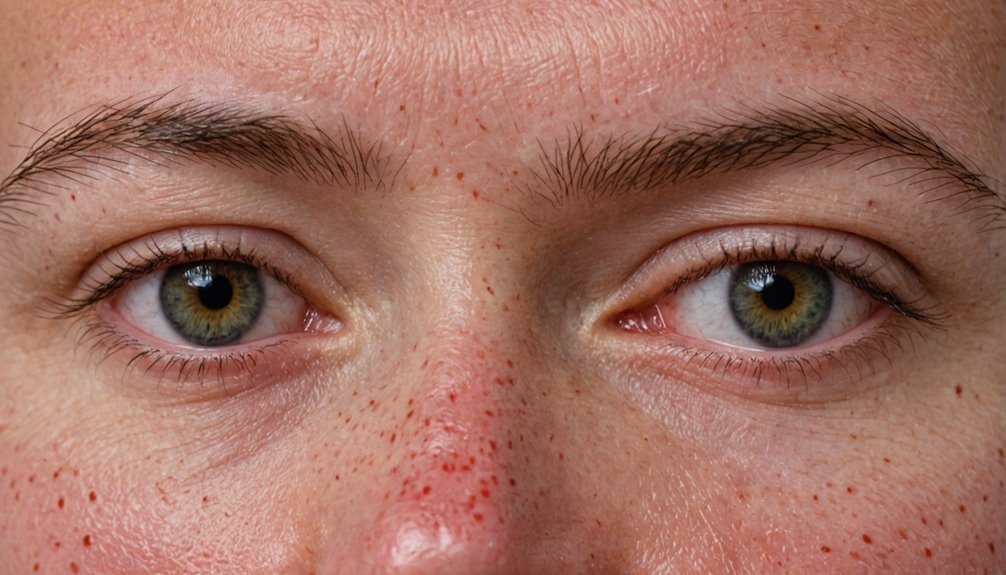
Recognizing the differences in where mosquito and cockroach bites typically appear can help in identifying the culprit.
Mosquito bites usually target exposed skin, especially areas like ankles, hairlines, necks, and the backs of the knees. These bites often appear as isolated marks, reflecting outdoor exposure, particularly during dawn and dusk. Mosquitoes thrive in warm climates and are commonly found near stagnant water sources.
Exposed areas like ankles and necks are primary targets for mosquito bites, often appearing as isolated marks during dawn and dusk.
Cockroach bites, on the other hand, are rare and usually associated with sleeping areas or places with food residue. They might appear on soft facial skin or around fingernails and eyelashes.
Here’s a quick rundown:
- Mosquito bites: Exposed skin like ankles, knees, necks.
- Cockroach bites: Rare, often near sleeping areas.
- Mosquito activity: Dawn and dusk.
- Cockroach activity: Nocturnal in food-contaminated environments.
- Mosquito pattern: Isolated, scattered bites.
Comparing Symptoms of Mosquito and Cockroach Bites
Even though mosquito and cockroach bites can cause discomfort, they exhibit distinct characteristics that help differentiate them.
Mosquito bites typically appear as small, raised, red or pink bumps with a possible dark center, forming within minutes to hours. They’re well-defined, localized, and often itchy due to a mild allergic reaction to mosquito saliva. This itching can lead to significant irritation and, if scratched, increase the risk of infection.
In contrast, cockroach bites, though rare, are described as irritated, red, and swollen lesions. They generally lack the classic itchy wheal seen with mosquito bites.
Mosquito reactions range from mild bumps to painful, swollen lesions, sometimes accompanied by large swellings or hives, whereas cockroach bite symptoms remain less standardized.
How to Relieve Itch and Pain From Bites
Mosquito and cockroach bites, despite their differences, both demand effective relief strategies to manage discomfort.
Start by cleaning the bite with soap and water to prevent infection. Use cold therapy, like a cool compress, to reduce itch and swelling. Over-the-counter remedies can further alleviate symptoms.
Clean the bite with soap and water, then use cold therapy to ease itch and swelling.
- Clean the bite: Use soap and water, pat dry gently.
- Apply cold therapy: Use a cool compress for 10-15 minutes.
- Use OTC treatments: Calamine lotion or hydrocortisone cream can help.
- Try home remedies: Apply baking soda or oatmeal paste for 10 minutes.
- Take oral medications: Use antihistamines or pain relievers if needed.
Monitor for signs of infection, and avoid scratching to prevent irritation.
Frequently Asked Questions
Can Cockroach Bites Transmit Diseases?
Cockroach bites don’t transmit diseases directly. The main risk comes from contamination they cause by spreading bacteria on surfaces. Keep areas clean and food sealed to prevent infestations and reduce potential health issues from cockroaches.
How Can You Prevent Mosquito Bites Indoors?
Seal windows and doors, repair screens, and install door sweeps. Eliminate standing water, use indoor insect sprays, and set traps. Wear protective clothing and apply repellents. Keep fans running to deter mosquitoes indoors effectively.
Are Certain People More Attractive to Mosquitoes?
You’re more attractive to mosquitoes due to differences in skin odor chemistry, carbon dioxide output, and body heat. Factors like genetics, pregnancy, and activity level also play a role, making you a more appealing target.
Do Cockroach Bites Cause Allergic Reactions?
Yes, cockroach bites can cause allergic reactions. You might experience redness, swelling, itching, and welts. If you’re allergic, symptoms could escalate to coughing, wheezing, or more severe reactions, requiring immediate medical attention.
What Repels Cockroaches to Avoid Bites?
Use peppermint, eucalyptus, or tea tree oils to repel cockroaches. Seal cracks, store food airtight, and clean spills immediately. Fix leaks and reduce humidity to make your home less inviting to these pests.
Conclusion
To summarize, being able to distinguish between mosquito and cockroach bites helps you manage symptoms better. Mosquito bites are common on exposed skin, while cockroach bites might appear in unexpected areas. Mosquito bites are typically itchy and red, whereas cockroach bites can cause more irritation. Always clean bites promptly and apply soothing treatments like antihistamines or ice packs. By understanding these differences, you can address discomfort quickly and effectively. Stay vigilant and take preventive measures to minimize bites.
