
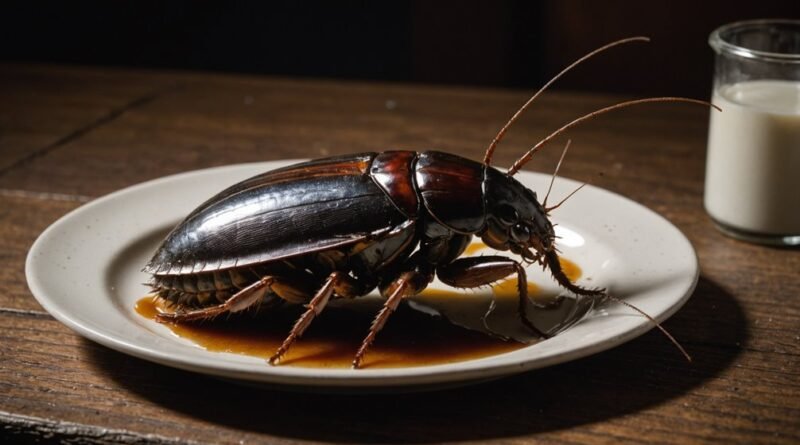
Can You Get Sick From Food Touched by a Cockroach?
Eating food touched by a cockroach can make you sick. Cockroaches spread bacteria and allergens through contact, saliva, and droppings. These pests can contaminate surfaces with pathogens like salmonella and E. coli, leading to symptoms such as stomach cramps and diarrhea. Their infestation also raises the risk of allergic reactions and asthma. Ensuring cleanliness and proper food storage can reduce risks. Discover how to protect yourself and improve food safety practices further.
Key Takeaways
- Cockroaches can mechanically transfer pathogens to food, increasing the risk of infections like salmonellosis and E. coli.
- Contaminated food may cause symptoms such as stomach cramps, nausea, and diarrhea.
- Feces, saliva, and vomit from cockroaches can contaminate food-contact surfaces.
- Discard uncovered or visibly contaminated food, especially ready-to-eat items.
- Proper sanitation and food storage reduce contamination and health risks.
How Cockroaches Contaminate Food and Surfaces
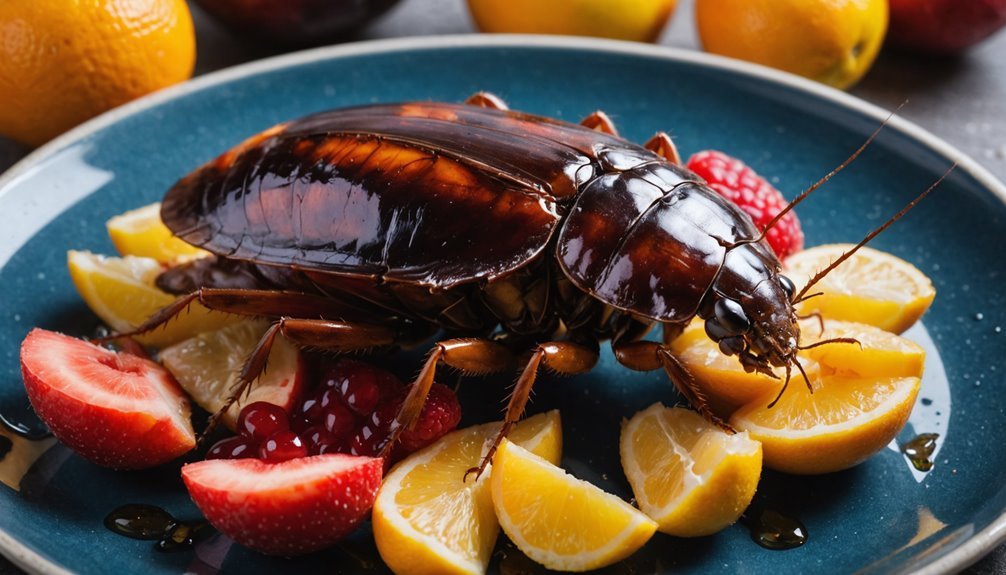
Although often unseen, cockroaches can quickly contaminate food and surfaces in your home. They spread contamination by directly touching food with microorganisms carried on their bodies. When roaches crawl across your kitchen counters and storage areas, they transfer bacteria and allergens through mechanical contact. Their feces, saliva, and shed body parts are also culprits, leaving harmful bacteria and allergens on food and surfaces. As they move over dishes, utensils, and food prep areas, they deposit microbes everywhere. Roaches are notorious for traveling between dirty and clean areas, creating cross-contamination pathways. They can carry contaminants from garbage, drains, and damp spaces into food-handling zones, making your home vulnerable to ongoing contamination risks even when they’re not visible. With their preference for kitchens, cockroaches often find easy access to food and water, increasing the likelihood of contamination.
How Do Cockroaches Spread Disease?
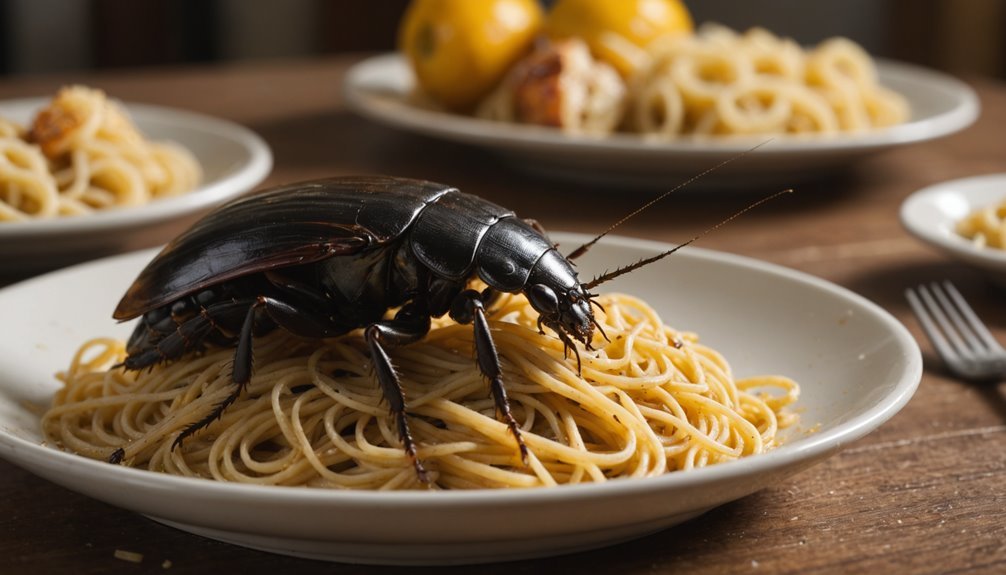
Cockroaches are more than just unwanted guests; they’re vectors of disease. They spread illness primarily through mechanical transfer, carrying pathogens on their bodies. As they crawl over food, utensils, and surfaces, bacteria hitch a ride on their feet, legs, and mouths. These pests are reservoirs of harmful organisms, contaminating ready-to-eat or improperly cooked food. Cockroach droppings and regurgitation also play a significant role in spreading disease. Feces and vomit can deposit pathogens onto countertops and food-contact surfaces. Cockroaches thrive in unsanitary areas such as sewers and garbage cans, increasing their exposure to pathogens. Even brief contact can lead to contamination, as waste gets transferred by hands or utensils. Eating contaminated food or touching your eyes, nose, or mouth after handling tainted items increases the risk of infection, making cockroach control essential for health.
Parasites and Viruses From Cockroaches
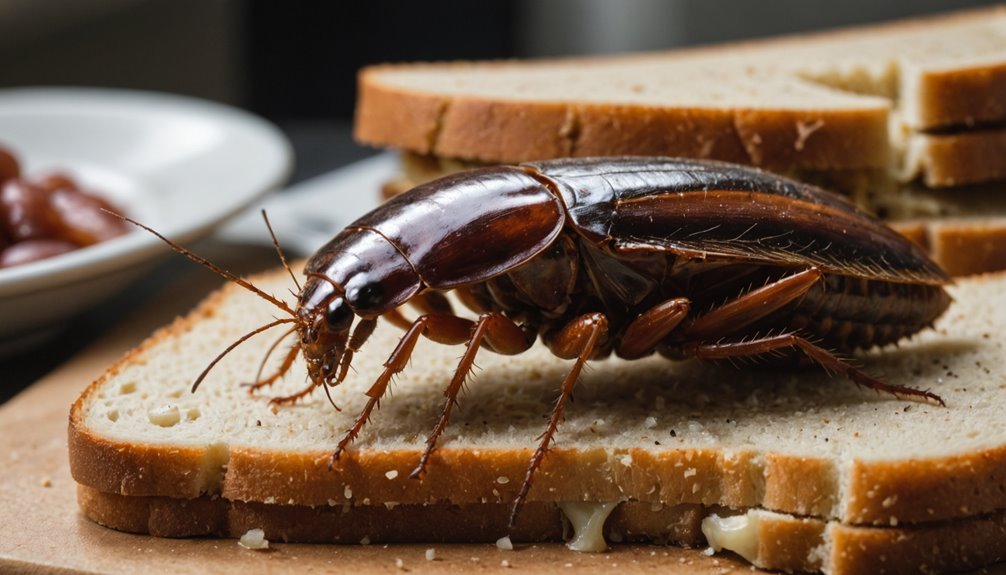
You mightn’t realize it, but cockroaches can carry harmful parasites and viruses that pose significant health risks. They can spread pathogens like *Cryptosporidium parvum* and rotavirus by contaminating food and surfaces, especially in food-handling areas. With approximately 25% of microorganisms from cockroaches identified as food-borne pathogens, understanding these risks helps you take steps to prevent potential infections and protect your health.
Viral Disease Transmission
When cockroaches scuttle across your kitchen, they don’t just bring the potential for bacterial contamination; they can also indirectly spread viruses by contaminating food and surfaces. They move from garbage and drains to your counters and utensils, transferring viral particles like rotavirus and hepatitis A. Although the risk is lower than bacterial threats, it’s still a public health concern, especially in unsanitary settings.
| Virus | Associated Illness |
|---|---|
| Rotavirus | Severe diarrhea in children |
| Hepatitis A | Liver infection |
| Poliovirus | Potential vehicle, not common |
| Gastroenteritis | Fever and diarrhea symptoms |
| Risk Groups | Children, elderly, immunocompromised |
Prevent contamination by maintaining cleanliness and sealing food. You can minimize the risk by addressing infestations promptly.
Parasitic Infection Risks
In kitchens and food-handling settings, the risk of exposure increases when these insects come into repeated contact with exposed food.
Although the World Health Organization notes definitive evidence of cockroaches as direct disease vectors is lacking, the contamination risk remains a public health concern.
Maintaining cleanliness and proper sanitation reduces these parasitic infection risks.
Allergic Reactions From Cockroach Exposure
Cockroach exposure can trigger allergic reactions that include asthma attacks, especially when allergens become airborne and inhaled.
You might notice symptoms like wheezing or trouble breathing, which can worsen for those with asthma.
Since cockroach allergens are a year-round issue, it’s essential to manage exposure and reduce allergens in your environment.
Triggering Asthma Attacks
Although often overlooked, exposure to cockroaches can markedly worsen asthma and trigger allergic reactions in those who are sensitized. Cockroach allergens in body parts, saliva, and fecal matter provoke airway inflammation, causing wheezing, coughing, and shortness of breath. Even dead cockroaches can trigger symptoms, making them a year-round concern. For those with asthma, the impact can be severe, often leading to increased hospital visits.
Here’s a quick glance:
| Symptom | Trigger |
|---|---|
| Wheezing | Allergen proteins |
| Coughing | Airway inflammation |
| Shortness of breath | Allergen exposure |
| Increased hospital visits | Sensitization |
Children, especially in inner-city environments, are at high risk, highlighting the need for effective prevention and management strategies.
Airborne Allergen Exposure
While it might seem surprising, cockroach allergens can easily become airborne, posing a significant risk for allergic reactions. These allergens originate from body parts, saliva, and fecal material, and can be inhaled even in undisturbed environments. When you breathe in these particles, they can trigger sneezing, congestion, and itchy eyes.
Here’s what to know:
- Sources: Allergens come from decomposing bodies, egg casings, and cast skins, often found in household dust.
- Exposure: Cockroach allergens, mainly larger than 10 microns, can remain suspended in the air, making inhalation possible.
- Prevention: Reducing exposure involves eliminating infestations and controlling dust with careful cleaning, HEPA filtration, and minimizing clutter.
Sensitization increases your risk, especially in urban areas.
Health Effects of Eating Contaminated Food
Eating food contaminated by cockroaches can pose significant health risks. These pests carry food-borne pathogens like bacteria, fungi, viruses, and parasites, potentially spreading illnesses such as salmonellosis, gastroenteritis, and E. coli infections.
You might experience symptoms like stomach cramps, nausea, vomiting, diarrhea, fever, and fatigue. Severe cases can lead to dehydration, especially with prolonged vomiting or diarrhea.
Cockroaches also introduce allergens from feces and exoskeletons, triggering allergic reactions or asthma in sensitive individuals. In rare cases, this exposure might cause anaphylaxis.
While one encounter doesn’t guarantee illness, visible contamination or waste increases your risk. Even though heat can kill some microbes, cockroaches can still deposit harmful pathogens, making contaminated food a real health concern.
Infestation Size and Health Risks
Even if a few cockroaches don’t seem like a big deal, the size of an infestation dramatically influences health risks. A small presence might be manageable, but a large infestation escalates concerns. Here’s how:
- Food Contamination: Cockroaches can spread bacteria like salmonella, staphylococcus, and streptococcus. Larger infestations mean more contamination points and higher risks of exposure on food and surfaces.
- Allergies and Asthma: Cockroach droppings, saliva, and exoskeletons can trigger allergic reactions and asthma attacks. More roaches equal more allergens in the air, especially affecting children and those with respiratory conditions.
- Indirect Exposure: Heavy infestations increase allergen-containing dust, making exposure persistent as debris accumulates in hidden areas, affecting indoor air quality.
Infestation size truly matters.
Food Safety Tips for Cockroach Contact
When dealing with food safety after cockroach contact, it’s crucial to take immediate steps to minimize health risks. First, discard any uncovered food that a cockroach has visibly touched, especially ready-to-eat items like bread or fruit.
Avoid eating food from opened or damaged packaging, as it’s more susceptible to contamination. Hard-shelled produce might be salvageable if thoroughly washed and cooked, but always prioritize caution.
Clean any surfaces or utensils a cockroach contacted using hot water and soap, followed by a disinfectant. Let surfaces air-dry for effective sanitation. Always wash your hands after handling contaminated items.
To prevent future issues, store food in airtight containers and promptly clean up spills and crumbs. These steps help guarantee your food remains safe from contamination.
How to Keep Cockroaches Out of Your Home
Although keeping cockroaches out of your home may seem challenging, it’s entirely manageable with some proactive measures. Start by sealing entry points to block their access. Use caulk for cracks, install weather stripping, and add door sweeps to close gaps.
Next, maintain kitchen sanitation and food storage:
- Store food in insect-proof containers to prevent access.
- Clean crumbs and spills promptly; don’t leave dirty dishes overnight.
- Restrict eating to the kitchen and keep counters clean.
Control garbage and waste:
- Use tight-fitting lids on trash cans and empty them daily.
- Rinse recyclables and keep trash away from entrances.
- Fix leaks to reduce moisture and eliminate standing water.
Monitoring and reducing clutter can help guarantee your home stays cockroach-free.
Frequently Asked Questions
Can Cooking Food Eliminate All Risks From Cockroach Contamination?
Cooking can’t eliminate all risks from cockroach contamination. It kills many bacteria but doesn’t remove toxins, fecal matter, or allergens. Always discard visibly contaminated food and clean affected areas to guarantee safety. Stay cautious and proactive.
Are There Any Visible Signs of Cockroach Contamination on Food?
You won’t see visible signs of cockroach contamination on food. Their bacteria, saliva, and fecal matter don’t alter the appearance, color, or texture. Always prioritize safety by discarding food potentially touched by cockroaches, even without visible evidence.
What Should I Do if I Accidentally Eat Contaminated Food?
Rinse your mouth and drink water. Discard remaining food and clean surfaces. Watch for symptoms like nausea or allergic reactions. Seek medical care if symptoms are severe or persistent. Store food properly to prevent future contamination.
How Quickly Can Symptoms Appear After Consuming Contaminated Food?
Symptoms can appear quickly, often within 1-6 hours for preformed toxins. Bacterial food poisoning symptoms usually start 6-72 hours after exposure. Timing varies based on the organism, contamination level, and your health status.
Can Cockroach Infestations Be Linked to Mental Health Issues?
Cockroach infestations can indeed affect your mental health. You might experience stress, anxiety, and sleep disruption due to disgust and fear of contamination. These feelings can intensify with ongoing infestations, impacting your overall well-being.
Conclusion
If you’ve ever wondered if food touched by a cockroach can make you sick, the answer is yes. Cockroaches can spread bacteria, parasites, and viruses, leading to various health issues. Plus, they can trigger allergic reactions. It’s essential to keep your home clean and take preventive measures to avoid infestations. Always make certain your food is properly stored and surfaces are sanitized. Protecting your health starts with keeping these pests at bay.
