
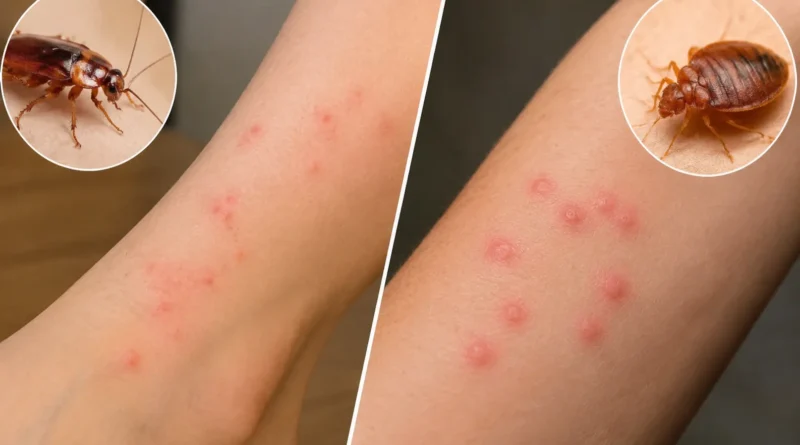
Cockroach Bites vs Bed Bug Bites: How to Tell the Difference
Cockroach bites and bed bug bites are not the same. Bed bug bites appear in clusters or lines, usually on exposed skin while you sleep, and cause intense itching. Cockroach bites are rare, appear as single raised red welts, and typically happen only when food residue is present on skin during heavy infestations. Knowing which pest bit you changes how you respond and what treatment you pursue.
Why Identifying the Right Bite Matters
Most people assume any bite in their bedroom comes from bed bugs, but that assumption can lead to wasted money and missed treatments. Misidentifying the source means you may treat for the wrong pest entirely, leaving the real problem to grow. Before you spend on extermination, it helps to understand what each bite actually looks like, when it happens, and what other signs accompany it in your home.
What Cockroach Bites Look Like
Cockroach bites are uncommon, but they do happen, particularly in homes with large or growing infestations. According to the guide on whether cockroaches bite, roaches only bite humans when food sources are scarce and their population is high. They tend to bite at night, often targeting areas like the face, hands, fingers, and eyelids where food odors may linger.
Here is what cockroach bites typically look like:
- Single, isolated red bump rather than a pattern or cluster
- Slightly larger than a mosquito bite, often 1 to 4 mm wide
- Raised and firm, with mild to moderate swelling around the bite site
- May cause itching but is usually less intense than bed bug bites
- Can become infected if scratched, especially in humid environments
If you want to understand the full picture of what a cockroach bite involves, including symptoms and how to treat the area, the detailed breakdown of cockroach bite symptoms and treatment covers exactly that. And if you are wondering whether a cockroach bite can cause serious harm, the answer in most healthy adults is no, though knowing the realistic risks is useful. The article on whether a cockroach bite can kill you addresses this directly.
What Bed Bug Bites Look Like
Bed bug bites follow a different pattern entirely and are far more common in residential settings. Bed bugs feed exclusively on blood and do so while you sleep, which means their bites appear on skin that was exposed during the night.
Key features of bed bug bites include:
- Bites appear in lines, clusters, or zigzag patterns, often three in a row (sometimes called the “breakfast, lunch, dinner” pattern)
- Located on exposed skin such as arms, neck, legs, shoulders, and face
- Intense itching that often feels worse than mosquito bites
- Small red welts with a darker red center, sometimes surrounded by a halo
- Bites typically appear in the morning after a night of sleeping
- Some people have no visible reaction at all, while others develop large inflamed welts
Unlike cockroaches, bed bugs do not bite because they are starving or because you had food on your skin. They bite because that is their only food source.
Where on the Body Each Bite Appears
Location on the body is one of the most useful clues when telling these two bites apart. The placement reveals feeding behavior, and feeding behavior reveals the pest.
Cockroach bites tend to appear on:
- Hands and fingers, especially if you touched food before sleeping
- Face and lips, where food smells can linger
- Feet and ankles if you walk barefoot in infested areas
Bed bug bites are more commonly found on:
- Arms, particularly the forearm and upper arm
- Neck and collarbone area
- Legs and thighs
- Shoulders and upper back
If bites are appearing consistently on your arms and neck in a row, bed bugs are the more likely culprit. If you find a single bite on your hand or near your mouth, and you live in an area where cockroaches are present, the possibility of a cockroach bite increases, especially when combined with other signs of infestation.
Timing and Pattern Differences
The timing of bites provides another layer of clarity. Both pests are nocturnal, but their behavior patterns differ significantly. Understanding when and why cockroaches come out at night helps explain why roach encounters tend to happen in kitchens or under furniture rather than on your bed.
Bed bugs, on the other hand, are drawn directly to sleeping humans. They live in mattress seams, box springs, bed frames, and nearby furniture. They feed for three to ten minutes while you sleep, then retreat. This means you will rarely see them but will wake up with new bites each morning if they are present.
Cockroach bites are erratic. They do not follow a schedule or location the way bed bug bites do. A cockroach bite is usually a one-time event triggered by proximity and scent, not a regular feeding pattern.
Other Signs That Help Confirm the Pest
Bites alone are rarely enough to confirm which pest is responsible. You need to look at the broader environment in your home for supporting evidence. Cockroaches leave behind a trail of signs that go well beyond bites.
Signs that point toward a cockroach infestation:
- Dark pepper-like droppings along baseboards, inside cabinets, or behind appliances. The detailed guide on what cockroach droppings look like shows exactly what to find
- A musty, oily smell in rooms where cockroaches hide. If you are not sure what to sniff for, learn what cockroaches smell like before inspecting your home
- Egg cases, known as oothecae, tucked into dark crevices. Understanding what cockroach egg sacks look like is helpful here
- Live or dead cockroaches spotted at night in kitchens or bathrooms
- Shed skins left behind as nymphs grow through molting stages
Signs that point toward bed bugs:
- Small rust-colored stains on sheets or pillowcases from crushed bugs or their droppings
- Tiny pale yellow shells or shed skins in mattress seams
- Live bugs found in mattress folds, behind headboards, or inside furniture joints
- A sweet, musty odor in heavily infested rooms
- Multiple family members or housemates developing bites at the same time
Reaction and Healing Time
How long each bite takes to heal and how your body reacts also differs. Cockroach bites generally heal within one to two weeks without special treatment. The bite site may become infected if scratched repeatedly, especially in warm or humid environments. People with cockroach allergies may experience a stronger inflammatory response, which is worth keeping in mind since cockroach allergens are a documented health concern. The relationship between cockroach allergies, symptoms, and exposure goes deeper than most people realize.
Bed bug bites can persist for one to three weeks and may become more inflamed over time, especially in people with sensitive skin. Repeated exposure to bed bug bites can cause a more severe allergic reaction with each subsequent incident.
Health Risks Connected to Each Pest
Beyond the bites themselves, the health implications of living with either pest are worth understanding. Cockroaches are not just a nuisance; they are active disease vectors. They contaminate food, surfaces, and air quality inside the home. People with asthma or respiratory conditions are particularly vulnerable. The connection between cockroaches and asthma in children is well documented, and adults are not immune either.
The broader risk picture for cockroach exposure includes:
- Contamination of food and kitchen surfaces through contact. Learning how cockroaches contaminate food and how to clean up is essential for food safety
- Triggering or worsening respiratory conditions through allergen particles in the air
- Possible transmission of bacteria including Salmonella through their droppings and movement
- Emotional and psychological stress from living in an infested environment
Bed bugs, by contrast, are not known to transmit disease, but the psychological toll of a bed bug infestation, including disrupted sleep, anxiety, and constant itching, is well documented and should not be dismissed.
What to Do If You Suspect Cockroaches
If the signs in your home are pointing toward cockroaches rather than bed bugs, the good news is that a range of treatment options exists, from DIY to professional. Early action matters because cockroaches reproduce rapidly, and what starts as a small problem can escalate quickly. Understanding how fast cockroaches reproduce makes it clear why waiting is rarely a good idea.
If you want to tackle the problem yourself, the breakdown of the best baits, gels, and traps for cockroach control gives you a practical starting point. For more serious infestations or when DIY methods are not working, the comparison of DIY vs professional cockroach extermination can help you decide the right path forward.
Preventing cockroaches from returning after treatment is just as important as the treatment itself. Simple changes to your kitchen habits, sealing entry points, and managing moisture go a long way. The guide on best prevention tips for keeping roaches out of your kitchen covers the most effective steps you can take starting today.
What to Do If You Suspect Bed Bugs
Bed bug infestations require a different approach entirely. Start by thoroughly inspecting your mattress, box spring, bed frame, and any nearby furniture. Wash all bedding in hot water and dry on the highest heat setting. Vacuum the mattress seams and surrounding floor thoroughly.
If the infestation has spread, professional heat treatment is considered the most effective method, as bed bugs cannot survive temperatures above 118 degrees Fahrenheit. Chemical treatments are also available but often require multiple applications. Unlike cockroach treatments, bed bug treatments focus heavily on the sleeping area and bedroom furniture.
A Quick Comparison Summary
When you need a fast reference, here is how cockroach bites and bed bug bites compare across the most important factors.
- Bite appearance: Cockroach bites are single, raised, and isolated. Bed bug bites appear in rows, lines, or clusters.
- Location on body: Cockroach bites favor hands, face, and areas with food odors. Bed bug bites target any exposed skin during sleep.
- Frequency: Cockroach bites are rare. Bed bug bites occur regularly every night if bugs are present.
- Timing: Both happen at night, but bed bugs are drawn directly to sleeping bodies while cockroaches bite opportunistically.
- Accompanying signs: Cockroaches leave droppings, odor, and egg cases. Bed bugs leave blood stains, shed skins, and live bugs in mattress seams.
- Health risk: Cockroaches pose greater disease and allergen risks. Bed bugs cause more psychological distress but do not spread disease.
Frequently Asked Questions
Can cockroaches bite you while you sleep?
Yes, cockroaches can bite you while you sleep, though it is rare. This is more likely in homes with a heavy infestation and limited food sources. They are attracted to the smell of food residue on skin, particularly around the mouth and hands. Washing up before bed and eliminating food access points reduces this risk significantly.
Do cockroach bites look like bed bug bites?
They share some similarities, such as redness and swelling, but the pattern and location differ. Cockroach bites are usually solitary and appear on areas with food odors. Bed bug bites appear in clusters or rows on exposed skin across the body. The context of where you find the bites, and what other signs exist in your home, is what distinguishes them most clearly.
How do I know if bites are from cockroaches or something else?
The safest approach is to look for other evidence in your home. If you spot early signs of a cockroach infestation such as droppings, shed skins, or a musty odor, then cockroaches are likely the cause. If the only evidence is bites with no other signs of roaches, another pest is probably responsible.
Are cockroach bites dangerous?
For most healthy adults, cockroach bites are not dangerous on their own. However, the broader presence of cockroaches in your home carries real health risks through allergens, bacteria, and food contamination. The full scope of cockroach health risks and safety concerns goes well beyond the bite itself.
What should I apply on a cockroach bite?
Clean the bite area with soap and water, then apply an antiseptic. An over-the-counter hydrocortisone cream can help reduce itching and swelling. Avoid scratching, as this increases the risk of infection. If the bite becomes more inflamed, shows signs of infection, or you develop a fever, consult a healthcare provider.
Can bed bugs and cockroaches infest the same home?
Yes, it is possible for both pests to be present simultaneously, though they occupy different areas of the home. Cockroaches tend to live in kitchens, bathrooms, and wall voids, while bed bugs stay close to sleeping areas. If you are experiencing bites and cannot identify the source, it is worth checking both locations carefully before deciding on a treatment approach.