

What to Do if You Find Cockroach Droppings in Food
If you spot cockroach droppings in your food, immediately throw away any contaminated items. Seal them in a sturdy bag and take them to a lidded bin outside. Check other foods, discarding any with damage or droppings. Clean surfaces with hot, soapy water and disinfect thoroughly. Wear gloves and a mask for protection during cleanup. Consider improving storage and sealing entry points to prevent future infestations. Discover additional detailed steps to guarantee safety.
Key Takeaways
- Dispose of any food with visible cockroach droppings immediately to prevent contamination.
- Seal contaminated waste in a leakproof bag and move it to an outdoor lidded bin.
- Clean affected surfaces with hot, soapy water followed by a household disinfectant.
- Inspect and transfer intact dry goods to new containers; discard damaged packaging.
- Schedule a pest control inspection to address and prevent further infestations.
Immediate Steps to Dispose of Affected Food
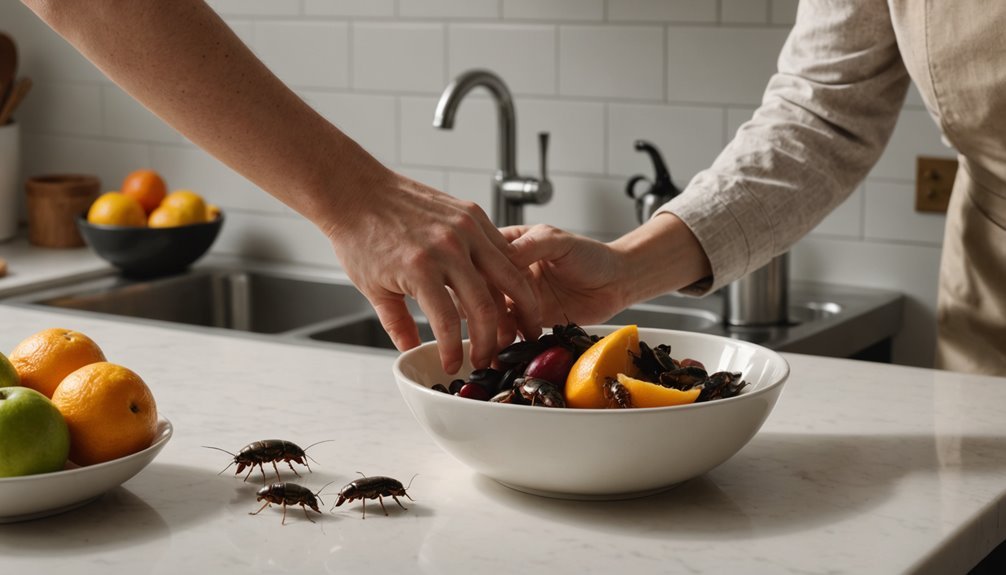
Discovering cockroach droppings near your food is unsettling, but quick action can minimize risks. Immediately dispose of any exposed food that a cockroach might’ve touched, especially if it’s uncovered like baked goods or prepared meals. Don’t just trim off the affected section; discard the entire item to guarantee safety. If there’s any doubt about contact, treat it as contamination and remove the food promptly from your kitchen to prevent further attraction. Cockroach droppings can contaminate food with pathogens such as E. coli and Salmonella, leading to potential health risks. Secure the waste by sealing it in a sturdy, leakproof container or heavy-duty plastic bag. Double-bagging helps reduce odor and pest access. Once sealed, take it outside immediately and place it in a lidded bin. This prevents pests from re-entering and limits exposure indoors.
Evaluating Safe Foods After Contamination
After disposing of contaminated food, the next step is to decide what can still be safely consumed. Moist, ready-to-eat items like salads and dairy should be discarded if contaminated. Cockroaches can spread bacteria such as Salmonella and E. coli, which makes consumption of contaminated items risky. For dry goods, inspect packaging carefully; if intact, transfer contents to a new sealed container. Discard anything with visible damage or droppings. For produce, thoroughly wash fruits and vegetables with intact skins. Leafy greens might need repeated rinsing. Produce with damaged skin or residue should be tossed. If a cockroach briefly contacted an item that will be thoroughly cooked, it might be safer, but err on the side of caution. Consider factors like food type, contact extent, and whether the item can be cleaned or cooked before deciding.
How to Clean and Disinfect Properly
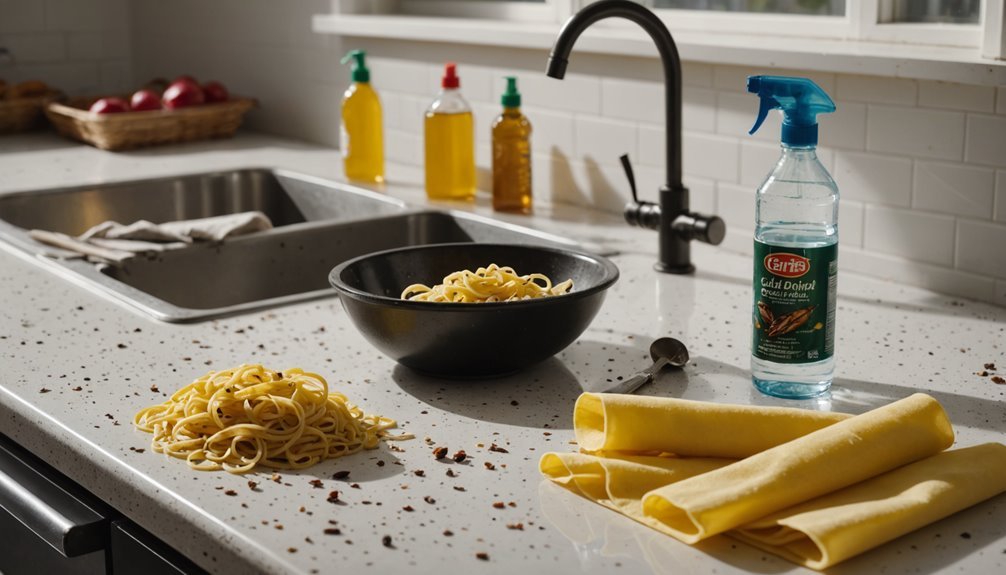
Tackle the cleaning process by first removing any visible debris using a HEPA-filter vacuum, which prevents allergens from spreading into the air.
Focus on counters, cabinet interiors, floors, and crevices. Avoid dry sweeping. Dispose of vacuum contents in a sealed bag outdoors.
Next, wash hard surfaces with hot, soapy water. Use damp cloths or sponges, especially on food-preparation areas. Replace cleaning materials immediately after use.
After cleaning, apply a household disinfectant. Consider a bleach solution (1 tablespoon per gallon of water) for disinfection, ensuring the product sits for about 10 minutes. Cockroach contamination can include droppings, shed skins, and decomposing bodies, posing health risks if not properly removed.
Rinse food-contact surfaces if required.
Inspect and wash dishware with hot, soapy water. Soak in bleach solution if necessary, then rinse and air dry.
Dispose of waste promptly.
Protect Yourself During Cleanup
Before tackling the cleanup, make sure you’re wearing protective gear like disposable gloves, a mask, and eye protection to keep allergens at bay.
Opt for a HEPA-filter vacuum or lightly mist areas with soapy water to minimize airborne particles.
Always dispose of contaminated materials in a sealed trash bag to prevent recontamination.
Wear Protective Gear
When you find cockroach droppings, it’s crucial to protect yourself during cleanup by wearing proper protective gear. Start by using disposable gloves to prevent skin contact. Choose nitrile or latex-free options to avoid allergies, and make sure they’re intact.
An N95 respirator mask is necessary to filter airborne particles. Verify the mask’s fit and replace it if damp. Protect your eyes with snug-fitting safety goggles; avoid prescription glasses without side shields.
Finally, cover your body with a disposable gown or coverall to shield your skin from contaminants.
Here’s a quick checklist:
- Hand Protection: Use nitrile gloves, inspect for tears, double-glove if needed.
- Airway Protection: Wear an N95 mask, ensure a proper fit.
- Vision Protection: Opt for non-ventilated goggles.
- Skin Coverage: Use a long-sleeved gown or coverall.
Safe Cleaning Practices
Cleaning up cockroach droppings safely is essential to protect your health. Start by using wet cleaning methods. Lightly mist droppings with soapy water or disinfectant before removing them to prevent airborne particles. Avoid dry sweeping; instead, use a damp cloth to lift residue. Clean from top down, and use a HEPA-filter vacuum for visible dry droppings. Disinfect surfaces with hot soapy water, followed by a disinfectant, ensuring proper contact time. Ventilate the area to control airborne contamination.
| Task | Method |
|---|---|
| Wet Cleaning | Soapy water/disinfectant |
| Avoid Dry Sweeping | Damp cloth |
| HEPA Vacuum | For dry droppings |
| Disinfection | Hot soapy water, bleach |
| Airborne Control | Ventilation, HEPA vacuum |
Dispose of waste promptly, and wash hands thoroughly after cleanup.
Preventing Future Cockroach Infestations
If you want to keep cockroaches at bay, start by managing food and waste effectively. Clean up spills and food waste immediately.
Store food, including pet food, in sealed containers and empty pet bowls at night. Regularly take out the trash and avoid clutter like paper bags and cartons.
To prevent moisture problems, fix any leaks and dry sinks and showers after use. Seal entry points by caulking cracks and repairing screens.
Maintain a clutter-free environment and clean under appliances.
For a thorough approach:
- Trim shrubbery to improve light and airflow.
- Remove debris from gutters and downspouts.
- Store firewood away from your house.
- Use sticky traps to monitor cockroach activity.
These steps will help prevent future infestations.
Contacting Professional Pest Control Services
If you find cockroach droppings, it’s essential to assess the infestation’s severity by noting where and how often you see signs.
Choose a reliable pest control service by asking about their licensing, treatment methods, and availability.
Schedule an inspection promptly to address the problem before it worsens, especially in sensitive areas like kitchens.
Identifying Infestation Severity
When you discover cockroach droppings, it’s essential to assess the infestation’s severity to determine if professional pest control is necessary.
Look for patterns and signs that suggest a serious problem:
- Droppings Pattern: Small, dark specks, especially around food and baseboards, indicate frequent traffic. Large, ridged droppings suggest bigger species.
- Live Sightings: Witnessing roaches during the day or in multiple rooms signals a severe infestation.
- Additional Evidence: Egg cases, shed skins, or a musty odor point to active reproduction and growth.
- Monitoring Results: Quickly filling sticky traps or new droppings after cleaning suggest persistent activity.
These signs can help you decide if it’s time to call in the experts.
Choosing Reliable Services
Even though finding cockroach droppings can be unsettling, choosing a reliable pest control service doesn’t have to be. Start by verifying the company’s current license and certifications, guaranteeing they’re legally operating in your area.
Check for industry certifications like BPCA or NPMA, which signal higher standards. Confirm they’ve liability insurance and bonded employees to protect against damages. Request proof of insurance certificates instead of relying on verbal claims.
Compare multiple companies by contacting 2–5 providers and obtaining written quotes that detail treatment scope and costs. Investigate their reputation through independent reviews and references.
Look for professionalism in communication and service quality. By following these steps, you’ll guarantee a safe and effective pest control experience.
Scheduling Timely Inspections
Choosing a reliable pest control service is just the beginning; acting quickly with inspections is equally important to tackle cockroach issues effectively. When you find droppings, contact a professional immediately.
Here’s how to proceed:
- Immediate Action: Reach out for same-day or next-day service. Droppings indicate active infestation, requiring expert evaluation within 24 hours.
- Follow-up Timing: Schedule inspections no sooner than 10 days post-treatment, with 14 days preferred for accuracy.
- Comprehensive Check: Confirm the inspection covers the entire property, focusing on food-storage areas, hidden access points, and moisture conditions.
- Inspection Frequency: Plan quarterly or biannual inspections depending on your property’s risk level, with more frequent checks in high-risk areas.
Taking these steps guarantees a thorough and effective pest management approach.
Cockroach Issues in Restaurants
Although encountering cockroach droppings in a restaurant can be alarming, it’s essential to take immediate action to protect your patrons and maintain hygiene standards.
Droppings, resembling pepper or coffee grounds, indicate an active infestation in storage or prep areas. These droppings, often near food sources, sinks, and electrical outlets, contaminate dry goods like flour and sugar, pointing to poor sanitation and inadequate food coverage.
Droppings carry harmful bacteria such as Salmonella and E. coli, posing health risks like gastrointestinal illness.
To address this, remove all contaminated food, clean surfaces with hot water and enzymatic cleaners, and discard affected items properly.
Enhance prevention by storing food in airtight containers, fixing leaks, and maintaining daily cleaning routines to reduce cockroach attraction.
Legal and Health Reporting for Recurring Problems
When recurring cockroach issues arise in a food business, it’s crucial to report them to local health authorities promptly. Doing so guarantees public safety and triggers necessary inspections.
To effectively report:
- Document Evidence: Capture photos or videos of droppings, live roaches, and contaminated areas.
- Detail Specifics: Include the name, location, date, time, and exact areas affected, like prep or dining areas.
- Submit Reports: Use online forms, hotlines, or municipal services. Make sure you include your contact information.
- Health Concerns: If linked to illness, mention symptoms and seek medical attention. Preserve packaging or receipts for investigation.
Consistent reporting of multiple sightings strengthens the case for action, potentially leading to inspections and necessary enforcement.
Maintaining a Pest-Free Kitchen
Keeping your kitchen pest-free is essential for maintaining a healthy home environment.
Start by storing dry goods like flour and rice in airtight containers to keep pests out. Refrigerate perishable foods and cover fruits and vegetables. Seal pet food tightly to prevent attracting cockroaches.
Clean countertops, tables, and floors daily to eliminate crumbs and grease. Wash dishes promptly and clear debris from under appliances. Fix leaks quickly, wipe up spills, and avoid overnight water in sinks.
Regularly empty trash bins with tight lids and clean them to minimize odors. Seal cracks and gaps around pipes and doors to block entry points.
Inspect storage areas to guarantee no food damage or signs of pests. Maintain these practices consistently for a pest-free kitchen.
Identifying Signs of Cockroach Contamination
After ensuring your kitchen stays pest-free, it’s important to recognize signs of cockroach contamination.
Begin by looking for visible droppings, which resemble tiny dark flecks like ground black pepper. These can appear near food, shelves, and counters. Larger roaches leave cylindrical pellets, while smaller ones leave finer specks.
Droppings resembling ground pepper near food or shelves indicate cockroach presence; larger ones leave cylindrical pellets.
- Egg Casings and Shed Skins: Oval-shaped casings and shed skins indicate infestation and are often found in hidden areas.
- Smear Marks: Look for long streaks on walls, cabinets, or floors where moisture is present.
- Direct Sightings: Spotting a cockroach, especially in daylight, signals a strong infestation.
- Odor and Patterns: A strong, oily odor suggests a larger infestation; check behind appliances and under sinks.
Stay vigilant!
Frequently Asked Questions
Can Cockroach Droppings Cause Allergic Reactions?
Yes, cockroach droppings can cause allergic reactions. When you encounter these proteins, your immune system might see them as threats, releasing histamine. This triggers sneezing, itching, and even asthma symptoms if you’re sensitive.
What Health Risks Do Cockroach Droppings Pose?
Cockroach droppings pose health risks by spreading bacteria like *E. coli* and Salmonella, causing food poisoning. They trigger allergic reactions and asthma symptoms. Ongoing exposure increases sensitivity, especially in children. Always discard contaminated food immediately.
How Can I Identify Cockroach Droppings?
You can identify cockroach droppings by their tiny, seed-like shape, dark brown to black color, and slight shine. They often appear in hidden, moist areas and may have a musty odor. Check for clusters.
Are Pets at Risk From Cockroach Droppings?
Yes, your pets are at risk. Cockroach droppings can carry harmful bacteria and allergens, causing symptoms like vomiting, diarrhea, and respiratory issues. Keep food sealed and clean up promptly to protect them from exposure.
Is There a Safe Way to Compost Contaminated Food?
You can safely compost contaminated food if you use a verified high-heat process. Make sure your compost reaches 130°F to 160°F for five days, repeated three times. Otherwise, treat it as waste to avoid pathogen risks.
Conclusion
Finding cockroach droppings in food can be unsettling, but taking quick action is key. Dispose of contaminated items immediately and thoroughly clean the area. Make certain you’re protected during cleanup and evaluate safe foods carefully. To prevent future infestations, maintain a clean kitchen and implement pest control measures. If you encounter issues in restaurants, report them to authorities. By staying vigilant and proactive, you can keep your kitchen pest-free and guarantee your peace of mind.
