
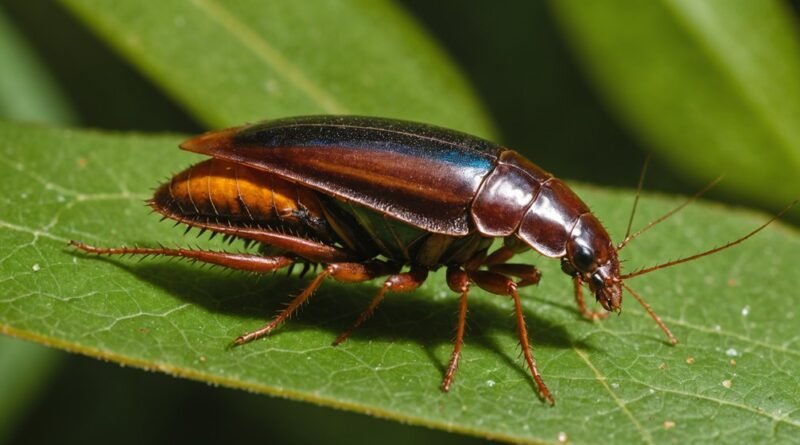
Types of Cockroaches in Florida: The Complete Guide
Florida is home to 70+ cockroach species, but you’ll most commonly encounter 7 to 8 in and around your home. These include the German cockroach, American cockroach, smokybrown, Asian, Australian, brown-banded, brown, and Florida woods cockroach. They fall into two practical groups: indoor breeders and outdoor invaders. Each species behaves differently, which means you’ll need different strategies to control them. Keep going to find out exactly what you’re dealing with and how to handle it.
Key Takeaways
- Florida has at least 70 cockroach species, with 7 to 8 commonly encountered in homes, including German, American, and Smokybrown cockroaches.
- Cockroaches are divided into indoor-breeding species, like the German cockroach, and outdoor peridomestic species, like the American cockroach.
- Misidentification of species can lead to ineffective treatments, making accurate identification critical for successful pest control.
- Cockroaches pose serious health risks by contaminating food surfaces and triggering allergies and asthma through shed skins and waste.
- Effective control combines indoor gel baits, liquid insecticides, sealing entry points, and outdoor vegetation and moisture management.
How Many Cockroach Species Live in Florida?
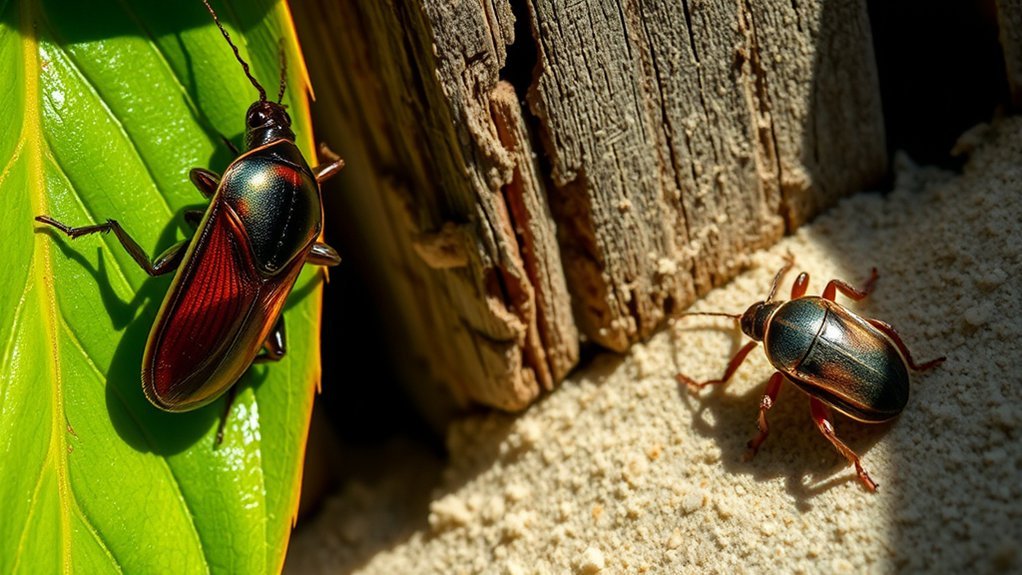
Florida is home to at least 70 cockroach species, but you’ll typically encounter only a handful of them inside or around your home. Most Florida residential guides focus on 7 to 8 species because those are the ones you’re most likely to see near people and structures.
UF/IFAS consistently names 7 species as the most common around Florida homes: the Florida woods, American, smokybrown, brown, Australian, German, and Asian cockroaches. Many guides add the brown-banded cockroach to bring that list to 8.
These species break into two practical groups. Outdoor species like the American, smokybrown, and Australian cockroach typically enter your home through gaps, drains, and vents.
Indoor-breeding species like the German and brown-banded cockroach establish persistent infestations inside kitchens, bathrooms, and wall voids.
That distinction matters because it shapes how you identify and treat a cockroach problem in your Florida home. All of these species are omnivorous scavengers, feeding on nearly anything available including food scraps, grease, and even paper or cardboard.
Indoor vs. Outdoor Cockroaches: What’s the Difference?
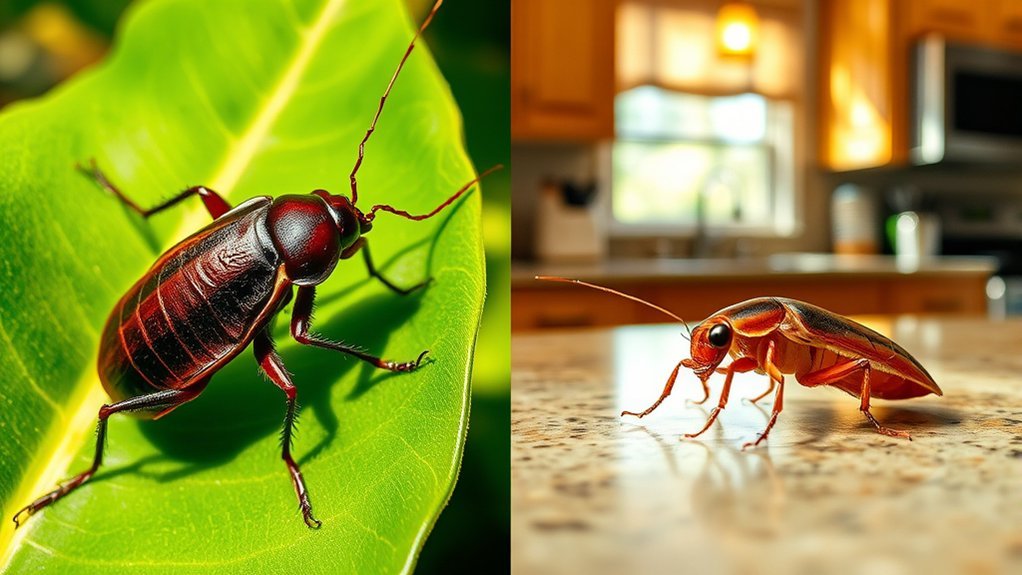
When dealing with cockroaches in Florida, one of the most useful distinctions you can make is whether you’re facing an indoor or outdoor species.
Indoor roaches like the German cockroach live and breed entirely inside your home, while outdoor species like the American cockroach typically stay in mulch, leaf litter, and landscaping but occasionally wander in through gaps, drains, or cracks.
That difference matters because it shapes your entire control strategy—indoor infestations demand targeted interior treatments, while outdoor roaches are best managed by reducing moisture, sealing entry points, and treating the landscaping around your foundation. In fact, outdoor cockroaches generally cannot survive indoors for long, which means a single sighting does not necessarily point to an established infestation.
Where They Live
Not all cockroaches in Florida behave the same way, and understanding where they live is key to dealing with them effectively.
Indoor species like the German cockroach thrive inside kitchens, bathrooms, and utility areas. They cluster in cracks, behind appliances, and near pipes where warmth, moisture, and food overlap.
Outdoor species take a different approach. American, Smokybrown, Australian, Florida woods, and Asian cockroaches prefer mulch beds, leaf litter, woodpiles, tree hollows, and other damp landscape areas.
They’re peridomestic, meaning they live near your home rather than inside it.
When you spot an outdoor species inside, it usually means there’s active harborage nearby outside, not a true indoor infestation.
Knowing the difference helps you treat the right location. Of the five main species found in Florida, only the German cockroach is known to establish large self-sustaining populations entirely indoors.
How They Enter
Knowing where cockroaches live naturally leads to the next question: how do they actually get inside? The answer depends on whether you’re dealing with an indoor or outdoor species.
German cockroaches rarely wander in from outside. They typically arrive through:
- Infested boxes, bags, or used appliances you bring indoors
- Groceries or secondhand items carrying hidden egg cases
- Neighboring units in multi-family buildings sharing wall voids
Outdoor species use a completely different playbook. They exploit structural gaps around doors, windows, foundations, and plumbing penetrations.
Heavy rain or flooding often pushes them inside, and overhanging trees or dense shrubs give them a direct path to your home.
One large roach near a drain after a storm usually means an outdoor intruder.
Repeated small roach sightings suggest something’s already breeding inside. The German cockroach is considered the most difficult species to control because it reproduces rapidly indoors, allowing populations to grow quickly once established.
Control Strategy Differences
Whether you’re dealing with an indoor or outdoor species changes everything about how you treat the problem. German and brown-banded roaches need interior baiting and crack-and-crevice treatments. American, smoky brown, and Asian roaches respond better to perimeter barriers and habitat reduction outside.
| Factor | Indoor Species |
|---|---|
| Primary treatment zone | Inside structure |
| Key tactic | Gel baits, crack-and-crevice sprays |
| Moisture focus | Fix leaks under sinks, appliances |
| Harborage reduction | Clean behind stoves, seal food |
| Exclusion priority | Door sweeps, interior gaps |
For outdoor species, shift every column outward—perimeter sprays, mulch removal, and drainage fixes replace interior tactics. Misidentifying the species means treating the wrong zone entirely, which is why correct ID drives every decision you make. Florida’s warm temperatures and humidity make it especially easy for roaches to establish themselves both inside and outside the home, which is why knowing exactly which species you’re dealing with is the foundation of any effective control strategy.
What Is a Palmetto Bug? American and Florida Woods Cockroaches
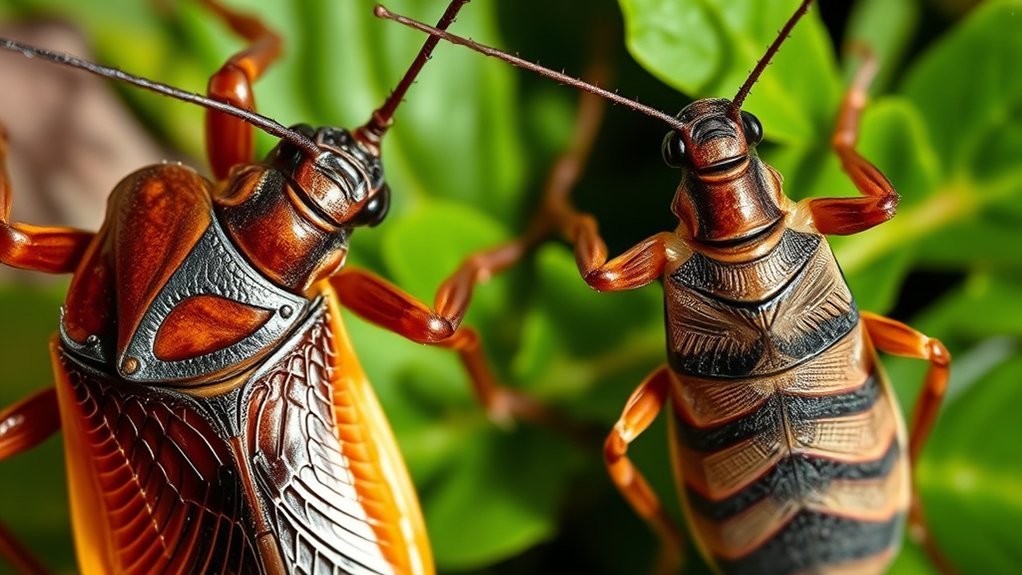
If you’ve lived in Florida for any amount of time, you’ve probably heard the term “palmetto bug” — but it’s not actually a separate insect.
It’s an informal nickname Floridians use for several large cockroach species, most commonly the American cockroach and the Florida woods cockroach.
Knowing which one you’re dealing with matters, because these two species differ in appearance, behavior, and habitat.
Defining the Palmetto Bug
The “palmetto bug” is a regional nickname, not a formal species name, so it doesn’t point to a single insect. In Florida, you’ll most often hear it applied to these three large cockroach species:
- American cockroach (*Periplaneta americana*) — dark reddish-brown with a yellowish-marked pronotum, reaching up to 2 inches long.
- Florida woods cockroach (*Eurycotis floridana*) — reddish-brown to black, measuring roughly 1.2 to 1.6 inches, and strongly tied to moist outdoor habitats.
- Smokybrown, Australian, and brown cockroaches — occasionally grouped under the same label depending on location.
Since the term is informal, local usage varies. When you’re trying to identify what you’ve spotted, focus on size, color, and habitat rather than relying on the nickname alone.
American Vs. Florida Woods
Their habitats differ just as sharply.
You’ll find American cockroaches in drains, sewers, and indoor utility spaces, where they can breed inside your home.
Florida woods cockroaches prefer leaf litter, rotting logs, and mulch outdoors, rarely establishing indoors.
That distinction directly shapes which control strategy you’ll need.
German Cockroaches: Florida’s Most Problematic Indoor Pest
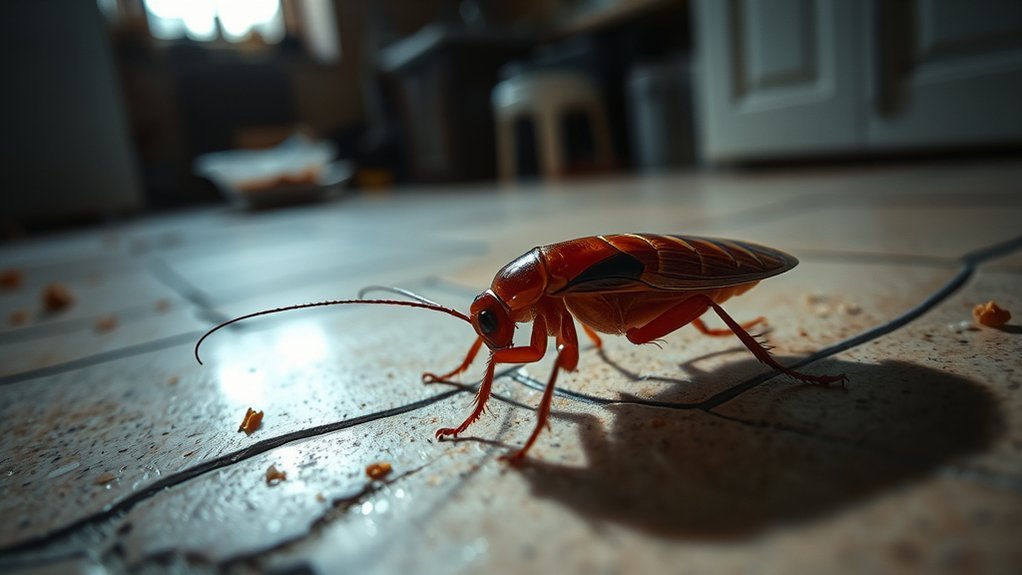
When it comes to indoor cockroach problems in Florida, the German cockroach is the one you’re most likely dealing with. You can identify it by its light brown body, small size (½ to ⅝ inch), and two dark parallel stripes behind the head.
These roaches thrive in kitchens, bathrooms, and laundry areas where warmth and moisture are plentiful. One female can produce hundreds to thousands of offspring annually, meaning infestations grow fast and quietly.
Beyond being a nuisance, German cockroaches are a genuine health threat. They contaminate food surfaces and carry bacteria like Salmonella and E. coli. Their shed skins and waste also trigger allergies and asthma, especially in children.
To control them effectively, focus on these three steps:
- Eliminate food debris and moisture sources through consistent sanitation.
- Apply gel baits in cracks and crevices according to label directions.
- Seal harborage points and use insect growth regulators for heavy infestations.
Asian and Brown-Banded Cockroaches: The Species Most People Misidentify
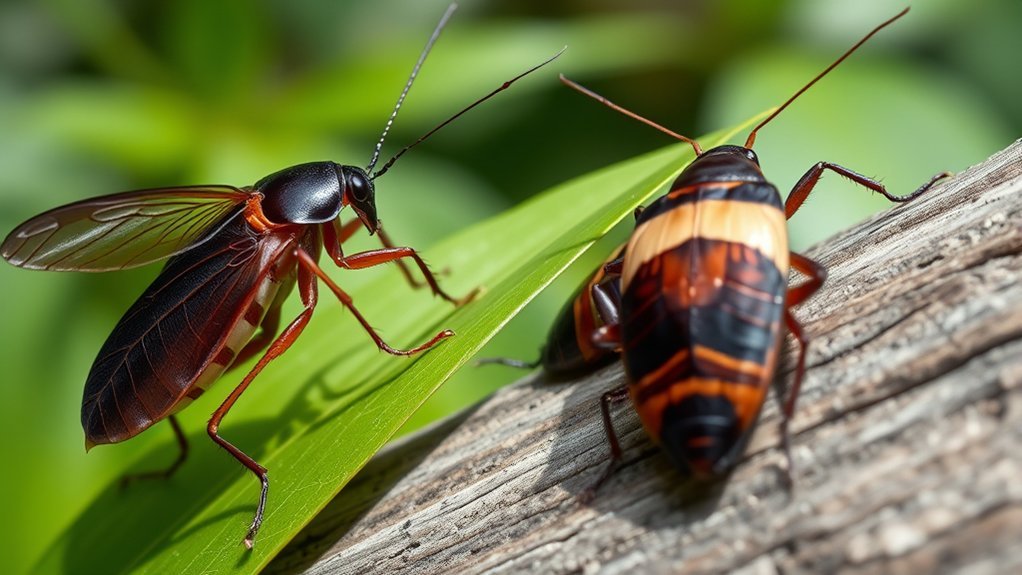
If you’ve ever spotted a small, tan roach with two dark stripes running behind its head, you may have assumed it was a German cockroach, but it could easily be an Asian cockroach — a strong flier that lives outdoors in mulch and leaf litter rather than in your kitchen.
Brown-banded cockroaches add another layer of confusion because they’re small and brownish too, yet they prefer dry, elevated hiding spots like bedroom shelving, furniture, and electronics instead of moisture-rich areas.
Misidentifying either species leads you to treat the wrong locations, leaving the actual infestation untouched and the problem unresolved.
Asian Vs. German Appearance
Two cockroaches in Florida trip people up more than almost any other species: the Asian cockroach and the brown-banded cockroach.
If you’re trying to separate an Asian cockroach from a German cockroach, focus on these three differences:
- Wing length – Asian cockroach wings extend past the abdomen; German cockroach wings don’t.
- Coloration – Asian cockroaches are slightly lighter and more tan.
- Flight – Asian cockroaches are strong fliers; German cockroaches rarely fly.
Both species share the same dark parallel stripes behind the head and nearly identical size, which is exactly why misidentification happens so often.
You can’t rely on size alone. Checking wing shape and watching whether the roach actually flies will give you the most reliable field identification.
Brown-Banded Hiding Spots
Once you’ve sorted Asian from German, there’s a second misidentification trap waiting: the brown-banded cockroach. Unlike species that cluster near moisture, brown-banded cockroaches prefer warm, dry, elevated spots—and they spread far beyond the kitchen.
Check upper cabinets, shelving, and bedroom closets first. You’ll also find them behind picture frames, wall clocks, and decorations where cleaning rarely reaches.
Small cracks along baseboards, molding, and loose wallpaper offer sheltered harborage throughout upper rooms.
The hiding spots most people miss entirely are inside electronics—TVs, routers, gaming consoles, and computers all attract them. Warm motors near refrigerators and light fixtures are equally common.
Furniture joints, upholstery seams, dresser drawers, and hollow-core doors can conceal egg cases long before you notice any activity.
Misidentification Control Consequences
Misidentifying Asian and brown-banded cockroaches doesn’t just delay results—it actively sends your treatment in the wrong direction.
Each species requires a different control strategy, and applying the wrong one leaves the source population untouched.
Here’s what misidentification typically costs you:
- Asian cockroach: Indoor-only treatments miss the outdoor breeding population. You need perimeter treatment, exclusion, and light reduction—not just kitchen sanitation.
- Brown-banded cockroach: Moisture-focused cleanup ignores their preference for dry, elevated areas like electronics, closets, and wall voids.
- Both species: Bait placement in the wrong zones wastes product while the infestation continues expanding elsewhere.
Accurate identification isn’t just helpful—it’s what determines whether your treatment plan actually works or simply runs out the clock.
Smokybrown, Oriental, and Australian Cockroaches: Outdoor Species That Wander Inside
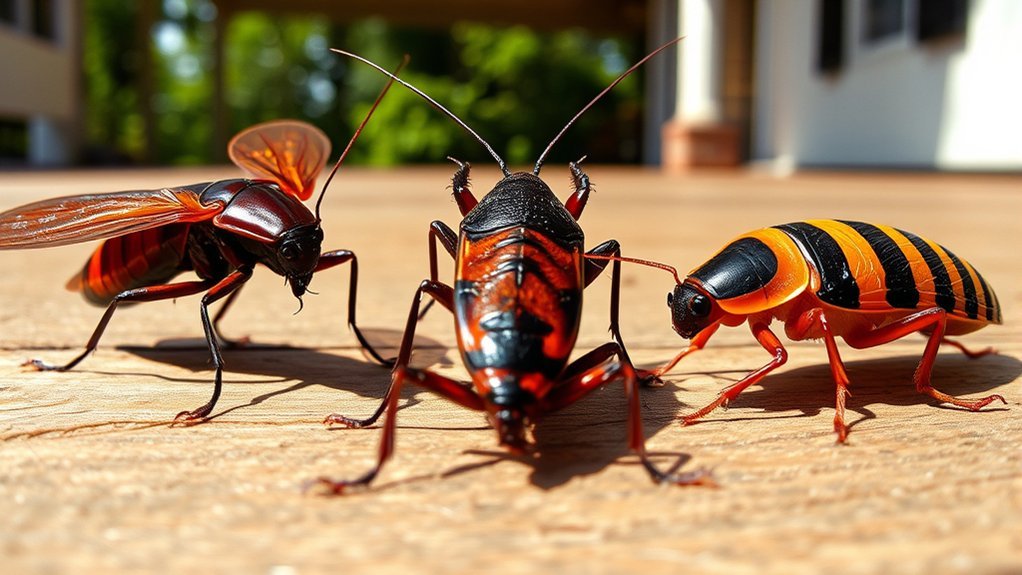
While German and American cockroaches get most of the attention, Florida’s smokybrown, oriental, and Australian cockroaches are a different kind of problem — they’re primarily outdoor species that wander inside rather than establish breeding colonies in your kitchen or bathroom.
Smokybrown cockroaches favor attic vents, roofline gaps, and soffits as entry points, often flying toward porch lights before slipping inside.
Oriental cockroaches stick to damp, ground-level areas and typically enter through under-door gaps, drains, or air vents, staying on lower floors once inside.
Australian cockroaches are landscape roaches tied to mulch, gardens, and yard debris that occasionally push indoors when conditions shift.
What all three share is this: if you’re spotting them inside, there’s almost certainly an outdoor harborage nearby driving the activity.
Rain, heat, and temperature swings accelerate that movement. Treating only indoors won’t solve the problem — you need to address what’s happening outside your home first.
How to Tell Florida Cockroach Species Apart
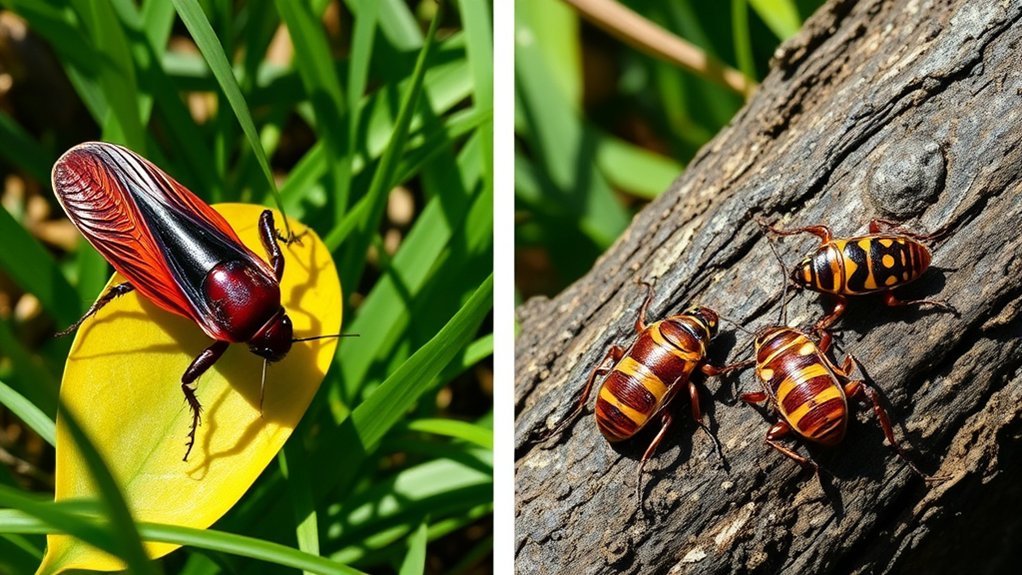
Telling Florida cockroach species apart comes down to a handful of reliable physical cues — size, color, markings, and wings — combined with where you actually found the roach.
Start with size, then layer in the details.
Start with what’s obvious, then work inward — size first, details second, and identification last.
- Small and tan? Check for two dark stripes behind the head — that’s a German cockroach. No stripes but longer wings? Likely an Asian cockroach.
- Large and reddish-brown? Look for a pale, yellowish figure-8 marking behind the head and wings extending past the abdomen — that points to an American cockroach.
- Dark, broad, and slow-moving outdoors? Reduced wing pads and a bulky black body suggest a Florida woods cockroach.
Brown-banded cockroaches stand out through visible light bands across their wings and abdomen.
Habitat confirms your ID — German cockroaches stay near kitchens, while American cockroaches favor drains and crawl spaces.
Which Florida Cockroaches Actually Breed Inside Your Home?
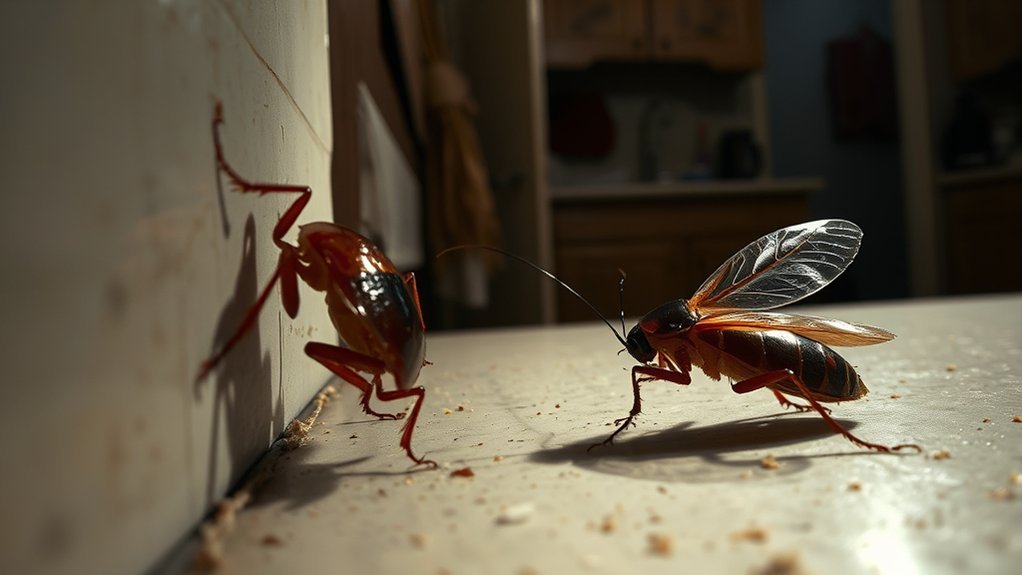
Not every cockroach you spot inside your Florida home is actually living and breeding there. Some species are simply wandering in from outside, while others are fully established and reproducing within your walls.
German cockroaches are the most serious indoor breeders. They reproduce year-round near food and water sources, hiding behind refrigerators, under sinks, and inside appliances. Their populations grow fast, so a small problem becomes a large one quickly.
Brown-banded cockroaches also live and breed entirely indoors, spreading into closets, furniture, and walls rather than staying near moisture-heavy areas.
Asian cockroaches present a mixed profile. Some sources list them as indoor breeders, while others describe them as moving in from outside.
American and smokybrown cockroaches typically don’t establish indoor colonies. They’re outdoor wanderers that enter under environmental pressure.
If you’re seeing multiple small roaches clustered in kitchens or bathrooms, you’re likely dealing with a true indoor-breeding infestation.
What Attracts Cockroaches Into Florida Homes?
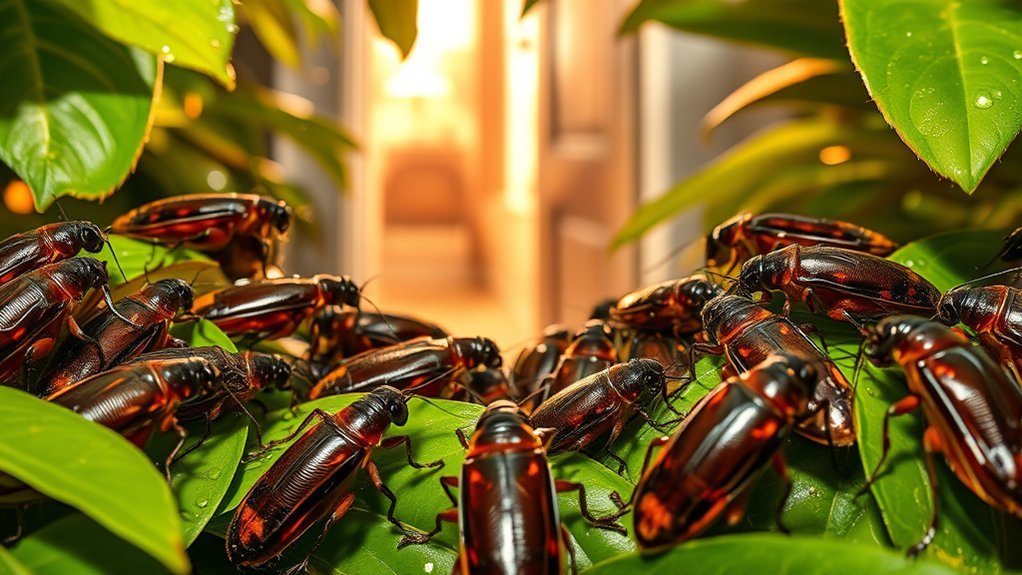
Knowing which cockroaches breed inside your home is only part of the picture — understanding what draws them in the first place helps you address the problem at its source.
Florida’s warm, humid climate already works against you. Cockroaches need just three things to thrive:
- Moisture — Leaky pipes, condensation around A/C lines, and poorly ventilated bathrooms create constant water access throughout your home.
- Food — Crumbs, grease buildup, unsealed pantry items, and overnight pet food bowls all supply reliable nutrition.
- Shelter — Wall voids, cardboard boxes, cluttered storage areas, and gaps around doors give roaches protected places to hide and reproduce.
Outdoor conditions make things worse. Clogged gutters, irrigation overspray, and soggy garden beds raise humidity near your foundation, pushing American cockroaches toward entry points.
Even a clean home stays vulnerable when hidden moisture, warmth, and food residue go unaddressed.
How to Get Rid of Florida Cockroaches: Indoor Treatment and Outdoor Prevention
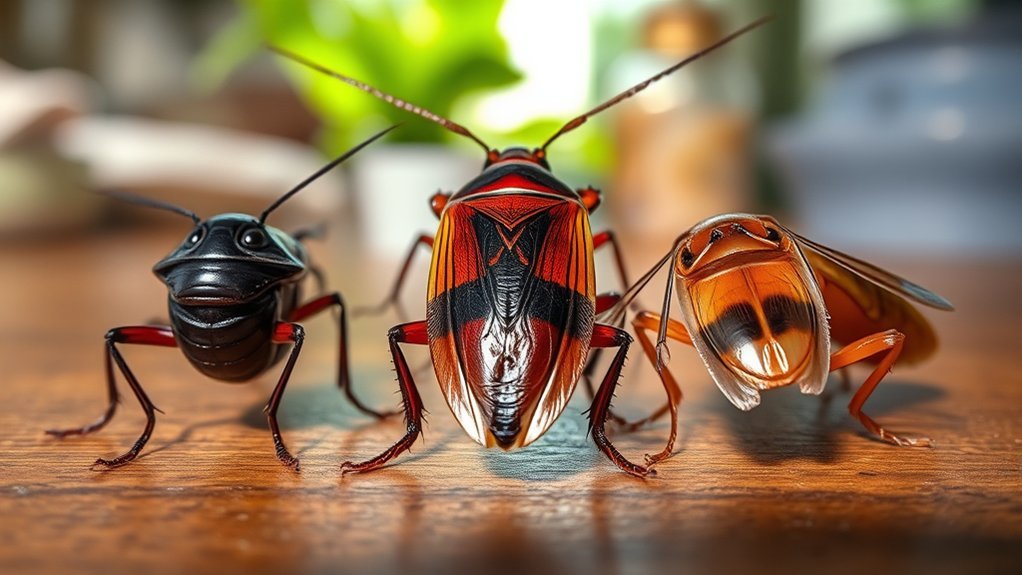
Getting rid of cockroaches in Florida takes action on two fronts: treating what’s already inside and cutting off the conditions that keep drawing them back.
Indoors, start by inspecting kitchens, bathrooms, and appliance voids. Vacuum thoroughly, wipe surfaces with hot soapy water, then place gel baits in cracks, crevices, and under sinks. For heavy infestations, apply a liquid insecticide with an insect growth regulator.
Outdoors, eliminate moisture, trim vegetation away from walls, and keep mulch 3–5 feet from the foundation.
| Action Area | Key Step |
|---|---|
| Indoor inspection | Target kitchens, bathrooms, appliance voids |
| Indoor baiting | Gel baits in cracks, crevices, cabinets |
| Indoor exclusion | Seal gaps around pipes, doors, baseboards |
| Outdoor landscaping | Keep mulch and debris away from foundation |
| Outdoor moisture | Fix leaks, improve drainage, clear standing water |
Seal exterior cracks, add door sweeps, and replace white bulbs with yellow ones to reduce flying roach attraction.
Frequently Asked Questions
Can Florida Cockroaches Survive Underwater or Flooding Conditions Temporarily?
Yes, Florida cockroaches can temporarily survive underwater. Larger species like American and Oriental cockroaches endure 30–40 minutes submerged, while German cockroaches last 15–20 minutes. They won’t drown immediately, so flooding often drives them into your home.
Do Florida Cockroaches Carry Diseases That Affect Pets Directly?
Florida cockroaches don’t usually infect your pets directly, but they can contaminate your pet’s food, water bowls, and feeding areas with Salmonella and E. coli, causing vomiting and diarrhea if ingested.
Are Cockroach Infestations in Florida More Common During Specific Seasons?
You’ll see cockroach infestations spike during Florida’s wet season, roughly June through September, when heat, humidity, and heavy rains drive roaches indoors. However, you’re never fully safe since they’re active year-round in Florida’s subtropical climate.
Can Florida Cockroaches Bite Humans While They Sleep?
Yes, Florida cockroaches can bite you while you sleep, but it’s rare. German cockroaches are the most likely culprits, especially during severe infestations when food’s scarce and you’ve got residue on your skin.
How Long Does a Typical Florida Cockroach Live in the Wild?
Depending on the species you’re dealing with, a typical Florida cockroach lives anywhere from 100 days to over a year. German cockroaches die fastest, while Florida woods cockroaches can survive considerably longer in the wild.
Conclusion
Now that you’ve learned about Florida’s cockroach species, you’re better equipped to identify what’s invading your space and take action. Whether you’re dealing with German cockroaches inside or American cockroaches wandering in from outside, the right treatment makes all the difference. Don’t wait for a small problem to become an infestation. Use the identification tips and prevention strategies you’ve learned here to keep your Florida home roach-free year-round.