

What Smells Do Cockroaches Hate? Scents That Actually Repel Them
Cockroaches hate peppermint oil, eucalyptus, citrus scents, and bay leaves. These smells overwhelm their sensory receptors and push them away from treated areas. In lab tests, oregano oil hit nearly 99% repellency, while catnip oil actually outperformed DEET against German cockroaches. You can also use everyday kitchen ingredients like garlic, cinnamon, and vinegar to keep them at bay. Stick around to discover exactly which scents work best and how to use them effectively throughout your home.
Key Takeaways
- Cockroaches hate peppermint oil, eucalyptus oil, and citrus scents, making them effective deterrents for kitchens, entryways, and cupboards.
- Lab-tested oils like oregano and citrus hystrix achieved up to 100% repellency against multiple cockroach species.
- Common kitchen ingredients such as bay leaves, cinnamon, and garlic also naturally repel cockroaches when strategically placed.
- Apply diluted essential oils along baseboards, entry points, and hidden hotspots using cotton balls or spray mixtures.
- Scent-based deterrents work best as supplementary tools, not standalone solutions, since they cannot address nests or sanitation issues.
The Scents Cockroaches Avoid Most Consistently
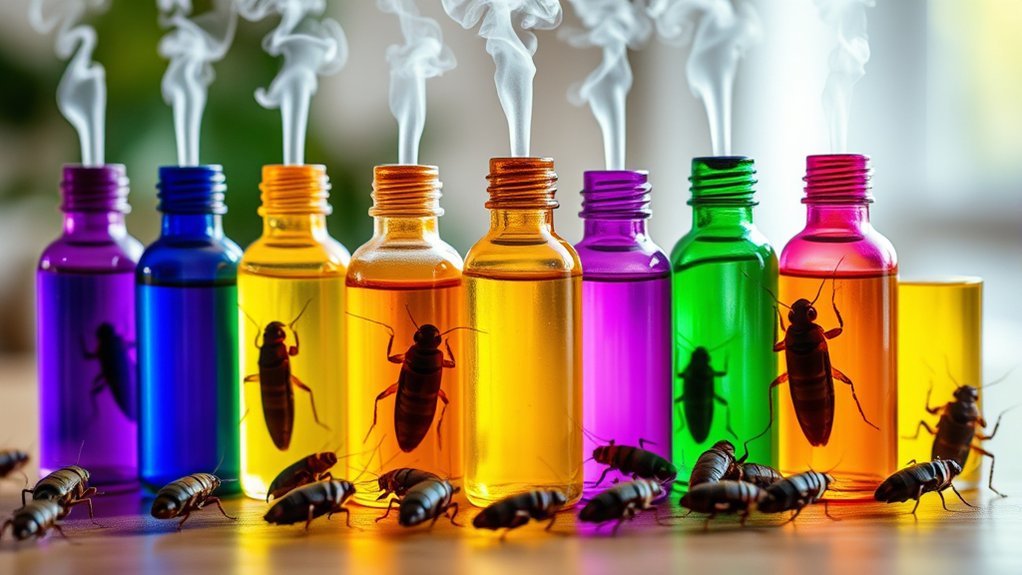
Certain scents stop cockroaches in their tracks more reliably than others, and knowing which ones tend to work best helps you make smarter choices about where and how to use them.
Peppermint oil tops most lists as the strongest and most consistent deterrent. Roaches tend to avoid its sharp, menthol-heavy profile, making it a go-to for cupboards, baseboards, and entry points.
Eucalyptus follows closely, with its medicinal eucalyptol compound producing a repellent effect that ranges from moderate to high depending on concentration. Bay leaves round out the most reliable options, offering a mild scent that humans barely notice but roaches consistently avoid — particularly useful in pantries and dry storage areas.
Citrus scents like lemon and orange also appear frequently, largely for their limonene content. They’re especially effective near countertops and trash areas.
None of these scents eliminate an infestation on their own, but they’re well-supported as deterrents when placed strategically. Essential oils like tea tree and rosemary go beyond simple repellency, with rosemary oil proving particularly toxic to cockroaches on contact.
Which Smells Actually Work Best, According to Lab Tests?
When lab tests get involved, the rankings shift in ways that might surprise you.
Lab results don’t always confirm what’s popular — sometimes the real winners are hiding in the data.
Peppermint gets a lot of attention, but controlled studies consistently point to stronger performers.
Three oils stand out based on actual data:
- Oregano oil reached 96.5% to 99.1% repellency against brown-banded cockroaches and retained that effect for at least one week after treatment.
- Citrus hystrix oil achieved 100% repellency against both American and German cockroaches in laboratory conditions.
- Catnip oil outperformed DEET against German cockroaches in lab comparisons, which is a significant benchmark.
Concentration also changes everything.
Some oils peak at just 2.5%, while others need higher doses to perform.
Species matter too, since an oil that dominates in one test can underperform against a different cockroach entirely.
You’ll also get stronger results from blended oils than from a single scent applied alone.
Regardless of which oil performs best, all scents fade within hours to days, meaning any repellent effect is temporary rather than lasting.
Kitchen Ingredients That Double as Roach Repellents

Five kitchen ingredients you likely already have can pull double duty as roach deterrents without requiring a trip to the store. Garlic, bay leaves, vinegar, cinnamon, and cucumber peels each work through strong scents or compounds that roaches tend to avoid.
Place crushed garlic or bay leaves near entry points, inside cabinets, and along dark corners.
Sprinkle cinnamon powder along baseboards and cupboard edges.
Wipe counters and sinks with diluted vinegar to strip away odors and residue that attract roaches.
Lay fresh cucumber peels near sinks or trash areas for a quick, low-effort deterrent.
None of these ingredients will eliminate an active infestation, and most need replacing every one to two weeks before their scent fades. Cockroaches rely on their antennae to detect scents as they navigate their environment, which is why strong or unfamiliar odors can disrupt their movement patterns.
Think of them as short-term barriers rather than solutions. They work best when you combine them with good sanitation habits and seal off common entry points throughout your kitchen.
How to Use Roach-Repellent Scents Around Your Home

Moving those kitchen ingredients from countertops to the right spots around your home takes a bit more strategy.
You’ll get better results by targeting specific zones rather than scenting entire rooms.
Focus your applications on three key areas:
- Travel routes – Spray diluted oil mixtures along baseboards, cracks, and appliance gaps where roaches actually move.
- Entry points – Apply scents to door frames, window sills, and ventilation grates to create a barrier before roaches get inside.
- Hidden hotspots – Place oil-soaked cotton balls behind cabinets, under sinks, and near trash can bases where darkness and moisture attract roaches.
For sprays, mix 10 to 15 drops of essential oil per cup of water, adding witch hazel to help it blend.
Use stronger concentrations in hidden spots and lighter applications in living areas.
Reapply after cleaning or whenever the scent fades. Keep in mind that roaches rely on a highly sensitive sense of smell for survival, which is exactly why consistent scent barriers are more effective than occasional applications.
Why Scent Alone Won’t Get Rid of Cockroaches
Scents can make certain spots less appealing to roaches, but they won’t eliminate an infestation. Roaches simply relocate when a smell becomes unpleasant, and odors can’t penetrate hidden nests, egg cases, or wall voids where colonies actually live.
The real drivers—moisture, food residue, clutter, and entry points—remain untouched by scent alone. Without fixing those conditions, roaches keep coming back. Signs of infestation like daytime sightings, lingering smells, and discovered egg cases confirm that scent-based deterrents are not enough to address an established colony.
| Factor | Scent-Only Approach | What Actually Works |
|---|---|---|
| Hidden nests | Can’t reach them | Baits and professional treatment |
| Egg cases | No penetration | Direct insecticide or removal |
| Moisture sources | Not corrected | Fix leaks, reduce humidity |
| Entry points | Not sealed | Caulk gaps and plumbing holes |
| Food and clutter | Not removed | Consistent sanitation habits |
Use scents as a minor support tool, not a standalone fix. Eliminating the colony requires targeting the infestation directly.
Frequently Asked Questions
Are Scent-Based Repellents Safe to Use Around Pets and Children?
They’re not automatically safe. You should avoid tea tree, eucalyptus, and peppermint oils around pets, especially cats. Stick to safer options like vinegar, bay leaves, or catnip, and always ventilate treated rooms.
Can Cockroaches Eventually Become Desensitized to Repeated Repellent Scents?
Yes, cockroaches can become desensitized to repeated repellent scents, especially weak or fading ones. You’ll get better results by rotating scents, using higher concentrations, and combining them with sealing and sanitation methods.
Do Roach-Repellent Scents Work Differently Depending on the Cockroach Species?
Yes, roach-repellent scents absolutely work differently depending on the species you’re dealing with. German cockroaches respond well to peppermint and citrus, while brown-banded roaches need rosemary or oregano for stronger results.
How Long Do Essential Oil Repellents Typically Last Before Needing Reapplication?
You’ll typically need to reapply essential oil repellents every three to seven days indoors. However, fast-evaporating oils like citronella can fade within hours, while oregano oil may last up to ten days.
Are Store-Bought Scent Repellents More Effective Than Homemade DIY Versions?
Yes, store-bought repellents typically outperform DIY versions because they use measured concentrations, stabilizing additives, and tested blends that help the formula stick longer and work more consistently than homemade sprays you’d mix yourself.
Conclusion
You’ve got plenty of natural options to keep cockroaches away, but don’t rely on scents alone. They’re a smart addition to your pest control routine, not a complete solution. Pair repellent smells like peppermint, eucalyptus, and cedarwood with proper sanitation and sealing entry points for the best results. If you’re dealing with a serious infestation, it’s time to call a professional rather than hoping a few drops of essential oil will do the job.
